Margins on refined products are thin, and an unplanned shutdown or an energy spike shows up directly in EBITDA. Many units still run on control logic tuned for conditions that no longer hold, such as a crude slate that has since changed or prices that now move by the hour. Planning resets the targets on a daily or weekly cycle, and the unit drifts between those resets. In between, the plan depends on recurring decisions, made every shift by different people with different information.
Real-time optimization works in that gap. A model learned from the unit's own plant data predicts how the process will respond to a move, and an optimizer writes setpoints to the existing advanced process control (APC) or distributed control system (DCS), minute by minute, inside limits set by plant engineers. Tightening emissions requirements add one more moving constraint. The sections below cover eight places where this adds value in refineries and gas plants.
Yield from every barrel
Crack spreads move and crude quality swings, so the gap between planned and delivered yield keeps reopening. Under that pressure every extra barrel of premium product counts.
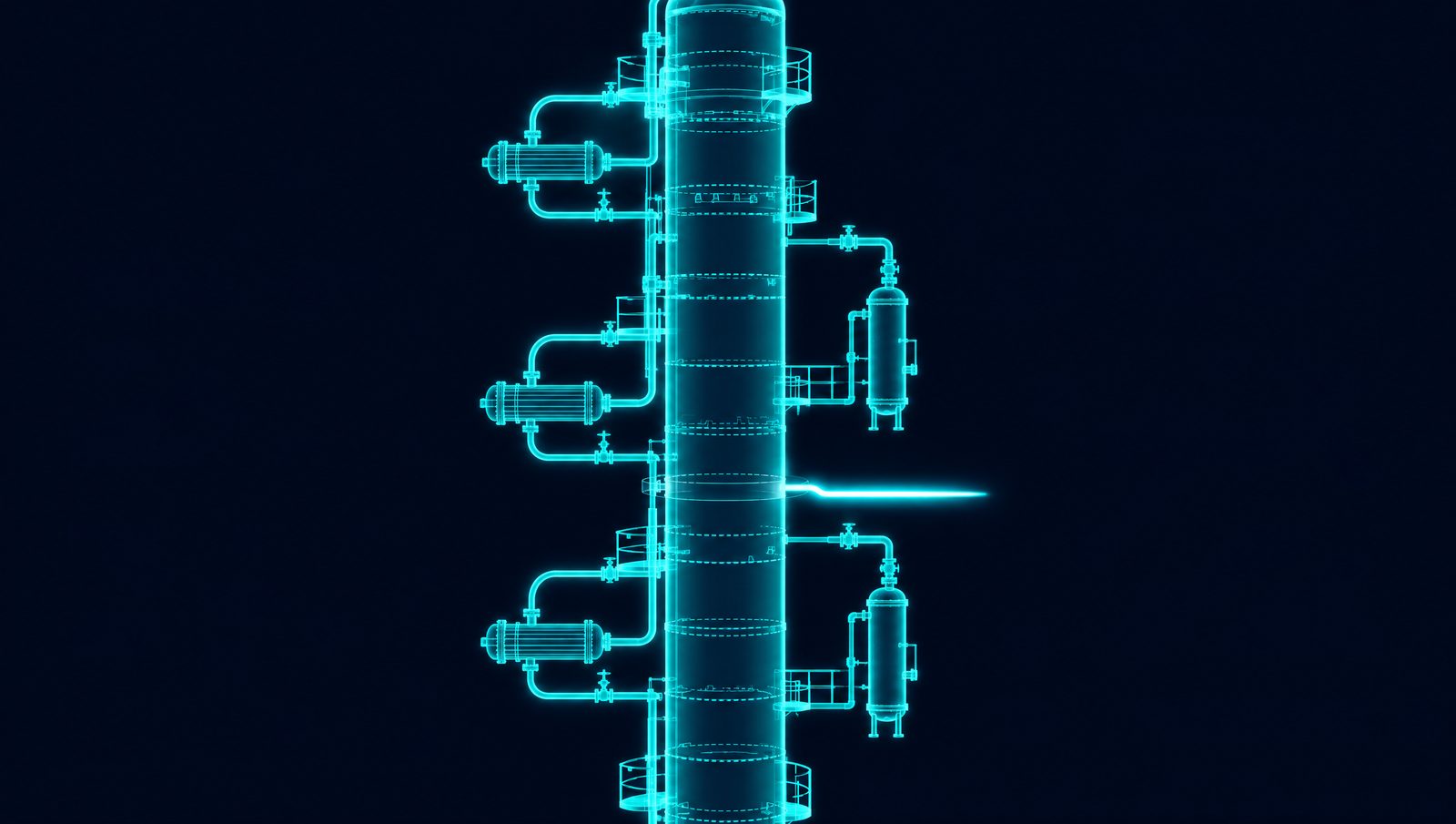
On distillation columns and downstream fractionators, an optimizer reads temperature, pressure and flow and adjusts cut points as crude quality shifts. By balancing tray loading and reflux against the column's constraints, it sends more of each barrel to the higher-value gasoline and diesel streams while product specifications and hydraulic limits hold.
Conventional APC holds the column to its targets using linear models identified around one operating point. Many refiners now add closed-loop optimization on top of the APC. A nonlinear model learned from the unit's history keeps finding the economic optimum as the crude moves away from that point, and passes the new targets to the APC. Yield gains flow directly to margin.
Fired heater and furnace energy
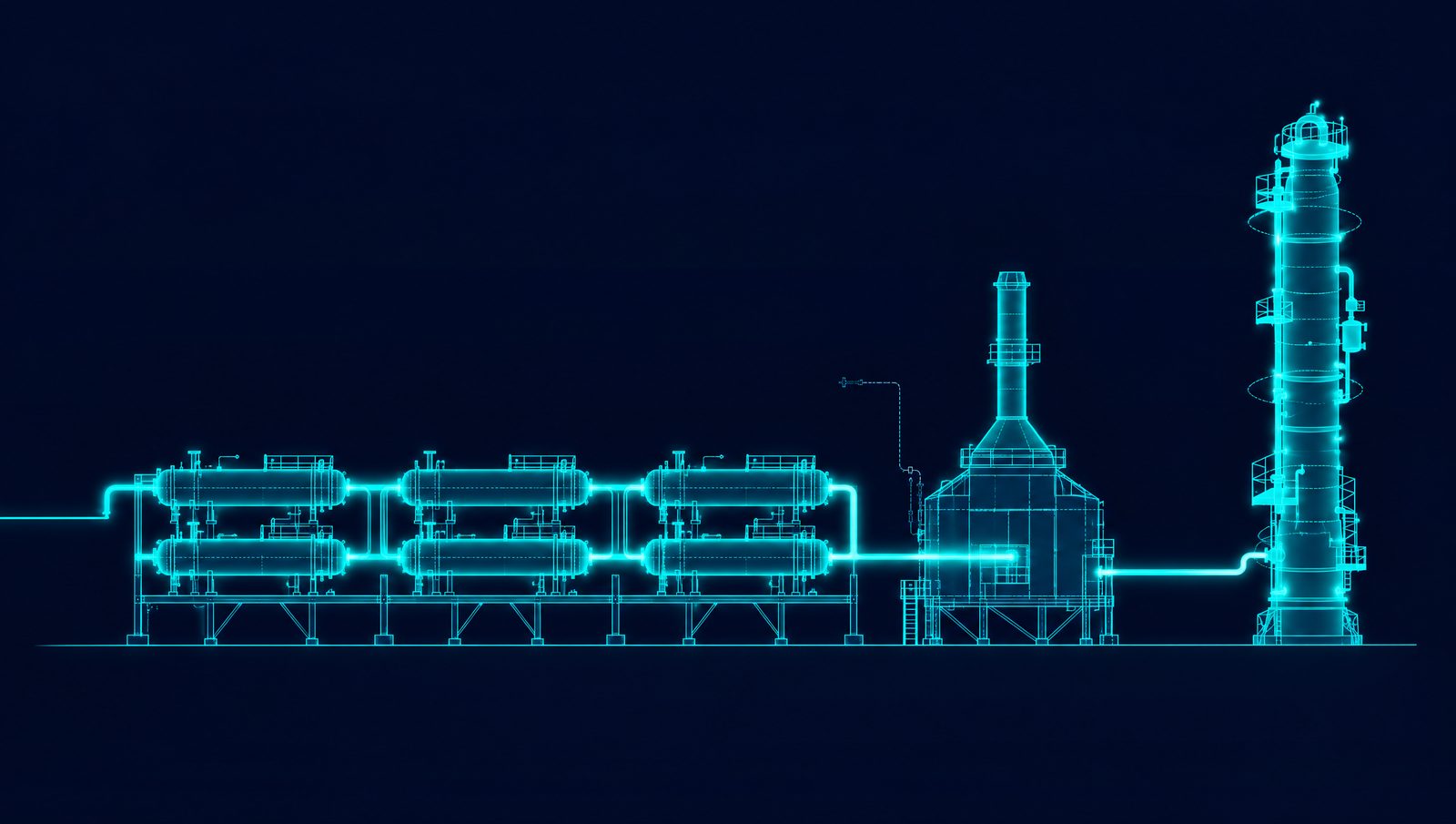
Fuel is often the largest operating cost after crude, and fired heaters and furnaces burn most of it. An optimizer manages air-to-fuel ratio, coil outlet temperature and draft as feed quality and ambient conditions shift, so excess air and over-firing come down while throughput targets hold. In midstream gas processing the same approach applies to the compressors and reboilers that carry most of the energy load, without engineers making constant manual setpoint adjustments.
Burning less fuel also lowers CO₂ emissions, which helps a site meet tightening sustainability targets with the equipment it already has. For more on the fuel and steam side, see energy management in oil and gas.
Giveaway and quality variance
Giveaway is product made better than the contract requires. Each extra cushion on a specification is margin given away, and operators carry that cushion because the unit varies and lab results arrive late.
A model trained on the plant's own history predicts quality between lab samples and tracks it continuously instead of once per shift. With a current view of where quality is heading, the unit can run closer to specification with fewer off-spec events, even as feed quality moves and units swing in and out of constraints. That means less reblending, lower blend component cost and fewer penalties. Gas plants apply the same principle to their product specifications, as described in self-optimizing gas processing plants.
Unplanned downtime
Real-time optimization works best alongside early-warning analytics. Models that track vibration, pressure and temperature continuously can detect subtle deviations well before alarms trigger and point to a corrective move.
The same monitoring speeds disturbance recovery. In pipeline service, for example, advanced monitoring can identify corrosion risk early and support faster, safer restarts. Fewer shutdowns mean steadier production and fewer missed commitments. See AI for plant reliability and unplanned downtime in a delayed coker.
Equipment life and maintenance cost
When valve strokes, pressure swings and thermal cycles stay inside a tighter operating envelope, metal fatigue slows and seals last longer. Holding temperatures, flows and vibration away from damaging extremes keeps critical equipment in its normal range instead of running close to alarm limits.
Because the models learn from continuous sensor data, they can flag degradation patterns early, so repairs can be aligned with planned turnarounds instead of forcing emergency call-outs and unplanned shutdowns. Longer asset life also reduces the capital tied up in replacements.
Crude and feedstock decisions
Crude differentials move by the hour, yet many refineries still run once-a-day blend plans from a linear program (LP). The LP works from crude assays, a price set and equipment limits, and its answer ages as those inputs change. For more on what the LP leaves behind, see oil refinery optimization.
Bringing current prices and plant data into the crude decision lets planners re-screen the available crude slates against unit constraints and the desired product mix more often. The units then have to run on the crude that actually arrives, which often differs from the one the plan assumed, and that is where closed-loop optimization of each unit carries the plan through to the plant.
Capacity in high-margin periods
High-margin windows close quickly. Capturing them means finding the active constraint, often fired-heater duty, compressor speed or reflux, and relieving the minor bottlenecks while every safety and quality limit holds.
Dynamic constraint management moves setpoints through the DCS as conditions change, in place of slow manual rate studies. Continuous monitoring of vibration, pressure and sample results flags emerging risks before they cost production. The aim is more on-spec product while prices are high, without trading it for unplanned downtime or equipment damage. Operators spend their attention on the decisions that need judgment, and less on constant manual tuning.
Operator workload and the skills gap
Oil and gas operators face a growing skills shortage as the processes they run become more complex. Many sites struggle to fill control-room seats or to bring new staff up to speed quickly.
A closed-loop optimizer takes on the continuous work of trimming setpoints within safe limits across thousands of signals, which no individual can track at once. Board operators spend less time chasing disturbances and more on abnormal situations and the unit as a whole, and engineers spend more time on improvement projects instead of firefighting. When recommended moves are recorded with the conditions behind them, newer operators can see why a decision was made, and the plant keeps more of its operating knowledge as experienced people retire.
Where to start
Start with one high-impact unit. Let the model learn from that unit's own data, and validate the recommendations in advisory mode while operators compare each recommendation with their own judgment. Then move to closed loop, inside limits set by plant engineers, and expand across the site as the results hold. Closed-loop optimization built on deep learning and reinforcement learning keeps setpoints on target as conditions move, so the gains on each lever hold instead of fading as the unit drifts.
How Imubit applies this
In refineries and gas plants, Imubit applies Map, Model and Control. Map traces plan-to-plant gaps in yield, energy, giveaway and reliability to the recurring decisions behind them. Model learns each unit's nonlinear dynamic behavior from its own history with Deep Learning Process Control® (DLPC®), guided by first principles. Control takes the critical decisions to closed loop, writing setpoints to the existing APC or DCS, inside limits set by plant engineers. In refining, this has delivered a $0.25/bbl margin improvement. See oil and gas.