Decarbonization in oil and gas has moved from the boardroom to the plant. The International Energy Agency estimates that oil and gas operations alone generate roughly 15% of all energy-related greenhouse gas emissions, a level the IEA says must fall quickly to align with limiting warming to 1.5°C.
Producers have responded with near-term methane reduction goals, 2030 intensity targets and commitments to net-zero operations by mid-century. Five trends are shaping how those commitments turn into results. Real-time optimization plays a part in most of them, because the operating moves that cut fuel use also cut cost.
Renewable and hybrid power at upstream and midstream sites
Upstream operators face energy transition pressure, but growth in on-site solar and wind has been gradual. Where operators do add renewables, they combine them with batteries and backup generators to build microgrids that can carry critical loads.
A typical configuration has four parts:
- Photovoltaic panels for daytime loads.
- Compact wind turbines for overnight generation.
- Battery storage to smooth output.
- Gas or diesel generators for backup.
On well pads, these hybrid systems power telemetry, artificial-lift motors and drilling operations. As equipment costs fall, the levelized cost of electricity falls with them, and the site avoids the cost and safety risk of trucking in fuel.
Control algorithms dispatch solar, wind, battery and generator capacity continuously for the lowest cost per kilowatt-hour. For operators weighing capital investment against ongoing diesel costs, the combined economics and emissions case increasingly favors hybrid power.
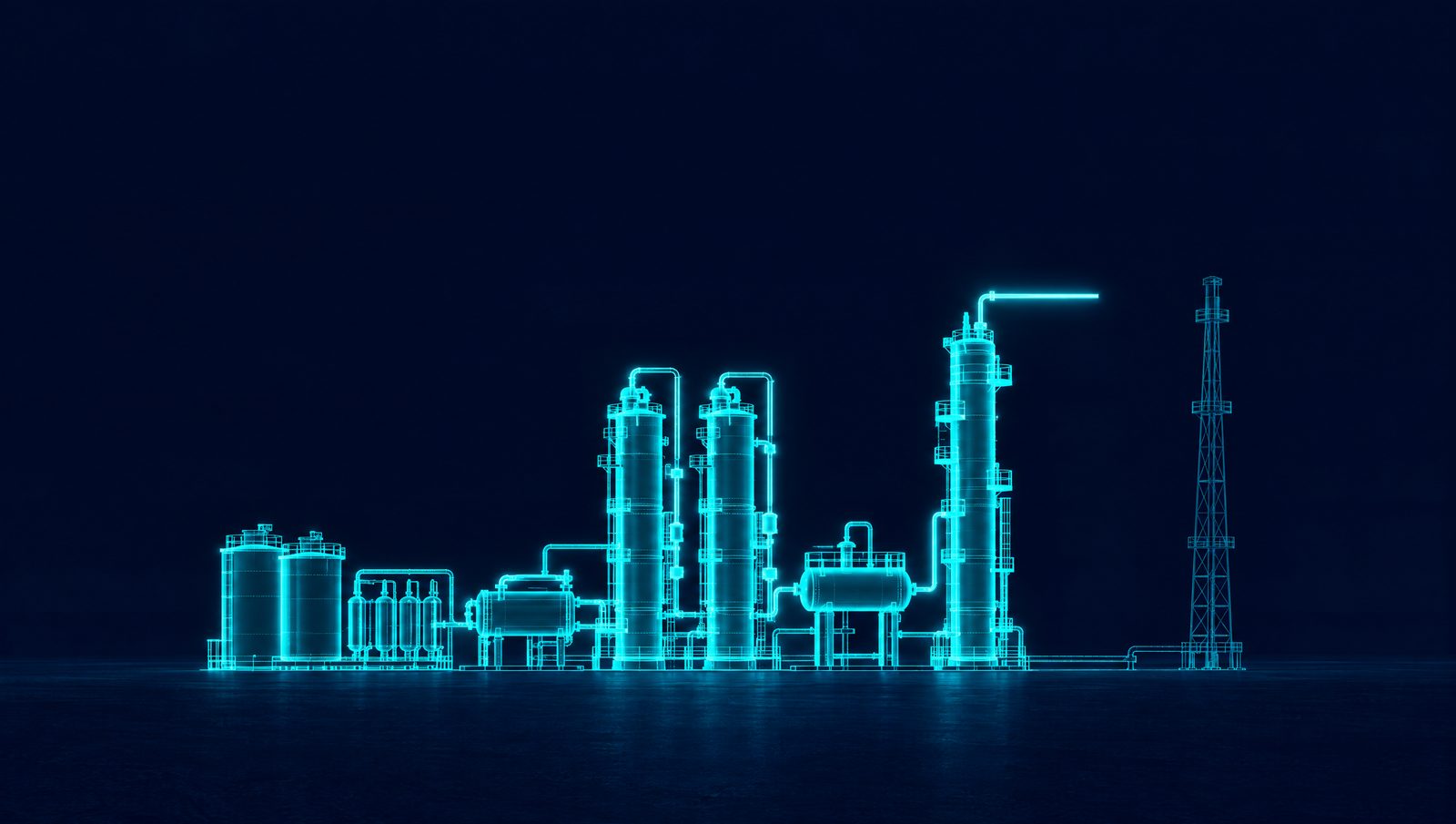
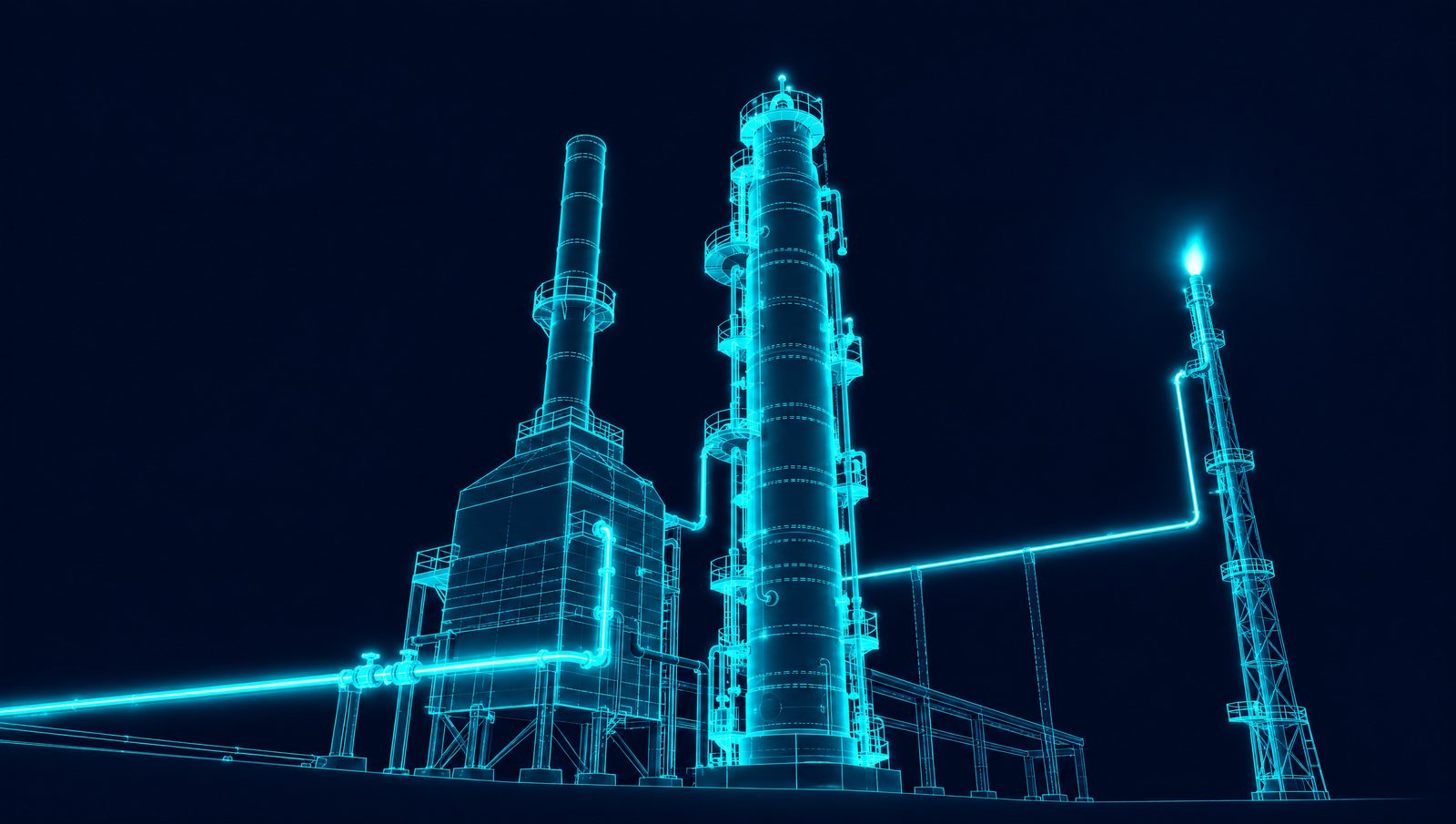
Carbon capture, utilization and storage
Large-scale carbon capture is moving from planning to deployment. According to the IEA, announced projects could take global capture capacity to nearly 430 million tonnes of CO₂ a year by 2030, although recent annual growth has been more modest.
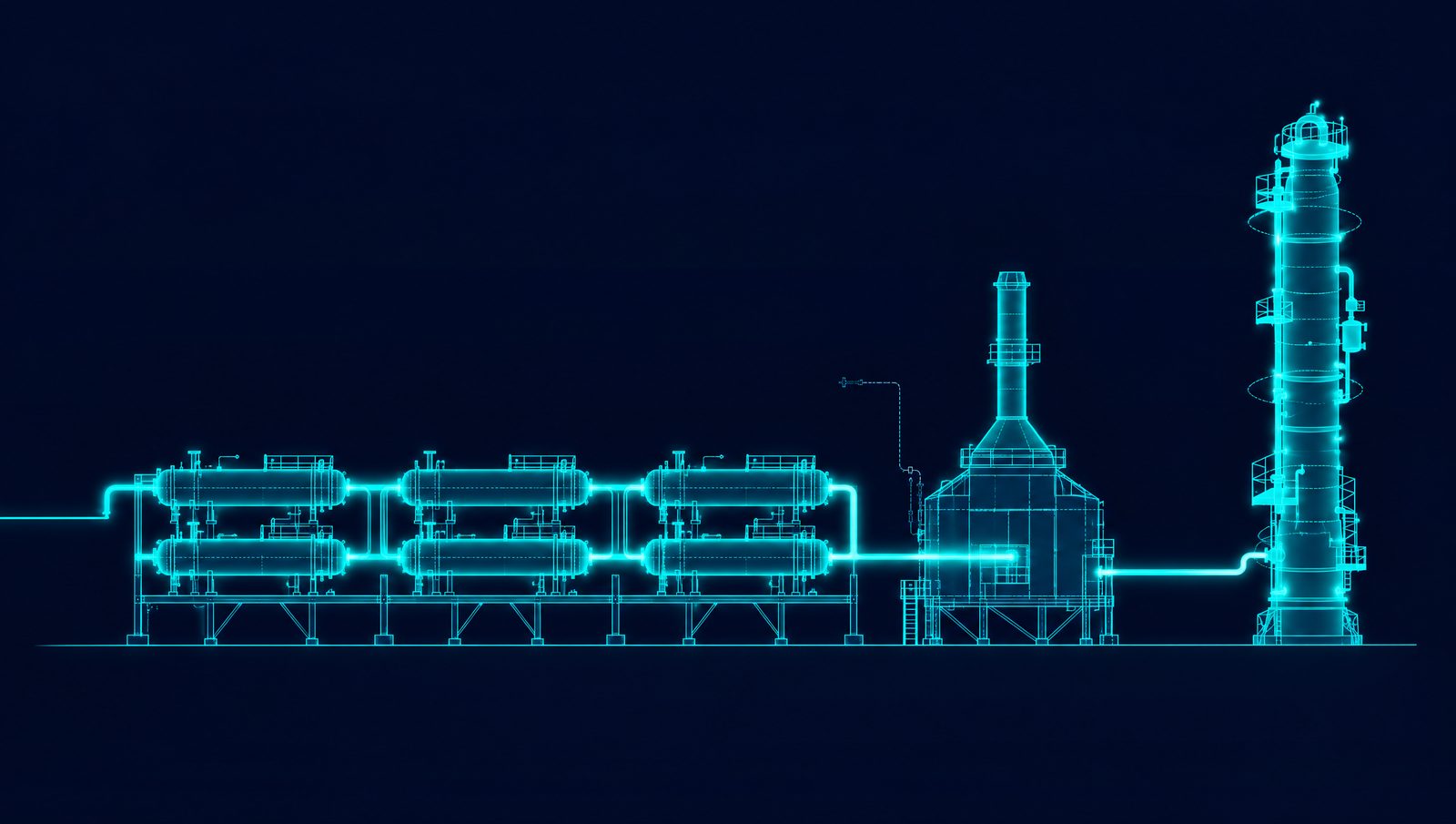
Three capture routes serve different applications:
- Post-combustion capture scrubs CO₂ from flue gas after the fuel is burned.
- Pre-combustion capture removes carbon before combustion.
- Oxy-fuel combustion burns fuel in pure oxygen, which produces a nearly pure CO₂ exhaust stream.
Cost depends on how concentrated the CO₂ is. The IEA puts capture costs at roughly $15 to $25 per tonne of CO₂ for concentrated streams such as natural gas processing, and $40 to $120 per tonne for dilute streams such as power generation flue gas. New solvents and membranes continue to bring costs down. Solvent-based capture units are large steam users in their own right, because regenerating the solvent takes heat, so how they are operated affects the net CO₂ they remove.
Captured CO₂ is used for enhanced oil recovery, synthetic fuel production and concrete curing. In the United States, the 45Q tax credit provides up to $85 per tonne for permanent geologic storage, which helps close the financing gap.
Oil and gas companies bring decades of subsurface expertise and existing pipeline infrastructure to storage development. Regional hubs that integrate capture, transport and injection are taking shape across major basins. Scaling them needs cost discipline and shared investment, but CCUS addresses some of the hardest emissions sources directly.
Digitalization and real-time process optimization
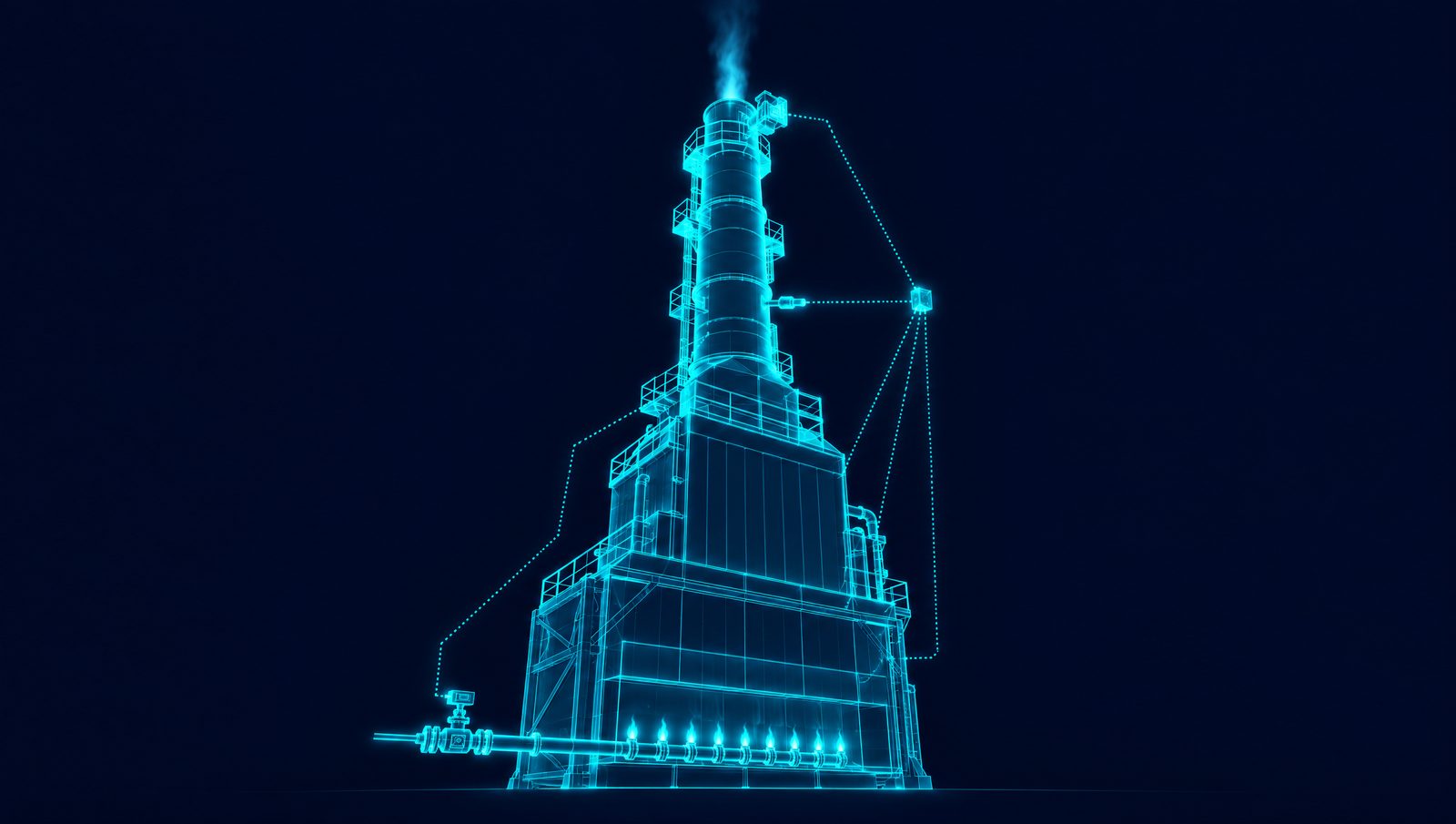
Real-time industrial AI learns a facility's constraints, establishes an accurate emissions baseline, and adjusts operating parameters to meet targets with less fuel. The main applications are:
- Heat integration. Rebalancing heat exchangers and furnaces so that heat is recovered instead of rejected.
- Flaring and methane. AI-based leak detection identifies plumes quickly, so crews can act before high global-warming-potential releases grow.
- Fouling. Predictive maintenance schedules cleaning before fouling erodes heat transfer and efficiency.
- Reporting. Dashboards consolidate operating parameters into auditable KPIs, which gives ESG teams verifiable data without manual compilation.
These improvements reduce utility costs and carbon fees at the same time. Because the models keep learning as data accumulates, the reductions can continue past the initial optimization.
Low-carbon fuels and hydrogen
Blue hydrogen, produced from natural gas with carbon capture, and green hydrogen, produced by renewable-powered electrolysis, are two ways to reduce emissions without abandoning existing thermal processes. According to the IEA, hydrogen demand is still concentrated in refining and chemicals and is met mostly by hydrogen made from unabated fossil fuels, and the agency calls for switching those existing uses to low-emissions hydrogen.
Replacing conventional grey hydrogen from steam-methane reforming with green hydrogen avoids roughly ten tonnes of CO₂ per tonne of hydrogen. Blending clean hydrogen into turbines or boilers displaces natural gas firing, and surplus production can supply ammonia or methanol makers.
Other low-carbon fuels, including advanced biofuels, synthetic liquids and ammonia, fit existing logistics networks with modest infrastructure changes. That compatibility lets companies diversify their products and hedge against future carbon pricing.
Regulatory and investor pressure
Carbon pricing already applies to oil and gas operations in several major jurisdictions. Europe's emissions trading system covers refineries and has expanded to maritime transport, and Canada prices industrial emissions under its federal carbon pricing benchmark.
Financial institutions are raising their requirements too. More than 600 investors in Climate Action 100+ ask portfolio companies for credible net-zero roadmaps. The Science Based Targets initiative is developing oil and gas standards that will define acceptable decarbonization pathways, and many operators join voluntary initiatives to show commitment and avoid the financing premiums applied to laggards.
Falling behind has measurable costs: higher investment hurdles, restricted market access and reputational damage that can delay projects. Real-time operating data provides audit-ready records for carbon fee calculations, voluntary disclosures and stakeholder reviews. Combined with process optimization, it lets a plant reduce emissions and operating cost together.
How the Imubit Platform applies
In refining and gas processing, the Imubit Platform works on the energy-intensive units where fuel use and emissions are set, such as fired heaters, crude units and fractionation. Map traces excess fuel and steam use to the recurring operating decisions behind it. Model learns each unit's nonlinear dynamics from its historian and lab data with Deep Learning Process Control® (DLPC®). Control writes setpoints to the existing APC and DCS minute by minute, inside limits set by plant engineers. Where energy is the optimization target, deployments have delivered a 15 to 30% reduction in energy consumption. See oil and gas.