Refinery margin is under pressure from the crude tank onward. Feedstock discounts move with every cargo, energy costs keep rising, and crude price volatility can erode the advantage of running heavier crudes. Maintenance backlogs add their own drag. Fired heaters burn most of the site's fuel, so they carry most of the energy bill.
Small inefficiencies in crude selection, heater operation, utilities and blending add up. Across a year they can decide whether a unit runs, idles or shuts.
Models trained on the refinery's own historian, lab and market data can follow these changes as they happen, instead of waiting for the next planning cycle or the next controller retune. That is the basis of a self-optimizing plant. This article looks at where it matters most in crude refining: crude slate variability, fired-heater and utility energy, and product yields on the conversion units.
Crude slate variability
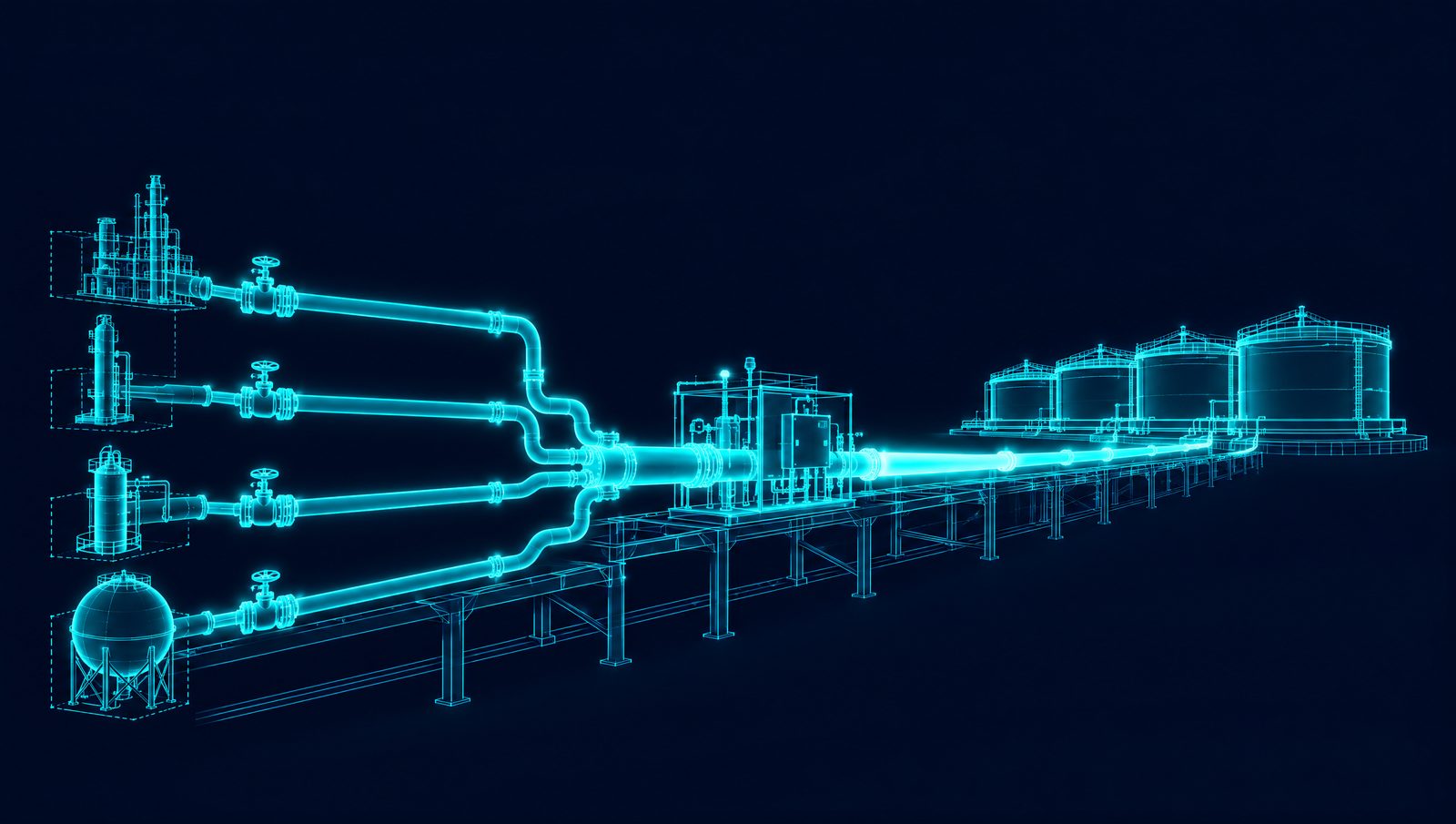
Every crude cargo arrives with its own sulfur content, metals and boiling-point curve. Those differences can put the linear programming (LP) plan out of step with the plant within hours of a crude switch. When sanctions or pipeline bottlenecks reshuffle cargo flows, feed quality swings wider still.
Each new blend forces fresh decisions on cut points, catalyst conditions and hydrogen use, with the risk of making non-prime product. Without end-to-end optimization, yield is left behind, especially when the discounts on heavy or sour crudes narrow unpredictably. The plant then tends to fall one of two ways. Operations runs conservatively and gives up margin, or it oversteps a constraint and pays for reblends, lost throughput or an unplanned shutdown.
What a learned model adds
A model trained on historian data, lab results and price curves can estimate how a cargo's properties will carry through the downstream units. As new lab data arrives, it recalculates cut points, feed ratios and hydrogen use. In closed loop, it writes those targets to the existing advanced process control (APC) or distributed control system (DCS).
LP adjustments made in a monthly planning meeting cannot keep pace with crude changes on that timescale. A closed-loop controller acts on each cargo as its lab data arrives and recalculates targets as conditions change. That lets the refinery process a wider range of discounted crudes while holding reliability and product constraints.
From data to closed loop
Moving from concept to closed loop usually follows four steps:
- Gather and clean historian, lab and LP data covering a representative period of crude changes and seasons.
- Train the model and stress-test it against historical crude switches and price scenarios.
- Run in advisory mode while operators compare its recommendations with current best practice.
- Close the loop once the model has shown it holds constraints and improves margin reliably, with operators able to take over from the board.
Fired-heater and utility energy
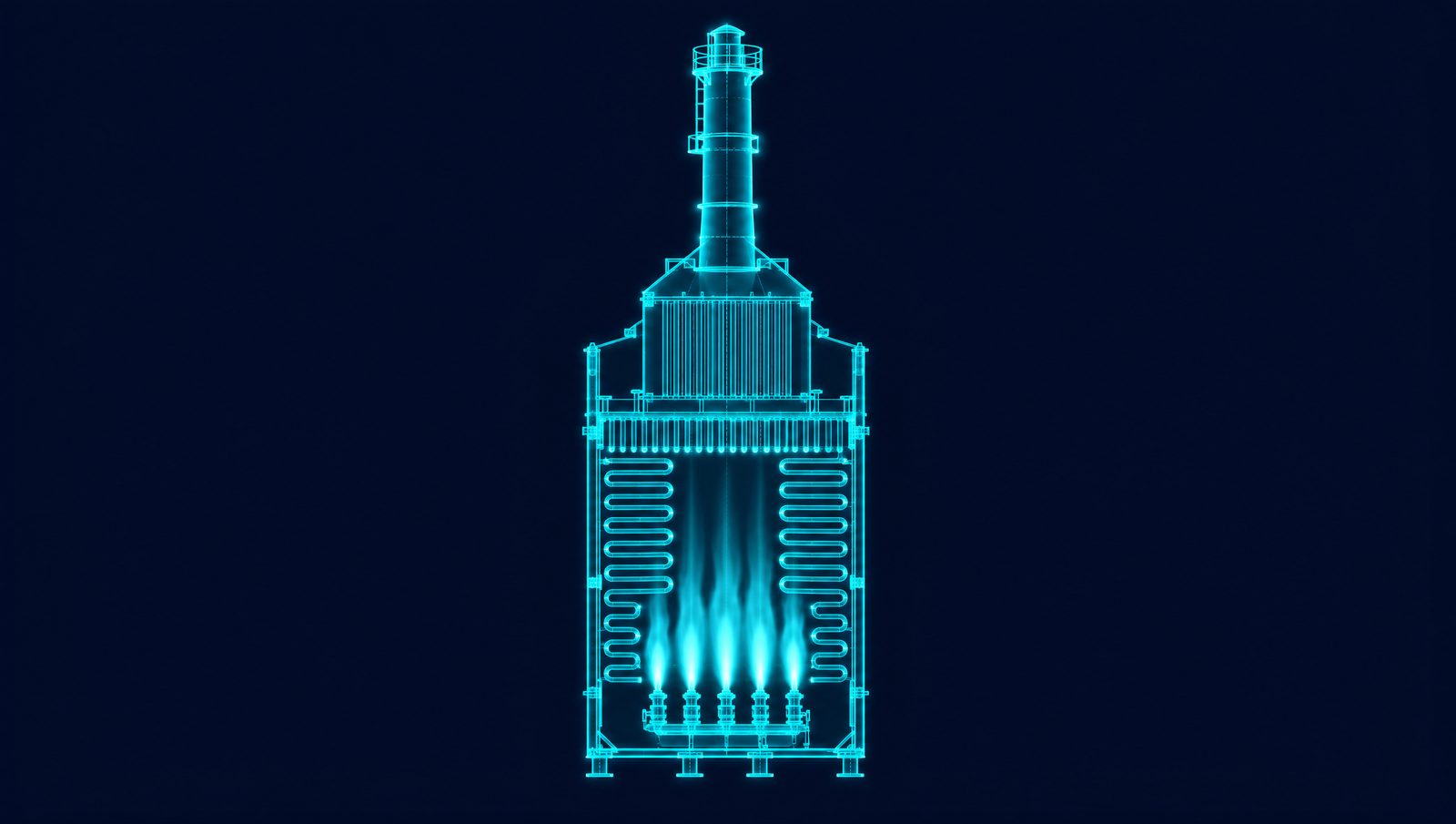
After crude itself, energy is usually the largest operating cost in a refinery, and fired heaters take the biggest share of it. That makes them the strongest lever on fuel cost and on direct CO₂ emissions.
Heater optimization still often depends on manual adjustments or rule-based control that is revisited at scheduled tune-ups. Between those reviews, operators run conservatively, combustion drifts and fuel is wasted.
Learning how the heater behaves
The variables that set heater efficiency interact: air-to-fuel ratio, coil outlet temperature, draft and feed composition. A model learned from years of historian data, lab results and live sensor feeds captures how they move together. A controller trained against that model with reinforcement learning can then write setpoints to the DCS within the heater's safety constraints. Because the model is learned across the range of conditions the heater has run, it accounts for shifts in crude quality that a linear model identified at one operating point misses. For more on heater operation, see the furnace in an oil refinery.
A practical deployment starts with a data-quality check of historian tags and stack-gas analyzers. The model then runs in advisory mode. Once its recommendations line up with operator judgment, the plant closes the loop and reviews heater performance indicators weekly to confirm the improvement holds.
Compared with manual or rule-based methods, the model works continuously, weighs dozens of interacting variables instead of a fixed subset, and responds to disturbances as they develop instead of at the next review. The effect shows up as lower fuel intensity, steadier heater duty and fewer excursions that threaten product quality or environmental compliance.
Product yields on the conversion units
On a fluid catalytic cracker, a reformer, a renewable diesel unit or a blending header, a fractional gain in gasoline or jet yield goes straight to margin. The difficulty is that feed composition, reactor severity, catalyst age and downstream blending economics shift together in nonlinear ways that LP models and linear APC rarely capture.
Nonlinear models and an economic optimum
Models trained on years of lab results, historian tags and market data represent plant-specific behavior more faithfully than the linear relationships in an LP. A range of methods has been tested on refinery data, including ensemble tree methods, neural networks, Gaussian process regression and support vector machines, to predict properties such as gasoline octane, diesel cetane and sulfur. Their accuracy varies with the unit and the dataset.
When predictive models of this kind feed an optimizer, unit targets move from a best estimate to an economic optimum recalculated minute by minute.
Transparency
Transparency matters when a model proposes moving reactor severity or a blend recipe. Engineers need to see why a new setpoint should raise reformate octane or reduce quality giveaway, through views of variable importance, active constraints and scenario playback. Building first-principles relationships into the model, such as mass balance, energy conservation and unit safety limits, keeps its recommendations physically consistent and easier for engineers to check.
How the Imubit Platform applies
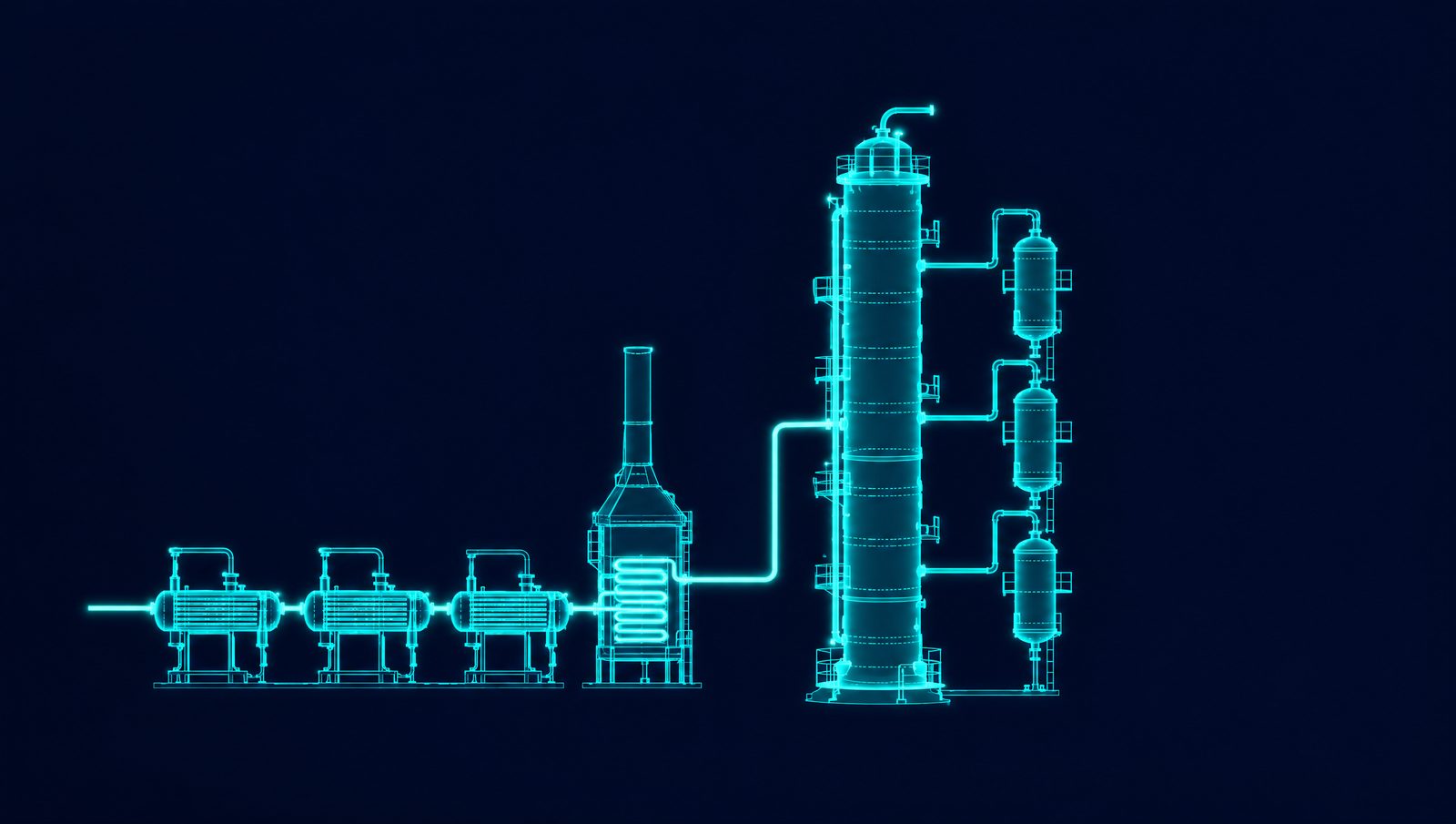
In refining, Imubit applies Map, Model and Control across the crude unit, its heaters and the conversion units downstream. Map traces margin lost to crude switches, heater fuel and yield giveaway back to the recurring decisions behind it. Model uses Deep Learning Process Control® (DLPC®) to learn a nonlinear dynamic model of each unit from its own history, guided by first principles. Control takes the critical decisions to closed loop, writing setpoints to the existing APC or DCS, inside limits set by plant engineers. On one crude furnace at one refinery, after the 2020 IMO specification change, fouling prediction and a crude diet study delivered a 33% reduction in furnace downtime.