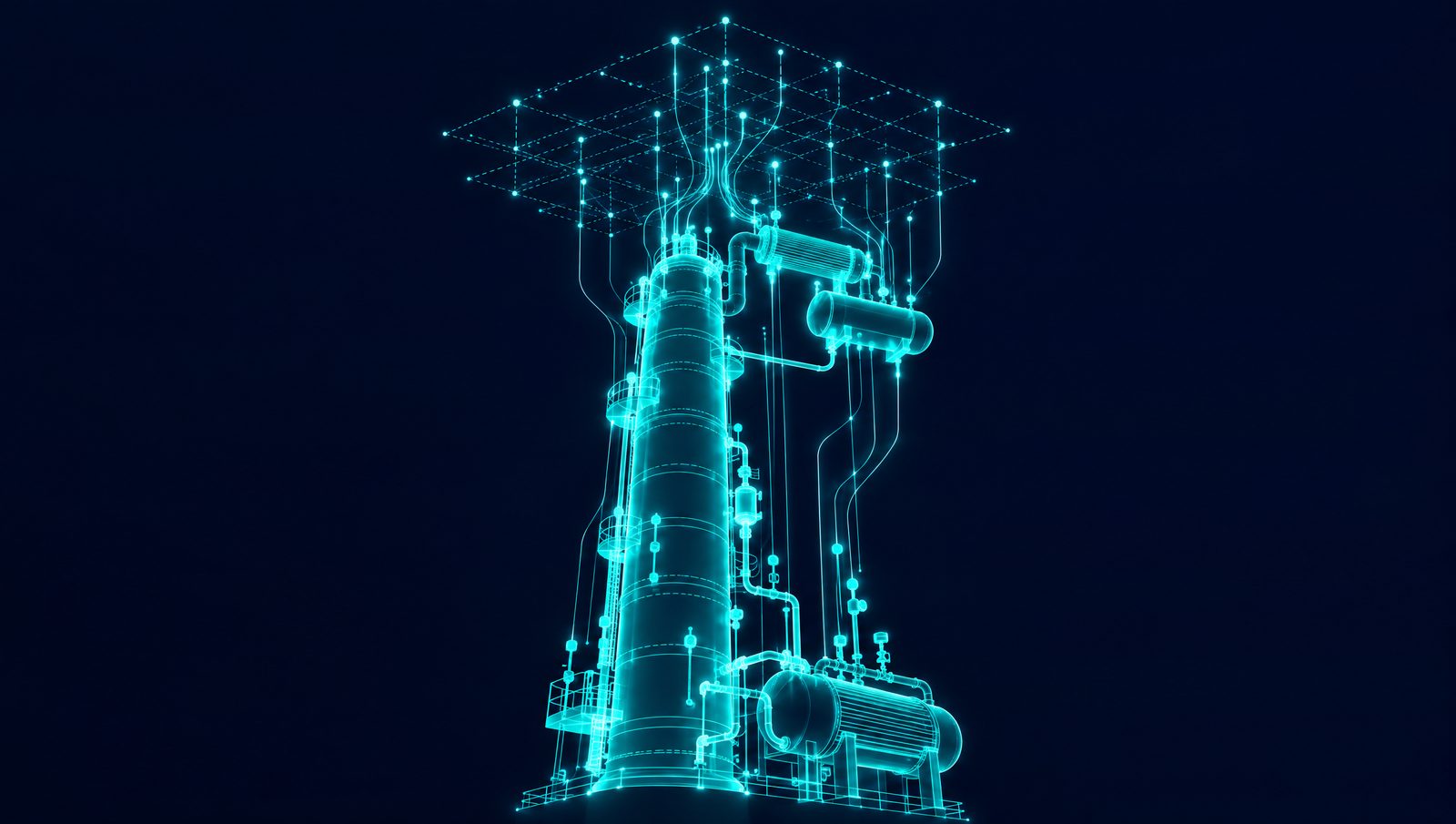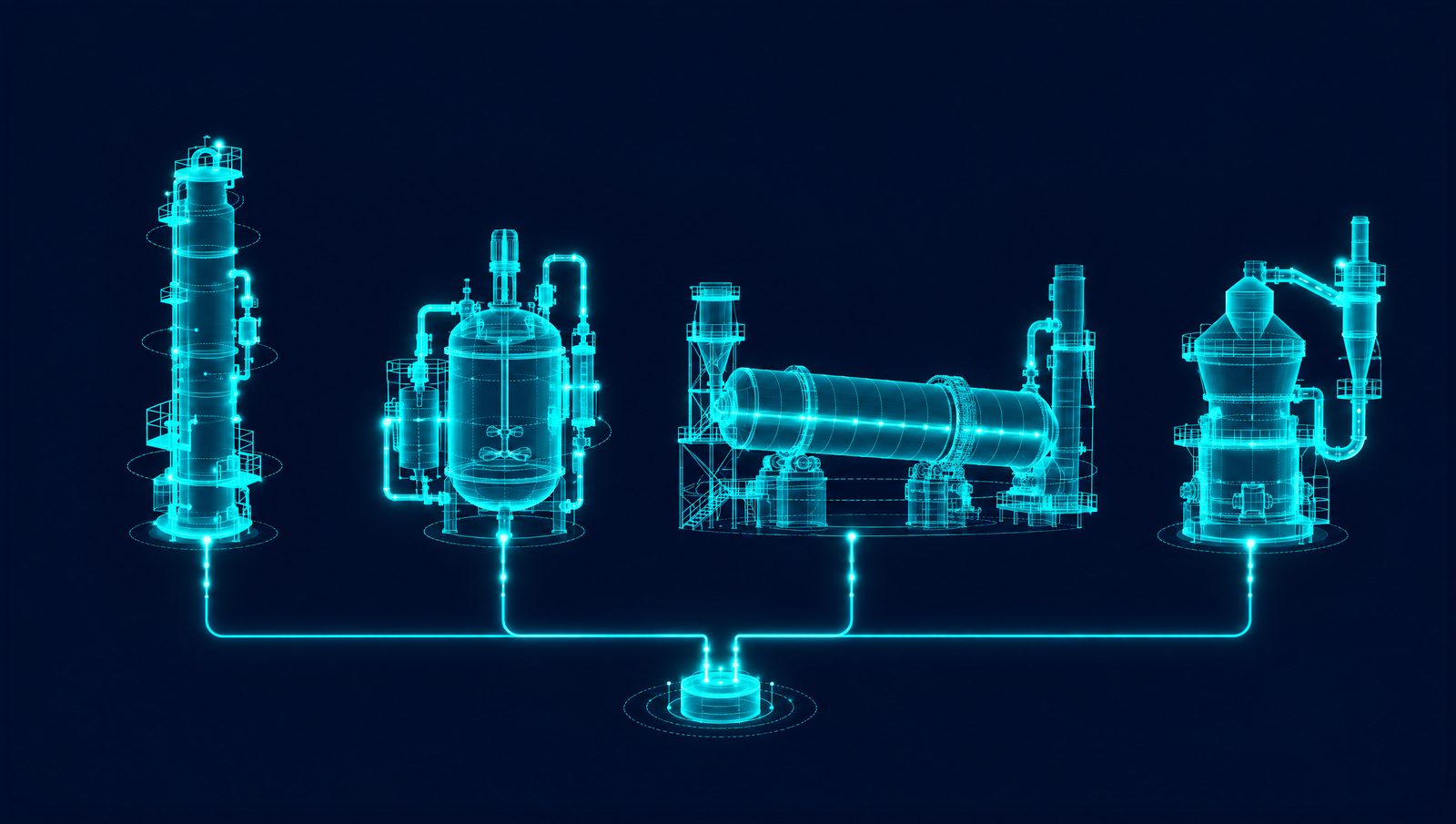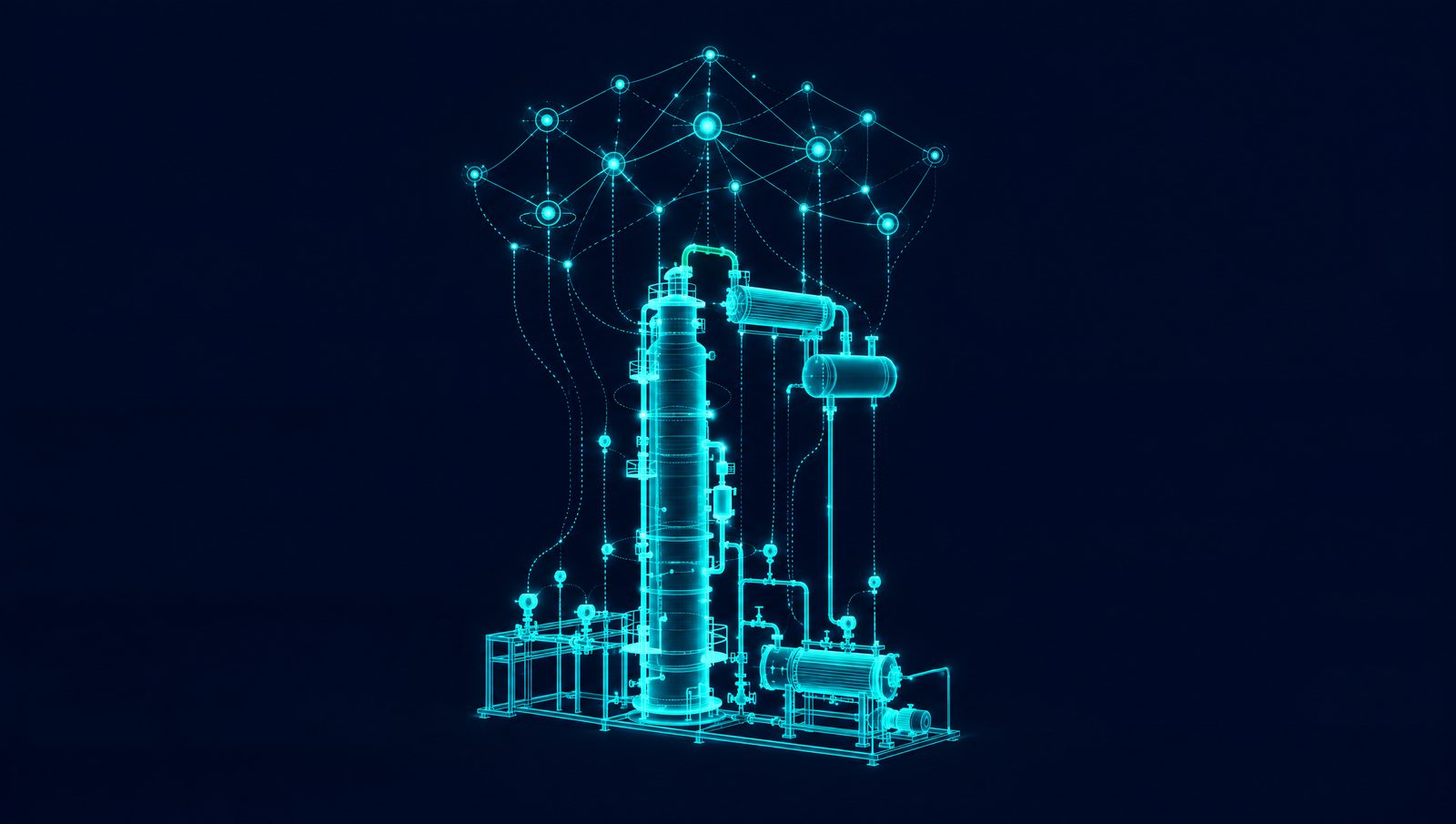
Front-line teams face a daily flood of sensor readings, procedure changes and incident logs. At the same time, experienced people are leaving. According to McKinsey (2025), the share of US manufacturing workers over 55 more than doubled in twenty years, and retirement rates have surged. When veteran operators leave, their knowledge of how the plant behaves often leaves with them, and newer staff rediscover solutions the hard way.
Information overload also hides the weak signals that come before equipment failures and safety incidents. The result is longer troubleshooting, avoidable operating costs and decisions made without full situational awareness.
Industrial AI can capture plant operations as they happen, organize what it captures and return it when it is needed, turning scattered documents and unwritten know-how into a knowledge base that stays current.
Capture and contextualize knowledge as events happen
Traditional knowledge management asks operators to write up insights after the fact, often days or weeks later, when the details have faded. AI can capture that knowledge as events unfold, from the workflows the plant already runs.
Industrial IoT networks stream temperatures, pressures and flows into secure data stores, where models learn their normal patterns. Natural language processing converts free-form shift logs and maintenance tickets into structured entries, and generative AI drafts short summaries for the knowledge base. Each record is time-stamped and tied to the relevant unit and equipment, without adding work to the operator's routine.
Context is what makes the information usable. A knowledge graph maps the relationships among equipment, procedures and past events, so a current alarm can be traced back to a similar incident years ago and to the fix that resolved it.
Capturing knowledge this way helps in several ways:
- Faster root-cause analysis when equipment trips, because past fixes are one query away
- Retained expertise before experienced staff retire, in a repository new hires can use
- Stronger safety compliance, because each procedure update is logged, versioned and searchable
- Shorter downtime, from alerts that arrive while there is still time to act
Intent-based search finds answers even when a question is phrased differently from the original document, and generative tools can turn rough notes into cleaner documentation.
Share knowledge across shifts and teams
Even with better capture, teams lose time in an emergency searching manuals and email. AI can deliver relevant expertise quickly, and sometimes before anyone asks.
Semantic search understands plain-language questions and returns relevant procedures and analyses without exact terminology. An operator who asks why pressure spiked last winter can reach the incident logs and root-cause analyses, even when those documents use different wording.
Generative models condense shift reports and maintenance tickets into short narratives. Crews receive handovers that highlight anomalies and open tasks, which makes shift changes more consistent and keeps a record as veterans retire.
Routing tools classify documents and send them to the right people. When an issue arises, the maintenance lead gets a targeted alert and the engineer gets the detailed analysis, which cuts overload and moves information between departments. Conversational interfaces let front-line staff find guidance without interrupting experts, and can point to the right person when a human answer is needed.
The plant keeps control over what is shared and with whom. The result is less time spent searching, faster problem resolution and know-how that moves across shifts and sites.
Support continuous learning and improvement
The skills gap shows most at shift change. Process plants that do not upskill their teams and bring in new talent fast enough risk stalling digital projects under rising data demands, safety constraints and retirements. AI helps by turning static manuals into a knowledge base that changes with the plant.
Instead of waiting for annual document reviews, the system monitors historian tags, operator notes and lab results continuously. Each new data point is tagged by unit, time and operating window and added to a searchable repository, so the latest practice is easy to find. When conditions drift, the system flags obsolete procedures and conflicting setpoints for review before they affect throughput or safety.
Training can adapt to the individual. If a junior console operator overrides a recommended valve position twice in an hour, the system can suggest a short refresher on constraint management at the console. Senior technicians can work through simulations that show nonlinear interactions they rarely see in normal operation.
Simulation is where much of the learning happens. A plant-specific simulator lets operators practice startups, grade changes and upset recovery without risking off-spec product. When someone tests a new strategy, each move is recorded and compared with past successes, and the lessons feed both the knowledge base and future training plans.
Steps for bringing AI into a training program:
- Build a clean data foundation by bringing historian tags, shift logs and existing courses into one place
- Pilot on one unit, gather feedback and iterate
- Keep experts reviewing AI-generated lessons, which builds trust and catches edge cases
- Measure impact with clear KPIs such as onboarding time, the number of manual overrides and sustained yield
Done well, learning becomes part of daily work, and operators come to trust recommendations they helped refine.
How the Imubit Platform applies
In the Imubit Platform, much of a unit's operating knowledge is held in its process models. Deep Learning Process Control® (DLPC®) learns each unit's behavior from its own history, including how it responds to the moves operators make, so that knowledge stays with the unit when people change roles. DLPC® Sim App lets engineers and operators see the result of a change before they make it, which supports training in upset recovery and throughput moves. In closed loop, the controller writes setpoints to the existing APC or DCS, inside limits set by plant engineers, so every shift runs the unit to the same strategy. Imubit applies this in refining, chemicals and polymers, cement, and mining and minerals, following Map, Model and Control. See the platform.