Fuel and electricity are among the largest variable costs in cement production, and every step up in carbon pricing squeezes margins further. Cement manufacturing accounts for roughly 8% of global CO₂ emissions, according to the World Economic Forum. Operational excellence has become the business case for staying competitive while meeting sustainability targets.
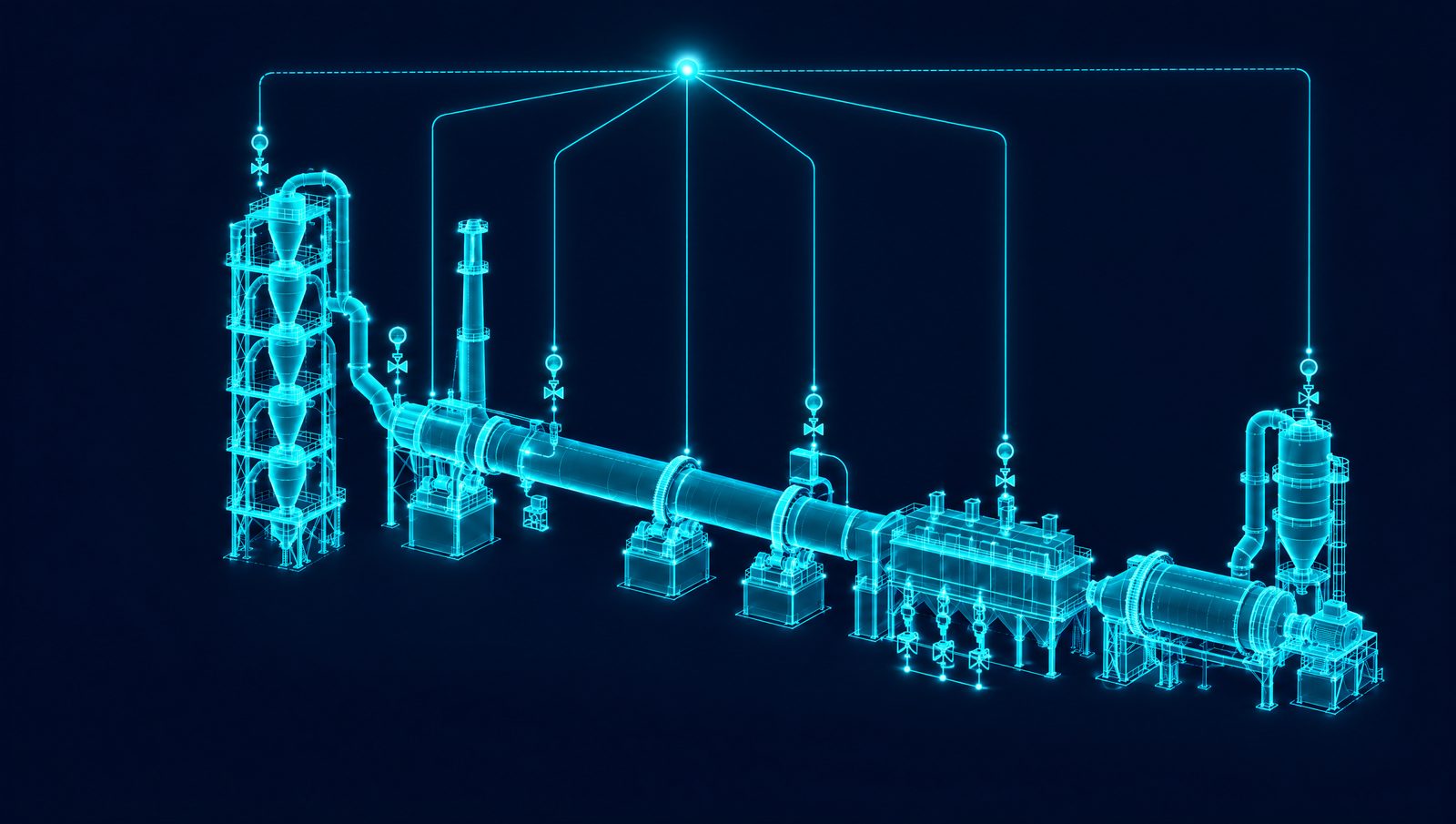
Closed-loop control learns from historical and real-time plant data and sends setpoints to the existing equipment through the control system. It adjusts fuel flow, airflow and feed blend in real time, within limits operators set, to improve throughput, energy efficiency, quality consistency and emissions without a major rebuild.
Why operational excellence matters in cement
Fuel is one of the largest production costs in cement, and every spike in coal or gas prices squeezes EBITDA. Carbon pricing and tighter CO₂ limits add another line to the budget. Because cement faces intense regulatory and investor scrutiny, environmental performance shows up directly in financial results.
Many producers respond by building operational excellence into daily routines: disciplined practices that drive reliable throughput, stable quality and lower energy intensity. Spreadsheets, manual audits and periodic tuning cannot keep pace with kilns that drift minute by minute. Closed-loop control works at that pace, holding the plant within tighter cost, safety and emissions constraints around the clock.
What closed-loop control adds
Closed-loop control absorbs historian, sensor and lab data, runs optimization models and writes setpoints to the distributed control system (DCS) continuously, within the limits operators set. Instead of static limits that ignore changing conditions, it holds adaptive targets that keep kilns, coolers and mills closer to their best performance while respecting safety boundaries.
Conventional improvement routines and legacy advanced process control (APC) need manual tuning and periodic recalibration. They lose effectiveness as raw material composition shifts, fuel quality varies and seasons change. A learned controller limits that drift by learning from both historical operation and real-time process feedback, and by coordinating many interacting variables at once. Because it sits on top of existing APC and PID loops, the plant captures the benefit without new equipment or an extended shutdown. See overall equipment effectiveness.
Seven gains
1. More throughput from existing equipment
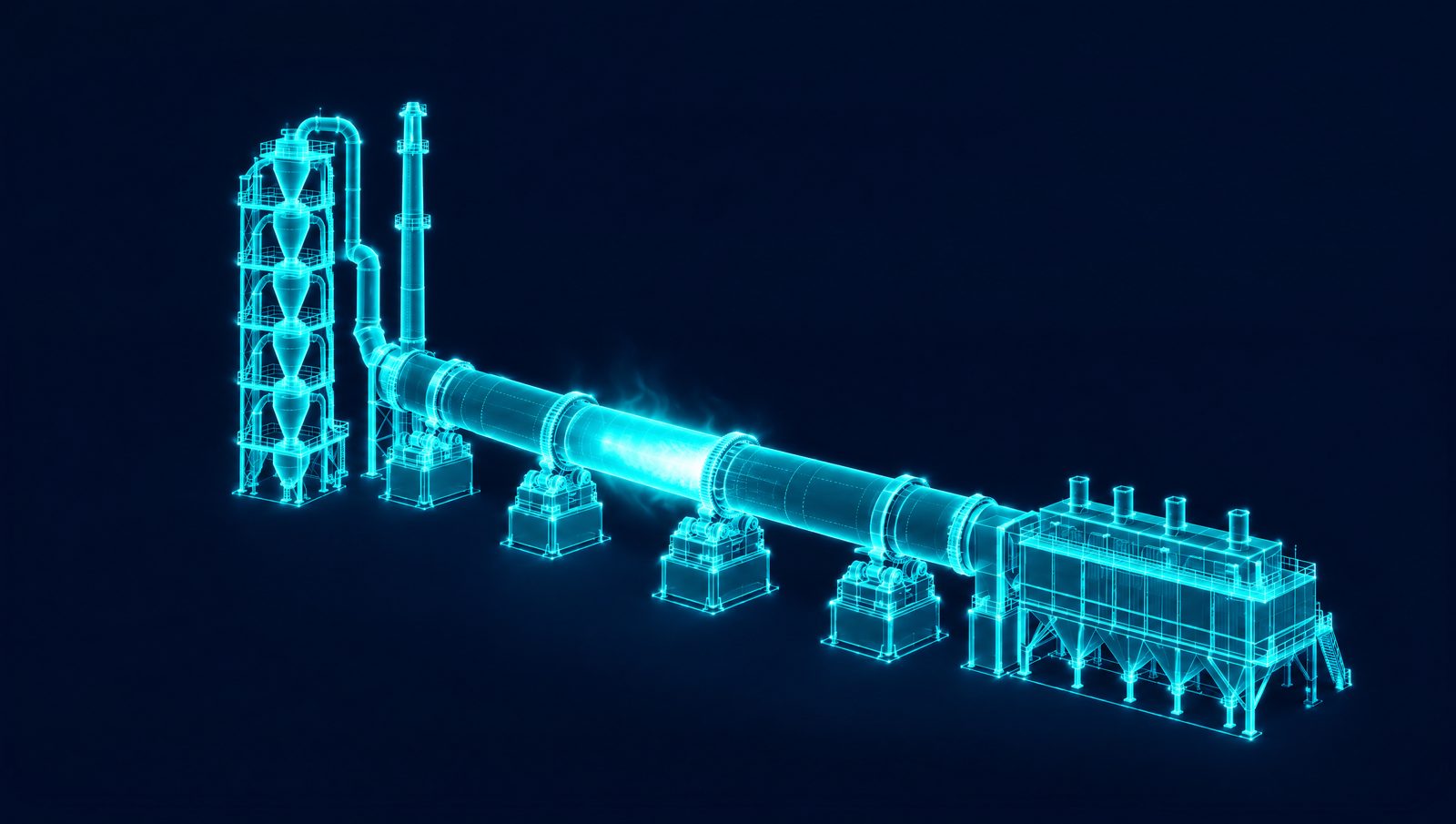
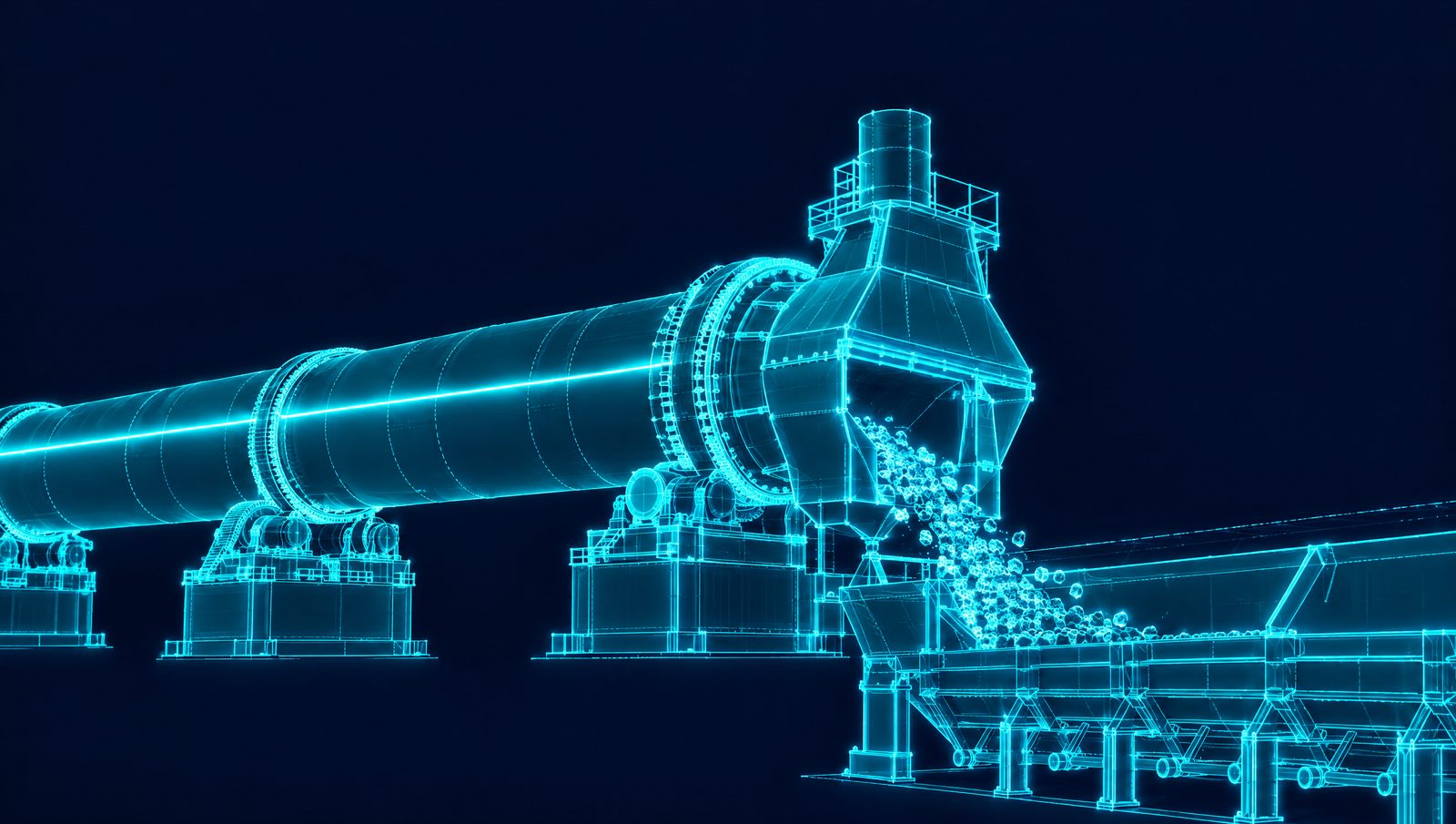
The controller reads data across kilns, coolers and finish mills and writes setpoints back to the DCS in real time. It balances draft, feed rate and residence time to move each asset closer to its true capacity, while keeping shell temperature, oxygen and vibration within their operating envelopes.
The capacity gain comes once the controller moves beyond advisory mode and writes the setpoints itself, and the room is usually largest in kiln and grinding circuits. Because this optimization builds on existing assets, it avoids the capital and downtime of a line expansion.
2. Lower fuel and power use
Fuel is among the largest variable costs in cement production, and conventional control leaves efficiency on the table. Closed-loop control recalculates setpoints for burners, ID fans and grinding circuits continuously, which reduces energy consumption.
Lower heat demand cuts both cost and CO₂ per tonne of clinker, which eases compliance pressure and protects margins when fuel prices spike. Because the models are retrained on new data, they hold the improvement between manual tune-ups instead of letting it drift away.
3. Wider safety margins
Closed-loop control holds kiln shell temperature, oxygen and pressure swings inside tighter limits, minute by minute and on every shift. By damping disturbances before they cascade into high-heat excursions or refractory damage, it lowers the odds of process upsets and equipment failure.
That supports process safety management compliance and reduces the time crews spend on manual checks in hazardous areas near hot vessels.
4. Consistent clinker quality
Every shift aims for consistent clinker, measured by free lime, Blaine fineness and 28-day strength. The relationships between kiln temperature, raw mix chemistry and mill power are complex, and closed-loop control updates setpoints in real time to keep production inside a narrow quality window.
Inferential models estimate clinker quality indicators such as free lime from process signals every few minutes, so the plant does not have to wait for lab results. That reduces both quality giveaway and rework, and the models adapt as fuels and weather change. See free lime prediction for real-time control.
5. Lower emissions and waste
About half of a cement kiln's CO₂ comes from calcination, which is fixed for each tonne of clinker. Fuel is the part operations can move. Closed-loop control tunes kiln temperature, fuel mix and airflow to burn less fuel per tonne of clinker while limiting CO₂ and NOx formation. Reacting in real time to raw material and weather shifts keeps combustion in its best window and avoids the overburning that wastes fuel and accelerates refractory wear.
Tighter variability also means fewer non-prime batches that need rework or disposal. Lower fuel use cuts carbon intensity, which supports the plant's climate commitments without curbing throughput and gives direct cost relief.
6. Faster troubleshooting and root-cause analysis
When dozens of variables shift at once, finding the one that caused a pressure surge or a quality dip is hard. A model of the plant's normal behavior flags subtle deviations before alarms trip. Because it evaluates kiln temperature, ID fan load and feed chemistry together, it points toward the root cause instead of its symptoms. See human and AI collaboration in industry.
Early warning lets the team adjust setpoints or plan repairs while equipment is still healthy, which reduces downtime and spare parts spending.
7. Performance that holds every day
Equipment and conditions change constantly, while manual optimization happens infrequently. Traditional improvement initiatives deliver initial gains, then performance erodes as operators return to familiar patterns and equipment characteristics shift.
Closed-loop control addresses that constraint. The process models are updated with the latest operating and quality data, and a controller trained with reinforcement learning in simulation writes setpoints to the DCS as refractory wears, ambient humidity swings and raw mix chemistry drifts.
Because the controller stays active around the clock, energy, throughput and quality improvements are far less exposed to the drift that follows a one-off tuning effort. Operators spend less time chasing alarms and more on higher-level analysis, and continuous improvement becomes part of daily operation.
Overcoming adoption barriers
Experience shows that the common challenges in cement are manageable.
- Control integration. Legacy control systems rarely need to be swapped out. Closed-loop platforms connect to the existing DCS through standard interfaces and stream data without disrupting operations.
- Building trust. Operator confidence comes from transparency. Running in advisory mode first lets the team compare recommendations with current practice before moving to closed-loop control.
- Data readiness. Perfect data is not required to start. Begin with the high-impact tags and basic cleansing, and improve data governance over time.
- Change management. Success needs executive sponsorship, clear ROI metrics and targeted skills training. Plants that prepare thoroughly see faster adoption and more durable results.
Long-term value
Higher throughput, lower fuel use, steadier quality, safer operation, lower emissions and faster troubleshooting reinforce each other, so their combined value is larger than any single metric shows. As the models keep learning from kiln, cooler and finish mill data, they also give the plant a working model of its own process to build on.
Control room operators move from reactive troubleshooting to higher-value analysis, and critical process knowledge stays with the plant as the workforce changes. In a market constrained by fuel costs and carbon regulation, sustaining that performance without costly rebuilds is a durable advantage.
How the Imubit Platform applies
The Imubit Platform maps the gaps between the plan and the plant to the recurring kiln, cooler and mill decisions behind them. It models their causality with Deep Learning Process Control® (DLPC®), learned from the plant's own history, and takes the critical decisions to closed loop on top of the existing APC and DCS, with operators able to take over at any time. Plants start in advisory mode and move to closed loop as the model earns trust. On one customer's kiln pyroprocess running in closed loop, the result was a 20 to 30% reduction in process variability. See Closed-Loop Physical AI for cement.