Cement manufacturing accounts for about 8% of global carbon dioxide emissions, according to a study in the Journal of Cleaner Production. Clinker production is the most carbon-intensive step. Demand for cement rises with urbanization, so the industry has to grow while it cuts its emissions.
Regulation is tightening, and investors are scrutinizing environmental performance more closely than before. Inside the plant, aging equipment and the retirement of experienced operators slow progress. This article covers where cement's CO₂ comes from, the process levers that reduce it, and the part real-time control plays in each.
Where cement's CO₂ comes from
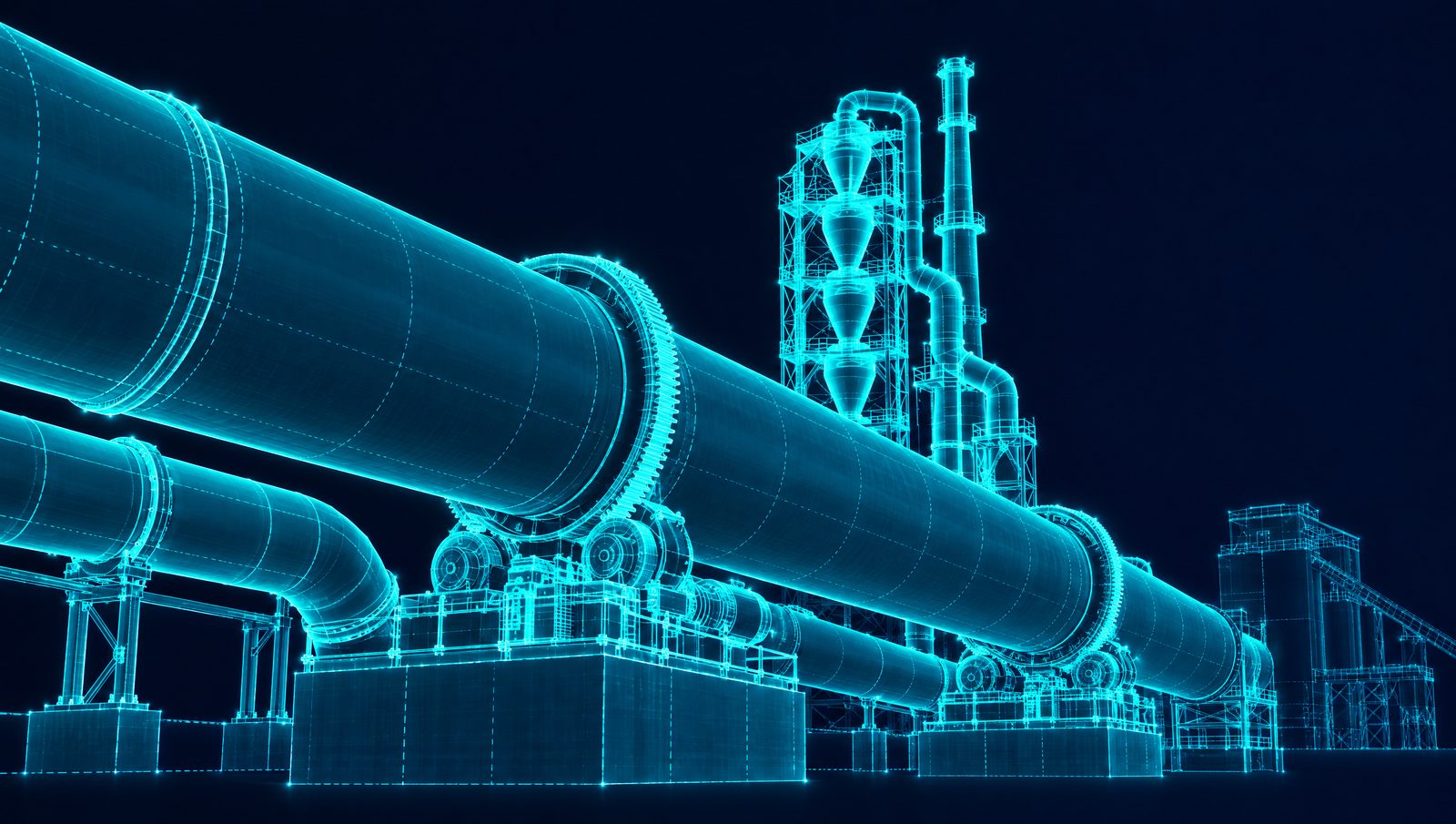
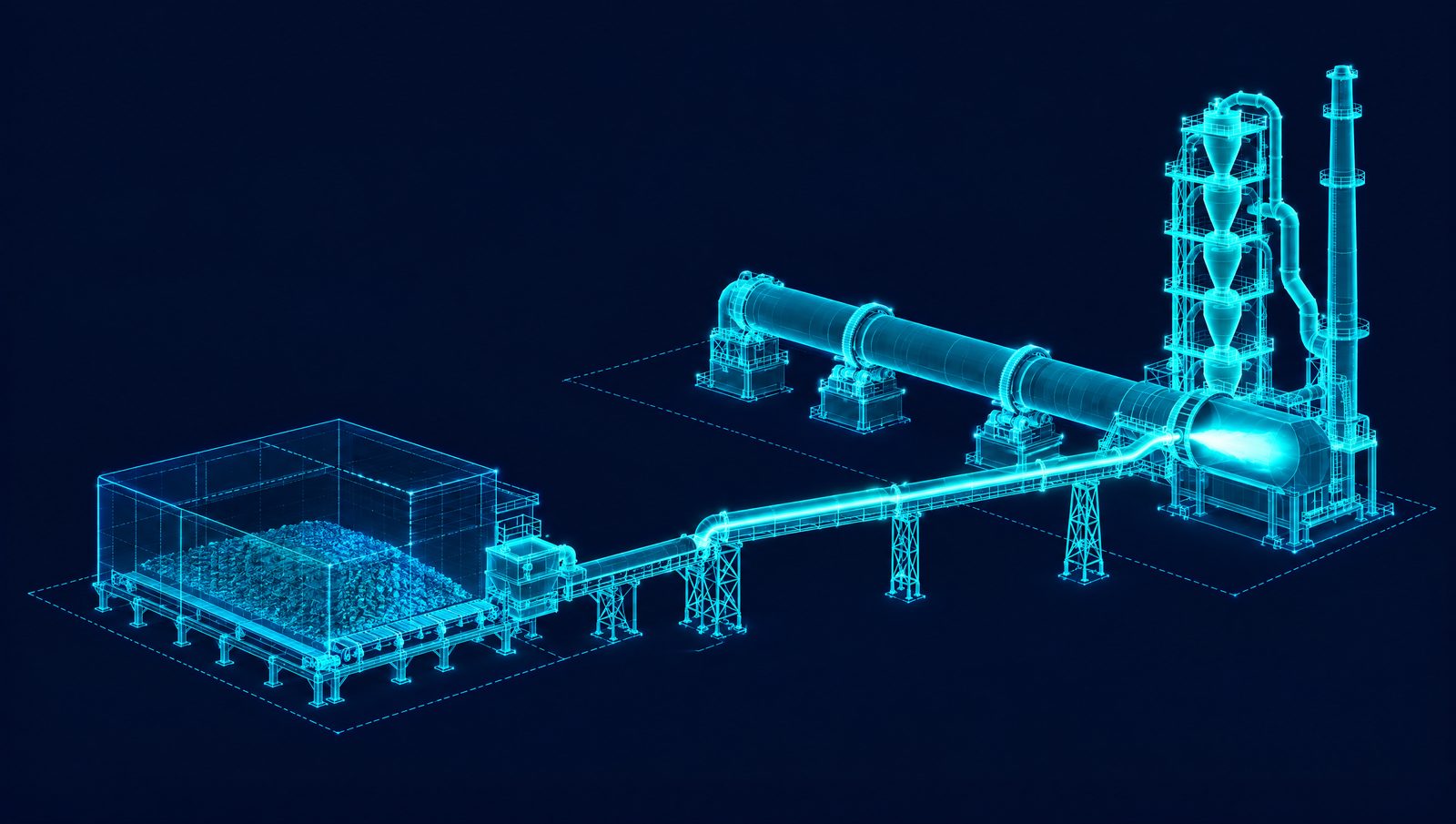
Clinker manufacturing accounts for most of the emissions in the cement life cycle. Around half come from calcination, the reaction in which limestone releases CO₂. Most of the rest come from the fuel burned to reach temperatures of up to 1450°C in the rotary kiln.
External pressure is rising. Carbon pricing is spreading and raising costs for high emitters, and governments are setting stricter targets. California's SB 596, for example, sets targets to cut the greenhouse gas intensity of cement used in the state to 40% below 2019 levels by 2035 and to reach net-zero by 2045, as described by the California Air Resources Board. Investors increasingly weigh ESG performance in funding decisions.
Inside the plant, many lines run on aging equipment that limits efficiency gains without costly upgrades. Decades of operator expertise are leaving the workforce through retirement, and process control is hit particularly hard. Measurement adds to the difficulty. Free lime, a key clinker quality metric, is hard to control when lab results arrive late.
Conventional control errs on the side of caution. Plants overburn clinker and spend extra fuel to protect quality, which raises CO₂ per tonne without making better clinker.
Run the pyroprocess closer to its limits
Grinding upgrades and kiln heat recovery remain important ways to improve energy performance. Controlling the pyroprocess more precisely in real time adds to them on the equipment the plant already has.
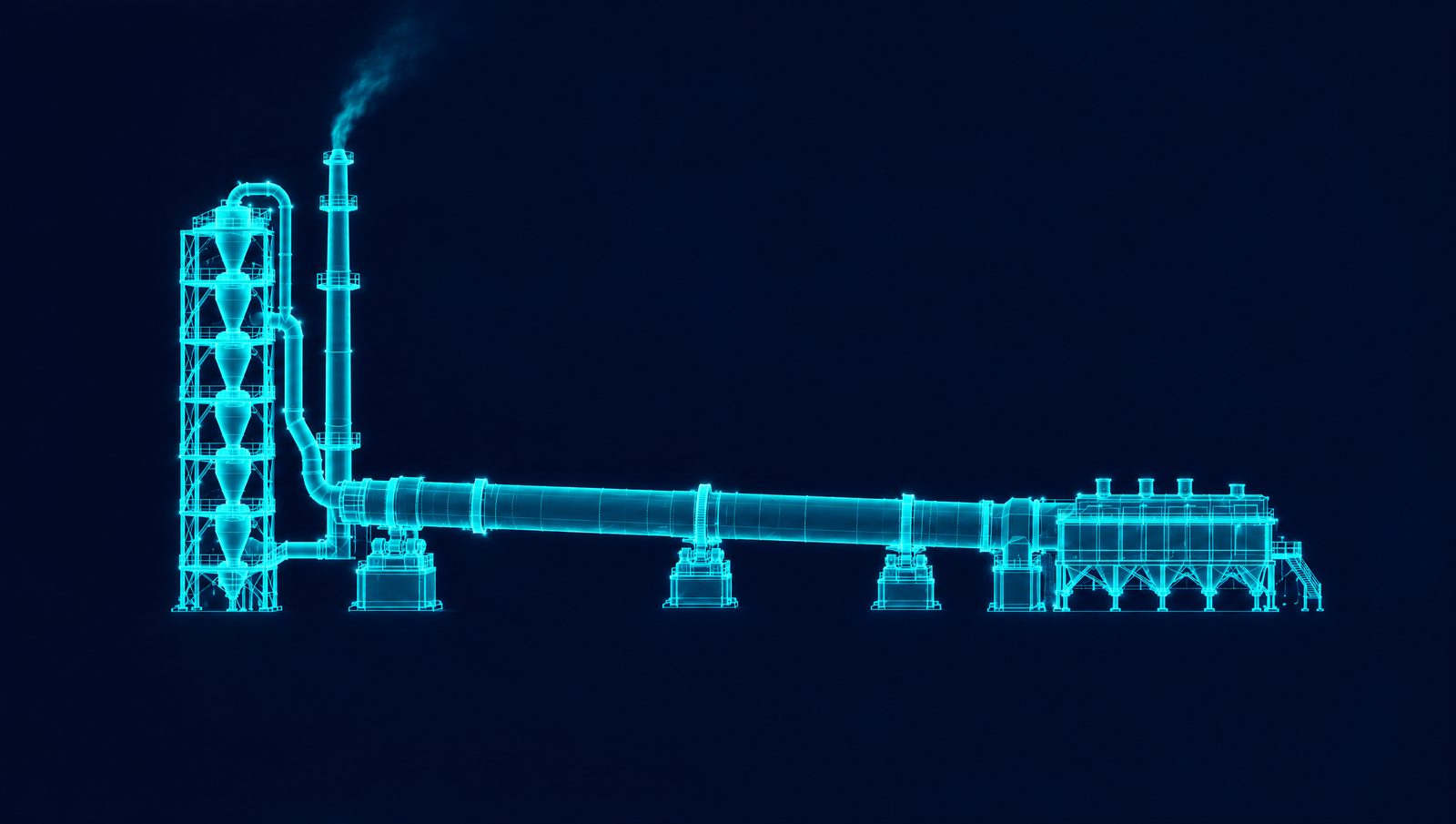
Across the preheater, calciner and kiln, the variables that matter include temperature profiles, airflow, fuel feed rates and raw meal composition. Conventional control relies on fixed setpoints and slow manual adjustment. A model learned from historical and live plant data can detect drift and emerging trends that are easy to miss on a busy board.
Much of the waste comes from conservative setpoints. Operators keep temperatures and fuel rates higher than needed to protect clinker quality, with wide margins for variability in feedstock and equipment behavior. That protects against off-spec clinker, but it overburns and wastes fuel. Real-time control can adjust fuel input, airflow and retention time as raw material and operating conditions change, so combustion stays stable and the kiln burns enough to hold clinker quality without crossing into waste.
The same control helps through transient conditions such as feed disruptions, equipment wear and ambient changes. Heat distribution stays more even and clinker forms more uniformly, which lowers energy use and supports throughput. Free lime is the critical quality indicator here, and holding it in a tight band is what allows the heat margin to come down. See free lime prediction for real-time control.
Lower the clinker factor with supplementary cementitious materials
Lowering the clinker factor is one of the most effective ways to cut emissions. Supplementary cementitious materials (SCMs) such as fly ash, slag and calcined clay can substitute for part of the clinker, the most carbon-intensive component of cement. Each percentage point of clinker substituted lowers CO₂ per tonne of cement.
Variable clinker is often what holds SCM use back. Inconsistent composition and burning make it hard to substitute clinker with confidence without affecting strength development, setting time and durability. Stabilizing clinker quality through control of kiln temperature, raw meal chemistry and combustion gives the plant room to:
- raise the SCM share in mix designs without compromising product performance
- rely less on the process corrections made to compensate for quality swings
- hold clinker factor reductions over the long term, in line with corporate and regulatory targets
Closed-loop kiln control that produces clinker of consistent reactivity at lower energy also supports higher substitution rates.
Use more alternative fuel without destabilizing the kiln
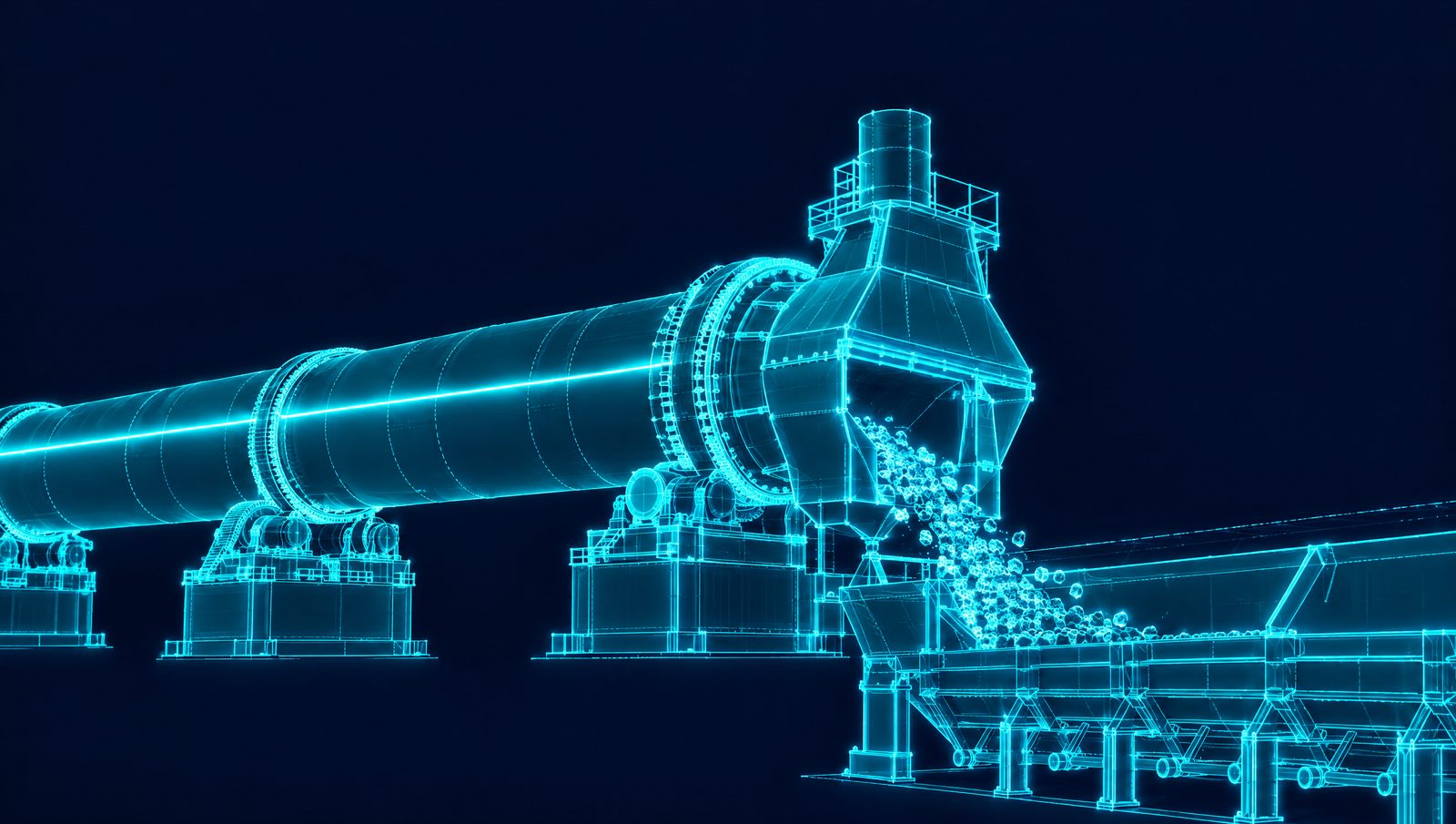
Biomass and refuse-derived fuel (RDF) can take the place of part of the coal and petroleum coke a kiln burns, with significant reductions in greenhouse gas emissions. They also bring inconsistent energy content, combustion behavior and availability.
That variability can destabilize the kiln. Temperatures fluctuate, combustion efficiency drops and clinker quality suffers. Plants have usually responded by capping the alternative fuel share, giving up emissions reductions to keep the kiln stable.
Real-time combustion control makes a higher share easier to sustain. It tracks flame shape, temperature distribution, fuel feed rates and oxygen across the pyroprocessing line. When the fuel shifts, for example from high-calorific RDF to moist biomass, it adjusts primary and secondary air and fuel injection rates to hold combustion conditions. That keeps the kiln in its operating window and protects clinker quality and thermal efficiency when fuels are blended or changed often. See alternative fuels in cement kilns.
Electrification would widen the control problem. As plants trial electric calciners or plasma torches, it grows to include balancing electric and thermal heat input against demand, equipment performance and electricity price.
Carry the gains into the finish mill
Consistent clinker makes finish milling more efficient, because stable mineralogy and hardness reduce the need for excess grinding. Cement mills are also sensitive in their own right to feed composition, ambient conditions and material properties. Coordinated control of separator speed, feed rate and circulating load keeps throughput and quality steady through that variability.
It also reduces quality giveaway, the production of cement with strength well above specification, which wastes energy and clinker. See cement grinding optimization.
Start with one unit
The practical question for a plant team is whether this will work on its own kiln. A low-risk way to answer it is with the plant's own operating data, analyzed to show where the efficiency, emissions and cost opportunities sit. From there, a staged approach works well:
- Start with one asset, usually one kiln or one finish mill, where the value can be measured and disruption is limited.
- Extend gradually to more assets and process areas as results show and operators gain confidence.
- Scale across the site, and then across sites, once the value is established.
This builds internal support and keeps technology risk low.
How the Imubit Platform applies
The Imubit Platform maps the gap between the plan and the kiln line to the recurring decisions behind it, such as the burn target against free lime and the alternative fuel rate for each shift's fuel. It models the kiln's causality with Deep Learning Process Control® (DLPC®), learned from the plant's own history, and takes those decisions to closed loop on top of the existing APC and DCS, with operators able to take over at any time. On one customer's kiln pyroprocess running in closed loop, the result was a 20 to 30% reduction in process variability. See Closed-Loop Physical AI for cement.