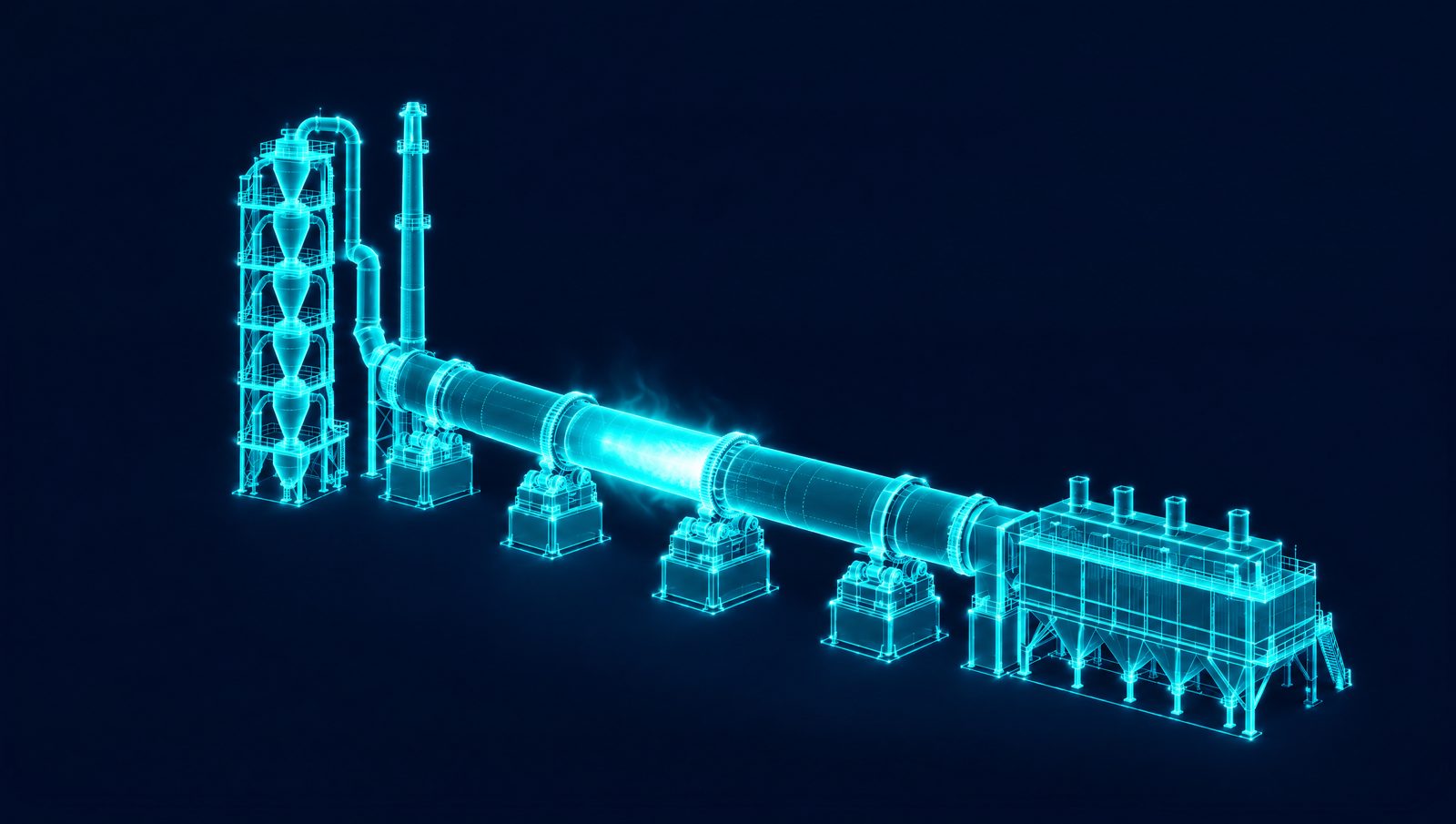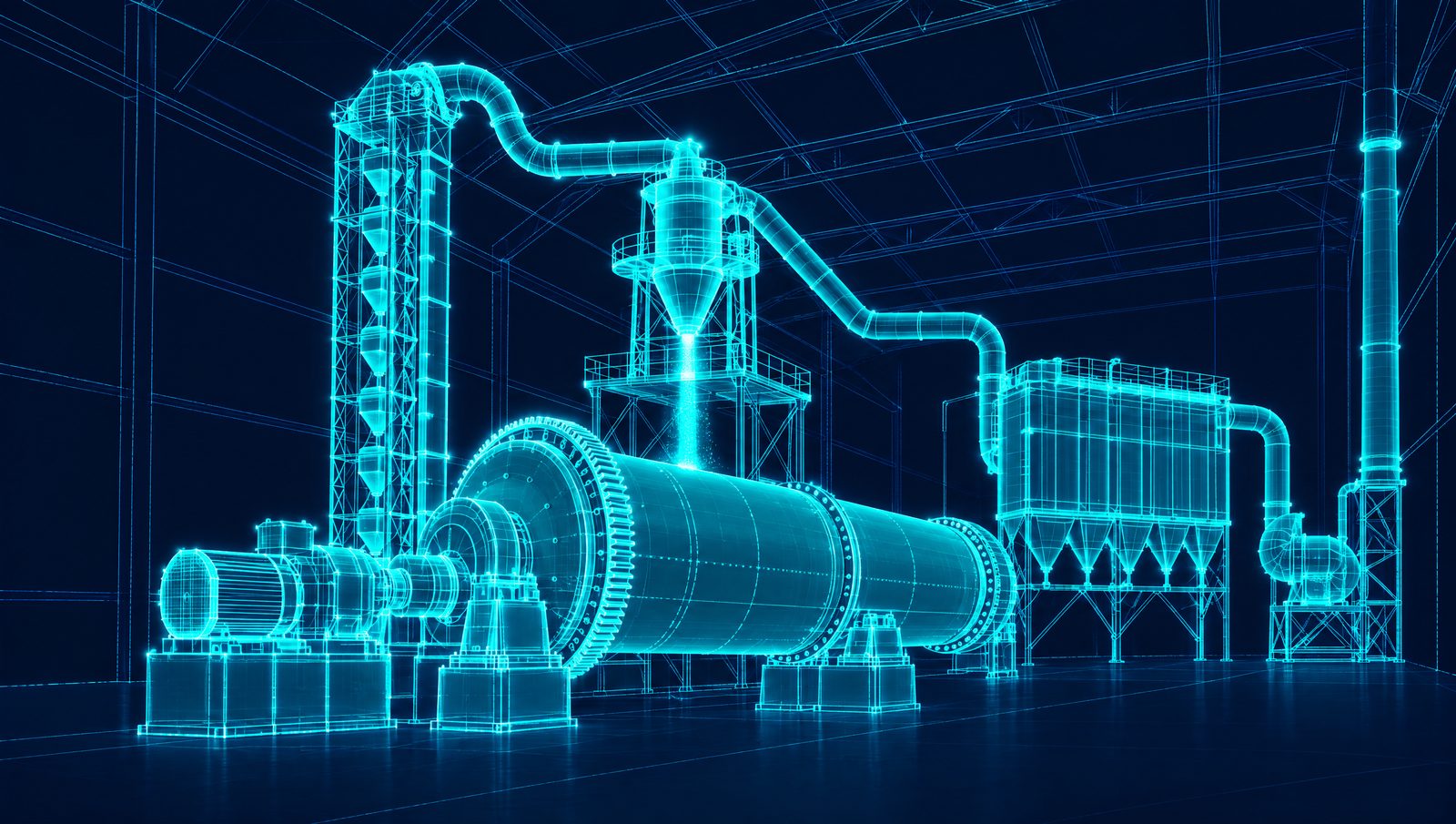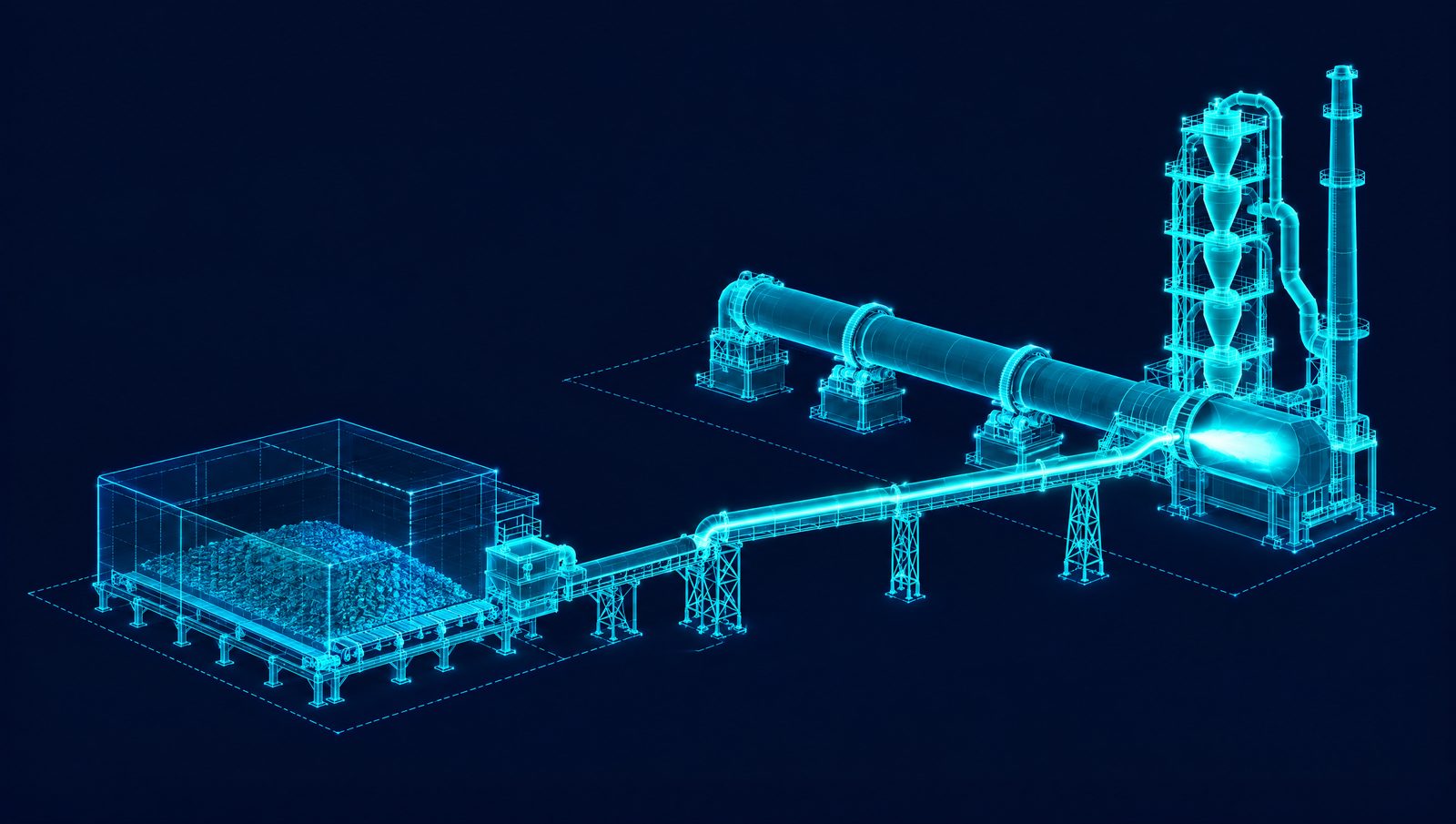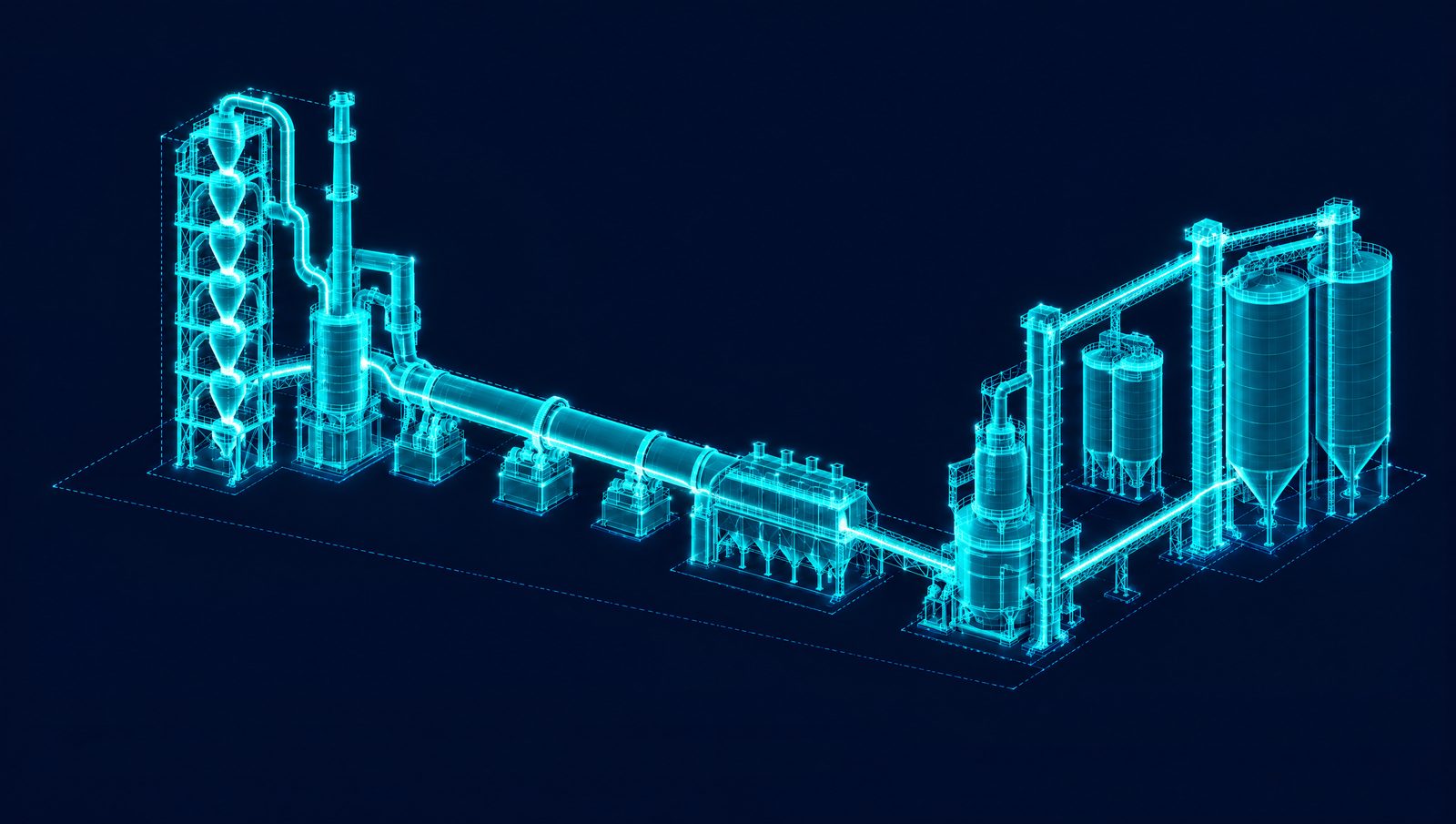
Cement production is one of the most energy-intensive process industries. According to the World Economic Forum, cement production accounts for about 8% of global CO₂ emissions, much of it from the high-temperature chemistry in the kiln.
Beyond fuel and power, plants contend daily with equipment reliability, shifting process conditions, product quality and regulatory pressure, constraints that bear directly on profitability and sustainability targets.
AI that learns from years of historian data and live sensor feeds can tune combustion, anticipate mechanical failures, steady the kiln and balance quality against throughput as conditions change. The sections below take six common constraints in turn.
High energy consumption
Kilns and finish mills draw most of a plant's power, and energy is a large share of production cost. That intensity magnifies every deviation, especially in clinker production, the most energy-demanding phase.
Fixed-setpoint control covers these deviations with conservative margins, which wastes fuel and power. Operators know better performance is possible, but manual adjustment cannot keep pace with changing conditions.
A closed-loop controller trained with reinforcement learning works on top of the existing advanced process control (APC). It adjusts air-fuel ratio, fan speeds and mill loading continuously, aiming to lower the kiln heat rate and power per tonne while holding clinker quality.
Reducing unplanned downtime
An unscheduled kiln shutdown stops production at once, while crews work to diagnose the fault. Predictive maintenance systems reduce that risk by streaming vibration, temperature and acoustic signals from critical assets into models that recognize faint anomalies before they escalate. When a model detects an emerging pattern, such as a slow rise in bearing vibration together with a gradual temperature drift, it can forecast the likely failure well in advance, so the repair fits into a planned maintenance window.
Fewer surprises mean higher availability, leaner spare-parts inventories, less overtime and steadier kiln thermal profiles that protect refractory life.
Stabilizing kiln operations
Kiln control means managing many interrelated variables at once. Feed chemistry, fuel quality, gas flows and refractory wear all shift minute to minute. Fixed-setpoint automation reaches a ceiling once several loops interact, and manual adjustments struggle to keep kiln temperatures and free lime on target.
Reinforcement learning controllers layered on APC treat those loops as one problem. They steer the temperature profile within tight bands while holding free lime and NOₓ inside their ranges. Tighter control helps prevent coating rings and smooths clinker flow. Continuous monitoring turns every disturbance into data the model learns from, so the kiln stays stable when raw meal chemistry drifts or fuel quality drops.
Optimizing raw mix and clinker quality
Holding tight targets for lime saturation factor (LSF), silica modulus (SM) and alumina modulus (AM) cuts fuel use and keeps clinker strength on specification. When these indices drift, the kiln runs hotter and longer, which raises CO₂ and forces rework.
Online X-ray analyzers read raw mix chemistry in real time, and the control system recalculates limestone, shale and sand proportions within seconds. A model that learns from every sample keeps variability low and stabilizes the kiln heat balance. The result is better clinker from less material, with lower emissions.
Controlling emissions and compliance
Regulations on CO₂, NOₓ and SOₓ continue to tighten. Conventional monitoring raises an alarm after a limit has been breached, which keeps compliance reactive.
Closed-loop optimization feeds stack gas measurements back into kiln, fan and fuel controls in real time. Instead of waiting for an exceedance, it adjusts combustion continuously to keep emissions inside their target ranges while holding throughput. The same control can manage the alternative fuel blend, keeping the kiln inside its permit limits when raw meal chemistry or ambient conditions shift.
Improving grinding and milling efficiency
Finish grinding takes a large part of a cement plant's energy budget, and the grinding circuits together are among the largest electrical loads on site. Separator speed, fresh feed rate, liner condition and water spray interact in ways that defeat simple optimization rules.
Fixed setpoints cannot adapt to those shifts. When limestone hardness varies or separator efficiency drops, operators are left choosing between higher energy cost and product quality risk.
A model can predict mill power draw and product fineness in real time, and the controller adjusts separator speed, recycle load and water injection continuously. The benefits carry through the line. Higher grinding capacity prevents bottlenecks at the kiln, and tighter particle-size control stabilizes kiln heat demand. For vertical roller mills under closed-loop control, the aim is lower power per tonne, higher output and steadier operation.
How Imubit applies this
Imubit applies Map, Model and Control to the cement line. Map traces the plan-to-plant gaps in clinker, fuel and power to the recurring decisions behind them, Model learns the kiln and mill behavior from the plant's own operating history, and Control takes those decisions to closed loop on top of the existing APC and DCS, inside limits set by plant engineers. On one customer's kiln pyroprocess running in closed loop, the result was a 20 to 30% reduction in process variability. See Closed-Loop Physical AI for cement.