Regulators are tightening emissions limits and customers expect a smaller CO₂ footprint, while cement plants still have to raise output from the kilns and mills they already run. Conventional process tweaks and periodic manual tuning struggle to meet both pressures at once. Closed-loop control built on learned process models is one way plants close that gap on existing equipment, and the results depend on the plant and the implementation.
This guide sets out the steps: build the data foundation, pick a high-impact first use case, choose a partner, develop and validate the model, deploy in production, measure and scale, and bring the workforce along. The aim is higher throughput and lower energy per tonne across the plant.
Build the data and infrastructure foundation
Learned models need clean, continuous data from the critical process points. Map every sensor tied to kiln temperature loops, stack gas flow, free lime lab results and mill power, so you know exactly what the model will see. A site evaluation often exposes gaps that derail projects when they surface late: missing lab timestamps, drifting thermocouples, or noisy PID loops that mask true process behavior.
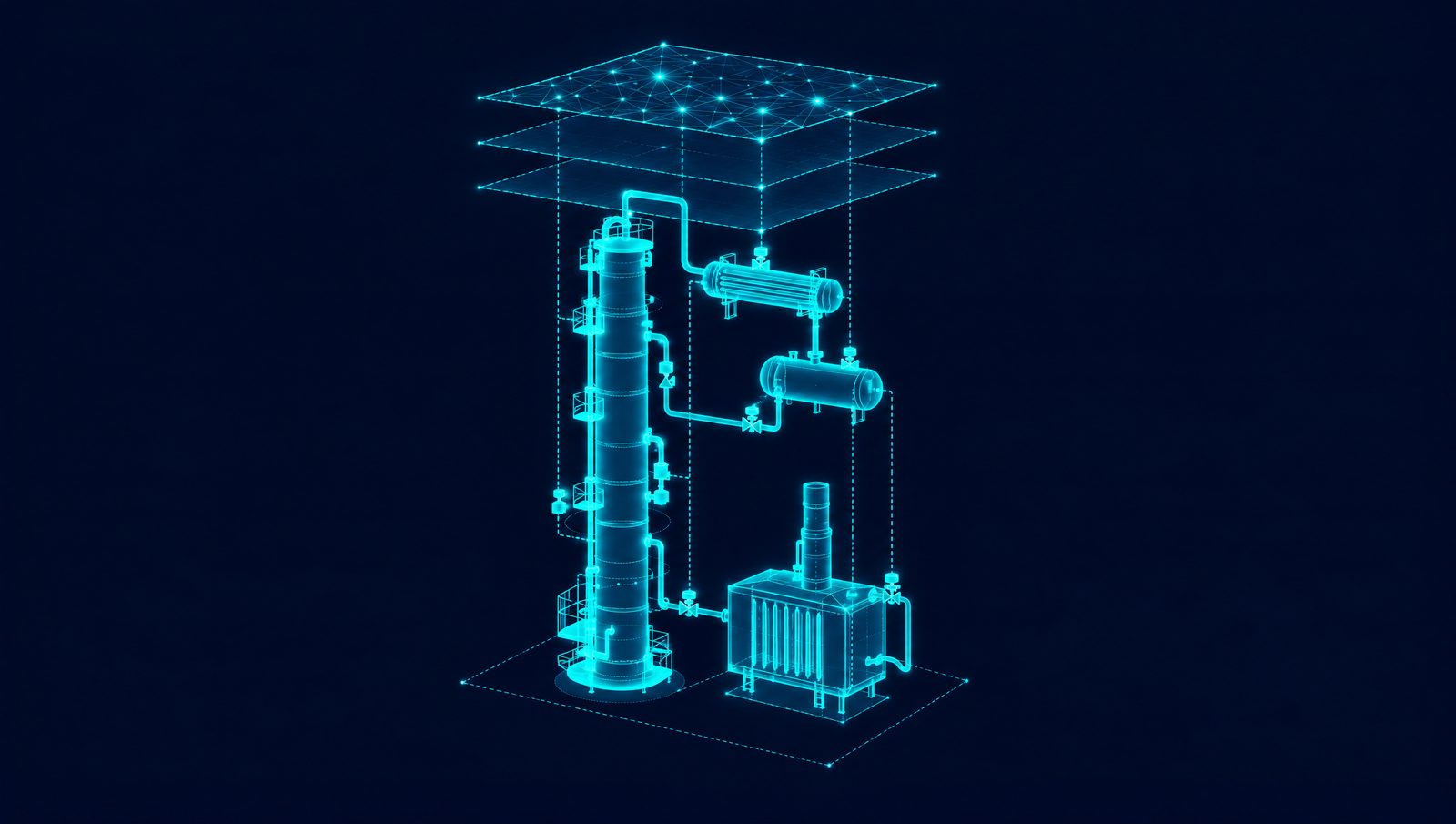
Route each signal through a layered architecture: the plant historian, an OPC UA gateway, then a secure on-premise or cloud training environment. Keep the historian connection read-only for training, and keep the AI network behind firewalls to preserve IT and OT security while it integrates with the existing DCS and APC.
Collect minute-level history that is long enough to cover seasonal fuel shifts and raw mix variability. That gives the model the context it needs to act reliably in real time.
Pick a high-impact first use case
Plot candidate projects on a two-by-two grid, with impact on plant KPIs on one axis and the effort to deliver on the other. The grid forces an objective comparison and points resources toward the clear winners.
Choose a visible first target, usually one kiln or the flagship finish mill, so executives and front-line teams can see measurable results and build support for the wider program.
Choose the right partner
Proof of closed-loop operation matters most. The controller should write setpoints to the DCS or APC itself. A system that stops at suggestions still leaves operators to chase each one. Ask for plant-specific references showing production increases and energy reductions delivered in closed loop.
Model transparency comes next. Operators need to see why each setpoint moves, or trust erodes. Look for deep cement expertise, backed by process engineers who can tune the model to the kiln's particular behavior and constraints.
Cybersecurity posture should include segmented networks, read-only historian connections and regular penetration testing. The support model shapes adoption: how models are recalibrated, how quickly issues get a response, and how operators are coached.
Questions to ask:
- Does the platform write setpoints to the DCS with safety interlocks?
- How does the model adapt to alternative fuel or raw mix changes?
- What integration steps were followed at comparable sites?
- How are verified savings calculated against baseline operation?
- What on-site training embeds the new workflows with front-line operations?
Develop and validate the model
With the data foundation in place, load the historian data into an isolated training environment. The first pass is preparation: clean the tags, align lab timestamps and build features that capture the kiln heat balance or mill load.
Then build a hybrid model that combines first-principles knowledge with learning from data. It respects mass and energy constraints from the start while it learns the unit's nonlinear dynamic behavior from its own history.
Back-test the draft model against history. Two cement-specific KPIs matter most: the mean absolute error of the free lime prediction and the projected reduction in megajoules per tonne of clinker. Both translate directly into fuel savings and steady clinker quality. If the back-test shows a clear gain over current operation under the existing advanced process control, move to advisory mode, where the model generates setpoints in real time but operators still steer the plant.
Advisory mode is where trust is built. Invite kiln operators to flag moves they consider unsafe, retrain on their feedback and replay the scenarios together. The model is updated as raw mix chemistry and ambient conditions change, so each iteration improves accuracy and removes the sense that the controller is a black box. By the time the plant moves to closed loop, the control room has already seen the projected fuel savings on its own dashboard.
Deploy in production
Moving from validation to closed loop starts with a disciplined management of change plan. Configure watchdog routines that check every recommendation against hard safety and environmental limits, and revert to the previous setpoint within seconds if a deviation appears. A clear rollback path reassures operators that production will stay inside approved boundaries.
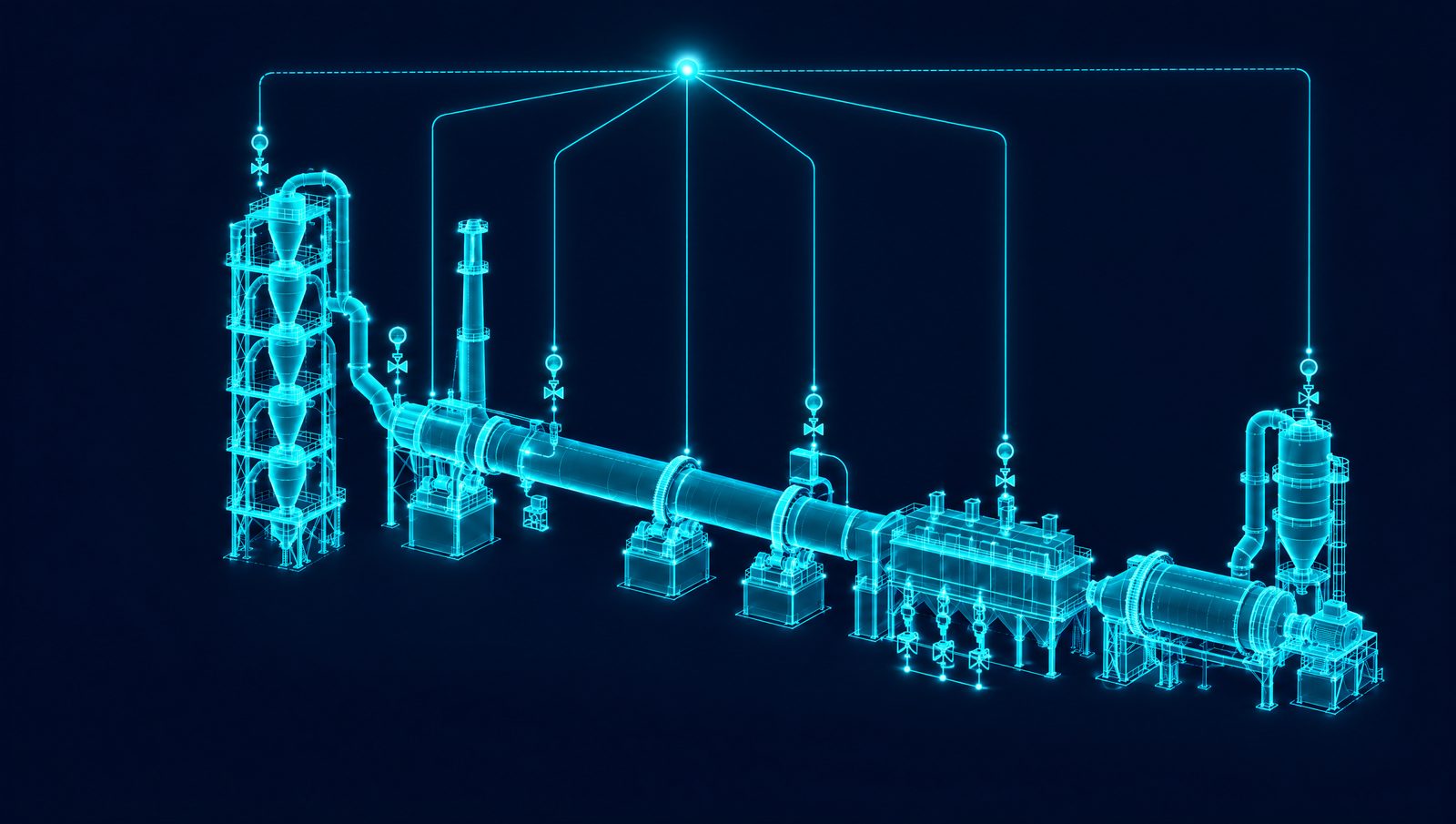
Control authority follows a clear hierarchy. The DCS remains the primary safeguard, APC handles routine targets, and the learned controller makes its adjustments on top of both, within the limits they allow. Operator override stays one click away, while the controller works toward higher clinker throughput through minute-by-minute adjustments to fuel flow, feed chemistry and separator speed.
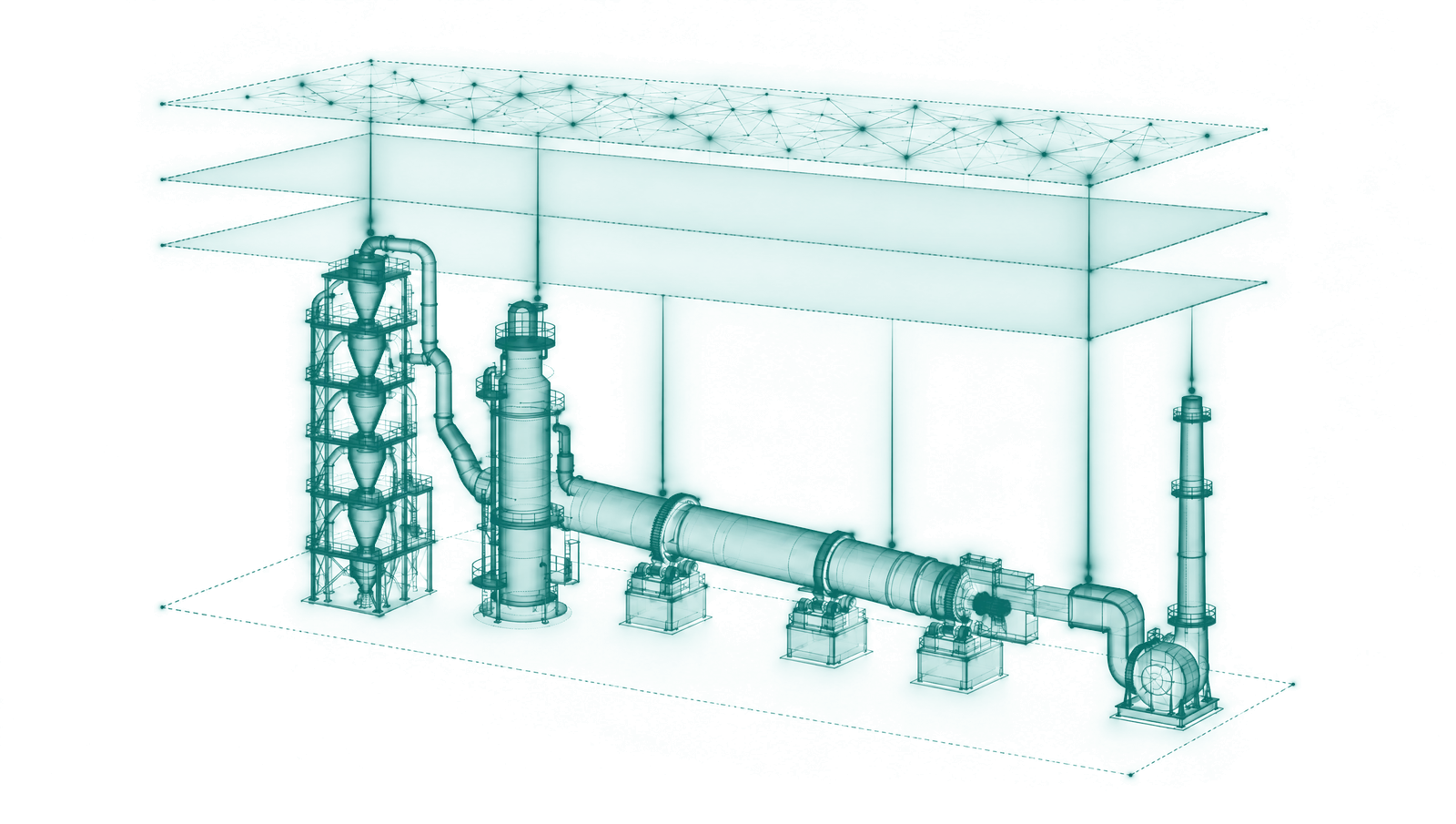
Commissioning goes best when daily routines feel familiar. Each shift starts by reviewing a live KPI dashboard of kiln thermal efficiency, free lime error and MJ per tonne. Recommendations are displayed before they are executed, and after sign-off, automatic control engages within boundaries agreed in advance by process engineering and EHS.
Because the model is retrained on fresh historian data, it keeps up with raw meal variability and ambient conditions without any rewrite of the existing DCS logic.
Measure, prove and scale
Once the loop is closed, prove the value. Compare a baseline period of historian data before activation with a period of the same length after it. Windows long enough to dampen daily noise isolate the sustained changes in clinker production, finish mill throughput, fuel use and off-spec batches.
Track a small set of plant-specific KPIs that tie directly to cost and sustainability:
- clinker tonnes per day
- kWh per tonne of cement
- kilograms of CO₂ per tonne
Summarize the findings for executives, with net savings and secondary benefits such as lower refractory wear. Then expand deliberately. Start with the kiln, then move to cement mills, preheater fans and alternative fuel lines. Each new area reuses the tuning rules, security configuration and operator workflows refined in the earlier deployment.
Close every review cycle by sharing the quantified gains and the next steps. Open reporting keeps leadership support strong for the next phase.
Manage change and build skills
Bringing closed-loop control into cement operations takes deliberate change management and workforce development. Map the stakeholders, including operators, process engineers, IT staff and sustainability teams, and address each group's needs during the transition.
Train on simulators, so the team can practice without disturbing live operations. Use what-if drills to build response to real-time situations, and informal brown-bag sessions to share knowledge. Build skills for each stakeholder group, and be clear that the controller supports their work and leaves them in charge.
The controller is also a knowledge transfer tool for newcomers. It shows how experienced judgment translates into moves on the kiln and mill, and it keeps operator expertise at the center of the operation.
Test offline, then climb the maturity ladder
Once units run in closed loop, a simulation of each one becomes the place to evaluate retraining needs and test new control policies before they touch the kiln. Regular refreshes keep accuracy high as raw materials and fuels change. As emissions limits tighten and plants raise alternative fuel use to meet decarbonization targets, the same controller helps hold kiln stability and clinker quality as the fuel mix shifts.
Over time, decisions move up a maturity ladder: from Deliberate decisions made by hand, to Augmented decisions supported by recommendations, to Autonomous closed-loop control with operators able to take over at any time. ARC Advisory Group describes this as human on the loop, where the AI calculates and executes and the operator moves from manual controller to high-level supervisor.
How the Imubit Platform applies
The Imubit Platform follows this path on cement kilns and mills. Map traces the gaps between the plan and the plant to the recurring decisions behind them. Model learns the causality of each unit from its own history with Deep Learning Process Control® (DLPC®), built by process engineers in DLPC® Builder, and DLPC® Sim App tests the controller offline before it touches the plant. Control writes setpoints to the existing APC or DCS minute by minute, inside limits set by plant engineers. See Closed-Loop Physical AI for cement.