Rule-based automation follows static control logic. Newer optimization tools take in continuous sensor data, learn the setpoints that work best under current conditions, and make adjustments in real time, inside limits set by plant engineers. The value shows up as higher uptime, lower variability and faster decisions, which protect margin when feed and energy prices move.
What smart manufacturing means in a process plant
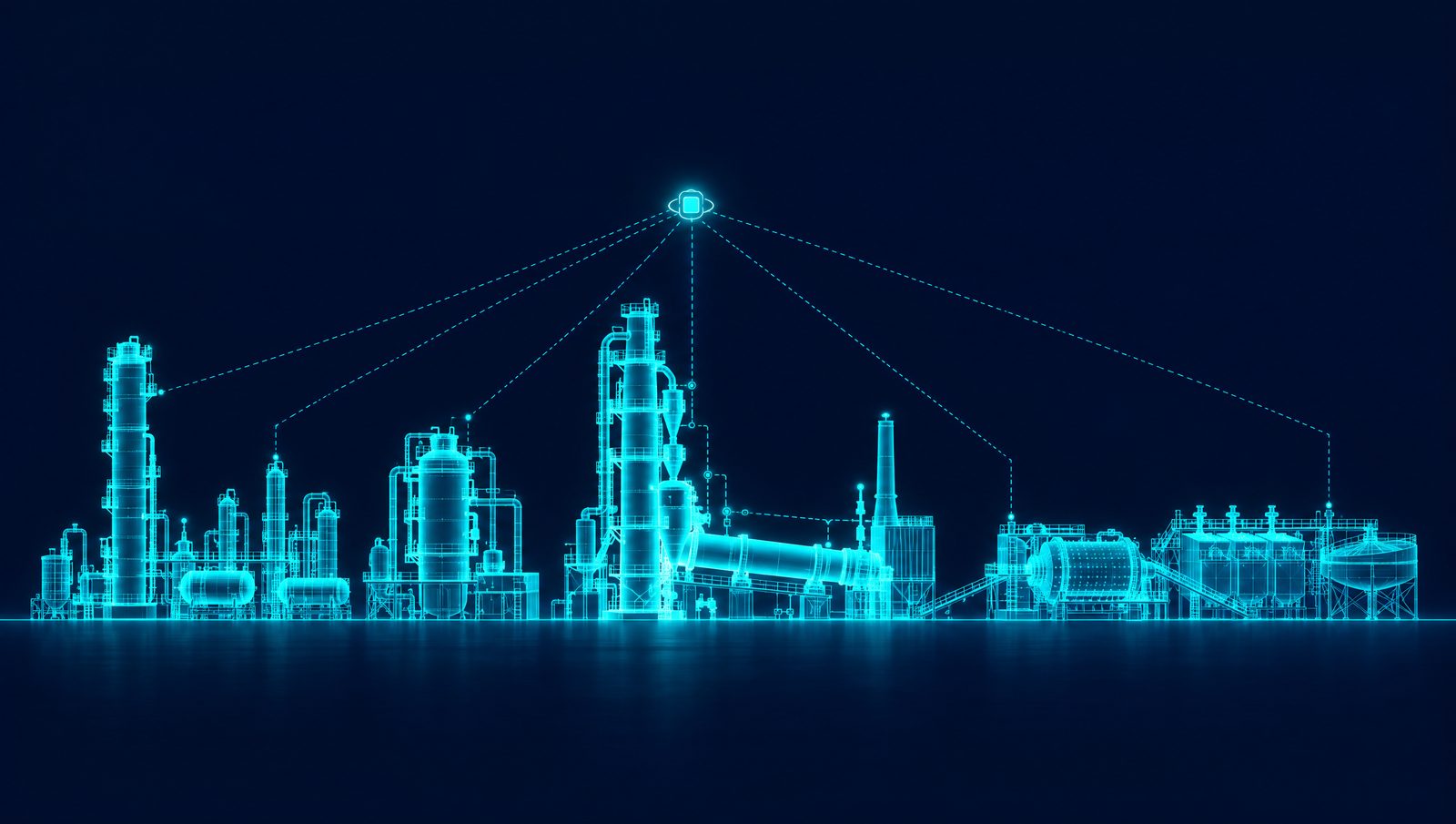
Smart manufacturing connects plant equipment, streaming sensors and analytics. Machine learning analyzes plant-wide data to detect variance, learn the best operating windows and adjust setpoints.
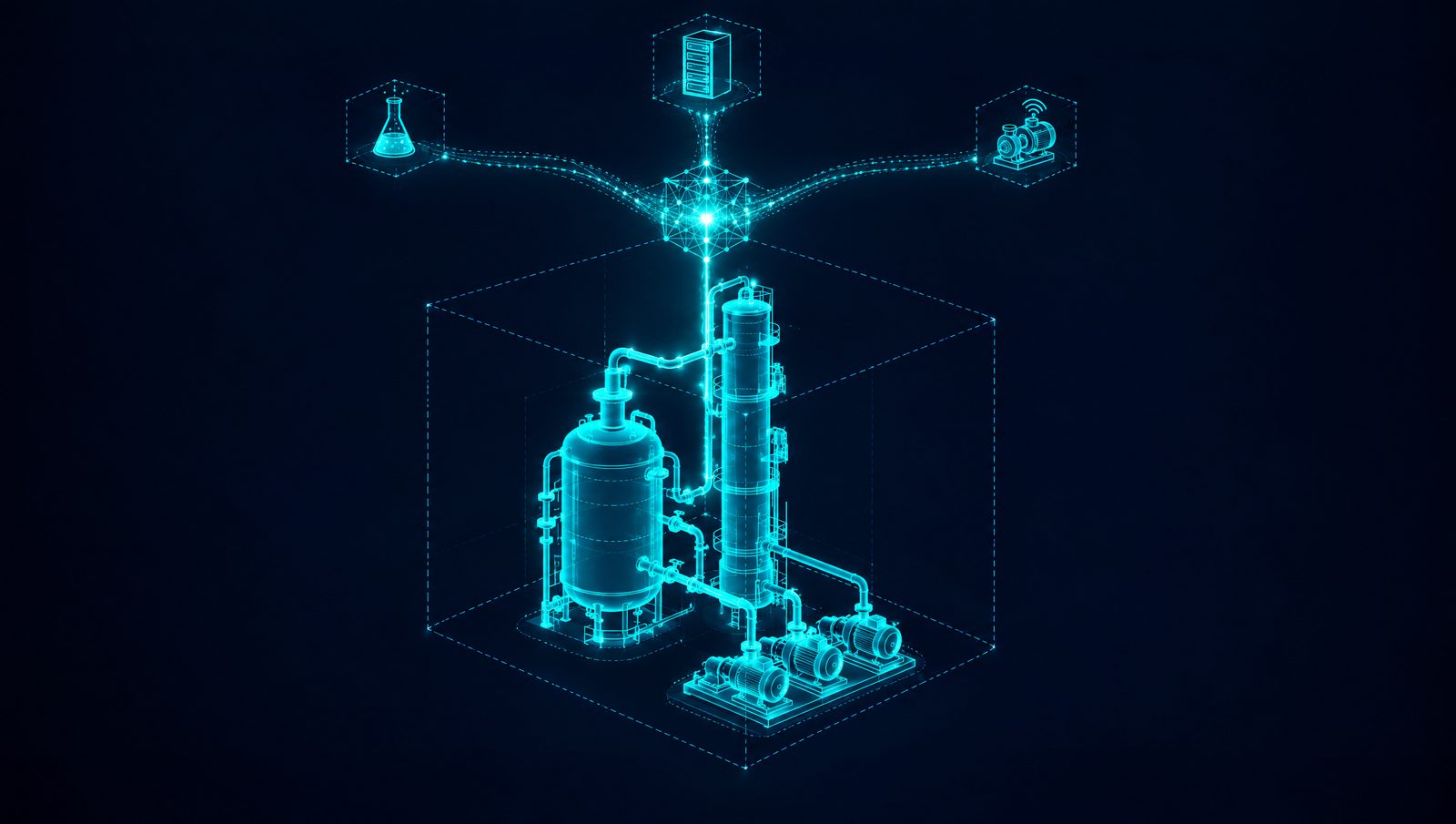
Classic advanced process control (APC) relies on linear models that need periodic retuning. A learned model can be retrained on historian and DCS data, so it keeps up with changing feed quality, ambient conditions and equipment constraints. It works on top of the APC and the DCS, which stay in place. Reinforcement learning, computer vision and other techniques are now in use across the process industries.
1. Tighter control and faster decisions
Process plants face growing complexity, retiring domain experts and volatile feed costs. AI shortens decision loops that used to take hours or days.
Real-time data analysis and predictive analytics scan thousands of sensor readings every minute and flag drift before it turns into extended downtime. Where product quality can be measured by camera, computer vision inspects continuously and tightens tolerances beyond what periodic sampling achieves, which reduces off-spec product and quality giveaway.
Shorter decision cycles give operators time for higher-value constraints such as energy balance and feed optimization, and they let the plant respond to variability across the whole system.
2. A different role for operators
When AI moves from pilot to daily operation, the change lands on the people in the control room. Operator assistance tools put recommended actions on control room screens, and guided training walks new hires through start-up and shutdown sequences. Operators spend less time watching trend charts for anomalies and more time on yields and process constraints.
New roles appear: digital champions who bridge operations and data engineering, specialists who investigate abnormal events across complex systems, and engineers who monitor adaptive models and validate setpoint changes.
The larger workforce question is reskilling. Gaps in data literacy and in OT and IT integration remain among the main obstacles to scaling smart manufacturing, and plants that invest in continuous upskilling and cross-functional teams see better adoption.
When models take over repetitive monitoring, experienced operators have time to mentor peers, refine procedures and run the plant more efficiently.
3. Closing the loop
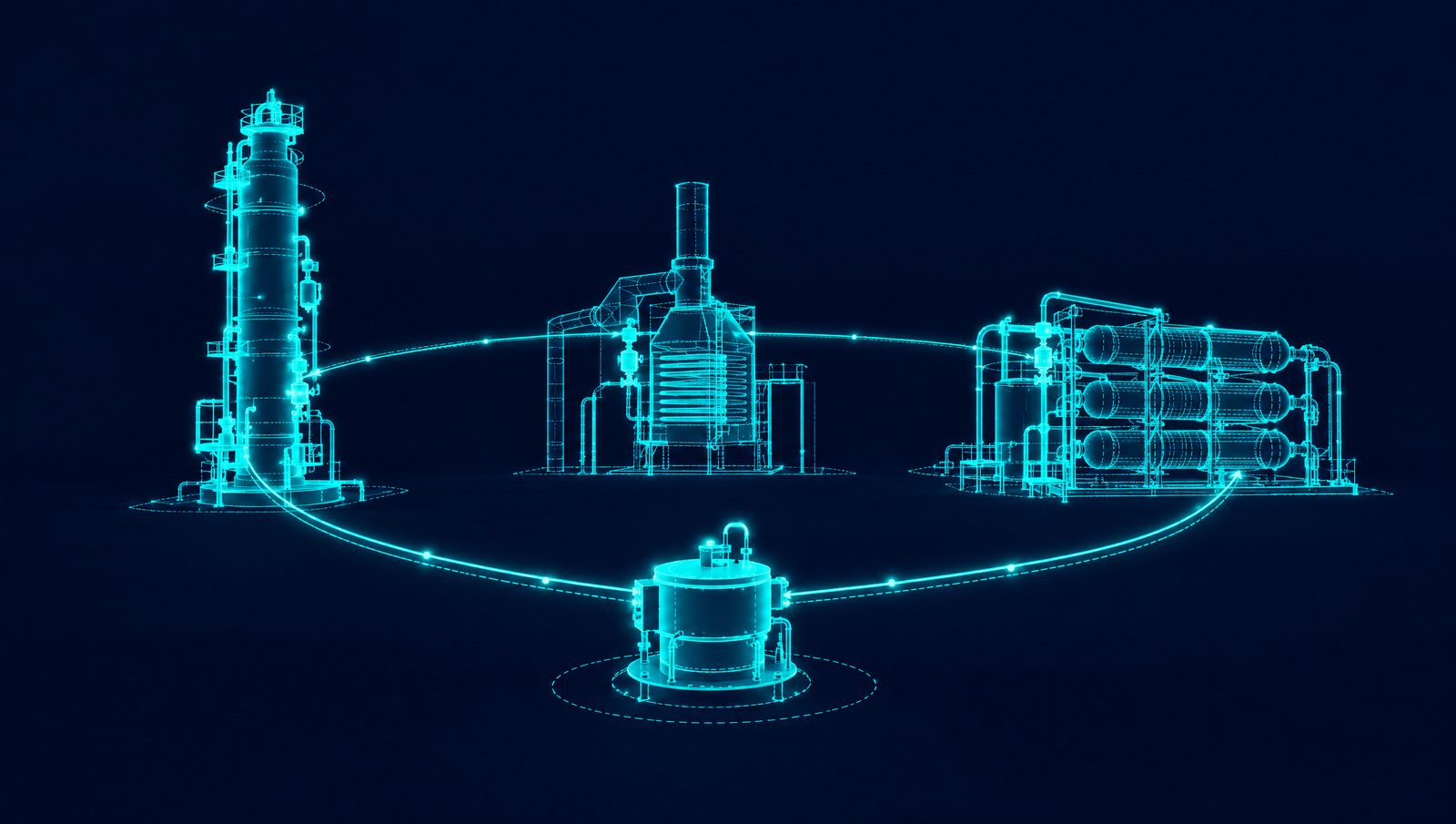
Feed price swings, equipment constraints and shifting operating conditions make consistent performance hard to hold. An advisory system suggests setpoint changes and waits for someone to act on them. A closed-loop controller writes setpoints to the APC or DCS itself, inside limits set by plant engineers, and so connects analysis directly to control.
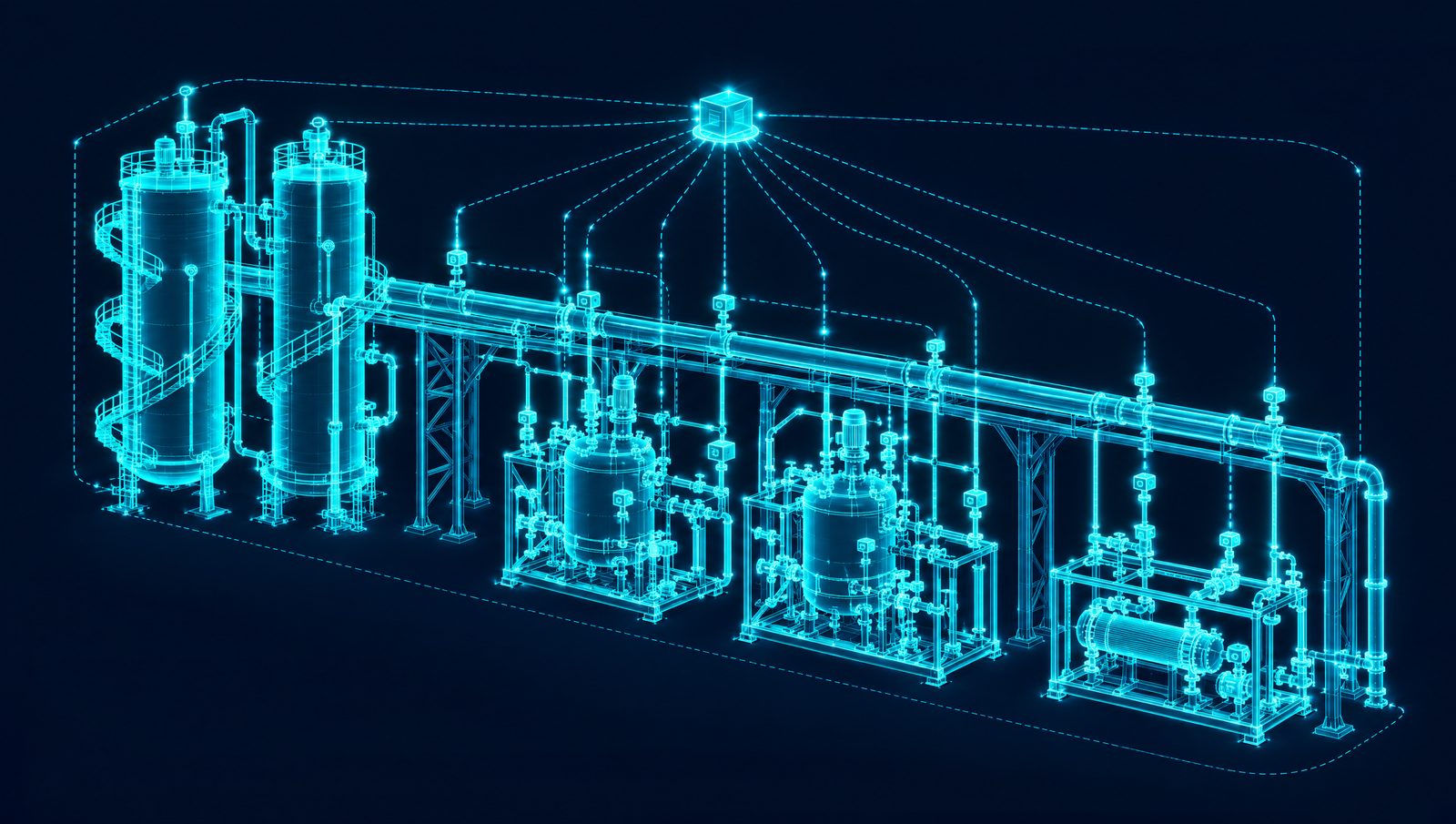
In Deep Learning Process Control® (DLPC®), a Deep Learning Predictor learns a nonlinear dynamic model of the unit from its own history, guided by first principles. A Deep Learning Controller, trained by reinforcement learning across millions of simulations, learns the control policy. It runs on-premise and writes setpoints to the APC or DCS minute by minute, while operators watch from the board and can take back control.
Common objections
Four objections come up when a project reaches finance, IT or the control room.
- Cost. Start with a focused pilot on one high-margin unit instead of a plant-wide overhaul.
- The black box. Operators need to see which variables drive each recommendation, and they keep the authority to override any setpoint. That transparency builds trust.
- Data silos and quality. Data barriers, as IIoT World describes them, remain a real constraint. Models built from the historian and DCS data a plant already holds narrow the integration work.
- Workforce disruption. Retraining programs that develop technicians into digital specialists show that the technology supports their expertise.
With a phased approach, each of these becomes a step toward more efficient and more consistent production.
Where plant leaders can start
A large capital investment is not needed to see traction. Start with the fundamentals, then extend what works across the plant.
- Run a data-readiness audit to confirm that the historians, sensor fidelity and the IT and OT network can stream continuous data.
- Choose a high-value pilot, such as crude unit heat integration, compressor energy use, kiln fuel rate or renewable diesel unit optimization, where the improvement can be measured.
- Form a cross-functional team from operations, process engineering and IT security so that expertise is present in each decision.
Digital twins, ERP integration and industrial cybersecurity add resilience as the program expands.
How the Imubit Platform applies
The Imubit Platform applies this across refining, chemicals and polymers, cement, and mining and minerals. Map traces plan-to-plant gaps to the recurring decisions behind them. Model learns the causality in each unit with DLPC®. Control takes the critical decisions to autonomous execution, inside limits set by plant engineers, on top of the APC and DCS already in place. See how the platform works.