In most cement plants, energy is the largest line item. The IEA puts energy at 30 to 40% of total production expenses, and The Cement Institute puts maintenance at another 15 to 25% of operating spend. Those two categories can decide whether a campaign finishes in the black. They also carry most of the environmental burden, because every unproductive kilowatt-hour adds fuel cost and CO₂.
Global cement-sector energy efficiency has improved by 18% since 1990, according to the GCCA. The distance between today's performance and what is possible is an opportunity, and rising carbon prices add urgency. The seven approaches below cut cost without risking clinker quality, through better control, smarter maintenance and targeted retrofits.
1. Improve kiln and preheater efficiency
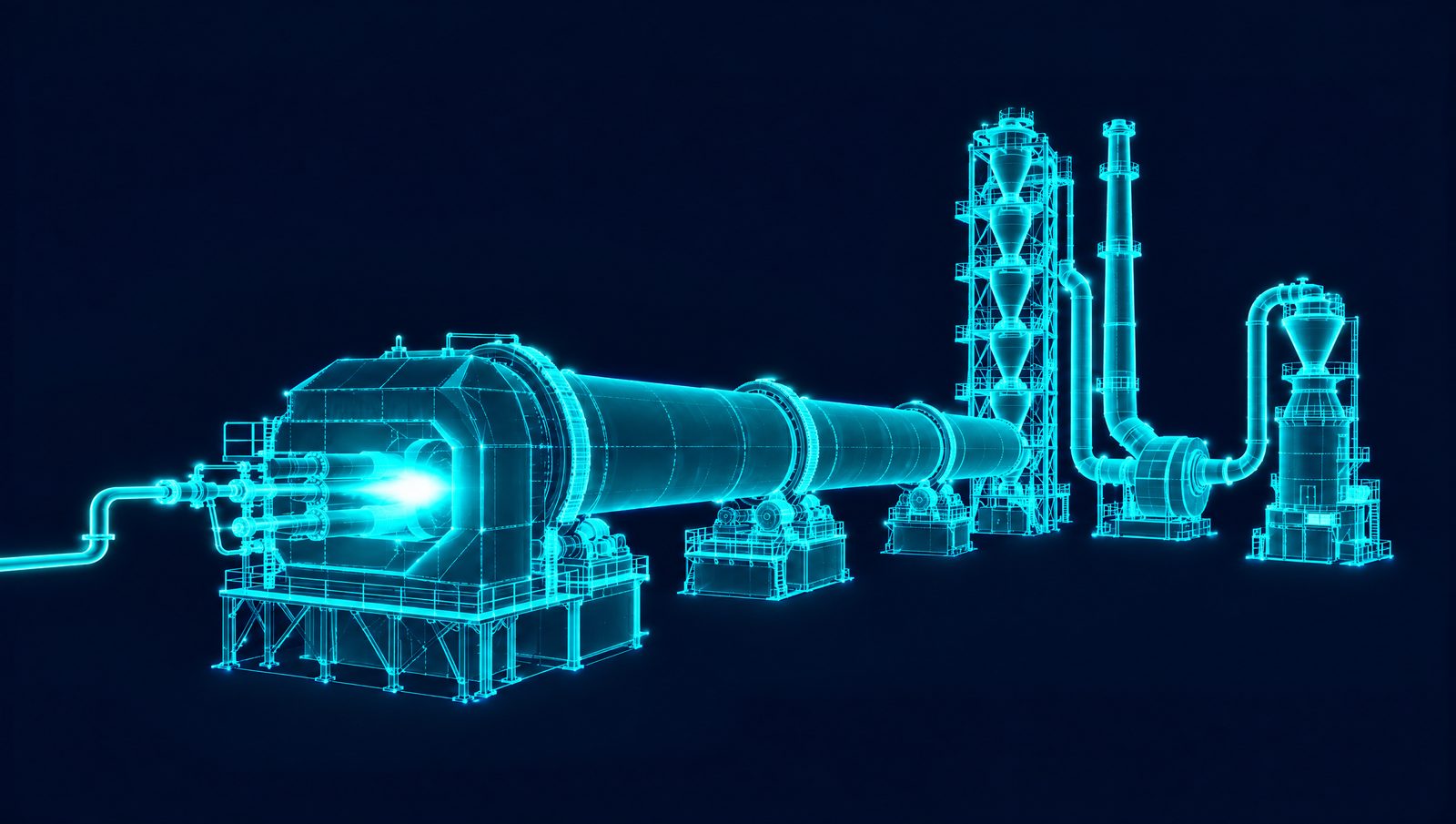
Kilns and their cyclone preheaters account for 70 to 80% of a cement plant's energy use, so small efficiency gains there are worth a great deal. Recent thermal demand averages close to 3.6 GJ per tonne of clinker, and every reduction below that benchmark is a direct fuel saving.
Preheater upgrades are the main hardware route. Adding cyclone stages, for example moving from a five-stage to a seven-stage design, lowers exhaust gas temperature and cuts fuel per tonne of clinker.
Pairing the preheater tower with a precalciner adds to the benefit. A precalciner burns more than half of the fuel outside the rotary kiln, so the system runs hot where it needs to and cooler at the stack. Modern precalciner kilns regularly reach thermal consumption around 3,300 MJ per tonne of clinker, a common industry benchmark.
Operation matters as much as hardware. Tighter combustion control, balanced air-to-fuel ratios and models that detect performance drift before operators notice it get more out of existing equipment. See cement plant operational efficiency with AI.
2. Lower the clinker factor
Clinker is the high-temperature, limestone-based intermediate that gives cement its binding power. The clinker factor, its share of the final blend, drives kiln fuel use and the CO₂ released during calcination. Lowering it is one of the quickest ways to cut both cost and emissions, and a significant reduction in the clinker-to-cementitious ratio is a central part of the industry's decarbonization strategy.
Holding product quality at a lower clinker factor means matching the chemistry of supplementary cementitious materials (SCMs) to performance targets, adjusting admixture dosage and tightening blend control. The constraints are real: the supply of high-grade SCMs, regional standards and customer acceptance. Within them, every percentage point of clinker substituted lowers fuel cost and CO₂.
3. Optimize grinding
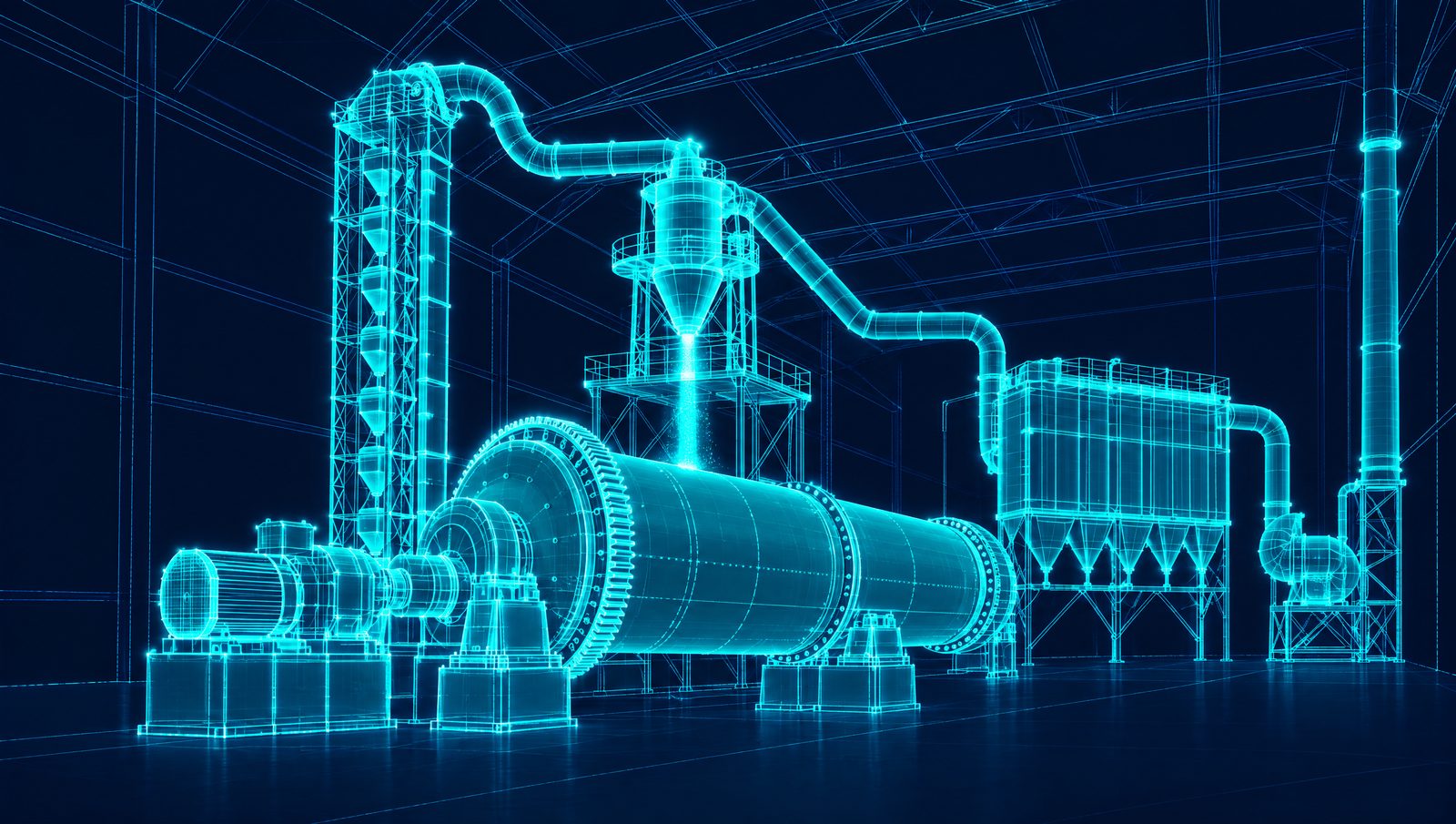
Grinding is the largest electrical load in the plant, so every kilowatt-hour saved there goes straight to cost. Specific energy varies widely by mill technology.
| Mill technology | Typical specific energy |
|---|---|
| Ball mill | 33 to 40 kWh per tonne of cement |
| Hybrid HPGR and ball mill circuit | about 28 kWh/t |
| Vertical roller mill | 20 to 23 kWh/t |
Where a full technology change is not feasible, a hydraulic roller press installed ahead of an existing ball mill can cut electricity use and raise throughput.
High-efficiency separators complement mechanical changes by curbing recirculation of fine material and preventing overgrinding. Power demand rises significantly with Blaine fineness, though the rate depends on mill type and operating conditions rather than a fixed ratio. The cheapest gains often come from maintenance: keep liners, grinding media and lubrication in good condition before pursuing larger investments. See cement grinding optimization.
4. Reduce electrical energy consumption
After grinding, the largest electrical loads are the plant's high-capacity fans, clinker coolers and material conveyors. These motors often run at full speed when the process does not need it, so variable frequency drives (VFDs) are usually the quickest win. Field data compiled by the European cement sector shows that VFD-equipped fans regularly use less power than fixed-speed units. IE3 or IE4 motors and automated idle-stop logic cut parasitic losses further and extend motor life.
Waste heat recovery, covered below, converts exhaust heat into electricity, offsets grid purchases and lowers peak demand. In many cases the recovered power covers the entire auxiliary load of the raw mill circuit. Plants that combine these measures with site-wide energy management can run below 90 kWh per tonne of cement, against a global average of roughly 100 kWh/t. Energy dashboards surface abnormal consumption, so airflow, material flow and cooling rates can be tuned before the extra kilowatt-hours are lost.
5. Move maintenance from reactive to predictive
Maintenance takes 15 to 25% of operating expenses by The Cement Institute's estimate, and every unscheduled breakdown adds energy waste and production delays that ripple into delivery commitments. Reactive repair waits for equipment to fail. Calendar-based schedules change parts too early. Predictive maintenance schedules work on actual equipment condition, which prevents unexpected breakdowns and avoids unnecessary part changes.
It uses vibration, temperature and pressure sensors connected to condition monitoring systems that apply machine-learning models to detect problems before they escalate. Start with the critical single points of failure that can stop the line, such as the kiln drive, the tertiary air fan and the ball mill gearbox. As the monitoring learns normal operating patterns, it can suggest service windows that line up with planned shutdowns, which reduces emergency repairs.
The result is steadier throughput, longer asset life and maintenance budgets based on equipment condition rather than fixed schedules.
6. Recover and reuse waste heat
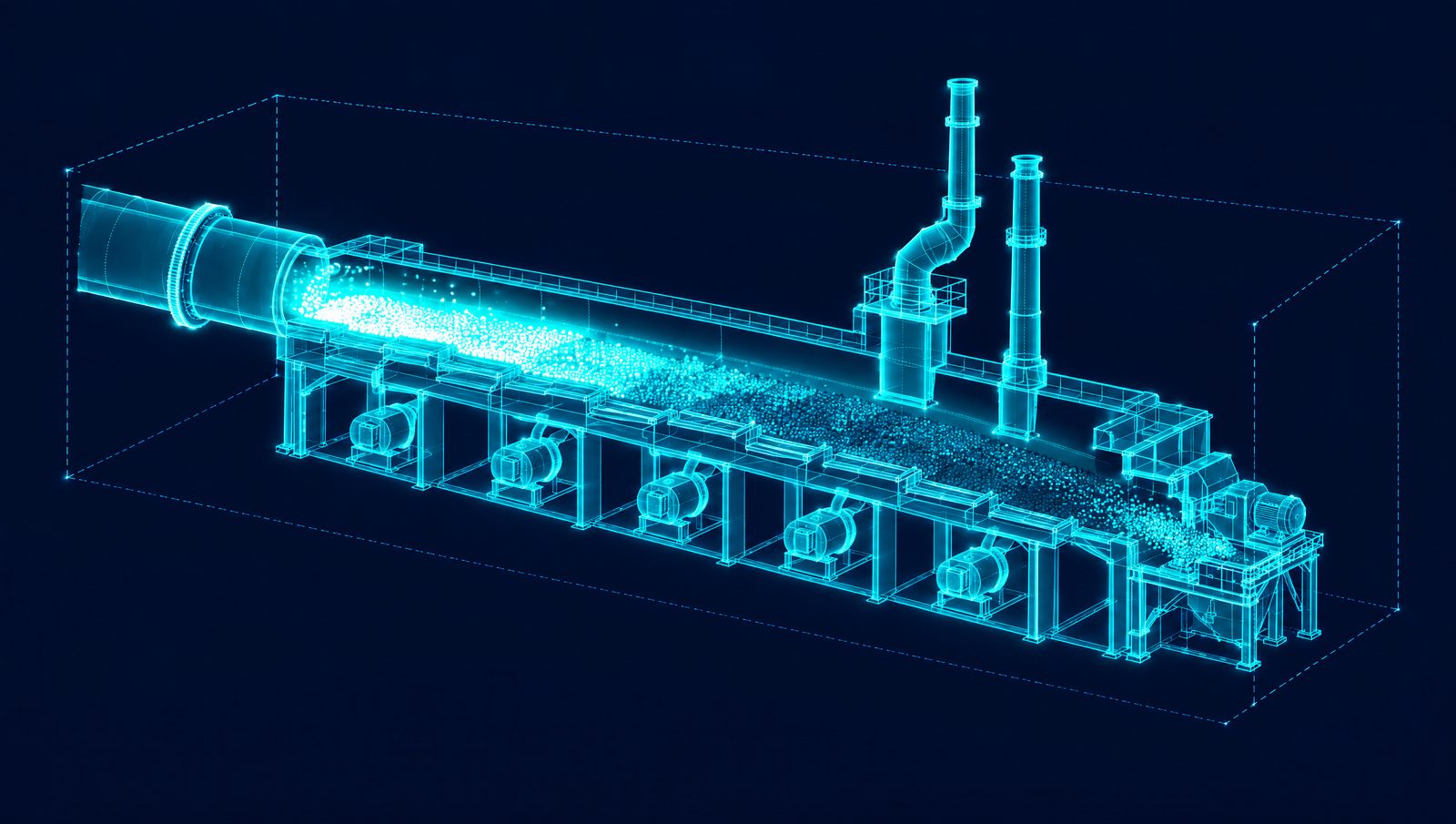
The hot gas leaving the preheater stack and the heated air leaving the clinker cooler hold most of the untapped thermal energy in a typical plant. Both can be harvested with a waste heat recovery (WHR) system, which can generate 25 to 35 kWh of electricity per tonne of clinker and cut purchased power.
Steam Rankine cycles remain the dominant technology, typically paired with high-moisture gas streams. Organic Rankine cycle systems are increasingly considered for drier, lower-pressure exhaust streams, and they avoid the complications of water treatment. Either route turns unavoidable process heat into power generated alongside production. See clinker cooler heat recovery.
Before committing, map out capital needs, footprint and maintenance access. Older lines may need duct rerouting or structural reinforcement. Modern heat exchangers limit gas-side fouling and keep pressure drop low, which protects kiln draft and turbine output. Plants that addressed these constraints early, particularly in Europe's energy-constrained markets, now treat waste heat as a core utility that cushions them against volatile electricity prices.
7. Use process data for real-time control
The control system already samples thousands of tags every minute, from kiln inlet oxygen to mill motor current, and most of that data goes unused. Models learned from that history can turn it into real-time action that trims energy and stabilizes quality.
In closed loop, the controller tracks kiln drift, adjusts fuel and airflow before free lime rises, and moves separator settings to prevent overgrinding that wastes electricity. Because the models learn from existing historian archives, new hardware is rarely needed. What the approach does need is a reliable data connection and operators who trust the controller. Recommendations shown alongside the process also help newer operators match the judgment of experienced ones. Layered on top of the kiln, grinding and maintenance measures above, real-time control adds savings without a retrofit.
Putting it together
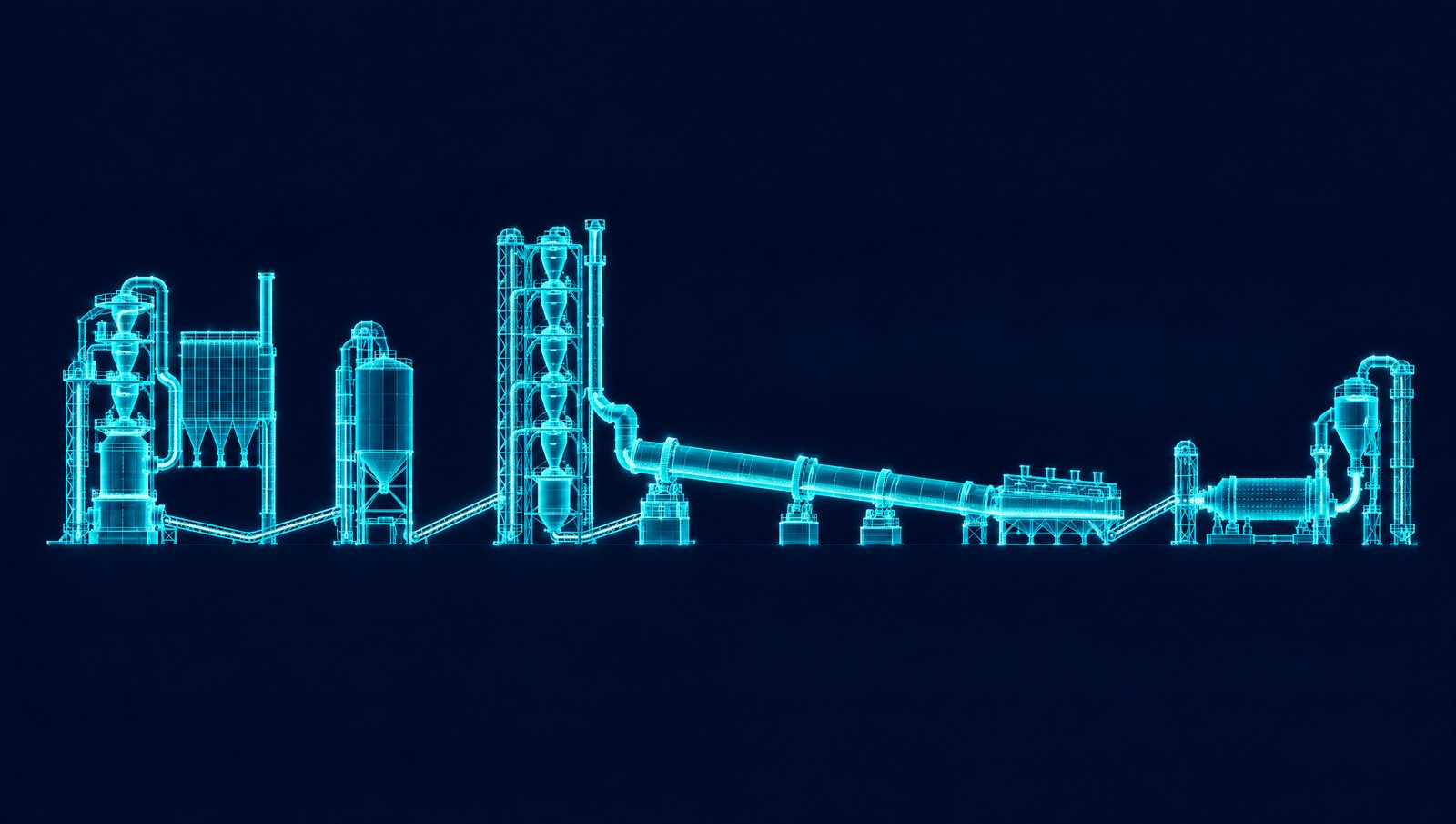
Together, these seven levers address the sources of most of a plant's energy and maintenance cost. A practical sequence starts with benchmarking against best-practice metrics to see where the plant stands. It then prioritizes the opportunities with the largest impact for the operation, begins with low-capital measures that show value, and invests in the data infrastructure that more advanced optimization needs.
How the Imubit Platform applies
The Imubit Platform addresses the seventh lever across the cement line. Map traces cost gaps to the recurring decisions behind them, such as burn targets, fuel mix and separator settings. Model learns the causality of the kiln and mills from the plant's own history with Deep Learning Process Control® (DLPC®). Control writes setpoints to the existing APC or DCS minute by minute, inside limits set by plant engineers, and keeps adjusting them as fuel, feed and clinker conditions change. See Closed-Loop Physical AI for cement.