AI projects in process plants often stall on data. Poor data quality, missing context and unvalidated records hold back AI implementation, and much plant data is still hard to reach or loosely governed.
The process industries face particular constraints: siloed historians, legacy tag naming conventions and strict safety regulation, any of which can stall a promising pilot. Each is solvable. The eight practices below turn raw plant data into a foundation that models, and the people who rely on them, can trust.
1. Establish clear data ownership
When nobody owns a dataset, quality checks lapse, compliance gaps grow and AI pilots stall. Clear ownership tells everyone who to call when tags go missing, who signs off on documentation and who approves access requests. That accountability keeps data clean and auditable, which models need to reach production and perform reliably.
Ownership works through two complementary roles. Data stewards handle quality, labeling and lifecycle management. Data custodians manage storage, backups and technical access. On a refinery distillation unit, for example, the operations superintendent owns the raw sensor streams, the process engineer owns the reconciled flows, IT manages historian changes, and data scientists are notified when datasets update.
Define ownership at three layers, raw, processed and derived data, so responsibilities stay clear as models create new outputs. Map the critical datasets, assign stewards and custodians, write the responsibilities into standard operating procedures, and review them quarterly.
2. Standardize data collection across the plant
Most plants collect data through a mix of tag names, sampling rates and calibration rules. Someone has to clean that data before any model work can begin. When temperature loops log readings differently from flow measurements, models inherit the inconsistency and struggle to converge.
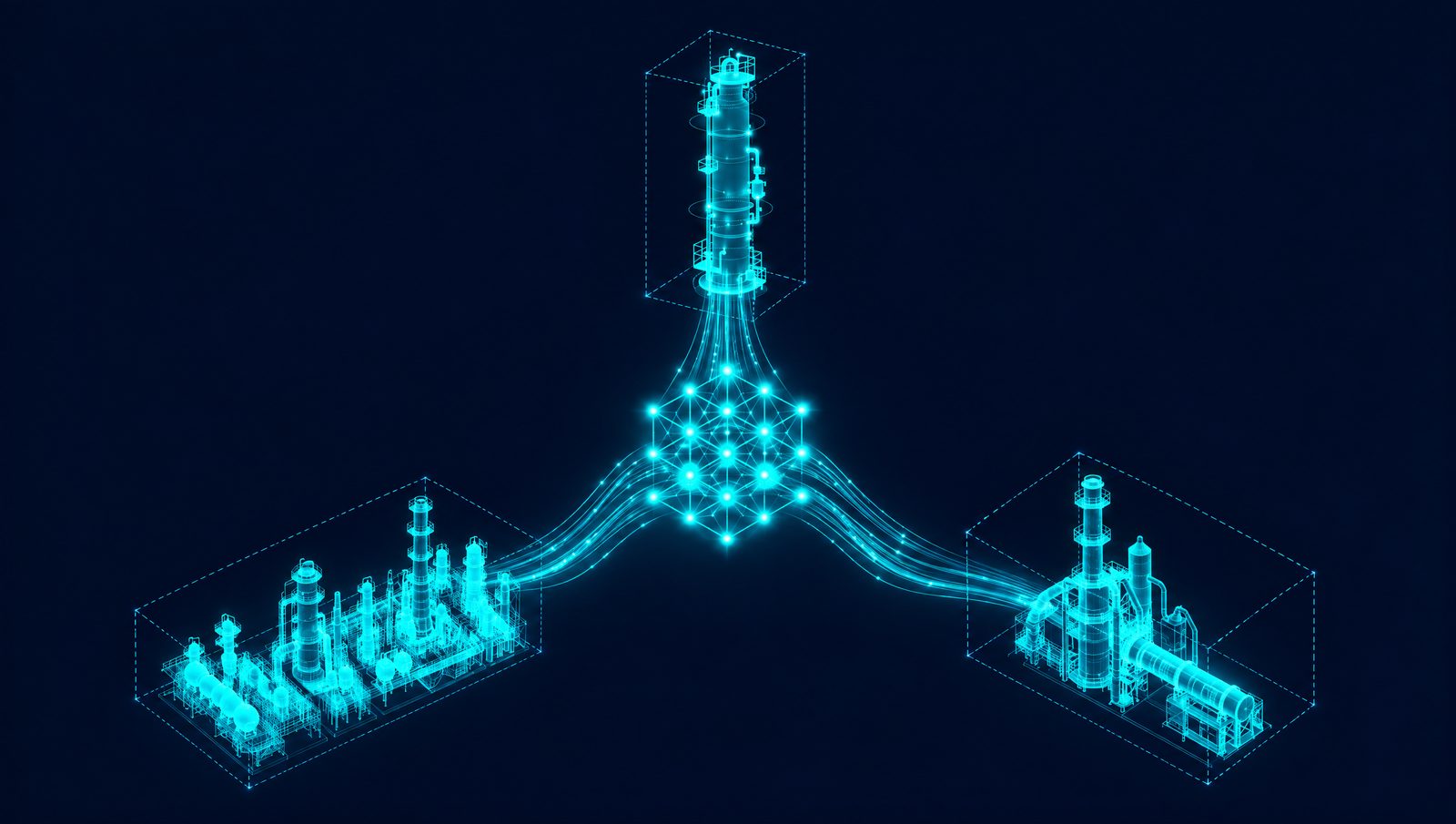
Plant-wide standards bring consistency, reliability and interoperability. Common naming conventions and synchronized sampling produce cleaner datasets, reduce the variability that drives model drift, and simplify integration across the MES, ERP and historian layers.
In practice:
- Create a plant information dictionary and manage it under version control.
- Write collection rules into standard operating procedures.
- Use automated discovery tools to find legacy tags that do not conform.
A phased approach, foundation first, then scale-out, then advanced capabilities, keeps the effort manageable as AI extends to more units.
3. Validate data quality continuously
Noisy or incomplete sensor feeds produce unreliable model guidance, which puts margin and safety at risk. Continuous validation treats data quality as a standing contract: every new record is checked, every prediction is re-scored, and drift is flagged before it affects performance.
The benefits build over time:
- Accuracy holds as operating conditions change.
- Drift is detected early enough to retrain before it causes an upset.
- Automated audit trails simplify regulatory reviews.
- Early anomaly alerts reduce operational risk at the front line.
In practice this means automated profiling on incoming tags, statistical process control on streaming data, and quarantine dashboards for suspect records. Monitoring tools provide drift metrics and alerts, and integration with existing systems lets validated models be redeployed in a controlled way. Steadier data gives steadier model recommendations and fewer production upsets.
4. Add context with rich metadata
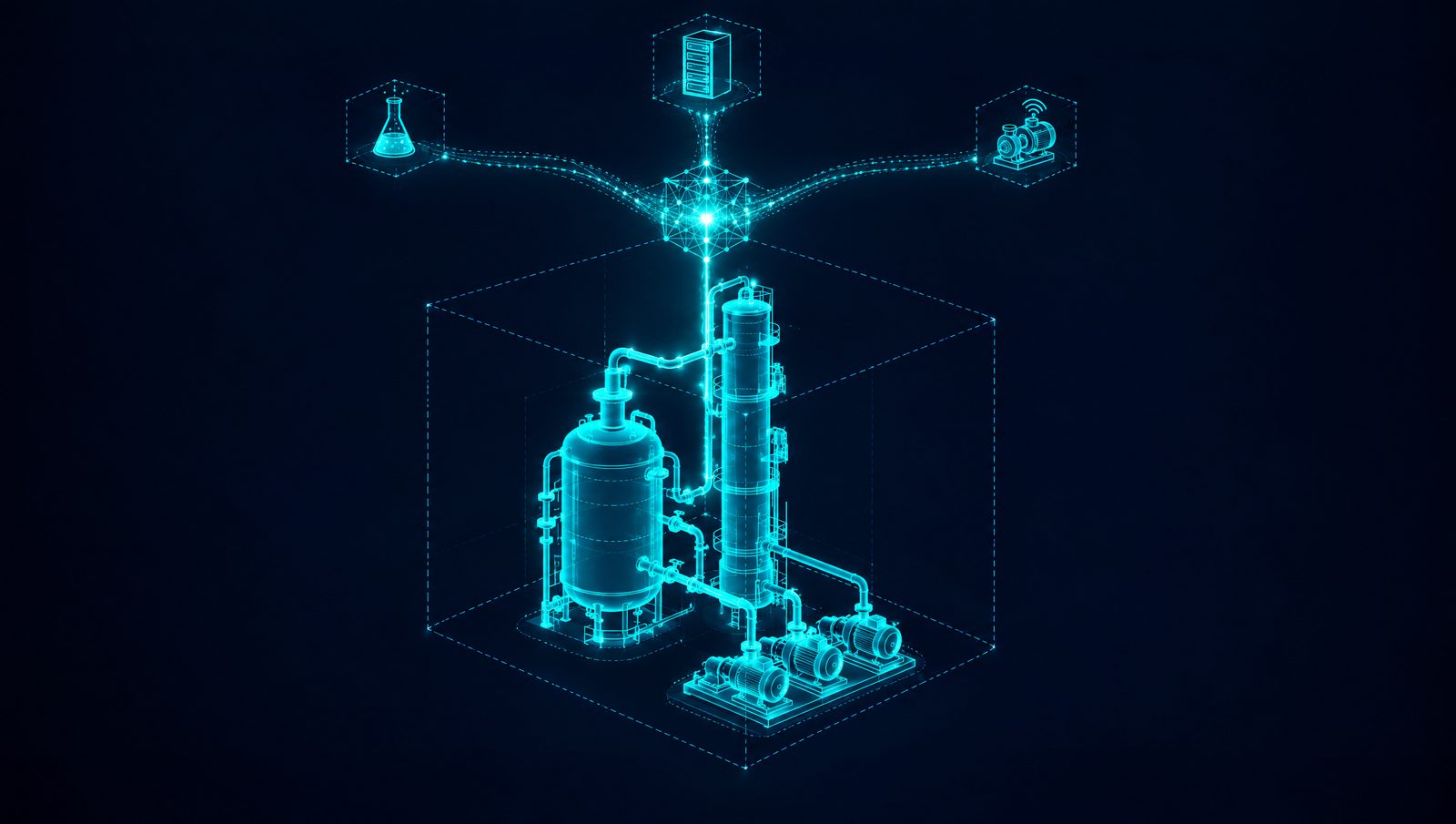
Raw sensor values rarely tell the full story of a reactor or distillation column. Metadata, the descriptive tags that record how, where and why a value was created, turns the numbers into process understanding. It gives models the context to learn real process relationships instead of noise.
Start with consistent naming conventions, then add process relationships, equipment hierarchies and precise time-series markers. When every temperature tag, valve position and lab result follows the same vocabulary, models receive cleaner inputs and engineers spend less time decoding cryptic tags. Open standards such as ISA-95 asset hierarchies and OPC UA companion specifications make these conventions portable across units, historians and analytics platforms.
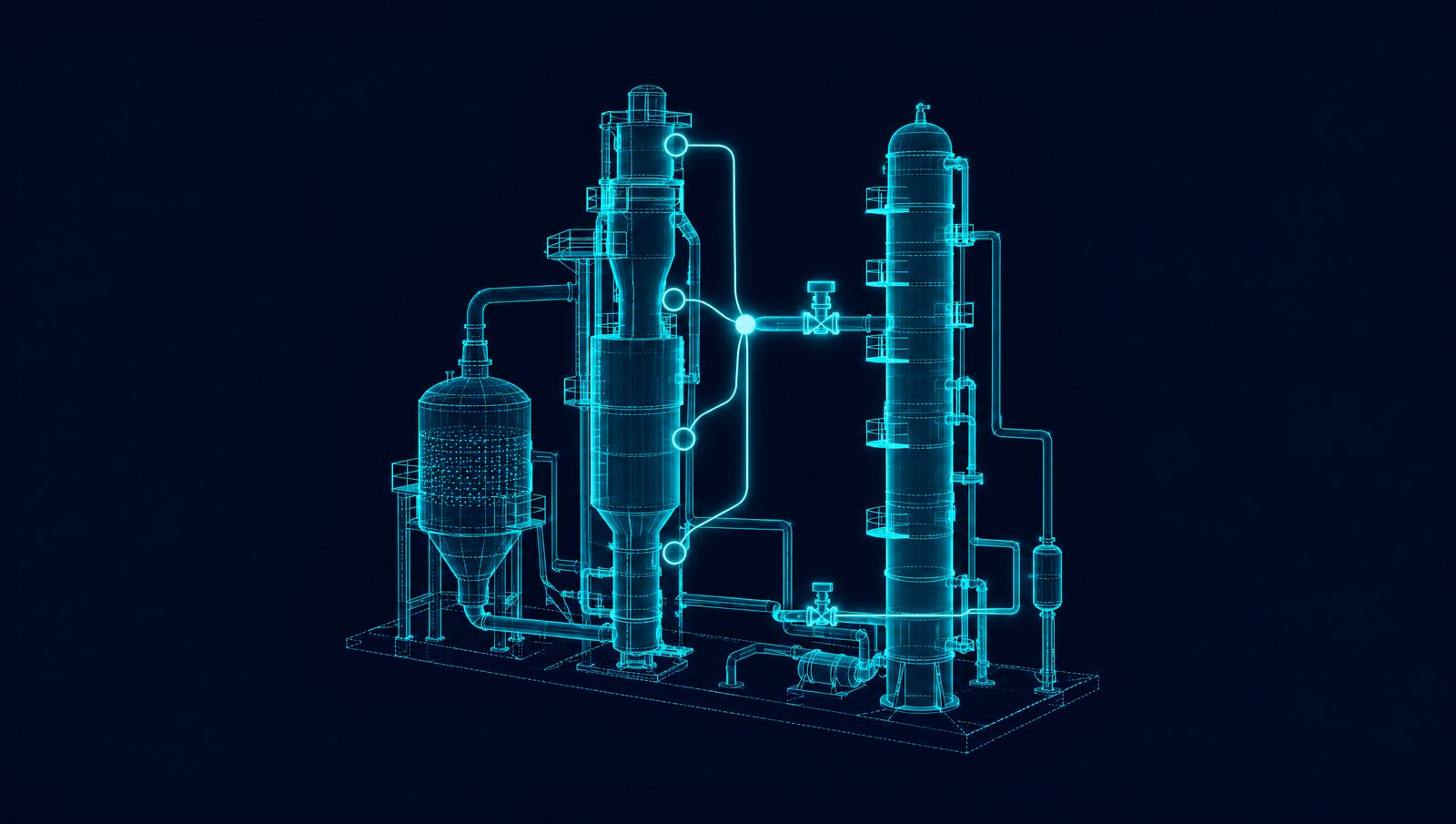
Consider a simple lineage chain. A valve-position tag feeds a real-time flow value, which feeds a yield model. Because each element is described and timestamped, an anomaly can be traced back to its source quickly, which serves both audits and troubleshooting.
Metadata at this level also answers the black-box concern, because every model recommendation can be traced and searched. Automated metadata tools reduce the manual effort of keeping it current.
5. Make data available in real time for process control
Closed-loop AI needs sub-minute data latency, so that the model acts on live plant values and its setpoints reflect the unit as it runs now. Fresh data streams let models follow the process continuously and respond to upsets as they develop, which is the basis of closed-loop AI in refineries, chemical plants and other complex processes.
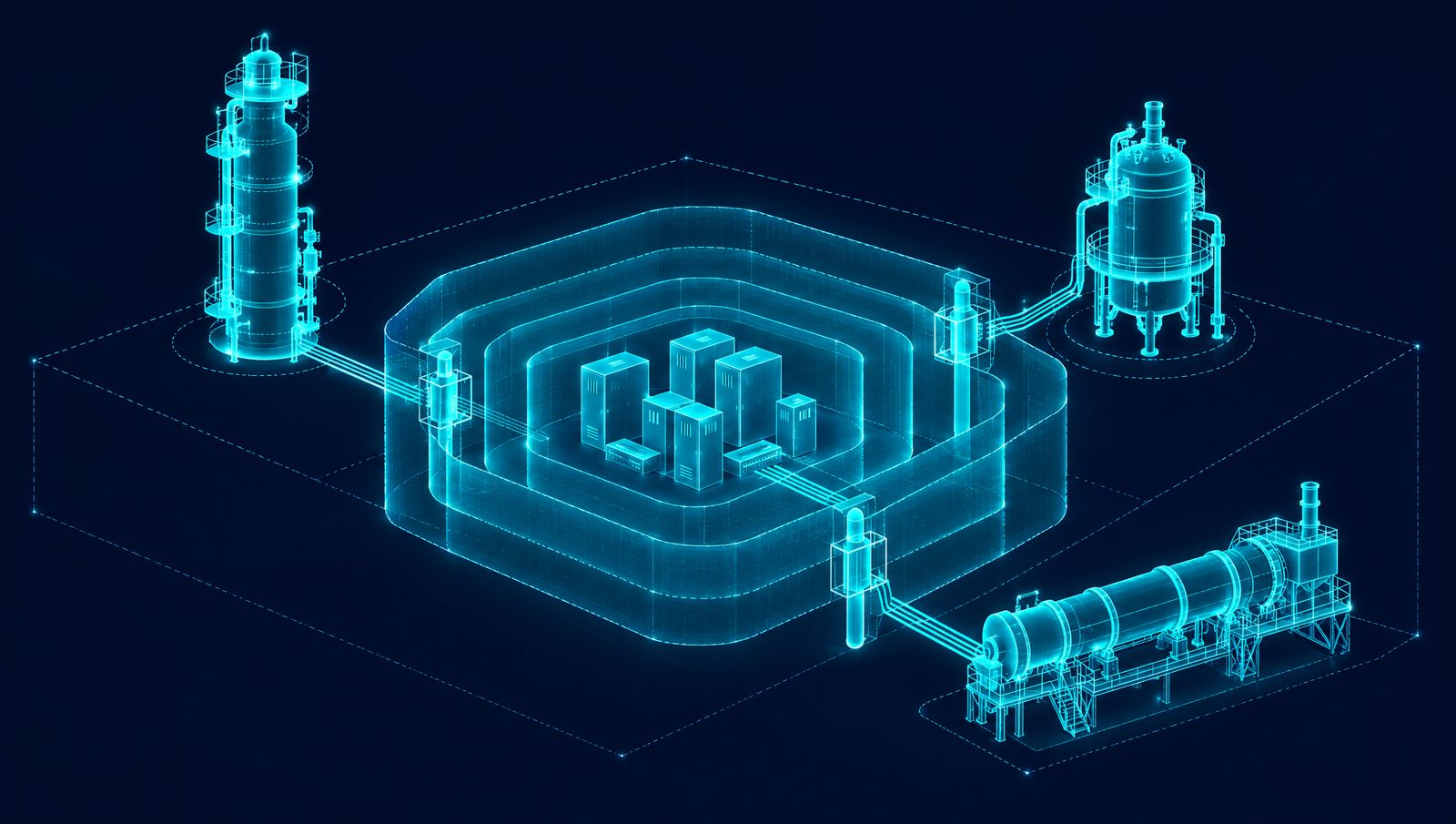
The architecture has to balance speed with reliability. Edge gateways compress and clean raw signals before forwarding them over MQTT or through a streaming platform such as Kafka, while secure OPC UA keeps compatibility with the legacy control layer. Versioned pipelines, redundancy and fail-safe fallbacks protect data integrity during network disruptions. Hardened security zones, role-based access and encrypted channels protect proprietary process variables without blocking collaboration.
Dependable, low-latency streams support continuous optimization, where models write targets to the existing APC or distributed control system and hold the plant to specification, with operators able to take over at any time.
6. Secure sensitive data while enabling collaboration
Proprietary process data has to be protected while engineers, planners and data scientists collaborate on it. Breaches in industrial settings show how quickly an attack can turn into production losses, fines or safety incidents. Locking data away in silos, though, starves the cross-functional analysis that AI depends on.
- Align role-based access controls with the ownership model from the first practice. With a clear steward for every dataset, granting and revoking permissions is straightforward.
- Confine sensitive tags, such as catalyst formulations or proprietary recipes, to network zones that never touch less secure layers.
- Encrypt high-value parameters in transit and at rest.
- Keep tamper-evident audit logs that show who viewed or changed data in every model training cycle, a baseline expectation under many compliance mandates.
Transparency matters as much as the controls. Publishing the security architecture and access policies on an internal portal reduces black-box concerns and builds trust with the operations teams who act on model recommendations. For the control-system side, see cybersecurity risks in industrial control systems.
7. Align governance with regulatory and safety standards
In a process plant, a single compliance lapse can mean a shutdown or a fine. Frameworks such as OSHA Process Safety Management, EPA greenhouse gas reporting, FDA validation for pharmaceuticals and API equipment standards all require auditable data trails.
Metadata does much of the compliance work. Tag critical parameters, such as relief-valve set points, batch records and emission readings, route sensitive data through stricter access controls automatically, and generate time-stamped reports for auditors. Documenting each transformation step shortens audit preparation, and regulators increasingly expect algorithmic decisions to be transparent.
The models need the same transparency as the data. Explainable logic backed by lineage records lets regulators and engineers trace each recommendation to its source, which a black-box algorithm cannot offer.
8. Build feedback loops between AI and operations
Recording what operators do, and what then happens in the plant, keeps models grounded in how the unit runs. When every valve adjustment and setpoint override is logged alongside the process outcome, the model can be reviewed against the same context operators use at the console.
Operator feedback routines make this practical:
- A simple log schema that records timestamp, tag, operator note and the AI setpoint, pairing each action with its result.
- A way for operators to flag a questionable recommendation from the DCS console as it happens.
- Regular model reviews with operations after every campaign or production run.
Over time, operators become stewards who spot edge cases early. Their feedback goes into model reviews and retraining, and confidence grows on both sides. The result is faster troubleshooting, fewer off-spec events, and recommendations operators trust because they can see their own expertise reflected in them.
How the Imubit Platform applies
Imubit applies Map, Model and Control in refining, chemicals and polymers, cement, and mining and minerals, and each step depends on governed plant data. Map traces plan-to-plant gaps to the recurring decisions behind them. Model uses Deep Learning Process Control® (DLPC®) to learn a nonlinear dynamic model of each unit from its own historian and lab data, guided by first principles; process engineers build those models in DLPC® Builder with no Python and no machine-learning background. Control takes the critical decisions to closed loop, writing setpoints to the existing APC or DCS, inside limits set by plant engineers. See the platform.