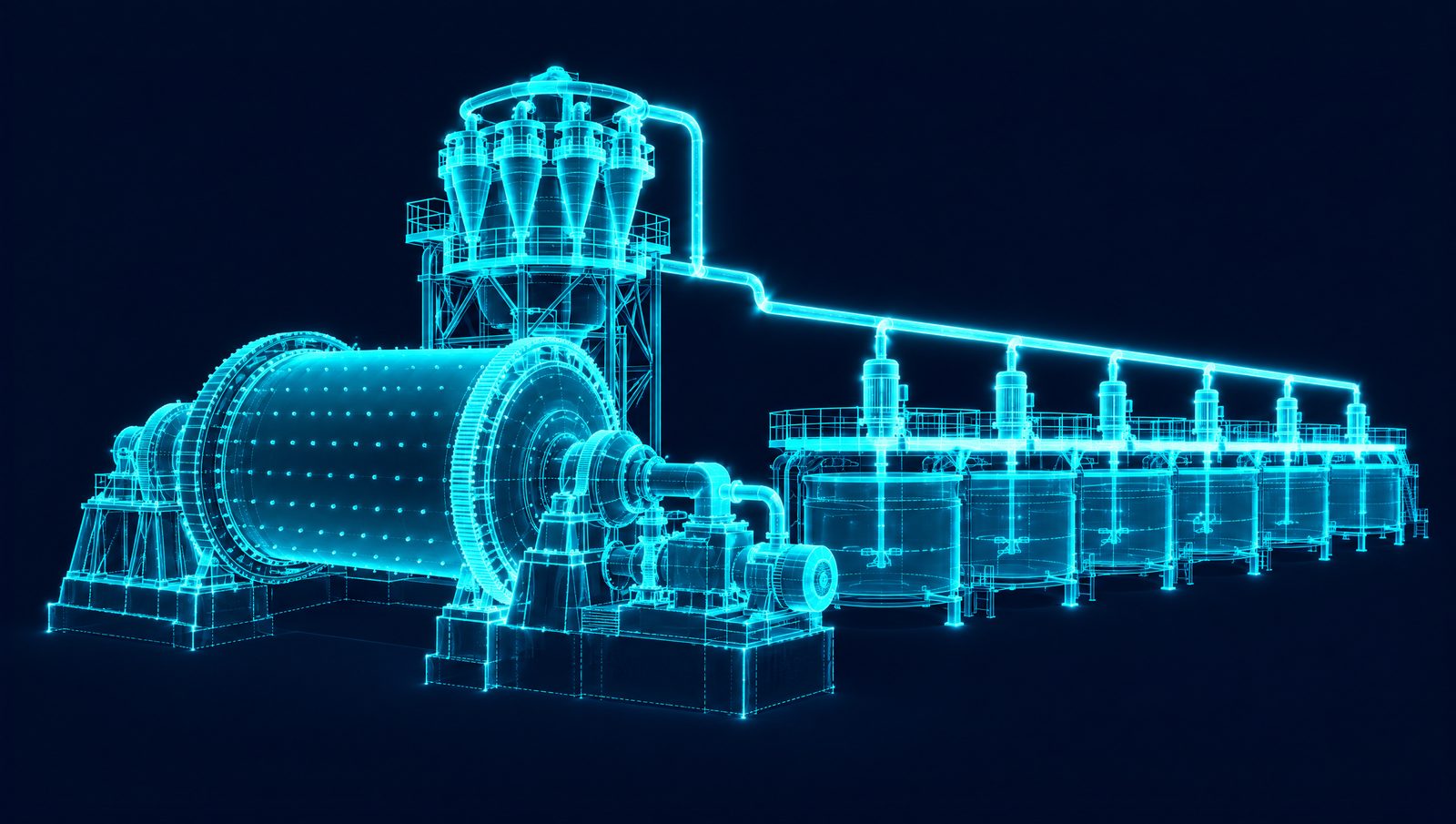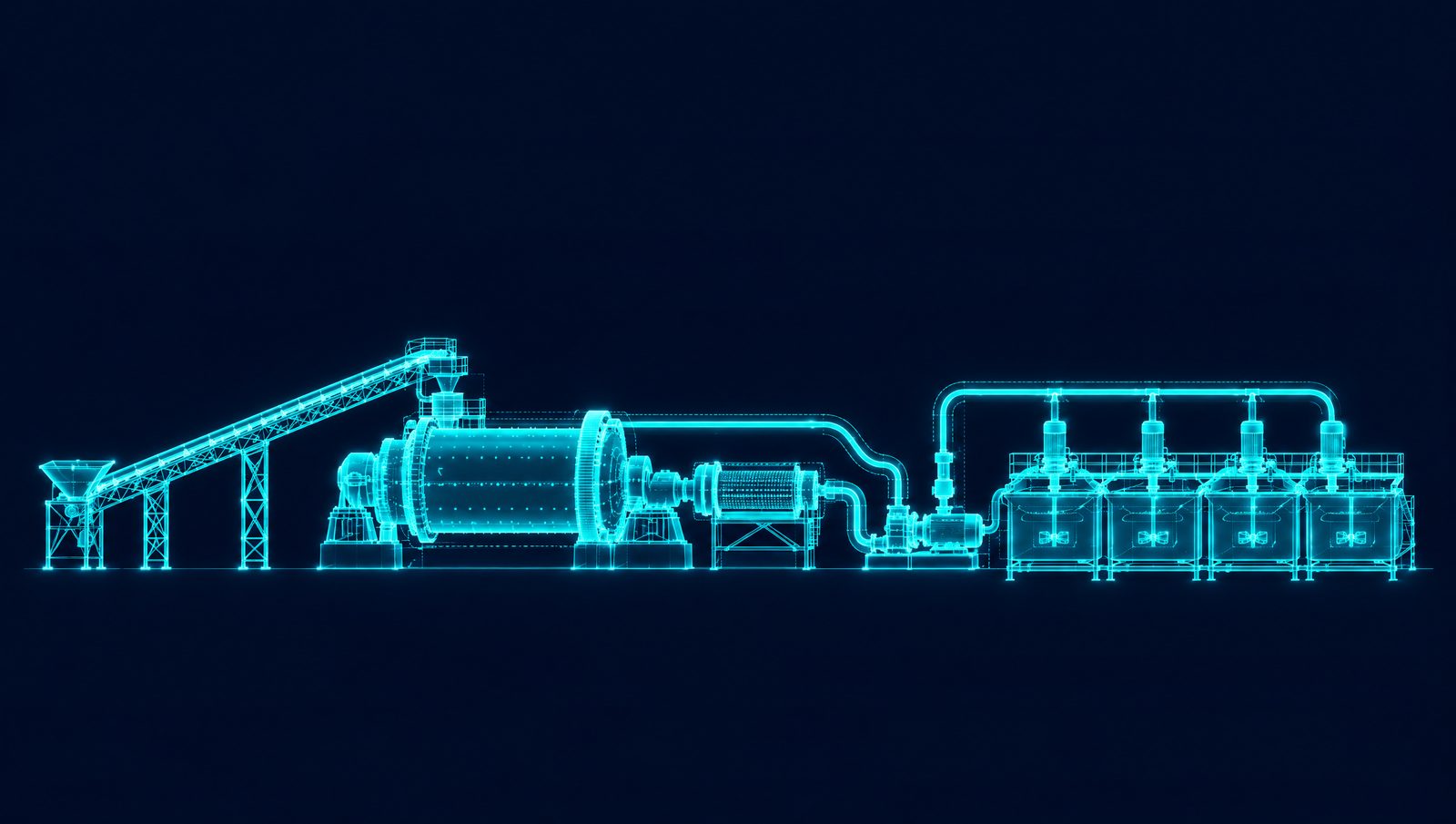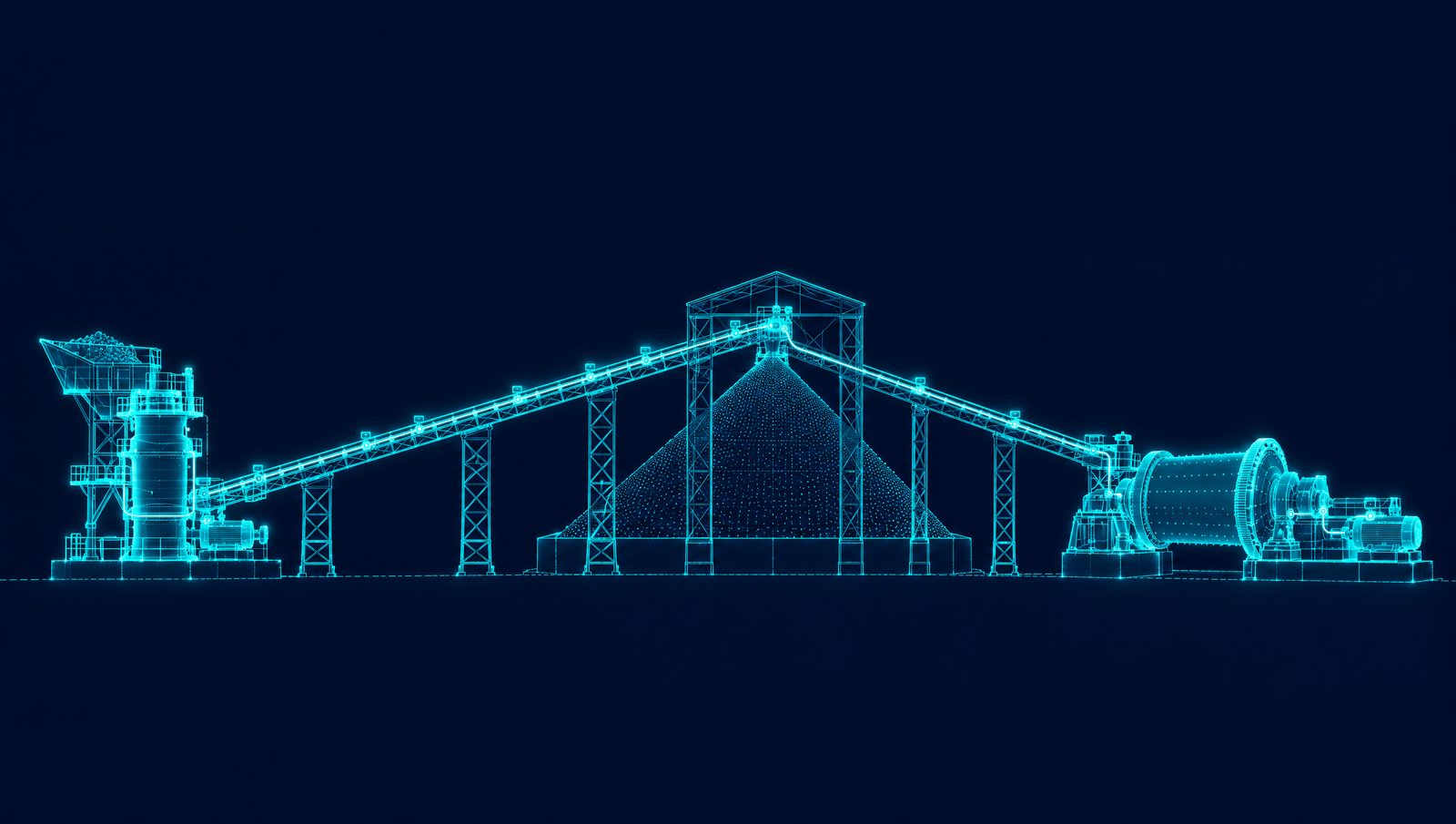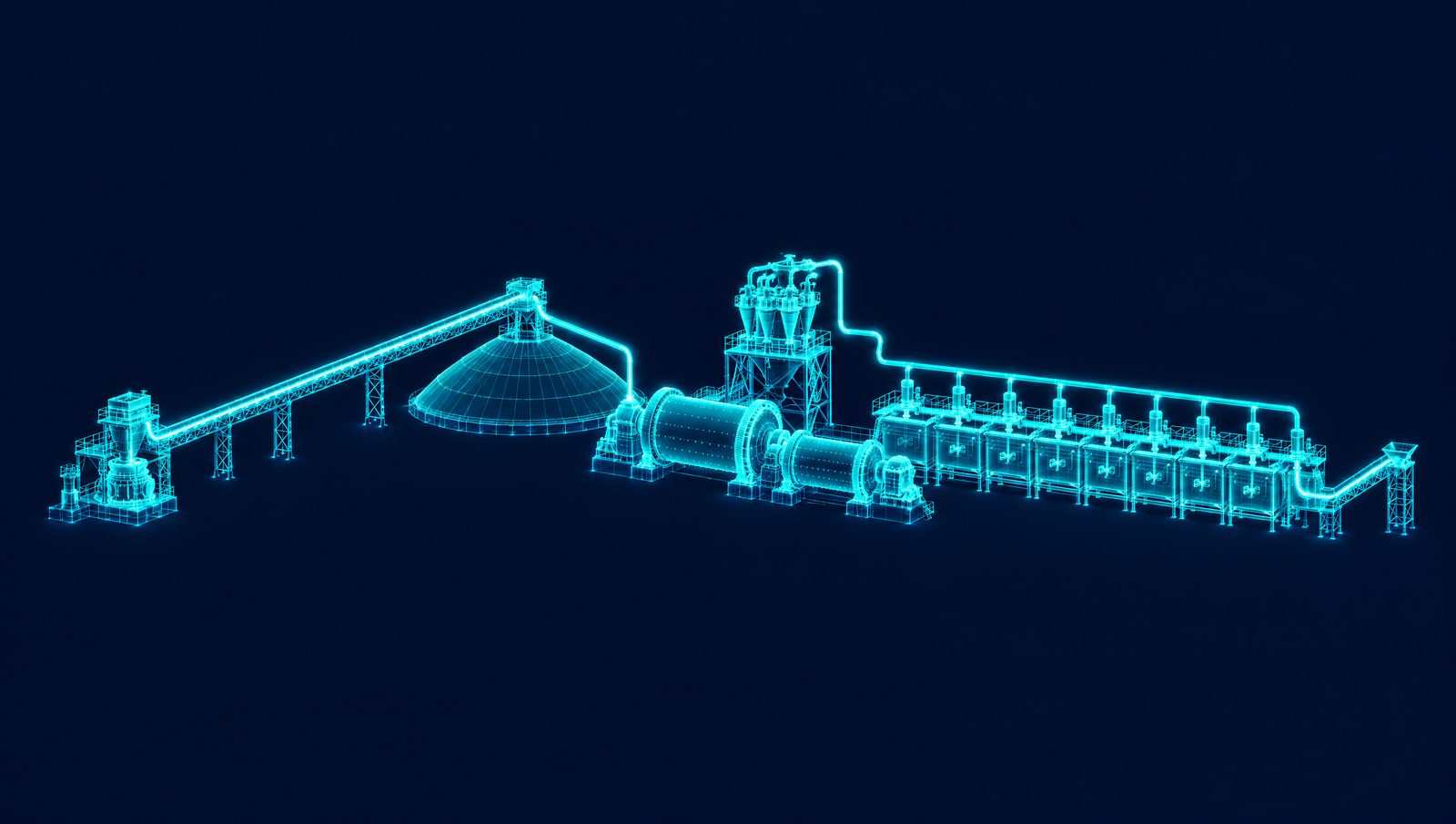
A concentrator rarely runs the same ore for long. Hardness, grade and mineralogy shift, liners wear and reagent response changes, and each change moves crushing, grinding and flotation away from their best operating point. Periodic studies find isolated improvements, but they cannot follow those changes as they happen.
Closed-loop control uses a model learned from the circuit's own history to write setpoints to the distributed control system (DCS) minute by minute, inside limits set by plant engineers. Improvement becomes part of daily operation instead of a periodic project.
Why operational excellence matters in mining
Energy is among the largest controllable costs in mineral processing, and a small rise in power prices can erase margin. Commodity prices swing unpredictably, which complicates long-range plans, and stricter ESG requirements call for measurable cuts in emissions, water and waste. With margins squeezed from all sides, inefficiency is hard to carry.
Many operations built their performance with structured improvement routines. Those programs tend to plateau because they depend on periodic, manual studies. The next step calls for tools that turn sensor data into action in real time and respond to shifting ore, market or regulatory conditions as they happen.
What closed-loop control adds
Closed-loop control adds a feedback layer that adjusts crushers, mills and flotation cells as conditions shift. It connects to the existing systems through standard OPC interfaces and writes setpoints to the DCS, working on top of the existing advanced process control (APC) loops instead of displacing them.
Seven gains
1. More throughput from existing equipment
Crushers, mills and flotation cells rarely run at their true power-draw limits. Closed-loop control follows the circuit in real time, using a model of how ore hardness, liner wear and reagent dosage interact. It moves setpoints to hold particle size where the downstream circuit needs it while pushing equipment closer to its safe maximum.
The model represents nonlinear relationships that linear methods miss, such as the coupling between pump speed and froth stability, so the controller can correct for them before recovery is lost.
2. Less grinding energy
The U.S. Department of Energy's mining industry energy bandwidth study found that grinding is the largest energy-consuming equipment type in U.S. mining, at about 40% of the industry's energy use, and that grinding and materials handling offer the greatest energy-savings potential, particularly in metal and coal mining. Every unbalanced mill load raises energy cost and worsens sustainability metrics.
Closed-loop control works on the variables that set mill efficiency, such as feed rate, mill load, power draw and water addition, and writes setpoints to the DCS that keep the mill near its most efficient point without giving up throughput. It adjusts several of them together as ore conditions change. Given grinding's energy footprint, modest efficiency gains carry real financial and environmental weight.
3. Fewer unplanned shutdowns
Unplanned equipment failures cascade through a mining operation and turn an isolated breakdown into lost production across the circuit. A model of how the equipment responds shows when critical variables are trending toward their limits.
Closed-loop control can then adjust operating parameters through the DCS to keep equipment inside its envelope. That gives the site room to plan maintenance instead of taking the unplanned downtime of a forced stop.
4. Steadier grade and fewer penalties
Each plant has runs where particle size, reagent dosage and residence time line up for peak recovery. Closed-loop control learns that operating envelope and holds it shift after shift, writing setpoints to the DCS minute by minute to keep concentrate grade on target and limit giveaway.
Where froth cameras are installed, their image data can feed the model. Changes in froth texture that signal grade drift can then prompt adjustments to air flow or collector dosage before off-spec concentrate forms.
Stable flotation and leaching circuits give higher metal recovery and narrower quality variability. That cuts smelter penalties and re-handling costs and lifts revenue per tonne processed.
5. Lower emissions and tailings
Every kilowatt-hour saved in comminution reduces the emissions tied to power generation. Holding crushers and mills at the minimum energy draw for the required throughput saves electricity that would otherwise be lost as heat.
Recovery matters as well. Higher recovery means less ore mined and processed per tonne of metal produced, so less waste rock and tailings per tonne of metal and smaller long-term reclamation requirements. Lower energy use and less waste give regulators, investors and communities measurable evidence of decarbonization progress.
6. Faster troubleshooting and decision-making
A model of the whole circuit connects historian tags that usually sit in separate screens and spreadsheets. With it, the team can trace a sagging flotation grade back to a slightly overloaded grinding mill instead of spending a shift hunting for clues, and the control room, metallurgy and site management work from the same operating picture.
Sites that once used a small part of their available data can then make setpoint corrections in real time, which shortens the time to resolve an upset and supports better decision-making across the team.
7. Gains that hold
Mining conditions change daily, and the KPIs from a conventional improvement project often drift back within months. Closed-loop control keeps the improvement in place because it acts every minute. The process model is learned from the circuit's own history, a controller trained with reinforcement learning across many simulations of that model writes setpoints to the DCS as ore hardness changes and equipment wears, and the model can be updated with recent operating data when the circuit changes.
That keeps throughput, energy intensity and recovery on target, spares operators repeated manual tuning and helps the operation keep its improvements instead of watching them erode. It is the practical basis of a self-optimizing plant.
Overcoming adoption barriers
- Control integration. Smart optimization does not require ripping out proven infrastructure. Secure gateways and data-quality checks protect control integrity and signal reliability before closed loop is enabled.
- Operator trust. Models run in advisory mode before closed loop. Crews compare recommendations with current practice and see which tags and constraints drive each move.
- Skills and bandwidth. Skills and bandwidth concerns need a plan from the start, with training for the people who will work with the models.
Long-term value
Throughput recovered from the existing circuit is capacity the operation does not have to buy with an expansion. Process control that holds energy and recovery gains also gives environmental, social and governance reporting measurable evidence, in fewer emissions per tonne and less tailings per tonne of metal.
How the Imubit Platform applies
In mining, minerals and metals, the Imubit Platform applies Map, Model and Control to the crushing, grinding and flotation decisions that set throughput, energy and recovery. Map traces the gaps between the plan and the plant to the recurring decisions behind them, such as mill feed rate, water addition and reagent dosage. Model uses Deep Learning Process Control® (DLPC®) to learn a nonlinear dynamic model of each circuit from its own history, guided by first principles. Control takes the critical decisions to closed loop, writing setpoints to the existing APC and DCS minute by minute, inside limits set by plant engineers. In mining, minerals and metals, deployments have delivered a 1 to 3% metal-recovery improvement, 5 to 10% grinding-energy savings and a 2 to 5% throughput increase.