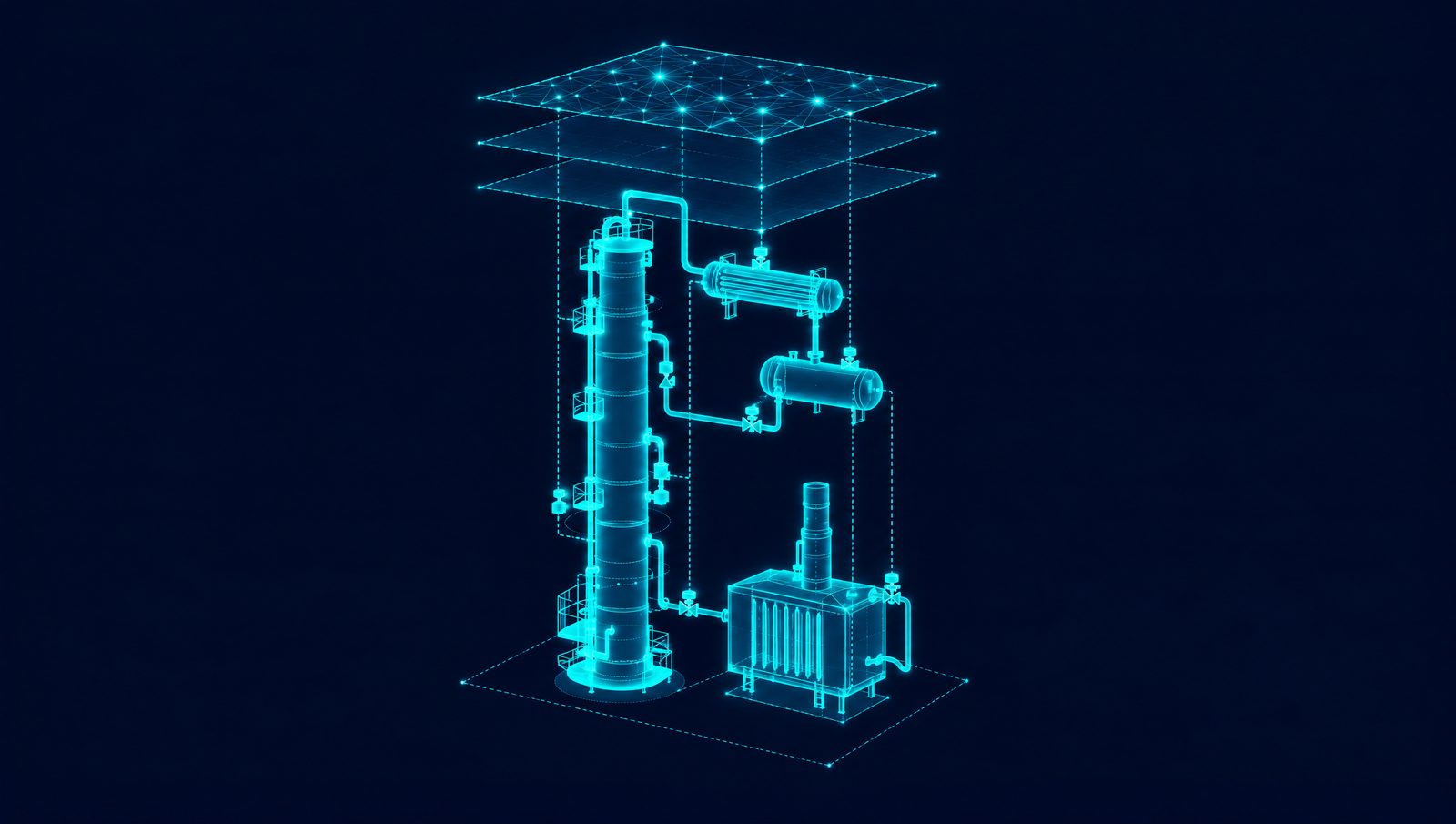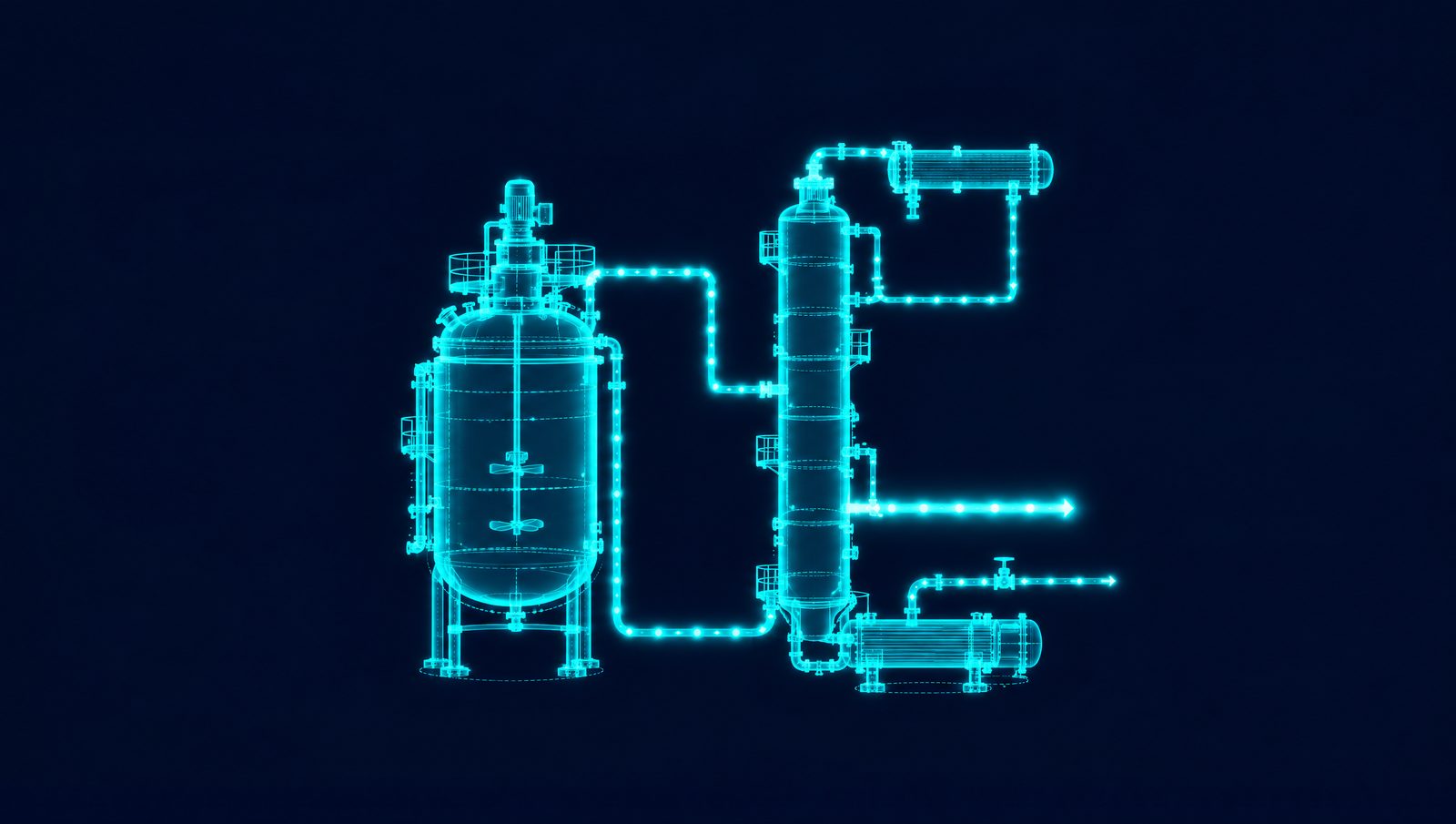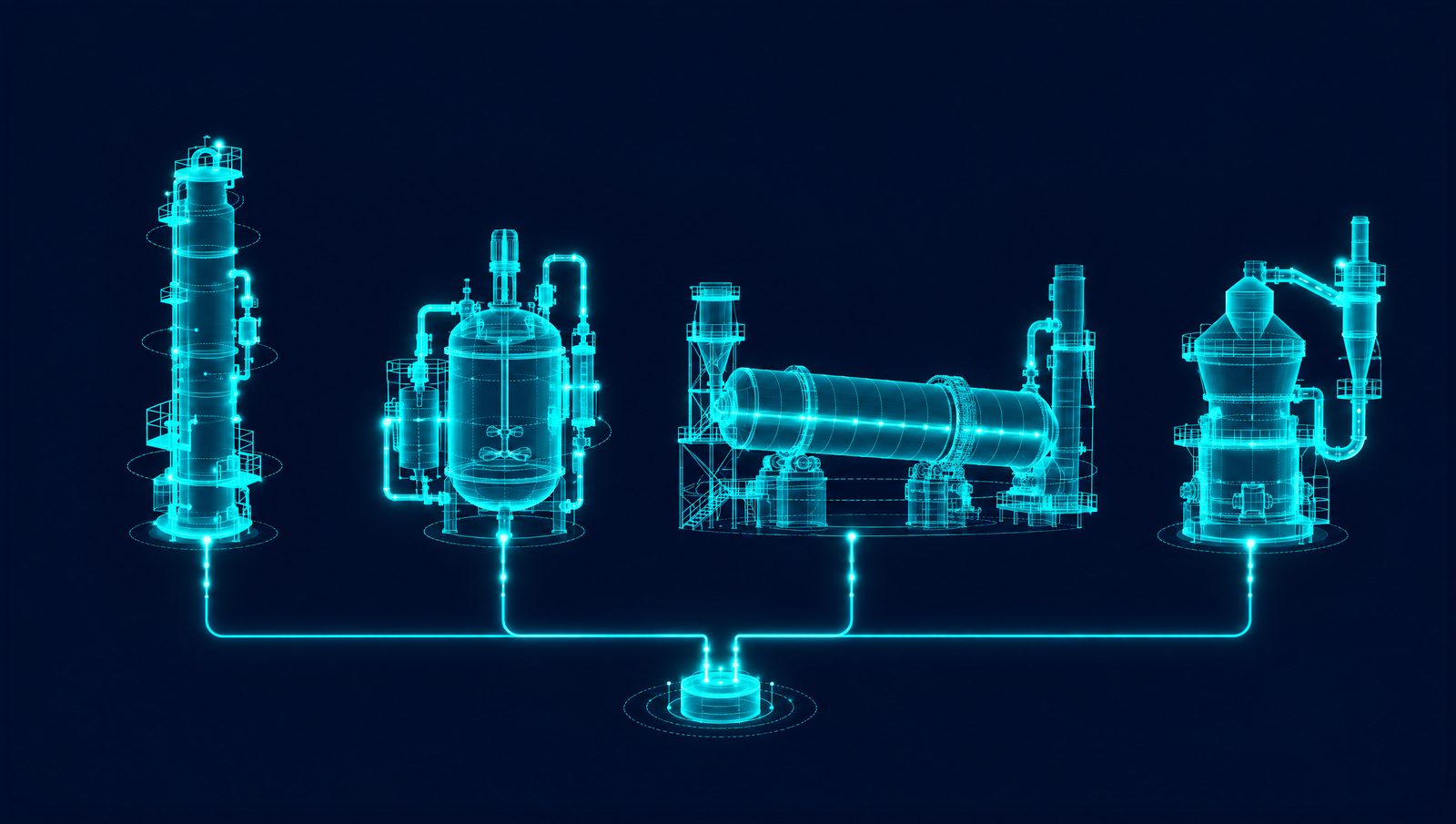
Process plants are running on tighter margins, with fewer experienced operators and more pressure on energy and emissions. Conventional process control was not designed to keep a unit at its best economic point while feed quality, energy prices and markets shift every day. Closed-loop optimization built on learned process models adds a layer that does that job, on top of the control systems the plant already runs.
What closed-loop optimization is
A closed-loop optimizer learns from the unit's operating data what good operation looks like and acts in real time to keep the unit there. It moves targets toward an economic objective across the operating envelope, in addition to holding variables within limits.
Advanced process control (APC) relies on linear models that control engineers build from step tests and update when time allows. Those models age, especially in complex, multi-unit operations where feed and equipment conditions keep changing. A learned model of the unit, retrained on recent operating history when the process changes, keeps the targets sent to APC matched to how the unit behaves now. That supports yield improvement in real time, steadier control through feed swings, and earlier warning of subtle anomalies.
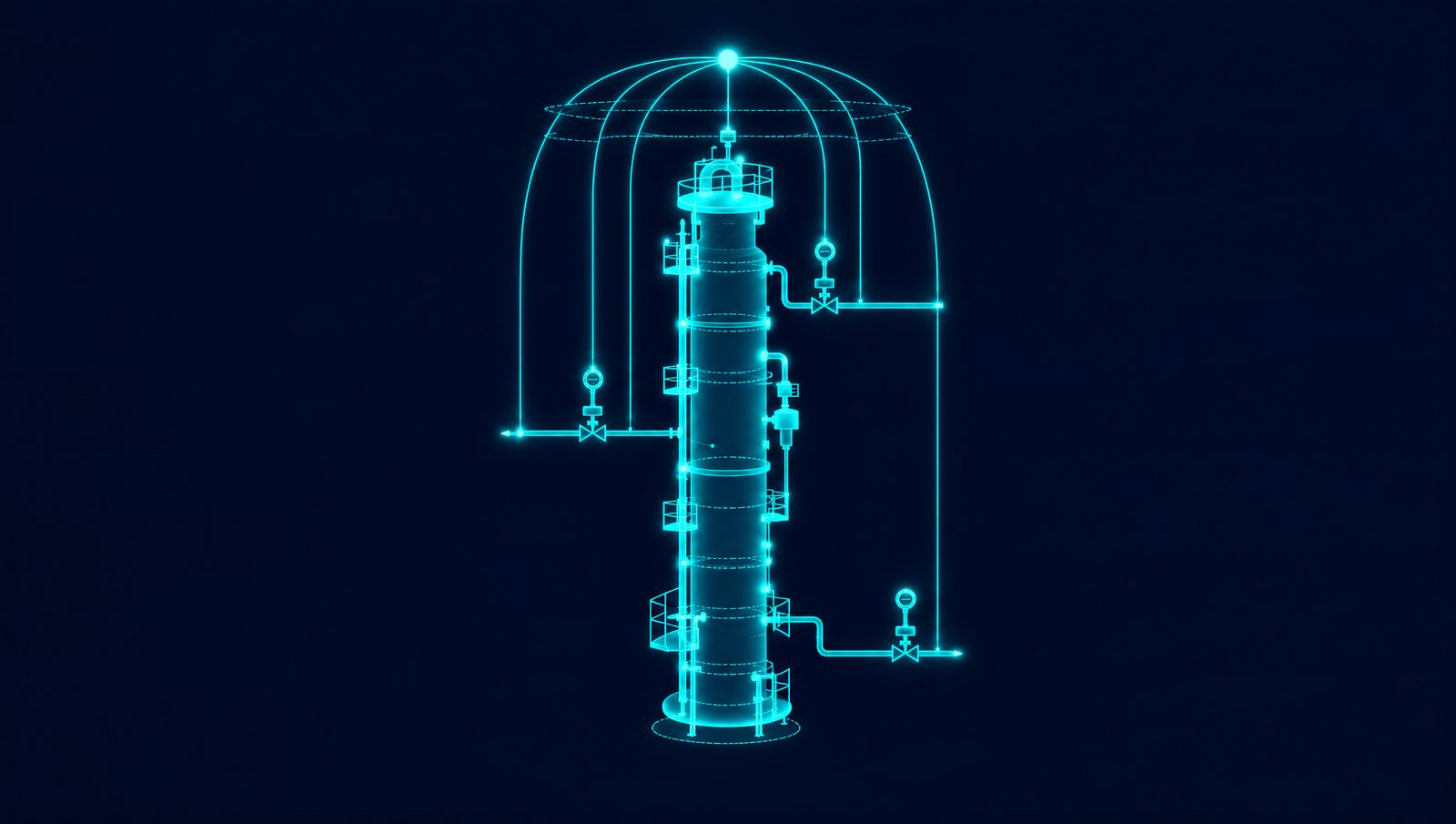
The optimizer works with the existing control layers. It sits above the DCS and the APC the plant already depends on, usually model predictive control (MPC), sends optimized targets down to them, and honors hard constraints across the plant. The APC keeps holding the unit at the targets it receives.
Transparency matters for operator trust. A well-designed system shows the logic behind each move, logs every control action and enforces configurable safety limits, so operators can step in at any moment.
An implementation roadmap
Phase 1: readiness and value assessment
Start by sizing the opportunity with a disciplined data audit. Map every critical process variable, check historian fidelity and flag unreliable transmitters. A review of the historian often turns up idle tags or sampling gaps that would starve a model of context, so repair those first.
With clean data in hand, build a simple economic model that ties each controllable variable to throughput, energy and quality objectives. Focus on a single objective to avoid over-scoping early. Before going further, confirm that the OT network can expose live data securely, that cybersecurity policy allows bidirectional writes to the control system, and that change-management procedures cover autonomous setpoint moves.
Phase 2: model development and offline training
Historical data trains a model that captures the unit's nonlinear cause and effect, with less dependence on plant step tests. Where data is sparse, supplement it with new sensors, inferential models or structured input from domain experts. A controller is then trained against that model with reinforcement learning.
Validate in simulation before anything touches the plant. Track reward curves, constraint adherence and safety interlocks. Bring operations into every model review, because their experience surfaces constraints the data may miss.
Phase 3: advisory pilot
Run the model in parallel with existing control. The system recommends adjustments, and operators keep manual authority. Compare each recommendation with the move the operator made, and tally the difference in profit, energy or quality.
This phase is where trust is built. Operators see the logic behind each suggestion before any control is handed over.
Phase 4: closed loop and scale-up
A short cutover checklist comes before closing the loop: verified failsafes, cybersecurity sign-off and operator readiness. From then on, monitoring dashboards track constraint proximity, model drift and economic value in real time.
To extend the work to other units, start from the proven model, retrain it on unit-specific data, and follow the same staged path from advisory to closed loop. The team's experience carries from one unit to the next.
Seven optimization levers
- Yield. The controller adjusts severity, feed ratios and recycle flows to keep each reactor near its best economic operating point, without new hardware.
- Energy. It trims excess furnace O₂, balances steam headers and idles blowers during low demand, while holding throughput targets.
- Plant-wide constraints. Instead of optimizing single units in isolation, it weighs upstream and downstream constraints together and reconciles competing objectives, such as crude rate against tower flooding, in one layer.
- Catalyst. Models that track catalyst activity can detect early decay and inform when to adjust catalyst additions or schedule regeneration, so the plant gets more conversion per kilogram of catalyst.
- Downtime prevention. Subtle shifts in vibration, temperature or product quality can signal trouble before operating limits are breached, which gives operations time to intervene and avoid a shutdown.
- Knowledge retention. A model trained on years of operating history captures how the unit responded to the moves experienced operators made. When the system explains its decisions, newer operators learn from them.
- Market response. With live price signals, the optimizer can adjust cut points, pool blends or product slates. That matters most on units such as renewable diesel, where feed prices move quickly.
Troubleshooting and common pitfalls
Even a well-scoped project hits roadblocks when data quality, integration or trust gaps creep in. Watch for these early signs.
- Data quality. Intermittent tags, drifting sensors or missing historian records, often from aging instrumentation, degrade model performance, and the optimizer pulls back to conservative operating points. Add sensor-health monitoring, automate data validation and schedule quick repair windows.
- Integration. Communication drops between the optimization layer and the DCS or MPC make control actions inconsistent or lagged. Verify protocols, harden the OT/IT bridge, or add middleware that buffers and reconciles data.
- Trust. When operators bypass recommendations more often than usual, the cause is a trust deficit or suspected model drift, and value capture stalls. Review the decision logic with the team and retrain the model on recent runs.
- Fading gains. Gains that taper after a strong start usually point to process changes or sensor drift, and KPIs slide back toward baseline. Run a model-health check, compare live data with the training window, and schedule targeted retraining.
Back these responses with health-monitoring dashboards that flag latency spikes, tag validity and KPI deviations in real time. Define clear escalation paths: who reviews an alert, how long before a human override is required, and what triggers a rollback to manual mode.
Building the business case
Leadership wants a clear, repeatable value model it can trust. Start with four baseline KPIs: energy per unit of production, margin per unit of feed ($/bbl in refining), quality giveaway and sustained production rate. Apply conservative improvement ranges drawn from the plant's previous APC upgrades, annualize the value, and set it against the cost of the project.
Tailor the case to each stakeholder. Operations leaders care about real-time action and operator override safeguards. Finance wants value measured against a clear baseline. Sustainability teams value lower energy intensity, which feeds directly into emissions reporting.
Propose a high-impact, low-complexity initial application to build momentum. A single furnace O₂ control loop works well, because its results are easy to measure.
Workforce adoption and change management
Lasting impact depends on how well the operations team takes to the system. Experienced staff are retiring while newer engineers work with decades-old interfaces, a skills gap that legacy control systems expose every day.
The system can also help train people. When each recommended setpoint comes with its economic rationale, newer operators see cause and effect instead of unexplained recommendations.
Early engagement makes the difference. Before closing the loop, run operator workshops that walk through the model's logic, invite what-if questions and set shared KPI challenges. That dialogue surfaces hidden process knowledge and builds the trust that keeps operators from overriding by reflex.
Keep the message plain. Explain why the project targets a specific constraint, how the model learns from existing data, and which safeguards keep people in control. Pair that with a cross-functional champion team from operations, engineering and IT that handles feedback as it comes in. Adoption speeds up when operators see that the system adds to their expertise.
Keeping the system current
Once the system runs in closed loop, the models and the team both need to keep learning. Schedule regular model refreshes, for example quarterly, that retrain on recent historian data, and retrain after major process changes.
After the initial unit, extend the same approach to adjacent units, then to other sites. Encourage engineers at each facility to share tuning insights and KPI dashboards so improvements spread instead of staying local. Hybrid models that combine first-principles knowledge with learning from plant data are improving accuracy. An AI center of excellence gives the organization a home for best practices, operator training and governance, so the technology and the team develop together.
How the Imubit Platform applies
Imubit applies Map, Model and Control across refining, chemicals and polymers, cement, and mining and minerals. Map traces plan-to-plant gaps to the recurring operating decisions behind them. Model uses Deep Learning Process Control® (DLPC®). A Deep Learning Predictor learns a nonlinear dynamic model of the unit from its own history, guided by first principles, and a Deep Learning Controller is trained by reinforcement learning across millions of simulations. Control runs that controller on-premise in closed loop, writing to the existing APC or DCS minute by minute, inside limits set by plant engineers. See how the platform works.