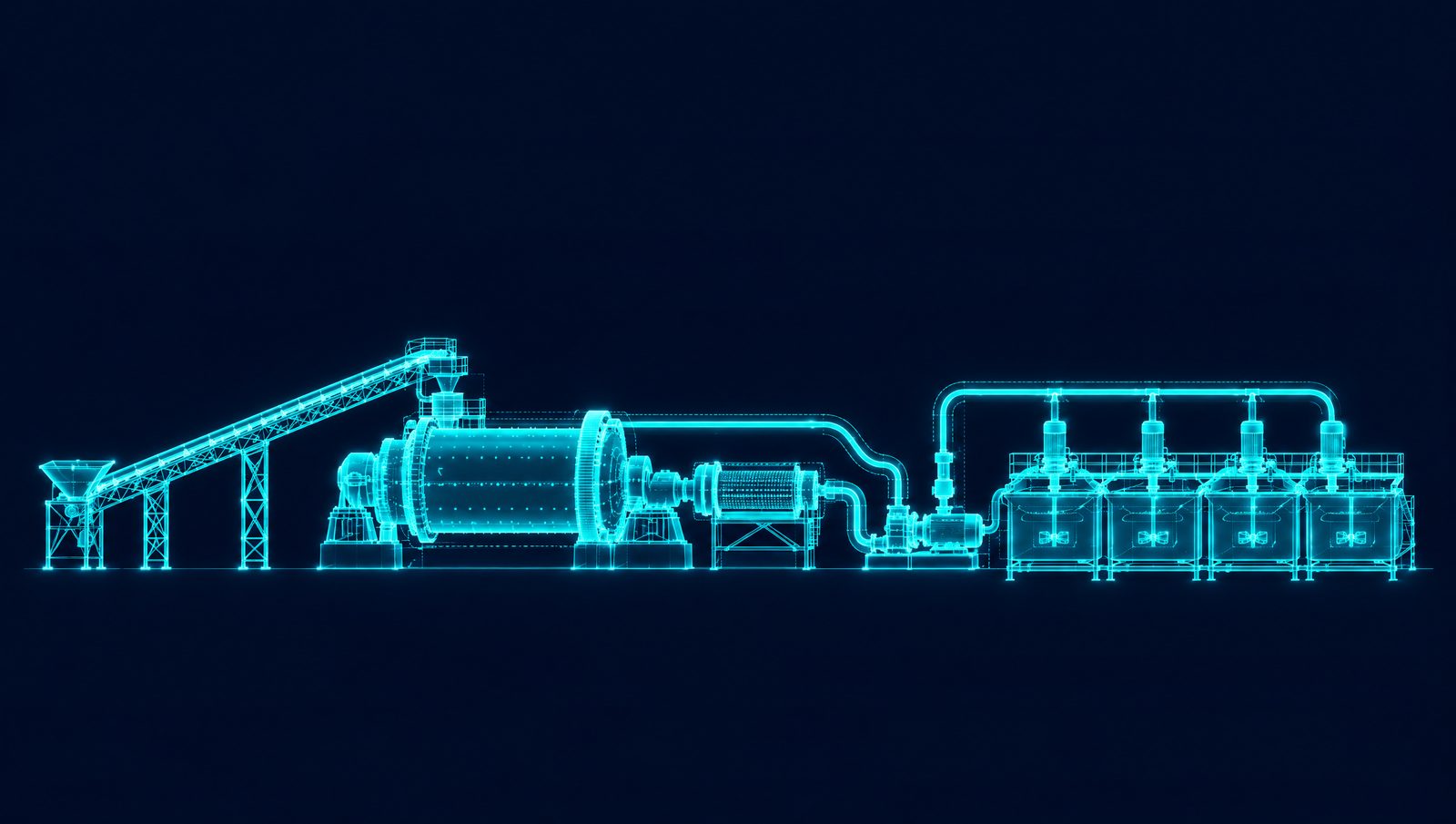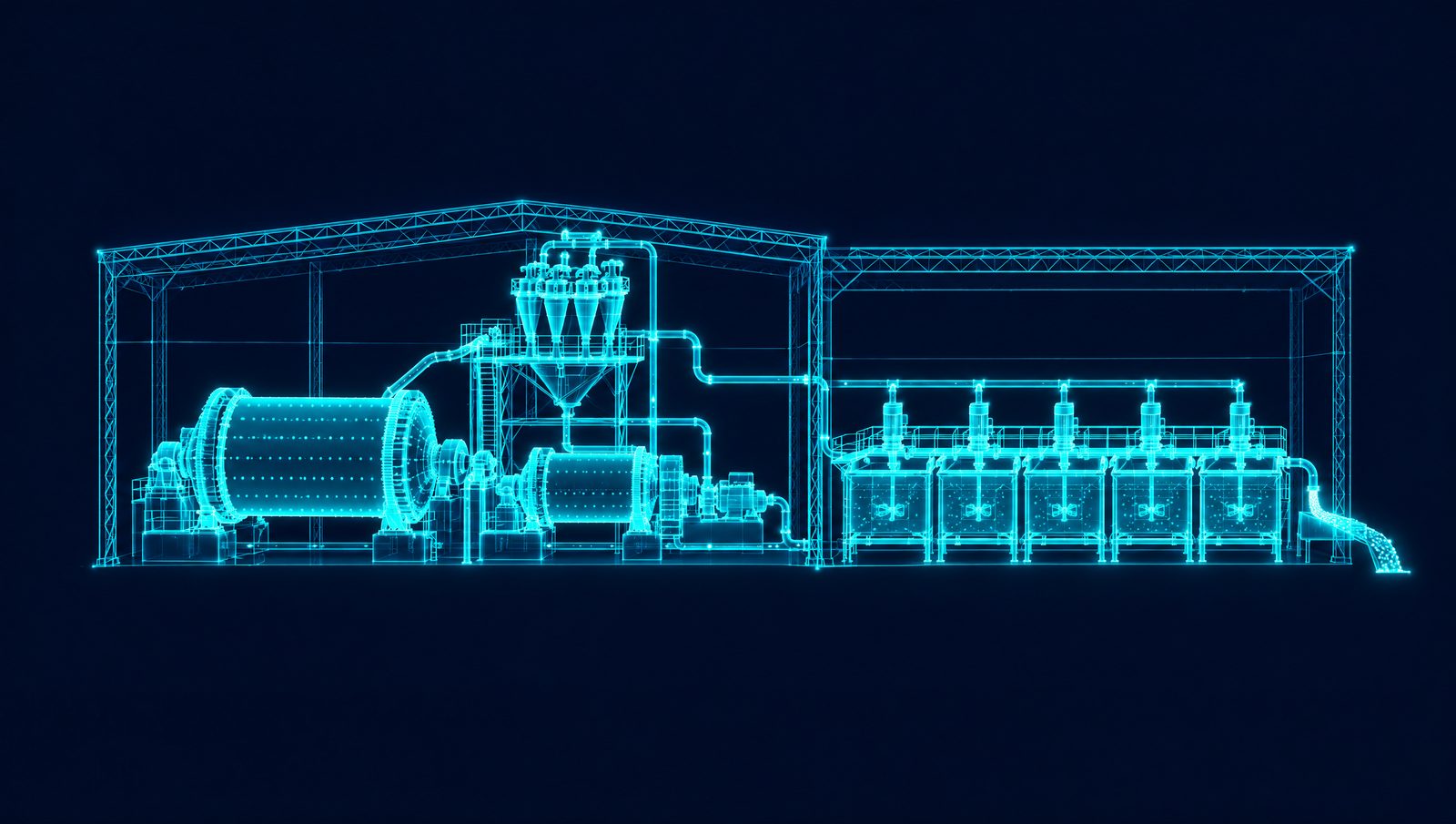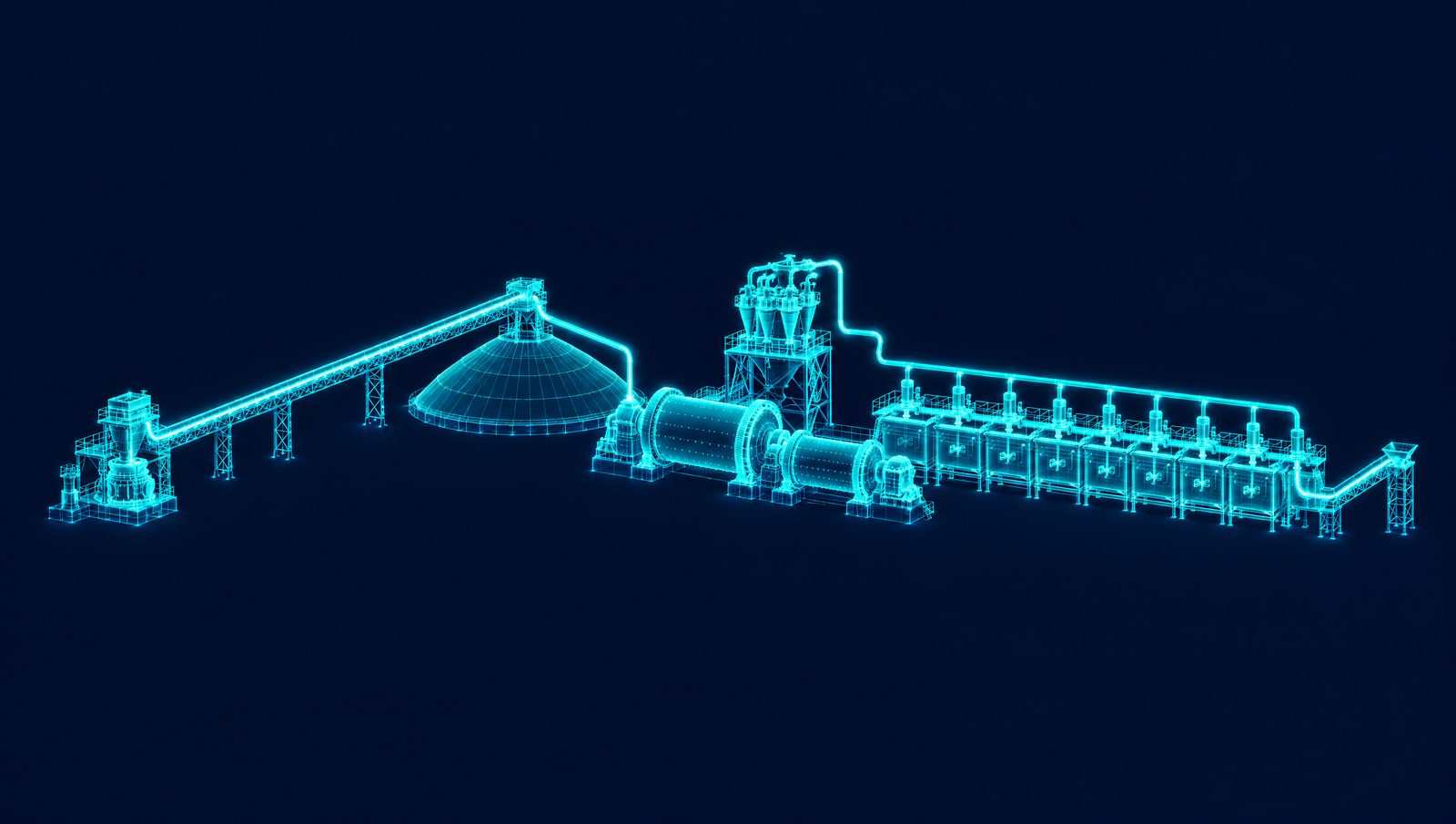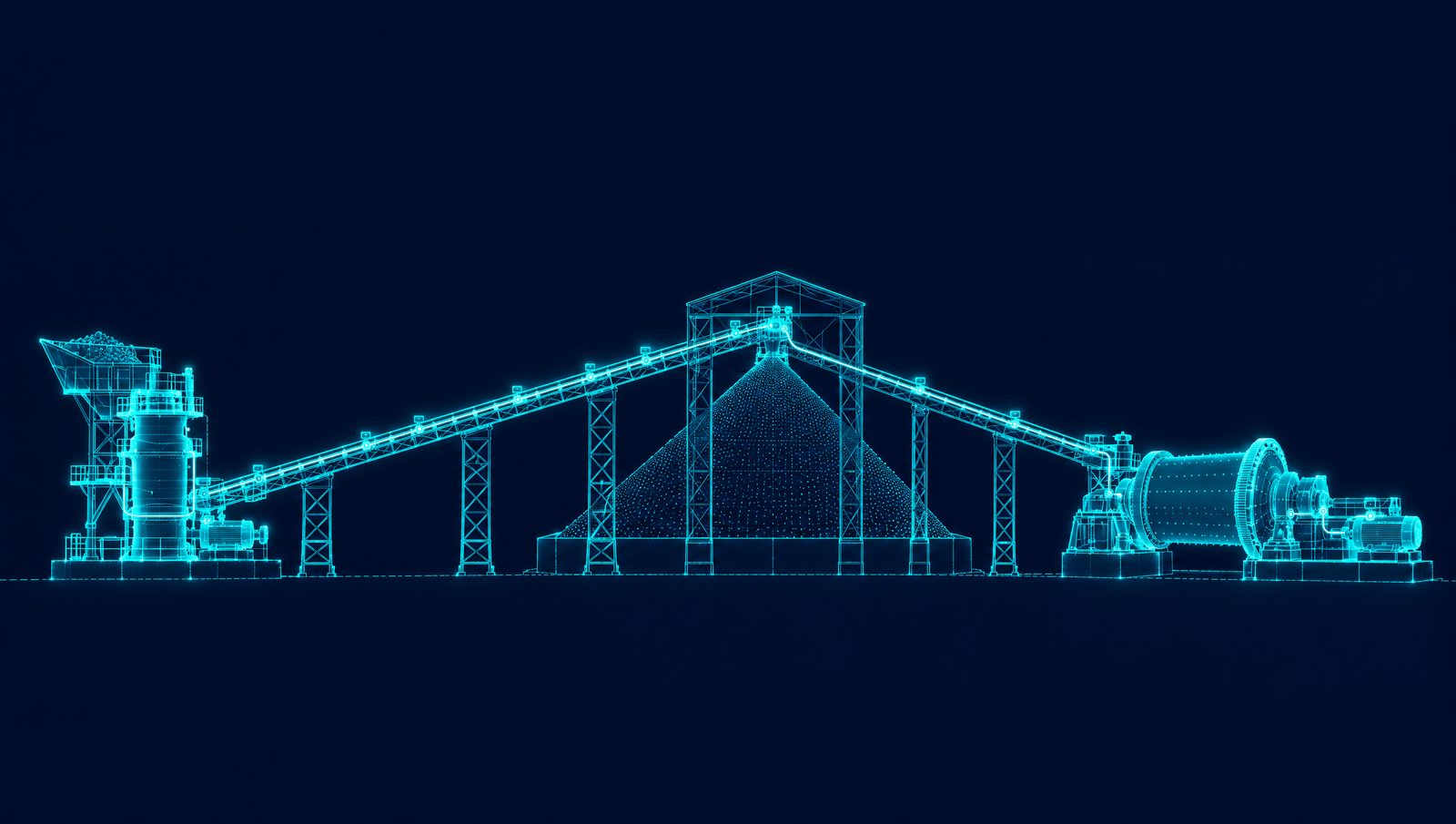
Mining runs on heavy, interconnected equipment: haul trucks, crushers, conveyors, mills and slurry pumps. When one of them stops, the equipment downstream often stops with it. A crusher failure can starve the mill once the stockpile runs down. A conveyor breakdown can idle a whole processing line, and the losses grow with every hour it stays down.
Much of this downtime can be predicted. Equipment usually shows signs of deterioration well before it fails, in vibration, heat, pressure and oil condition. Industrial AI turns the site's sensor and maintenance data into earlier warnings and better-timed work, which reduces unplanned stops and lowers maintenance cost. The five strategies below build from a single asset to the whole site.
1. Predict equipment failures before they happen
Abrasive dust, shock loads and temperature swings wear bearings, gearboxes and pumps faster than most fixed maintenance plans assume. When a critical haul truck stops, the crusher it feeds stalls, and the losses compound across the site.
Vibration, temperature, pressure and oil-analysis sensors stream data to machine-learning models trained on historical failure patterns. By comparing live signals with past breakdown signatures, the models surface anomalies well before they become failures. Bearings, planetary gearboxes and slurry pumps are good candidates, because their early warning signs, micro-vibration spikes and small temperature rises, are measurable by sensors but impossible to feel by hand.
The goal is a longer mean time between failures. A haul-truck gearbox fault flagged ahead of time can be fixed during a planned shift change instead of as an unplanned stop. For reliability engineers in mining, that means higher uptime, lower parts spend and longer asset life.
2. Schedule maintenance on equipment condition
Fixed-interval maintenance takes equipment off line whether it needs work or not. That costs production hours and pushes critical repairs into overtime, in production windows that are already tight and with crews that are already stretched.
Condition-based scheduling replaces the calendar with failure probabilities that update as sensor data arrives. The scheduling logic weighs production targets, crew rosters and parts inventory, then picks the maintenance window with the least risk to throughput. The schedule adjusts as equipment condition and shift availability change.
Three fundamentals come first:
- Clean the historian data and time-align the sensors, so the baseline is accurate.
- Start on one high-impact asset with chronic stoppages, where the value is easiest to show.
- Log downtime, labor and parts savings, so the results can be checked and support can build.
3. Monitor critical assets in real time
Crushers, conveyors and haul trucks carry the whole value chain, and a single conveyor failure can halt it. Periodic spot checks cannot give these assets the visibility they need.
Edge gateways mounted on the equipment stream sub-second vibration, temperature and pressure data to anomaly-detection models trained on historical failures. The first analysis runs at the edge, so patterns such as overheating bearings, resonance and hydraulic pressure spikes are caught before the data reaches the control room or the historian. Clusters of sensors give a continuously updated picture of machine health. Because every reading is time-stamped and archived, the same records also simplify regulatory compliance.
Fleet dashboards bring the live feeds together with risk scores and recommended actions. Whether in the pit or the planning office, teams can see which assets need attention, send crews with the right parts and avoid a cascade of shutdowns. With that visibility, maintenance can move from reactive to proactive work.
4. Share one view of failure risk
Dashboards that combine live sensor data with historical work orders show the probability of failure for every haul truck, crusher and conveyor ahead of time. Planners get time to stage crews, order long-lead parts and schedule repairs around production peaks instead of reacting mid-shift. The same models can set spare-parts stock against failure risk, which cuts excess inventory without risking stock-outs.
A shared view also removes data silos, which leave much of a site's data unused. When maintenance, operations and finance work from the same risk assessment, decisions are faster and cause fewer conflicts.
To build confidence in the recommendations, start by showing how the predictions connect to familiar KPIs in the existing maintenance management system (CMMS). Show the model's key drivers so teams understand what triggers an alert. Then widen coverage as trust builds with the front line.
5. Improve safety through proactive monitoring
Every unexpected breakdown carries a safety risk as well as a production loss. Unplanned failures put crews into hurried repairs around energized equipment, extreme heat or unstable ground. Streaming mechanical and environmental sensor data into AI models links asset health directly to crew protection.
When temperature or gas concentration crosses a preset limit, automated protective logic can slow conveyors, idle crushers or trip a full shutdown before conditions become dangerous. A potential incident becomes a controlled pause instead of an emergency.
Monitoring also extends beyond line of sight. Drones inspect high walls, shafts and ventilation systems without exposing people to the hazard, and every alert is archived for audits.
From equipment to process
These practices draw on the same sensor and maintenance data, so each one makes the others easier to run, and together they protect availability. How much the plant produces while that equipment runs depends on how the grinding and flotation circuits are operated from minute to minute, as ore hardness and grade change.
Imubit works on that part of the problem in mining, minerals and metals. Map traces lost throughput, energy and recovery to the recurring decisions behind them. Model uses Deep Learning Process Control® (DLPC®) to learn a nonlinear dynamic model of the grinding and flotation circuits from their own history, guided by first principles. Control takes the critical setpoint decisions to closed loop on top of the existing APC and DCS, holding the circuit within its equipment limits as ore properties change. In mining, minerals and metals, Imubit's published results are a 2 to 5% throughput increase, 5 to 10% grinding-energy savings and a 1 to 3% metal-recovery improvement.