When a valve drifts or feed quality shifts unexpectedly, every minute of delay costs money. Yet many plants still rely on spreadsheet analysis that takes hours or days to produce a usable answer, and by then the process has moved on.
Models that read live process data can evaluate thousands of measurements and propose new setpoints as conditions change. Operators work from one current view of the unit, with economic opportunities and risks surfaced as they appear, rather than from lagging reports. The effect reaches process control, maintenance, resource allocation and quality.
Real-time data closes the analysis gap
Clipboards, spreadsheets and nightly reports leave gaps of hours before data reaches an engineer. By the time someone acts, conditions have shifted, and yesterday's analysis no longer describes today's unit.
Real-time processing streams sensor readings to the models as they are generated, without batch queues or manual handoffs. When every stakeholder works from the same current view, setpoint changes rest on evidence rather than intuition. A closed-loop controller goes a step further and writes new targets to the control system as conditions change, inside limits set by plant engineers, which reduces the shift-to-shift inconsistency of manual moves.
Predictive models move plants from reactive to proactive
Manual review forces operators to act after a deviation has already become costly. Models trained on historical and live sensor data detect drift as it begins, hours before it would otherwise be noticed. Because the models keep learning, each production run adds data that sharpens the next recommendations.
The first gains usually show up in reliability. Failure prediction from vibration, temperature and power signals lets maintenance be scheduled when it is needed. The same models can feed production plans, energy allocation and tighter quality windows as conditions evolve.
These models notice small performance shifts well before conventional alarms trigger, which leaves time for measured adjustments instead of emergency response. The plant sees fewer unplanned work orders and smoother planning, and the team spends more of its time on improvement.
Ranked alerts put high-impact issues first
During an alarm flood, a control room can see hundreds of alarms per hour. Even in normal operation the load adds up. Alarm management guidance such as ISA-18.2 treats about 6 alarms per operator per hour as acceptable and about 12 as the most an operator can manage, and expects most alarms to be low priority. Low-priority alarms around the critical events cause alarm fatigue and missed deviations.
Industrial AI can rank alerts by economic impact and operational significance, so the most important issues sit at the top. Anomaly detection compares live sensor streams with historical patterns and catches subtle shifts before a conventional alarm would activate, which allows a faster response to external changes such as a feed switch or a change in demand.
Each prioritized alert is most useful in context: the trend, the setpoint history and the financial implication. With that in front of them, operators can act instead of interpreting raw data.
Setpoint decisions around the clock
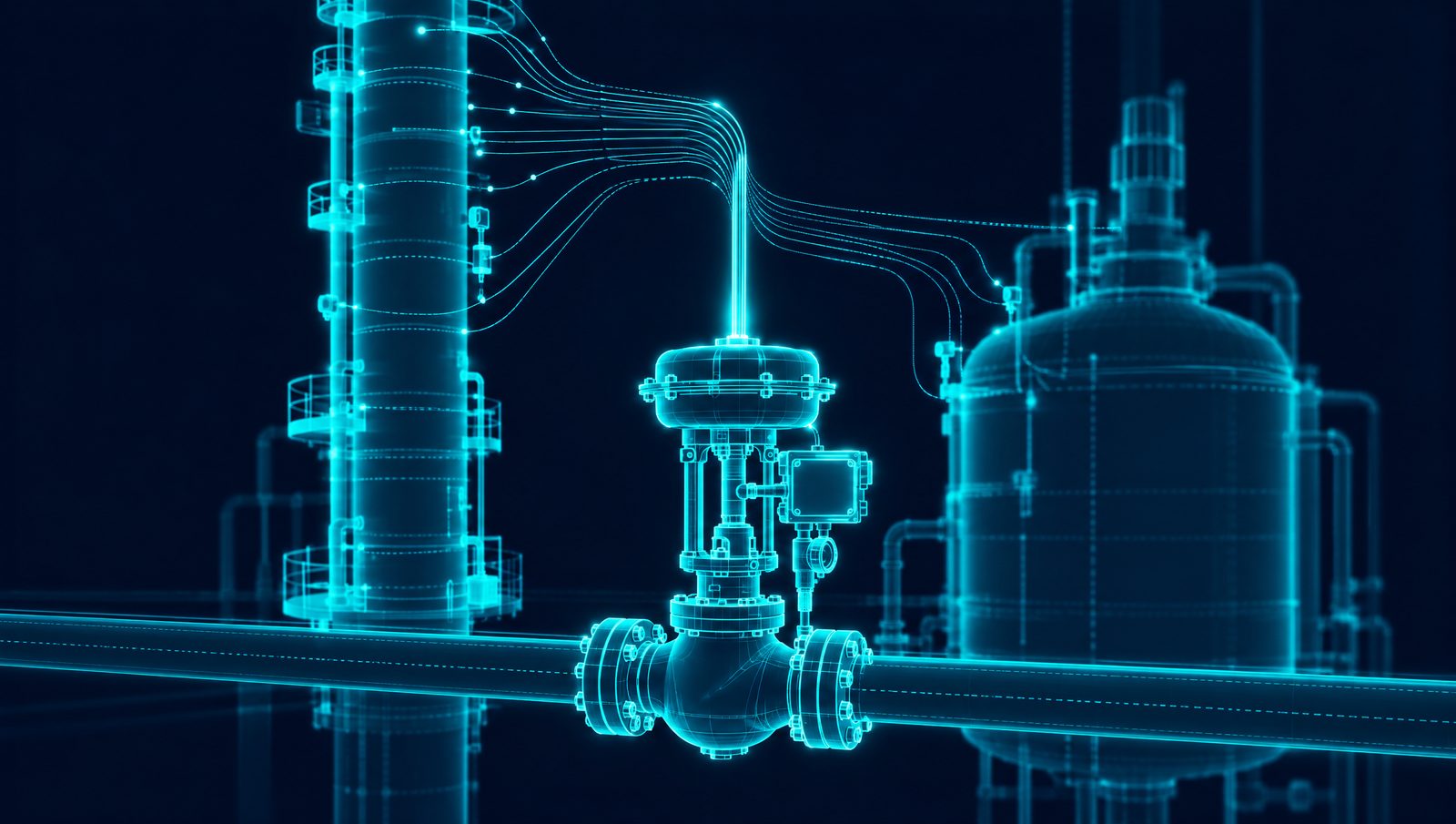
Plants run continuously, and their decisions need to keep pace. In closed loop, the model does not stop at a recommendation. A controller trained with reinforcement learning weighs temperature, pressure and flow measurements against the economic objective and writes setpoints for temperatures, flows and recycle ratios to the APC or DCS, which moves the valves. The controller adapts as feed quality, energy prices and catalyst activity change, so the unit keeps tracking the economics between planning cycles. See process control for how the control layers fit together.
Operators can take over at any time. They keep approval authority over high-impact changes, while routine moves happen within the limits they set. ARC Advisory Group describes this as human on the loop: the AI calculates and executes, and the operator moves from manual controller to high-level supervisor. Newer team members get guidance from the controller's moves, and experienced engineers have more time for improvement work.
Shared models break down information silos
Critical information sits in separate places: planning spreadsheets, maintenance logs and real-time process data. Different teams own them, measure them on different KPIs and review them on different rhythms, and they spend hours reconciling numbers before anyone can decide. The plant behaves inconsistently even when every team does its job well, and leaders see the result as a gap between the plan and the plant. That gap comes from recurring decisions, made every shift by different people with different information.
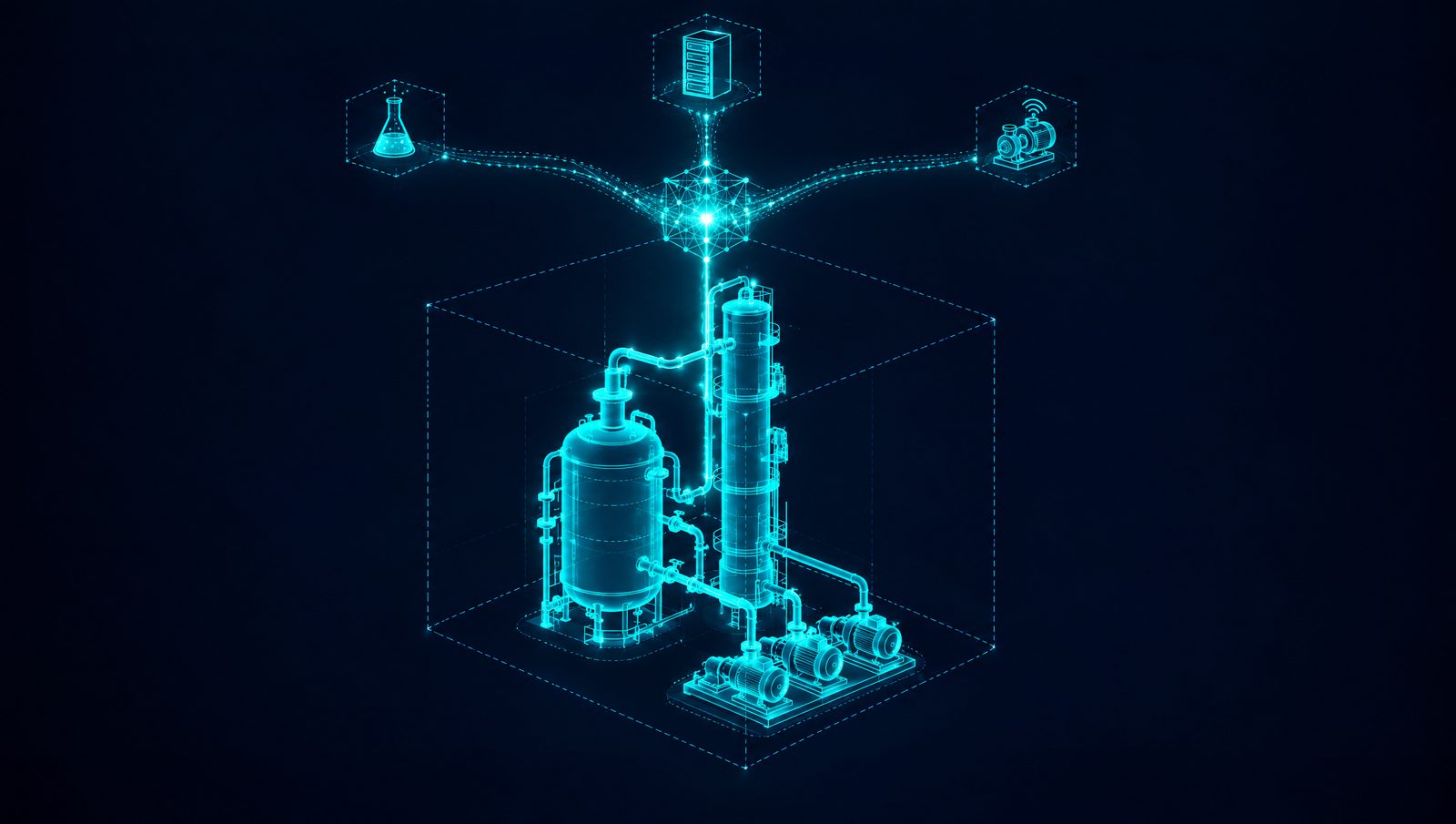
Shared models ingest historian tags, work-order histories and economic targets together, and give every stakeholder the same current picture. Decisions that used to wait for a shift handoff or a scheduled meeting can be made when the data changes, with economics, reliability and safety weighed in one calculation instead of by each team separately.
Success still depends on fundamentals: clearly defined KPIs, thorough audits of the control system, and active change management. Integration is usually harder than the algorithms. When the pieces connect, supply chain decisions line up with front-line operations, and the local optimizations that drain margin give way to plant-wide ones.
Pattern recognition speeds root-cause analysis
Traditional troubleshooting means long data analysis sessions and whiteboard discussions that can stretch for days while production suffers. Models that scan years of sensor history can find the combination of temperatures, pressures and flows that preceded an upset much faster.
The value comes from separating cause from variables that merely moved alongside it, which human analysis often misses across hundreds of tags. When an anomaly appears, the model can test scenarios to rank the most probable root causes and estimate their economic impact. It can also expose hidden interactions between control loops, so corrections stabilize recovery and reduce unplanned downtime.
The same model can run offline as a simulator. Engineers can test a move and see the result of a change before they make it, and new staff can learn the unit on it, which preserves knowledge as experienced workers retire.
How the Imubit Platform applies
Imubit applies Closed-Loop Physical AI to these decisions in refining, chemicals and polymers, cement, and mining and minerals. Map traces plan-to-plant gaps to the recurring decisions behind them. Model learns each unit's causality from its own operating history with Deep Learning Process Control® (DLPC®). Control takes the critical decisions to autonomous execution, inside limits set by plant engineers, on top of the APC and DCS already in place. Imubit has over 100 closed-loop controllers deployed worldwide, the largest install base in the industry. See how the platform works.