Many process plants still run on setpoints that people adjust by hand between periodic optimization runs. An engineer updates the targets, operators hold them through the shift, and the next correction waits for the next lab result or planning cycle. Meanwhile feed quality, ambient conditions, fouling and catalyst activity keep moving. In between, the plan depends on recurring decisions, made every shift by different people with different information.
Closed-loop AI addresses that gap. A model learned from the plant's own data predicts how a unit will respond to a change, and a controller writes setpoints back to the control system on a short, steady cycle. Operators can take over from the board, inside limits the plant sets.
What closed-loop AI is
Conventional control relies on fixed rules, linear models identified at commissioning and periodic retuning. Between retuning efforts the models drift away from how the unit behaves, and engineers compensate with conservative targets.
Closed-loop optimization connects real-time data, machine learning and control in one continuous loop. At its center is a controller trained on plant data that acts to maximize an objective the plant defines, such as yield, energy efficiency or reliability. Because the model is learned from operating data and retrained as conditions change, it can follow the unit as feed quality, fouling and catalyst activity move.
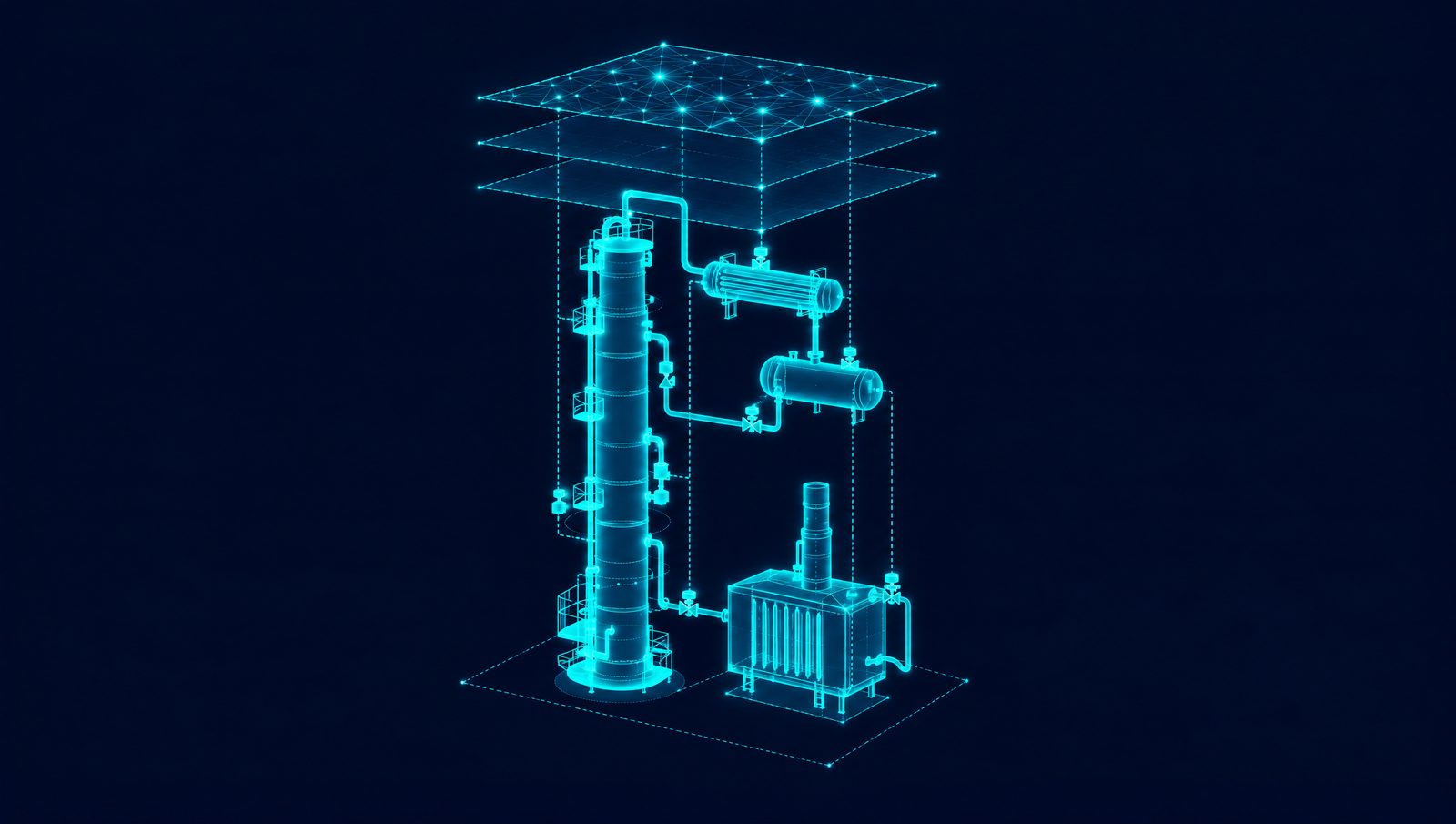
It sits on top of the control layers a plant already has. Regulatory control in the distributed control system (DCS), the advanced process control (APC) applications and the safety systems all stay in place. The AI layer decides the targets those systems hold. ARC Advisory Group describes the operator's role in this arrangement as human on the loop: the AI calculates and executes, and the operator moves from manual controller to high-level supervisor.
How the loop works
The loop runs in three steps and repeats continuously.
Data acquisition
The system collects high-resolution process data from sensors, the plant historian and the control system. Fine-grained data captures transient events and small fluctuations that hourly averages, or monitoring based on fixed rules, tend to miss.
Modeling and decision
Deep learning captures the nonlinear relationships between process variables. Reinforcement learning then learns a control strategy by trial and error, in a simulation built from that model rather than on the live unit. The model is retrained on new operating data as plant conditions change.
Setpoint write-back
The controller writes setpoints back to the DCS or to the APC layer. On a refinery fluid catalytic cracking unit, for example, it might adjust reactor temperature, catalyst circulation and feed rate to maximize yield while holding product quality and safety limits.
The cycle repeats minute by minute. Conventional optimization might update setpoints weekly or monthly, which misses short-term opportunities and leaves the unit exposed to disturbances between updates.
Piloting closed-loop AI on one unit
A closed-loop project can look daunting given the complexity of the process and the data infrastructure behind it. A pilot on one well-chosen unit limits the risk and builds confidence inside the plant.
- Choose a high-impact unit. Good candidates show variable performance, frequent manual adjustment by operators or high energy use. A well-understood operating range and a rich operating history help the model train well.
- Collect historian data. Several years of data is ideal. The key variables are temperatures, pressures, flows and product quality indicators. The more operating conditions the data covers, the more robust the model.
- Train and validate offline. The model is trained and checked against historical outcomes in a controlled environment, without touching live operations.
- Run in advisory mode. The model runs in shadow alongside the existing control system and makes real-time recommendations without changing anything. Operators and engineers compare those recommendations with their own judgment.
- Close the loop inside set limits. Once confidence is established, the controller adjusts setpoints within predefined safety boundaries. Operators keep oversight and can intervene at any time. As trust grows, the team widens the operating envelope the controller may use.
Advisory mode is a step toward closed loop, where the controller acts on every cycle instead of waiting for someone to act on a recommendation. Judge the pilot on operational results, such as energy saved or downtime avoided, and on whether the operating team accepts the system and is ready to scale it.
From pilot to production
A structured rollout balances technical readiness with operational acceptance. Each stage ends in a formal checkpoint with leadership and operations, which keeps risks visible and communication clear.
- Assess readiness. Rank candidate units by optimization potential and infrastructure maturity to produce a pilot shortlist. Poor sensor health or thin data coverage has to be fixed before moving on.
- Secure the data infrastructure. IT and OT teams set up reliable, secure access to high-resolution data from the historian and sensors, and validate its quality.
- Develop the model. Train models on historical plant data so they represent the unit's behavior and constraints. Data quality problems such as sensor drift have to be addressed, or the model degrades.
- Test virtually. Run the models in a sandbox alongside the existing control system. This verifies the recommendations and builds operator trust with no risk to live operations.
- Go live. Start closed-loop operation with oversight and manual override in place. Change management and operator training carry the adoption.
- Optimize continuously. Monitor performance, retrain the models and review results periodically as plant conditions evolve.
What the plant needs in place
Closed-loop AI works with the existing control architecture and does not require an overhaul. The prerequisites are:
- a historian that captures high-resolution, frequent samples
- control system access that lets the controller write setpoints back
- a secure bridge between the operational technology (OT) and IT networks
- computing capacity for real-time model execution, on-premise or in a hybrid arrangement
- cybersecurity controls that protect data integrity and prevent unauthorized access
- an integration that handles data latency, so each control move is made on current values
How Imubit applies this
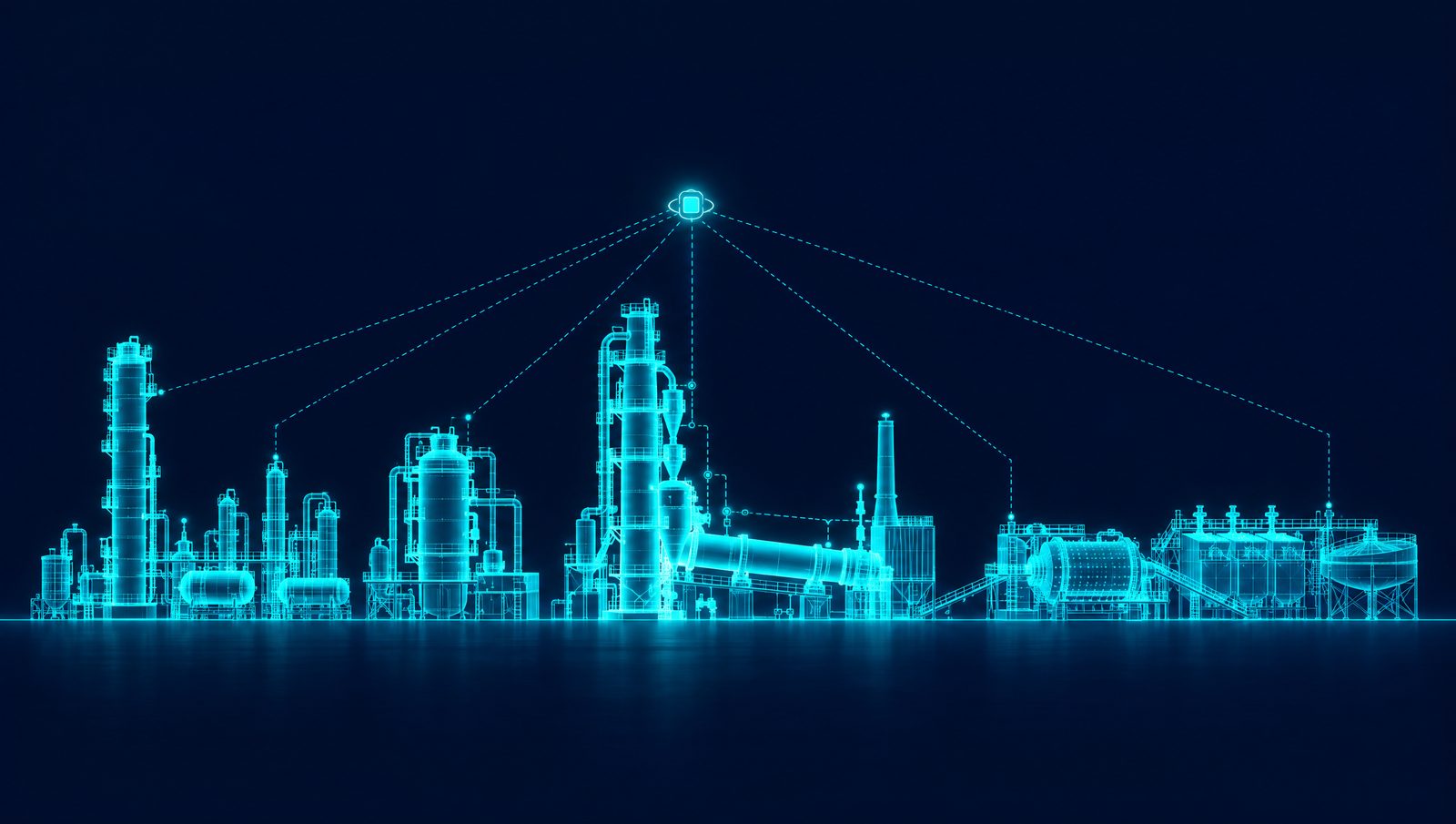
Imubit applies Map, Model and Control on units in refining, chemicals and polymers, cement, and mining and minerals, as described on the platform overview. Map traces plan-to-plant gaps to the recurring decisions behind them. Model uses Deep Learning Process Control® (DLPC®): a Deep Learning Predictor learns a nonlinear dynamic model of the unit from its own history, guided by first principles, and process engineers build those models with no Python and no machine-learning background. Control takes the critical decisions to closed loop, where a Deep Learning Controller trained by reinforcement learning writes setpoints to the existing APC or DCS minute by minute, on-premise and, inside limits set by plant engineers. Imubit has over 100 closed-loop controllers deployed worldwide.