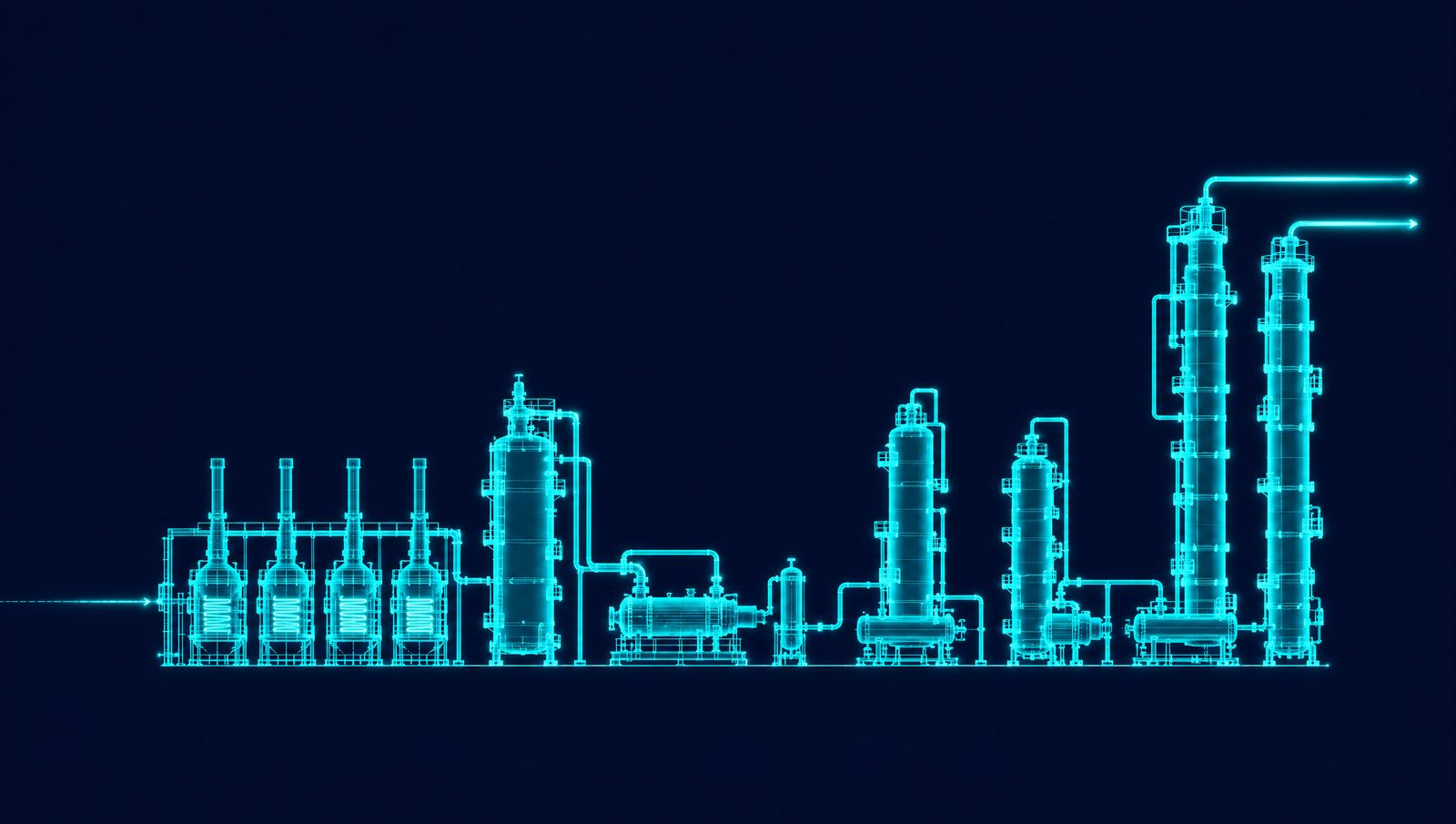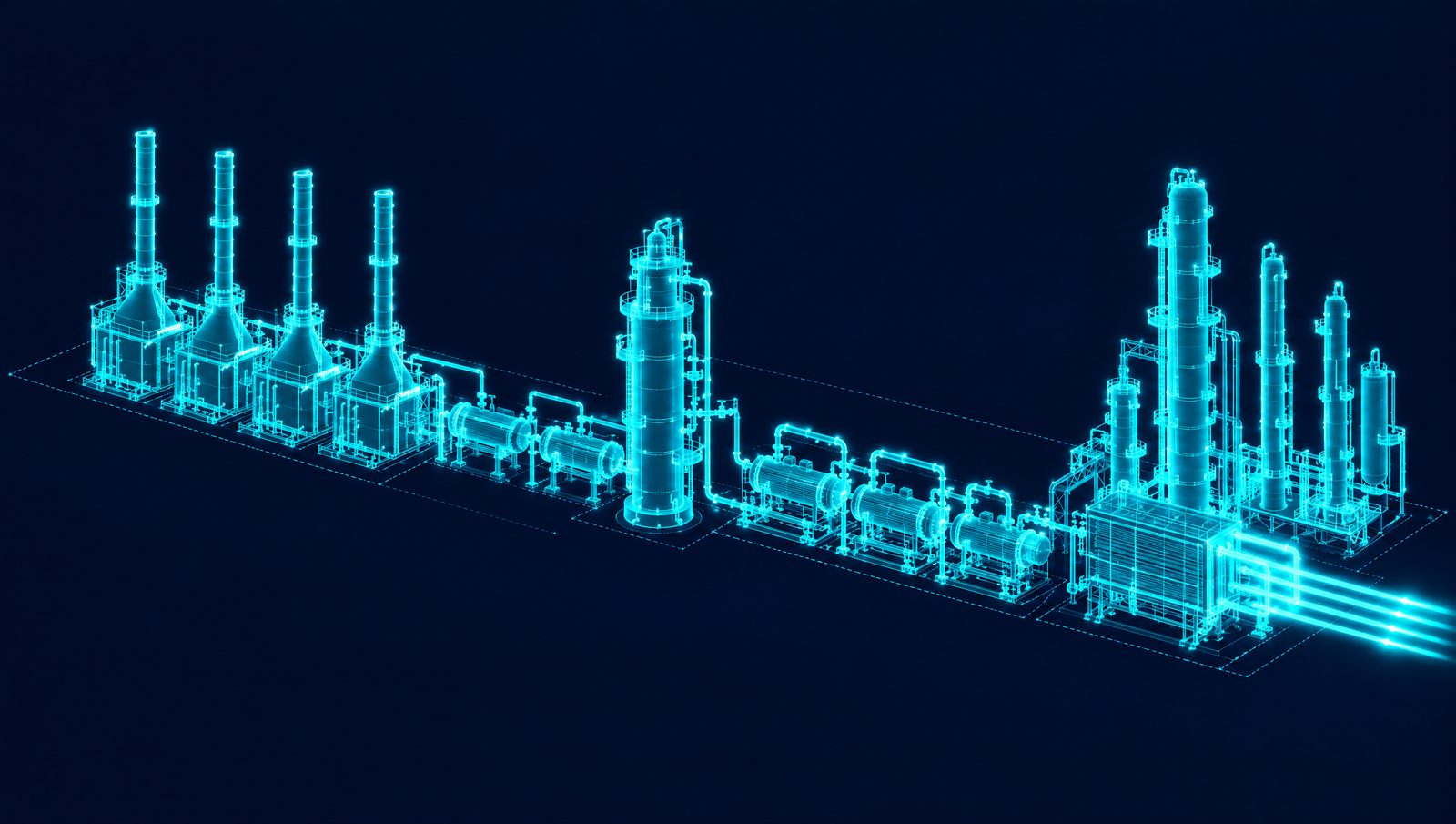
Olefins plants, the producers of ethylene, propylene and their co-products, are among the most energy-intensive operations in the petrochemical sector. The furnace radiant coils run at roughly 800°C, and the separation train downstream runs as cold as -170°C.
The gap between how a plant runs and how it could run traces back to how olefins production works, from the radiant coil to the last fractionation column. Following the process from end to end shows why conventional control struggles and what a path to a self-optimizing olefins plant looks like.
From cracking furnace to separation train
Whether a plant runs on ethane and propane or on naphtha and gas oil shapes its design, its yield pattern and its economics. An ethane cracker produces a narrower slate dominated by ethylene, with tighter operating windows. A naphtha cracker yields a broader mix of ethylene, propylene, butadiene and aromatics. That breadth gives more degrees of freedom to optimize, and more constraint interactions to manage.
The hot section
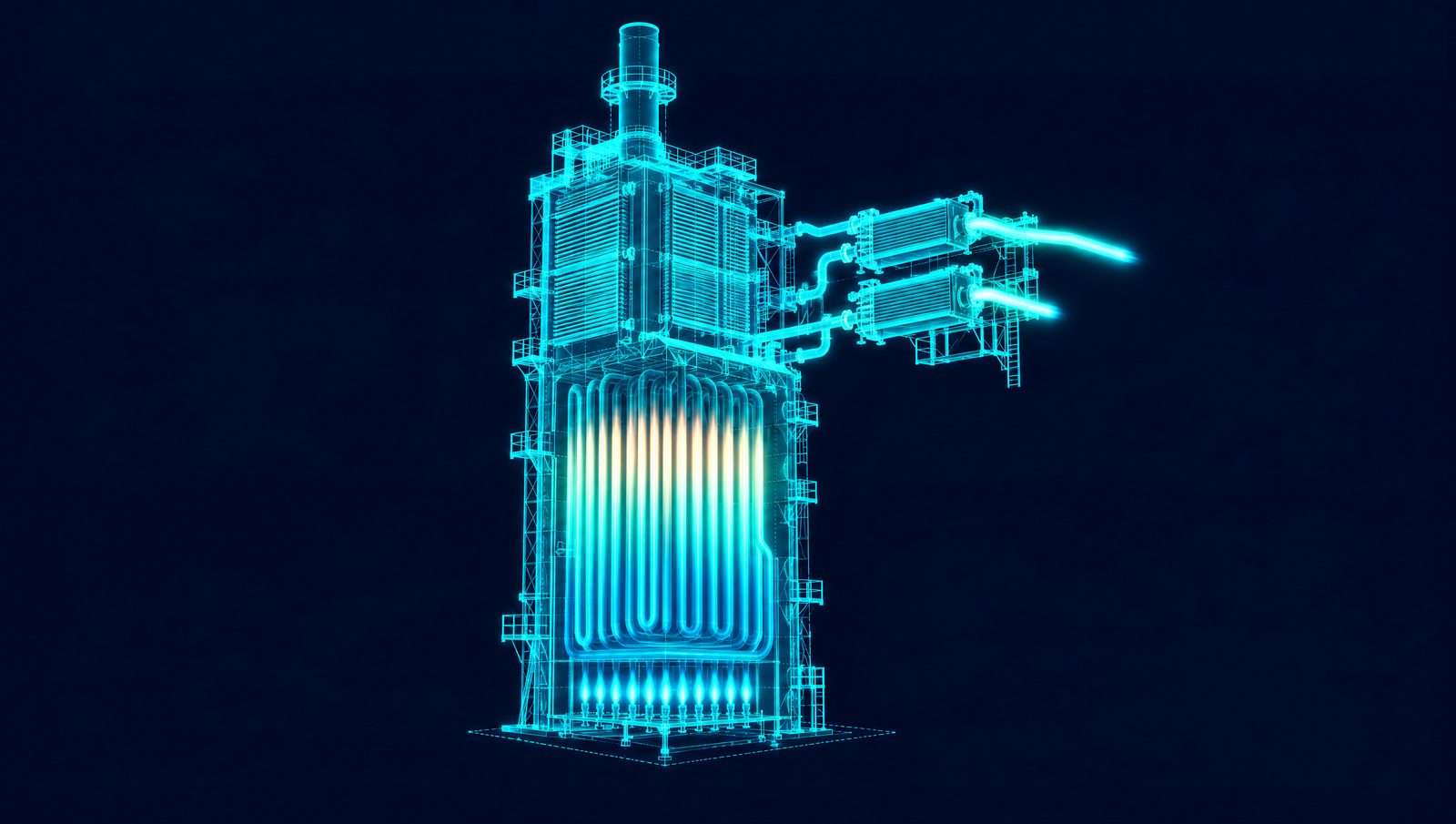
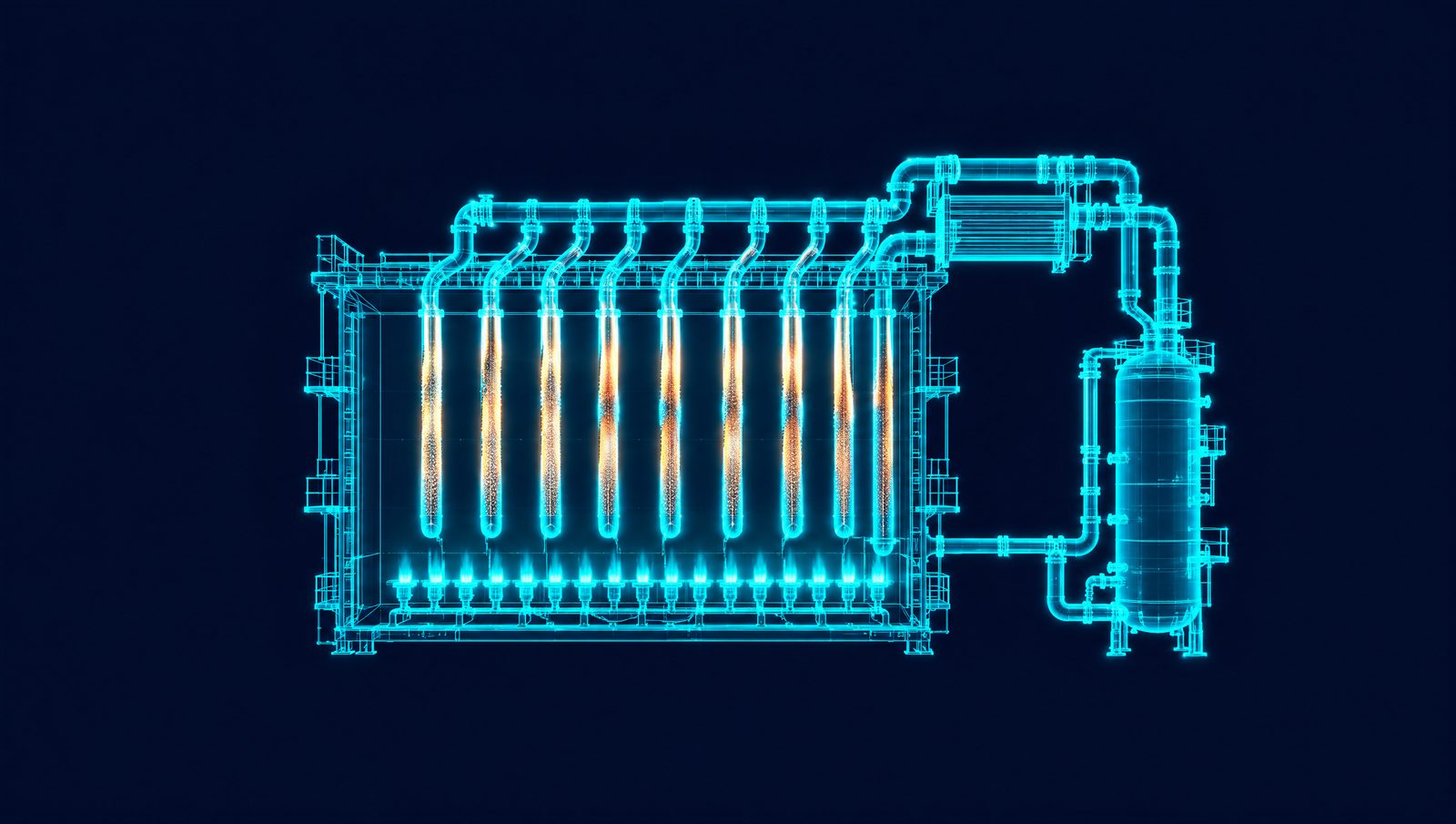
The hot section centers on the steam cracking furnaces. Hydrocarbon feed is mixed with dilution steam and enters radiant coils at roughly 800°C, where residence time is measured in milliseconds. The cracking reactions are fast and highly temperature-sensitive, and the product mix shifts with severity, the steam-to-hydrocarbon ratio and feed composition.
The transition out of the furnace matters as much as the furnace itself. Transfer line exchangers must cool the cracked gas within fractions of a second of leaving the radiant coil. Any delay lets secondary reactions break ethylene and propylene down into heavier, less valuable byproducts.
Quench oil and quench water towers complete the cooling before the gas enters compression. Quench efficiency directly affects the composition that reaches the cold section. It is an optimization variable in its own right, but traditional control schemes rarely treat it as one.
The cold section
Once cooled, the gas enters the compression and fractionation train, which separates the individual products at temperatures as low as -170°C. The key columns are the demethanizer, deethanizer, C2 splitter, depropanizer and C3 splitter. Refrigeration systems, often propylene and ethylene cascades, supply the cooling these separations need.
Why olefins plants resist conventional optimization
Coking and run length
Each furnace coil ages at its own rate as coke builds inside the tubes. Pressure drop rises and heat transfer degrades over each run. Decoking resets performance, but the timing creates asymmetry across the fleet: some furnaces run fresh while others approach end-of-run conditions.
Process control systems typically treat each furnace on its own, so they miss the chance to coordinate severity targets across the whole furnace fleet.
Feed variability
Even within a single feedstock contract, composition can shift enough to change yield patterns. A naphtha cracker processing heavier parcels produces more pyrolysis gasoline and less ethylene, and lighter feeds push the other way. Heavier feeds also accelerate coking, which tightens decoking schedules and ties feed selection, severity and run-length targets together. Managing feedstock variability becomes a daily operating problem.
Traditional advanced process control (APC) handles these dynamics slowly. It relies on linear or quasi-linear models that assume relatively stable conditions, and it needs manual retuning when conditions shift.
Interaction between the hot and cold sections
A change in furnace severity alters the volume and composition of gas entering compression and separation. Column loadings, refrigeration demand and product purity targets all shift at once. Optimizing the cracker without accounting for downstream capacity, or the reverse, can push one section into a constraint while leaving margin on the table in another.
The gap between the plan and the plant
Planning adds its own disconnect. Linear programming (LP) models set production targets from economics, but those targets assume steady-state conditions that rarely hold once feed quality, furnace coking, acetylene converter catalyst activity and equipment health evolve through a campaign. Feed slates change mid-campaign as contract parcels shift, unplanned derates force operation below nameplate capacity, and seasonal demand changes the relative value of ethylene and propylene.
LP models typically update on weekly or monthly cycles, so by the time operators act on the targets, the conditions behind them may already have moved. Meanwhile the plan depends on recurring decisions, made every shift by different people with different information.
Energy
Furnace fuel and the electricity for compression and refrigeration are among the largest operating costs in the plant. Small deviations from the best firing rates, reflux ratios or compressor loadings compound quickly across multiple furnace trains. The energy penalty from poor coordination is one of the few costs that is both large and controllable.
How a plant-wide learned model changes performance
A learned model addresses these constraints by capturing the nonlinear, interconnected behavior that traditional controllers approximate at best. Rather than a linear model that needs manual retuning when conditions shift, it learns from the plant's own operating data, such as furnace inlet compositions, coil outlet temperatures, column profiles and refrigeration loads, across all operating regimes, guided by first principles.
The result is plant-wide coordination instead of unit-by-unit optimization. When one furnace approaches decoking, the model can redistribute severity targets across the rest of the fleet while adjusting column profiles, reflux ratios and compressor loadings to match the changed gas composition, and still hold the overall production target.
The same model serves the planning and economics teams. Product mix and routing decisions then draw on what the plant can do today instead of last quarter's LP assumptions. Because the model works from current plant data between LP updates, the persistent gap between planned targets and actual operation narrows.
Advisory mode first
Deployment usually starts in advisory mode. The model generates setpoint recommendations, and operators review them and accept or reject each one. This is where the model is validated against the people who know the unit best.
Operators get what-if analysis that shows how competing constraints interact: what happens to ethylene yield if furnace severity drops to extend run length, or how a shift in feed composition should change the energy balance of the separation train. Cross-shift consistency improves because every crew works from the same analysis instead of individual judgment calls that naturally vary from shift to shift.
Consider a fleet of eight furnaces at different points in their coking cycles. An experienced operator might favor the furnaces they know best, while a newer operator might follow a fixed severity profile across the board. Advisory mode gives both crews the same answer: which furnaces can take higher severity, which should be eased to extend run length, and how those choices affect the separation train's energy balance. That consistency reduces the shift-to-shift variability that often goes unmeasured but erodes margin over time.
Then closed loop
As trust builds, the plant moves to closed loop. The controller writes setpoints to the existing APC or DCS inside safety limits the operators define. The transition is gradual and reversible. Safeguards hand control back to the existing control layer at any point if data quality or model confidence drops.
That reversibility matters as much for trust as for technical safety. Operators and managers are more willing to widen the closed-loop scope when they know the system will not corner them into an operating regime they cannot override.
One model for operations, maintenance and planning
Technical capability alone does not decide whether optimization succeeds. Olefins plants face the same knowledge transfer problems as the rest of the petrochemical sector: experienced operators retiring, newer staff still building process intuition, and silos between operations, engineering, planning and maintenance.
A single shared model of plant behavior changes that. When operations, planning and engineering work from the same representation of how furnace severity, feed quality and separation efficiency interact, questions that used to wait for an offline study can be worked through against the model the plant already runs on.
Maintenance benefits too. Instead of scheduling decoking on tube metal temperature limits alone while operations manages severity targets separately, both teams can see how the timing of a decoke and the condition of each furnace affect the economics of the whole plant, and time their interventions accordingly.
No model replaces the pattern recognition that comes from decades at the board. A model can preserve the observable relationships between process states and the actions that produced good outcomes, and make that knowledge available to every shift instead of a few senior operators. Newer operators can practice on the same model in simulation before they meet those situations live, which builds their skill without risking a process upset.
How the Imubit Platform applies
In chemicals and polymers, the Imubit Platform applies Map, Model and Control to the furnace, compression and separation decisions that set olefins margin. Map traces the gap between the plan and the plant to the recurring decisions behind it, such as severity targets across the furnace fleet, decoking timing, and column and compressor loadings. Model learns a nonlinear dynamic model of the plant from its own history with Deep Learning Process Control® (DLPC®), guided by first principles. Control takes the critical decisions to closed loop, writing setpoints to the existing APC and DCS minute by minute, inside limits set by plant engineers.