When a depropanizer drifts a few degrees or a single valve sticks, propane giveaway rises, energy use climbs and margin shrinks. The column loses that margin to long analyzer lags, multivariable coupling and conservative operating windows that conventional control does not fully address.
How the depropanizer works
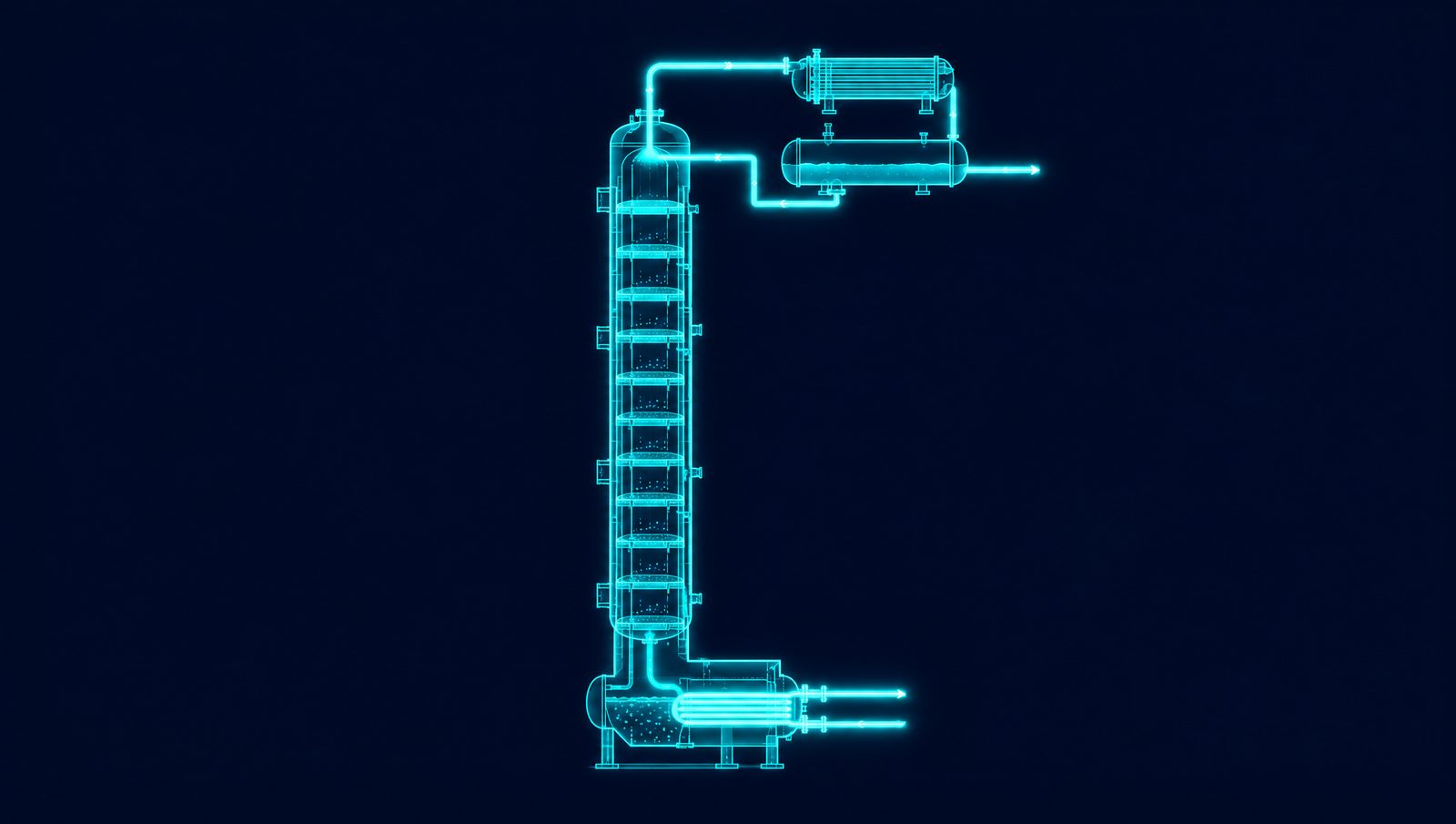
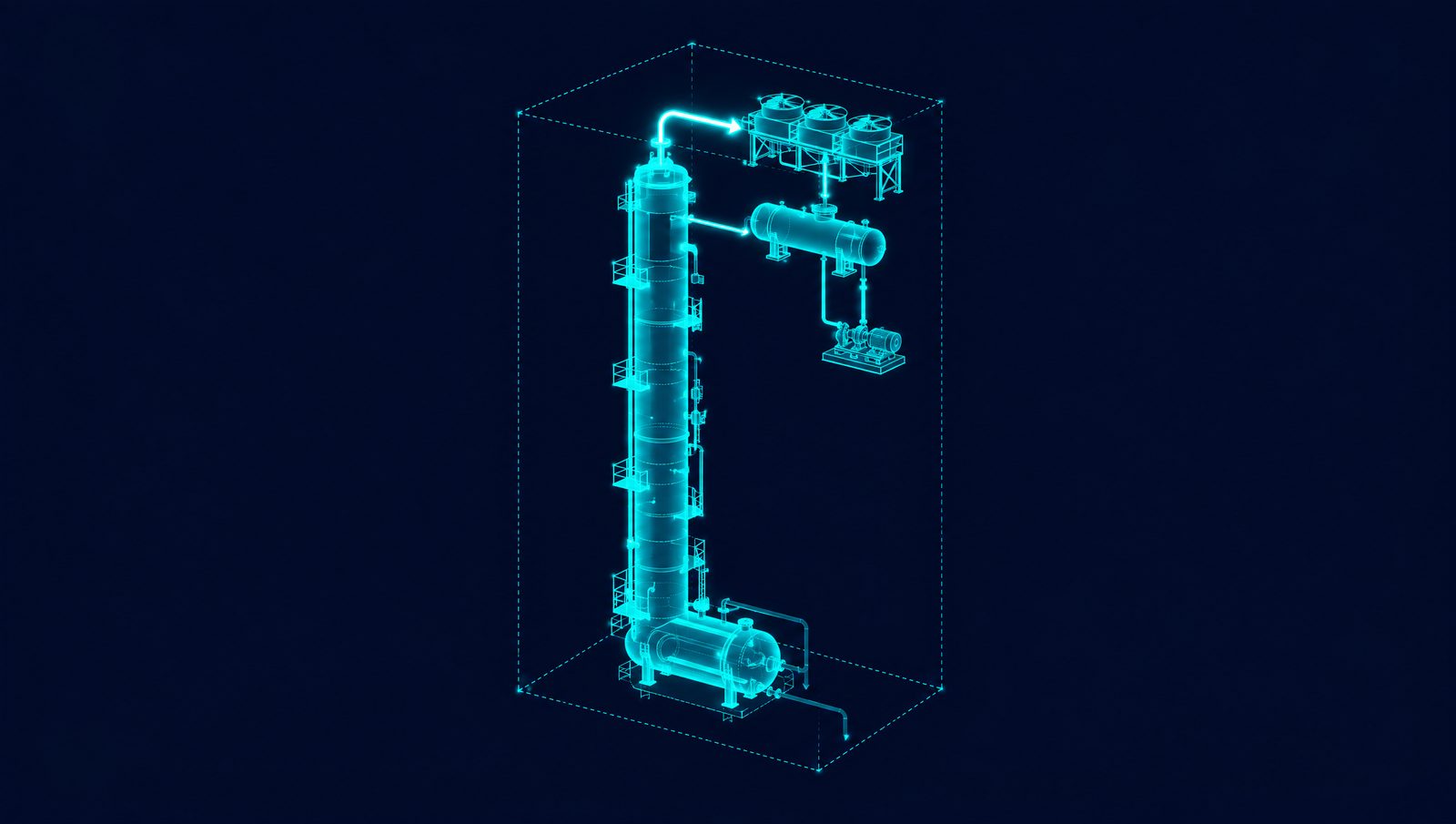
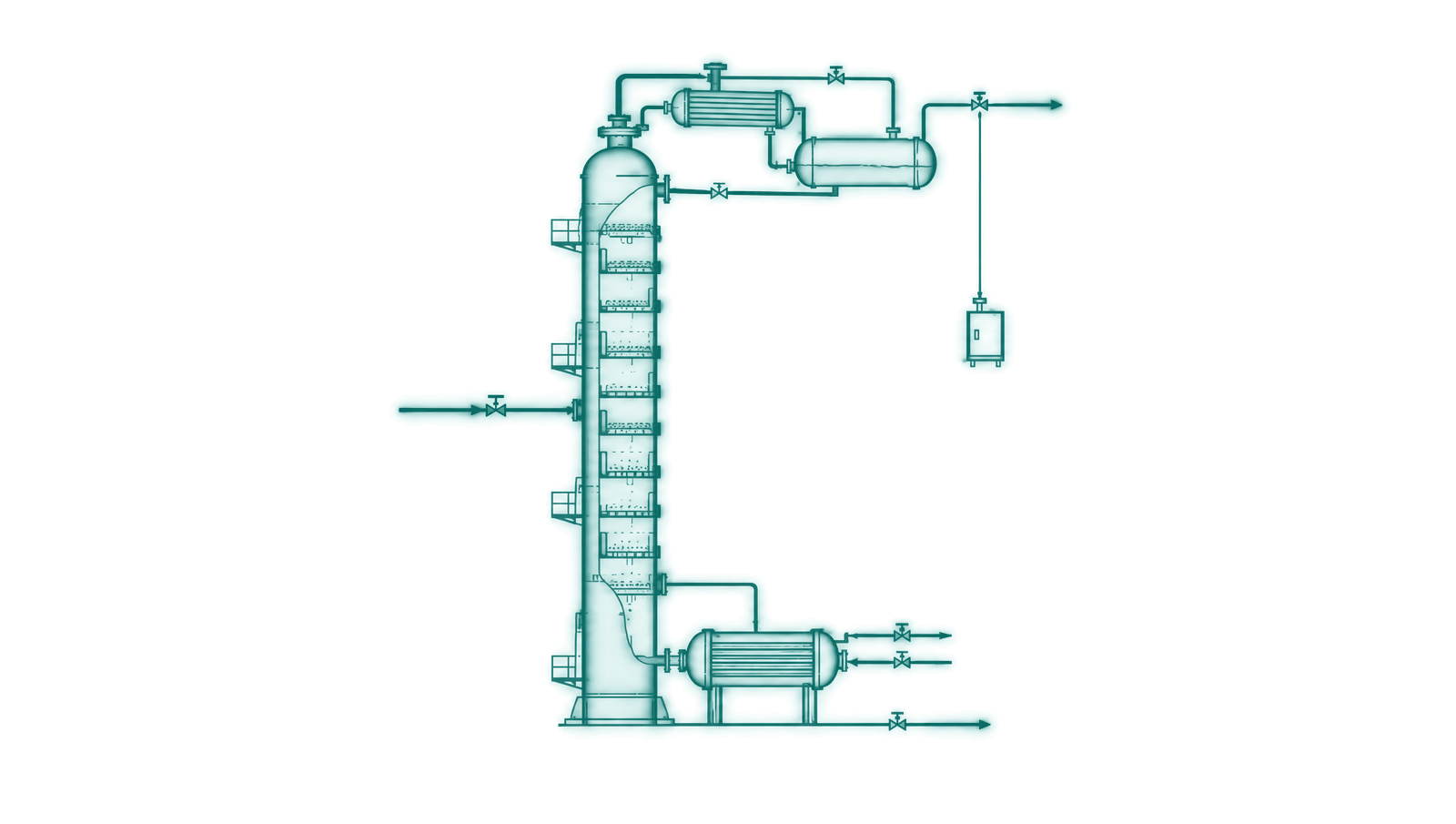
The depropanizer separates propane (C₃) from heavier C₄+ hydrocarbons in streams leaving FCC, coker or steam-cracking units. Its behavior rests on a handful of variables:
- Top pressure sets relative volatility. Push it too high and the separation suffers. Push it too low and the overhead becomes harder and costlier to condense.
- Reflux ratio sets overhead purity.
- Reboiler duty supplies the heat for the split.
- Bottom temperature and feed composition complete a tightly coupled system that responds to every small change.
The economic constraints are the propane product specification, the steam budget and the flooding limit. The pain points are familiar: propane giveaway, excess energy spent on conservative reflux, and tray or packing fouling that raises differential pressure toward a shutdown.
Analyzer feedback can arrive 30 to 40 minutes late. That dead time slows every correction and erodes margin when propane prices swing and every tonne of steam, with its CO₂, counts.
Where PID loops and APC reach their limits
PID loops control single variables well. They struggle when every change in top pressure, reflux or reboiler duty ripples across the column. Under strong interaction, tuning becomes guesswork and variability creeps back in.
Long analyzer delays add a second problem. With composition data arriving late, a feedback loop corrects an error after it has already moved the product.
Advanced process control (APC) helps. Building and validating its models takes substantial engineering, and accuracy erodes as fouling, sensor drift and feed changes accumulate, so the models need periodic retuning. The usual result is a cautious operating window, extra energy and constant spreadsheet updates.
What a learned model changes
A deep learning model trained on the column's own history captures nonlinear relationships between top pressure, reflux ratio, reboiler duty and feed composition that a linear model misses. A controller trained with reinforcement learning across many simulated operating scenarios learns how to move those variables together as conditions change. Because the controller anticipates the column's response instead of waiting on the analyzer, purity limits can be tightened without running off-spec, and engineers spend less time on manual adjustments.
The approach brings together several capabilities:
- Multivariate monitoring. A neural network model watches tray temperatures, differential pressure and column feed together, and can flag the onset of hydraulic flooding before alarms trigger.
- Fouling forecasting. Trends in differential pressure and temperature profile can forecast fouling rate, so cleaning fits planned maintenance windows and helps extend asset life.
- Adaptive setpoint control. The controller adjusts reflux-to-feed ratio or reboiler duty as feed composition changes, holding purity while minimizing energy.
- Soft sensors. An inferential model estimates C₃ purity continuously from temperature profiles, pressures and feed composition, instead of waiting on the analyzer or the lab.
- DCS integration. Optimized targets reach the DCS through writable tags and operator message queues, alongside the existing APC.
Working with APC and DCS
The learned controller works as a supervisory layer on top of the existing APC and DCS. It sets targets and handles longer-horizon coordination across top pressure, reflux and reboiler duty, while APC and the regulatory loops keep managing fast dynamics. A clear handoff between the layers avoids controller conflicts and keeps operators in charge of the authority limits they set.
What to do when a model drifts
Model performance can slip as sensors age or feed quality shifts. The signs are familiar:
- the soft sensor's purity estimate diverges from sample results
- controller moves become more aggressive
- energy use creeps upward at steady throughput
When trends look wrong, start with the basics:
- Confirm that critical instruments are calibrated and healthy. A single sticky temperature transmitter can skew predictions.
- Check the date range used in the latest training. Leaving out recent turnaround data, for example, can leave the model blind to today's operating envelope.
- Verify network latency between the model server and the DCS. Intermittent data drops often look like algorithm faults.
If those checks do not resolve it, retrain the model on fresh, high-quality data or roll back to a prior version. Models need upkeep: monitor for statistical drift, retrain when feed quality or equipment condition moves outside what the model has seen, and keep strict version control.
Quick diagnosis
- Rising pressure drop often means flooding. Reduce feed and verify reflux.
- Off-spec product can signal model drift. Check analyzer calibration and consider retraining.
- Rising energy use usually points to a suboptimal reflux ratio. Compare the model's recommendations with the current APC targets.
How to measure the result
Four groups of KPIs connect depropanizer performance to refinery margin. Track them together so that one is not optimized at the expense of another.
| KPI group | What to track |
|---|---|
| Yield | On-spec propane volume, C₄ giveaway, daily purity variability |
| Energy | Steam or fuel gas per barrel, reboiler duty, condenser load |
| Reliability | Unplanned downtime, column trips, equipment availability |
| Operator workload | Manual setpoint changes, alarm frequency, maintenance planning hours |
For a first-pass estimate of an energy improvement, multiply the steam saved per hour by the site's steam cost per tonne and by annual operating hours. A weekly view that pairs that estimate with trends across all four groups helps finance and operations see the same result.
Data and operators
A model is limited by its data. Gaps in historian coverage, drifting pressure transmitters or missing sample results confuse the model and erode trust. A sensor health program keeps the training data clean, and data governance keeps it reliable over time.
Operator buy-in matters as much as the data. When operators see the model reproduce cause-and-effect relationships they already know, skepticism gives way to support. Short scenario-based sessions let operators test recommendations in a sandbox before any authority is handed over. Plants usually start in advisory mode, where operators decide on each recommendation, and move to closed-loop control once validation targets are met. The handoff between the learned controller and APC is defined before it moves anything, and operators can take over from the board.
How the Imubit Platform applies
Imubit applies Map, Model and Control to the depropanizer and the fractionation trains around it as part of its work in refining and chemicals and polymers. Map traces propane giveaway and excess steam to the recurring decisions behind them, such as top pressure, reflux and reboiler duty targets. Model uses Deep Learning Process Control® (DLPC®) to learn the column's nonlinear dynamics from its own history, guided by first principles, so the effect of a move can be seen before the analyzer reports it. Control takes those decisions to closed loop, writing targets to the existing APC and DCS, inside limits set by plant engineers.