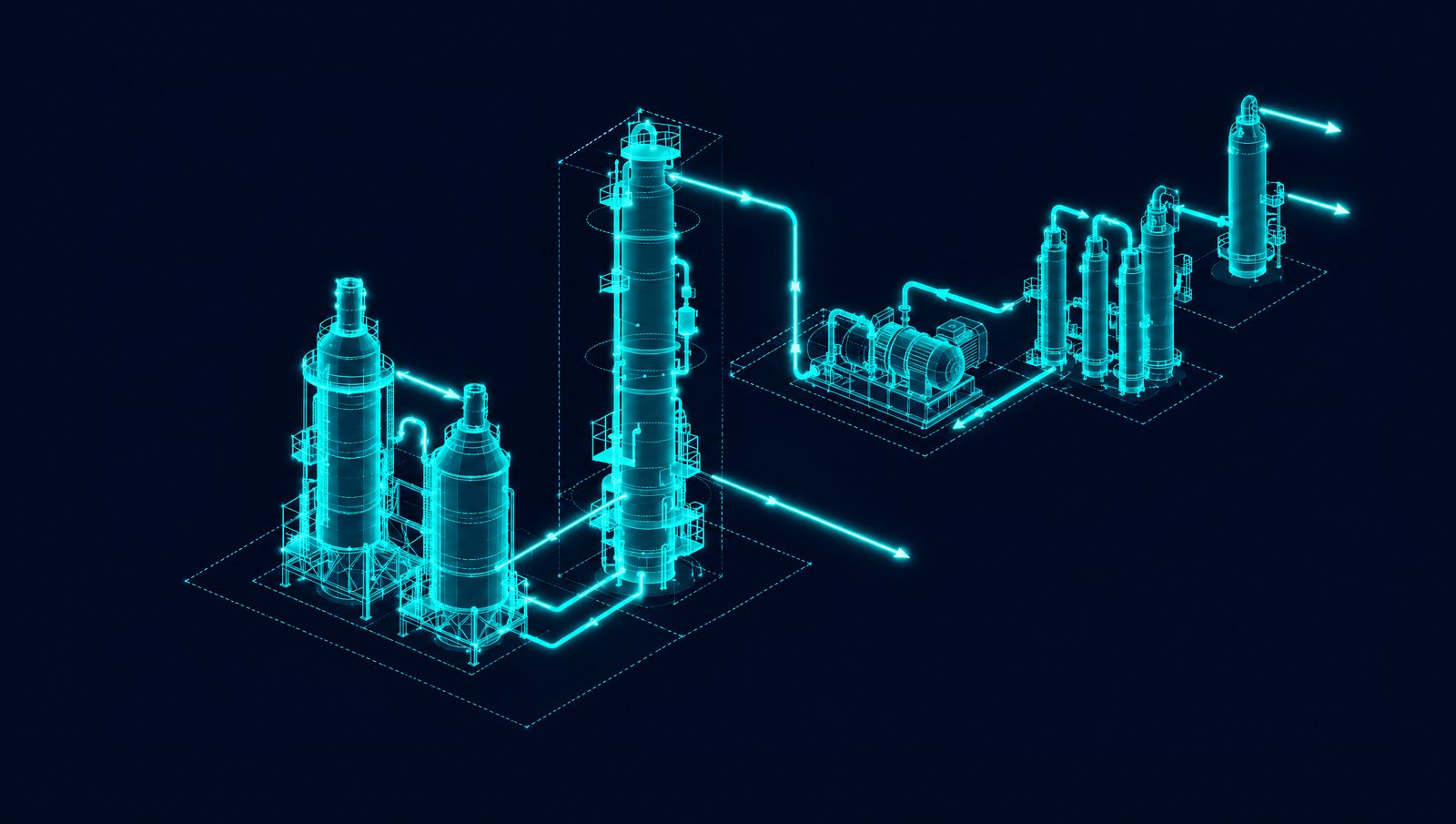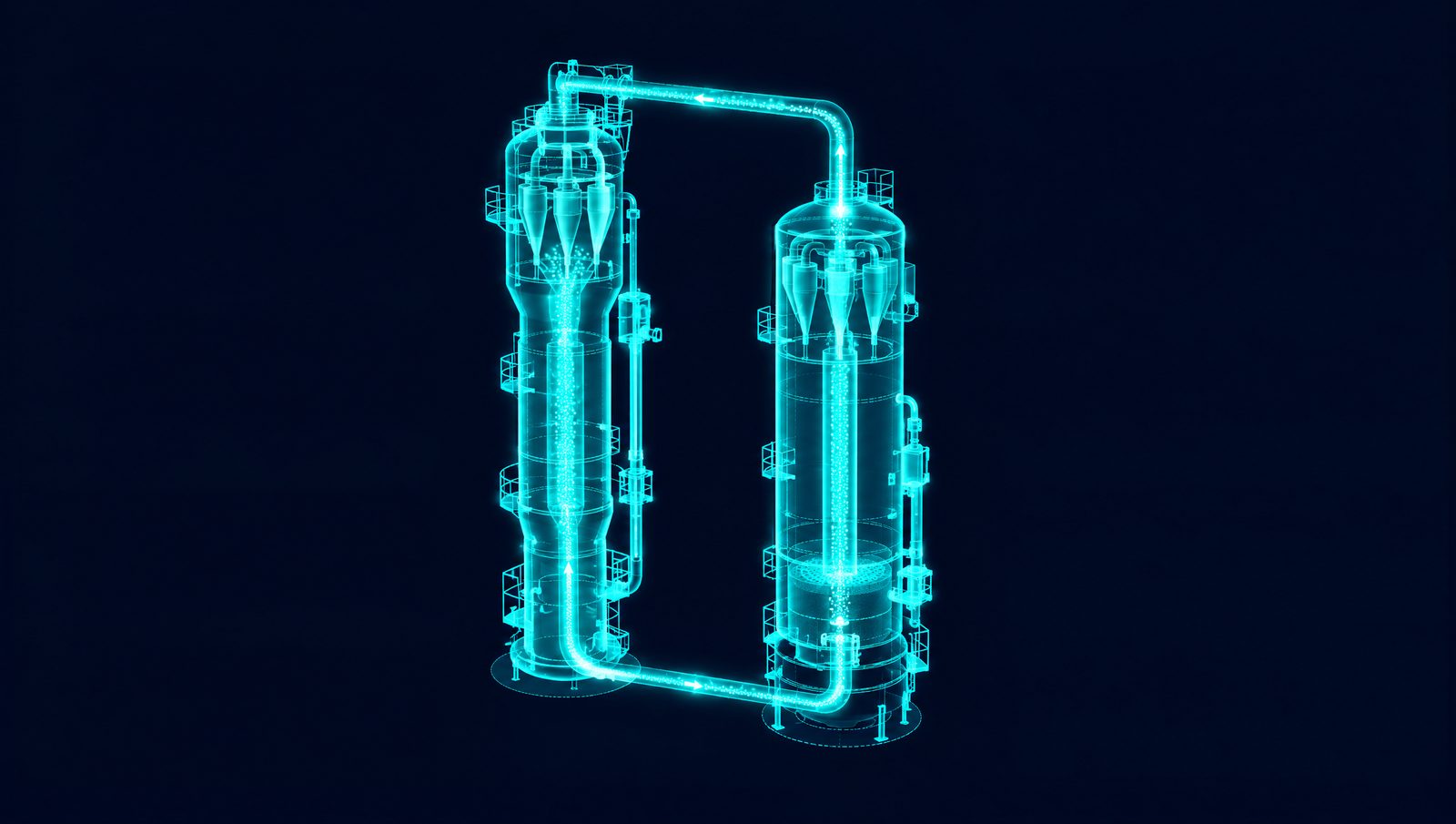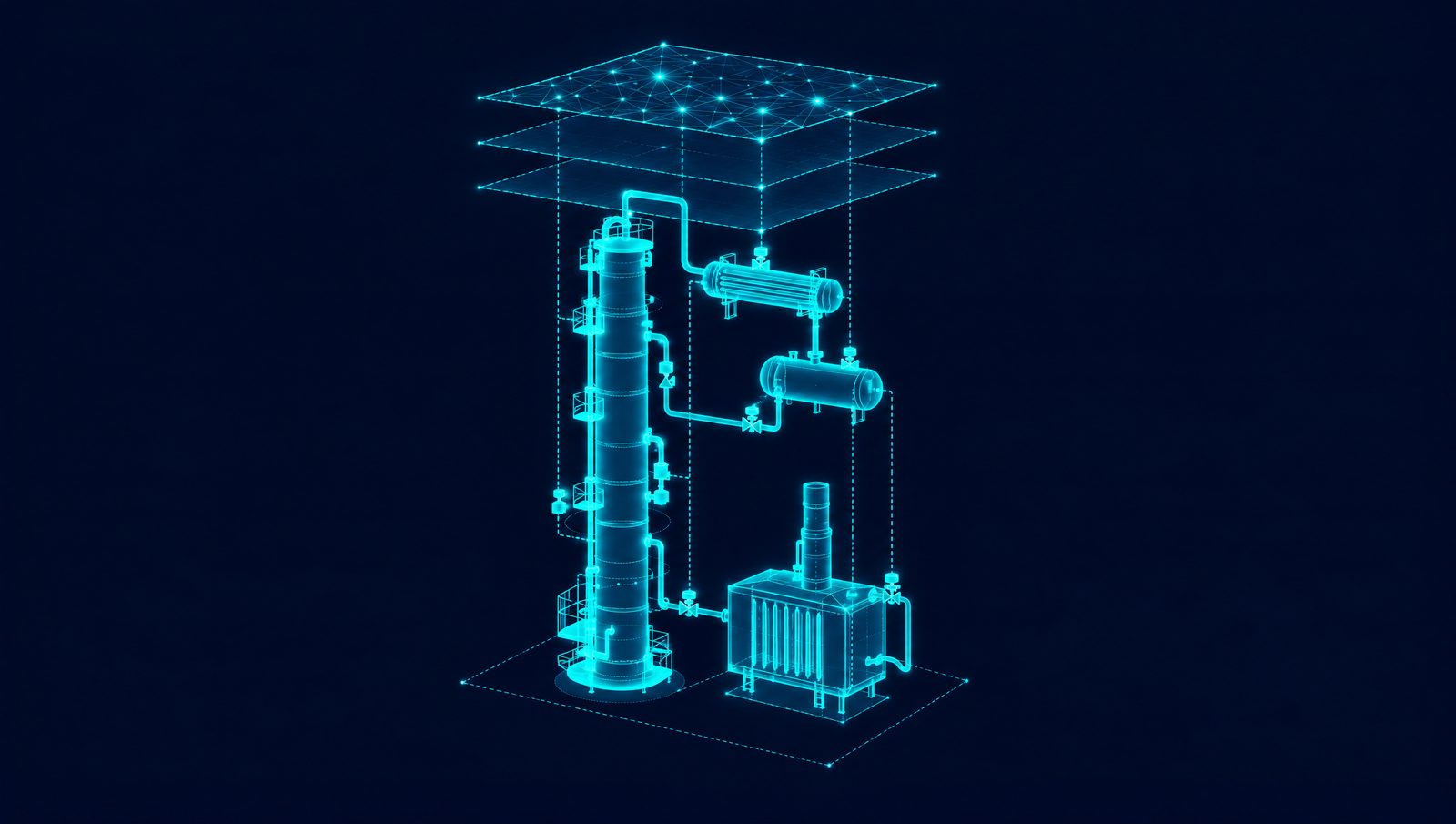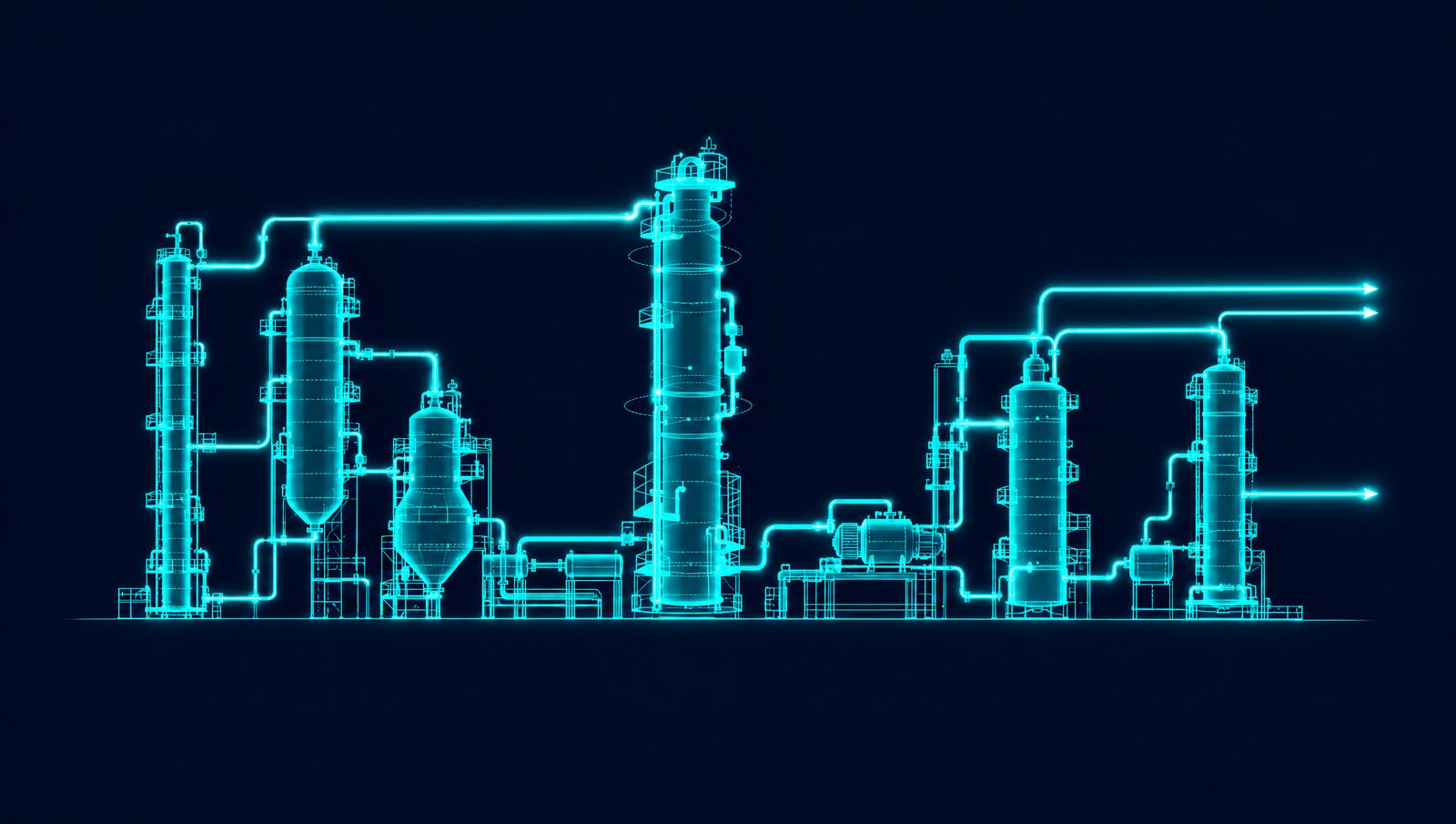
The fluid catalytic cracking (FCC) unit converts heavy, low-value gas oil into gasoline, LPG and light olefins, and it is one of the highest-margin units in a refinery. The U.S. Energy Information Administration describes fluid catalytic cracking as an important step in producing gasoline.
Even well-run FCC units leave value behind. Feed variability, catalyst deactivation and competing process constraints create a moving target that conventional advanced process control (APC) handles imperfectly. The gap between current yields and achievable yields is recoverable margin.
Why the FCC is difficult to optimize
Fluid catalytic cracking is a chemical conversion process. Distillation, by contrast, is a physical separation. In the FCC, heavy gas oil contacts a hot, powdered zeolite catalyst that breaks large hydrocarbon molecules into smaller, more valuable ones. The catalyst circulates continuously between the reactor and the regenerator and behaves like a fluid when suspended in hot vapor.
The difficulty comes from the tightly coupled loop at the core of the unit. In the riser, vaporized feed meets regenerated catalyst at high temperature. Cracking produces gasoline-range hydrocarbons, light olefins and lighter gases, and deposits coke on the catalyst.
The spent catalyst flows to the regenerator, where air burns off the coke. That restores catalyst activity and generates the heat that drives the whole cycle. Raising riser temperature to increase conversion also changes coke yield, which changes regenerator temperature, which feeds back into catalyst circulation and activity.
Every operating decision cascades through the system. Downstream, the main fractionator and the gas recovery section split the cracked vapors into products whose economic values differ and shift, so any optimization has to account for the full chain.
Where FCC yield performance breaks down
Two FCC units running similar feed can produce meaningfully different margins. The difference comes down to how well operators and control systems handle the unit's interdependent constraints.
- Feed variability is the most persistent source of yield variation. Crude slates shift with market conditions, and small changes in feed quality alter cracking behavior, coke formation and product distribution. A heavier feed with more Conradson carbon increases delta coke and limits conversion. A lighter feed opens throughput but may shift the product slate away from the highest-margin products.
- Catalyst condition adds another layer. Activity declines as metals accumulate, and the rate depends on feed quality, circulation rate and regeneration conditions. The link between equilibrium catalyst activity and product selectivity is nonlinear. Small changes in catalyst condition can shift the gasoline-to-LPG ratio more than conventional models predict.
- Operating constraints compound the problem. Regenerator temperature limits, wet gas compressor capacity, slide valve differential pressure and emissions targets define the feasible operating envelope. Operators build conservative margins around these limits to avoid trips, and that conservatism has a direct cost in lost yield.
Most FCC units end up operating well inside their actual capability. At the volumes a typical FCC handles, a modest gain in gasoline yield or a small reduction in delta coke can add up to significant margin over a year. Closing the gap takes control that can see and respond to all of these interactions together.
Why conventional FCC control struggles with these dynamics
APC has been the standard approach to FCC control for decades. It uses linear or piecewise-linear models to coordinate manipulated variables and push the unit toward its constraint limits while keeping it stable. Within its model range, APC holds riser temperature targets, manages the catalyst-to-oil ratio and respects regenerator limits. On many units it has delivered meaningful improvement over manual operation.
The limitation is structural. APC models are a snapshot of unit behavior under specific conditions. When feed quality drifts, catalyst activity changes or economic targets shift, model accuracy degrades. Re-tuning to current conditions is labor-intensive and usually happens on a schedule rather than in response to what the unit is doing.
The interactions between riser severity, coke selectivity, regenerator heat balance and fractionator cut points are nonlinear, and linear models approximate them within a narrow operating window. The largest opportunities sit where APC struggles: close to constraint limits, during feed transitions, and across the connected reactor, regenerator and fractionator. Conventional control handles those conditions conservatively by design.
FCC economics also depend on conditions downstream, including gasoline pool octane requirements, alkylation feed needs and product prices. APC optimizes the FCC in relative isolation and misses the value of coordinating FCC targets with the rest of the refinery.
How models learned from plant data recover FCC margin
The difference starts with how the model is built. Instead of a linearized representation of unit behavior, a deep learning model is trained on the unit's own operating history and captures the nonlinear relationships between feed conditions, operating parameters and product outcomes. Because it has learned from a wide range of conditions rather than being calibrated to one, it stays accurate as the unit moves through feed campaigns, catalyst ages and economic environments.
On an FCC, the difference shows up in daily operation:
- Feed transitions. The model anticipates how a change in feed quality will move through the reactor-regenerator heat balance, and adjusts riser temperature, catalyst circulation and cut points ahead of the disturbance rather than after it.
- Constraint handling. Instead of a fixed back-off from every limit, the model uses live operating data to set how close the unit runs to regenerator temperature limits, compressor capacity and slide valve positions, always inside the limits operators set.
- Coordination across units. A model spanning the FCC and its connected downstream units can pursue refinery-wide profit, beyond local FCC conversion.
Working with existing APC
This layer sits on top of the existing APC. The APC keeps handling base-layer process control, while the learned model supplies higher-level setpoint targets that account for nonlinear interactions and changing economics. That preserves the existing control investment and lets operators judge the new targets against control behavior they know.
The data the model needs
An FCC model needs process data from the DCS, laboratory quality results with accurate timestamps, catalyst activity and circulation measurements, and the economic inputs that drive refinery margin, including product prices and utility costs. Plants can start from the operating history they already have. Perfectly clean data is not a prerequisite, and the model improves as the data infrastructure matures.
From advisory mode to closed loop
The usual path starts in advisory mode. The model posts recommended setpoint changes, and experienced operators evaluate them against their own judgment. That builds trust and exposes edge cases the model needs to learn from.
As confidence grows, plants move to closed-loop control, where the model writes setpoints to the distributed control system (DCS) within operator-defined limits. The model carries the continuous multivariable work that exceeds human bandwidth. Operators keep the judgment calls, safety decisions and exceptions.
When operations, planning and economics teams share one model of FCC behavior, the recurring arguments about crude slate changes, FCC severity targets and light olefin routing rest on the same data. Today each group often works from different assumptions about what the unit can do.
How Imubit applies this
Imubit has over 100 closed-loop controllers deployed worldwide, across refining, chemicals and polymers, cement, and mining and minerals. For the FCC, as across refining, the approach is Map, Model and Control. Map traces lost FCC yield to the recurring decisions behind it, such as riser severity, catalyst circulation and cut points. Model uses Deep Learning Process Control® (DLPC®) to learn a nonlinear dynamic model of the reactor, regenerator and fractionator from the unit's own history, guided by first principles. Control takes those decisions to closed loop, writing setpoints to the existing APC or DCS minute by minute, inside limits set by plant engineers.