Much of a plant's automation still runs on fixed logic and on models tuned for the conditions the unit was commissioned for. Systems that learn from plant data and adjust as conditions shift are now in use alongside it, from the control layer up to the operating view leaders use.
Five advances are driving that change. Each section below covers how the technology works and what it changes on the unit, to help prioritize investment in margin and reliability.
1. Learned process control
Conventional advanced process control (APC) uses linear models identified around a normal operating point, and much of the logic beneath it is fixed. Both handle routine disturbances well. Their accuracy falls off when raw material quality, demand or ambient conditions move the unit away from the conditions they were built for.
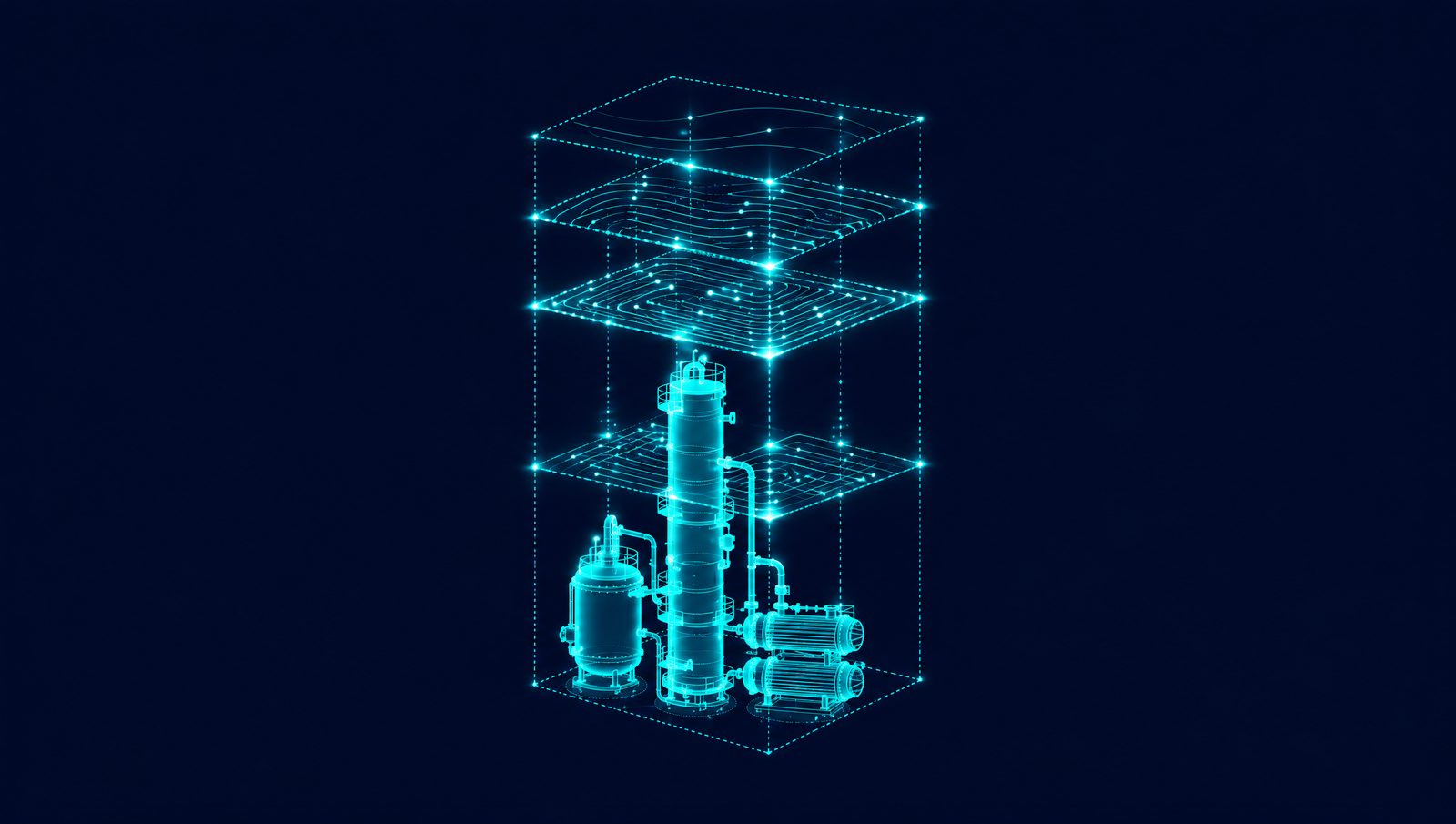
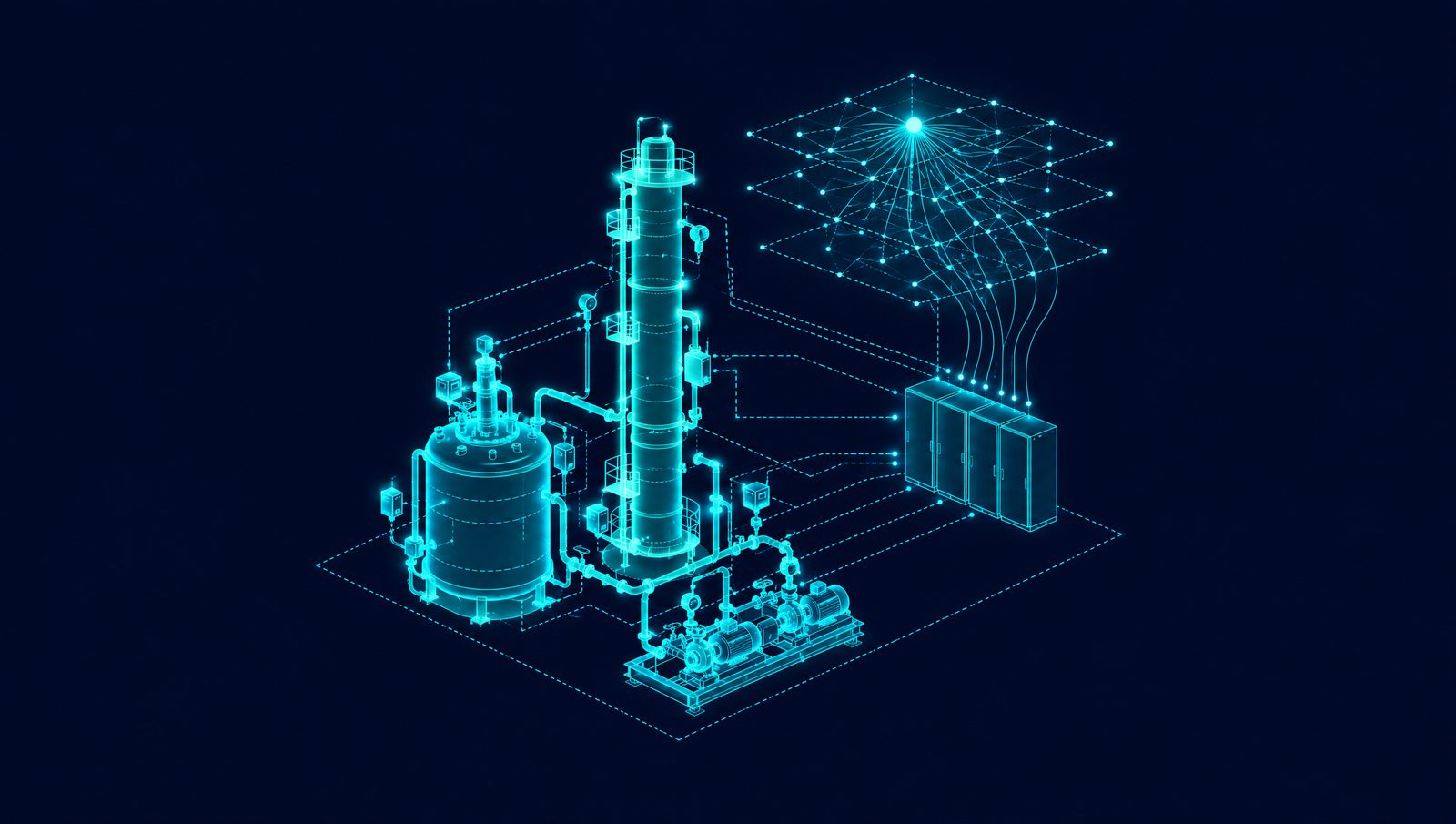
AI-based control adds a layer on top of the existing APC and distributed control system (DCS) that learns from plant data. It analyzes historian trends, sensor feeds and operator feedback to select the most profitable operating conditions in real time, and writes setpoints to the control system, inside limits set by plant engineers.
The difference is in how each one handles change. A linear model is accurate near the operating point it was identified at. A model learned from the unit's own history describes its nonlinear behavior across the range the unit has operated in, and it can be retrained as that range grows. The value shows up as higher throughput, tighter energy use and fewer manual interventions.
The four advances that follow support this layer with integrated data, faster local processing, earlier warning of equipment problems and a shared view of the plant.
2. Integrated OT and IT architecture
Better control is part of the picture. The other part is removing the wall between operational technology (OT) in the plant and enterprise IT.
OT and IT convergence creates one data backbone that serves both production control and business planning. Real-time sensor data sits alongside work orders, inventories and energy costs, so decisions can draw on all of them. With process, maintenance and commercial data in one place, analytics can work across domains, for example to predict bottlenecks or adjust run plans, which isolated systems could not support. That improves operational efficiency by automating tasks that were trapped in separate systems.
The move carries risk. Connecting decades-old controllers to corporate networks and cloud services expands the attack surface. Mixed technology, proprietary protocols and organizational splits remain stubborn barriers. OT prioritizes availability, while IT prioritizes confidentiality and integrity.
Standards such as OPC UA and MQTT, combined with secure, segmented networks, help bridge those gaps. Done well, production plans adapt faster and front-line teams get a real-time view that keeps profit-driving decisions close to the equipment.
3. Edge computing for industrial analytics
Where OT and IT integration builds the data foundation, edge computing changes where the data is processed. Instead of sending everything to remote servers, edge devices process data next to the equipment that produces it.
That cuts response times to single-digit milliseconds, fast enough for inline quality checks and machine-level monitoring. In high-throughput operations, the speed difference decides whether a defect is caught mid-cycle or off-spec product ships.
Operations keep running when network links fail, because decisions are made locally before data leaves the facility. Edge platforms filter and compress sensor data, which lowers bandwidth cost while still sending key results to enterprise systems for wider analysis. Keeping sensitive production data on site also strengthens security by reducing exposure to breaches.
Edge devices commonly run machine learning models that predict bearing failures or detect product defects inline. This distributed processing works alongside central analytics to give dependable, immediate decision support on every shift.
4. AI-driven fault detection and diagnostics
Edge computing provides the speed and reliability that fault detection needs. When thousands of sensors stream vibration, temperature and pressure data every second, machine learning models separate signal from noise and pick out the readings that point to trouble ahead.
Because the models learn plant-specific patterns, they can flag anomalies hours or days before equipment would normally fail, which gives the team time to act on its own schedule.
Two approaches work together:
- Predictive maintenance forecasts when a pump seal or compressor bearing will cross a failure threshold.
- Proactive maintenance goes further, retuning setpoints or recommending process changes so the fault does not develop.
Together they form a continuous cycle of monitoring, early anomaly detection, root-cause diagnosis and maintenance scheduling that keeps operations steady. The result is fewer emergency callouts, smaller spare-parts inventories, and front-line teams who spend more time interpreting results and less on repetitive inspections. The technology supports human expertise. Maintenance engineers still make the final call, with clearer evidence behind it.
5. Unified visualization and control platforms
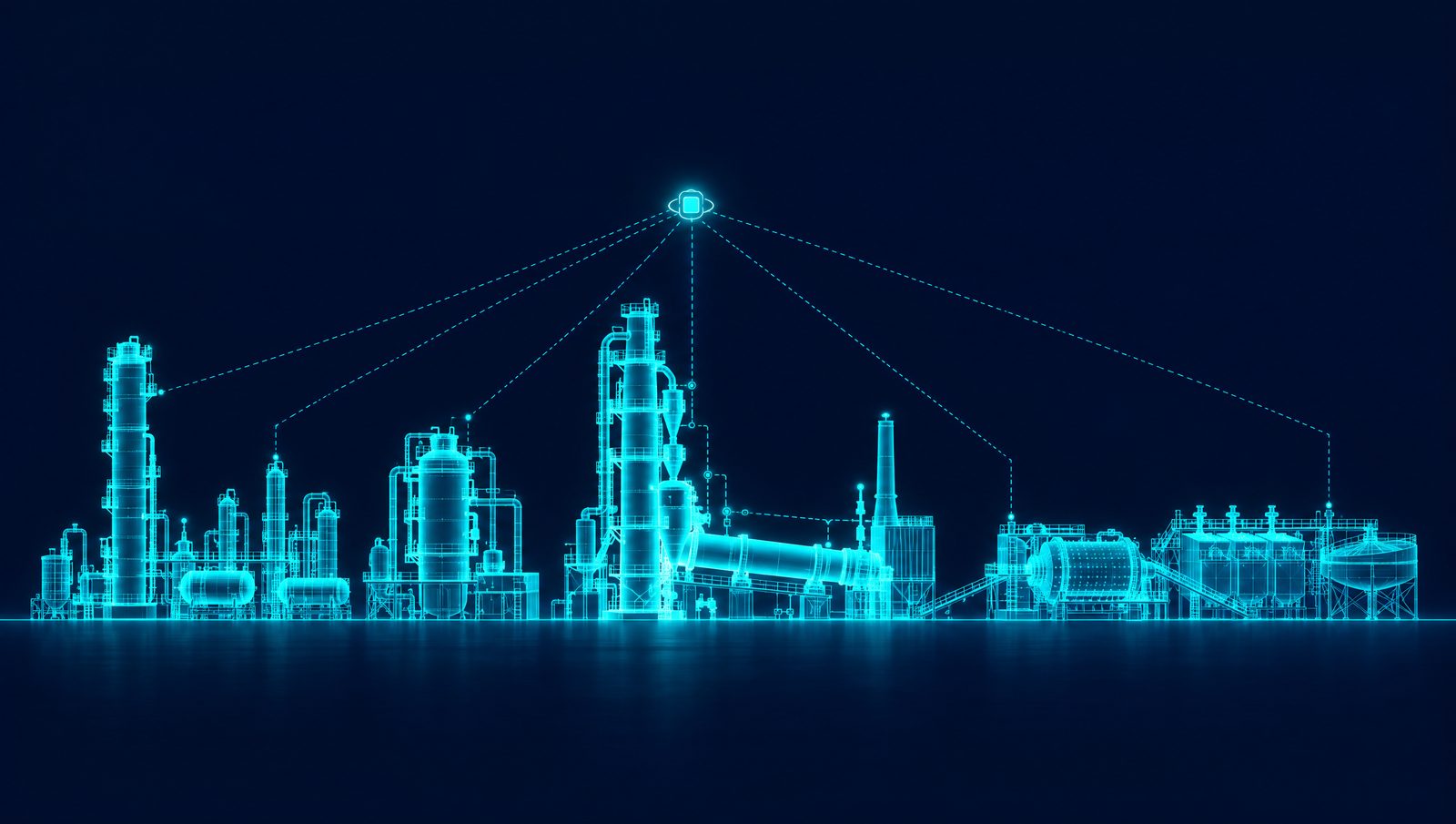
Unified visualization brings the other four advances into one operating view: learned control, converged OT and IT data, edge analytics and diagnostics. A single view aggregates data from every unit, site and corporate system, so leaders follow production in real time instead of assembling reports hours later.
Because the platform draws on operational sensors and ERP data at once, engineering, maintenance and finance work from the same information. Edge nodes preprocess signals locally and forward the critical events, which keeps response fast and bandwidth low.
Role-based views let operators drill into individual loops while executives follow equipment effectiveness from anywhere. KPI tracking shows how each decision affects the metrics that drive profit, and anomaly detection flags deviations before they escalate, supporting energy and emissions goals alongside throughput targets.
The constraints to plan for
Together these advances support higher throughput, lower energy use and steadier quality. The constraints are real, and each needs its own plan: network segmentation and access control for cyber risk, data cleaning and contextualization for inconsistent data, and training to close a widening skills gap among the people who will run and maintain the new systems.
Frequently asked questions
How do plants start adding AI to existing automation?
Scope and data readiness set the pace. Work usually starts in advisory mode, where models learn from existing plant data and give recommendations without writing to the control system. As confidence builds, teams extend the scope and move to closed loop, where the model writes setpoints within limits the operators set. Starting with a single unit and scaling on results is a common way to manage risk.
What is the difference between rule-based automation and AI-driven automation?
Rule-based systems follow fixed if-then logic written for expected operating conditions. When feed quality shifts, demand changes or equipment degrades, those static rules cannot adapt. AI-driven automation learns from plant operating data and adjusts setpoints toward the best conditions as the plant changes. The model is retrained as new data arrives, instead of the logic being reprogrammed by hand.
Can AI-driven automation work with legacy control systems?
Yes. AI-based optimization is built to work with existing distributed control systems, historians and sensor networks. The AI layer sits above the existing control layers, reads data from the historian and writes recommended or optimized setpoints back to the control system. Plants do not need to overhaul their infrastructure to start.
How Imubit applies this
Imubit applies Map, Model and Control in refining, chemicals and polymers, cement, and mining and minerals. Map traces plan-to-plant gaps to the recurring decisions behind them. Model uses Deep Learning Process Control® (DLPC®) to learn a nonlinear dynamic model of each unit from its own history, guided by first principles. Control takes the critical decisions to closed loop, writing setpoints to the existing APC or DCS minute by minute, on-premise and, inside limits set by plant engineers. See how the platform works.