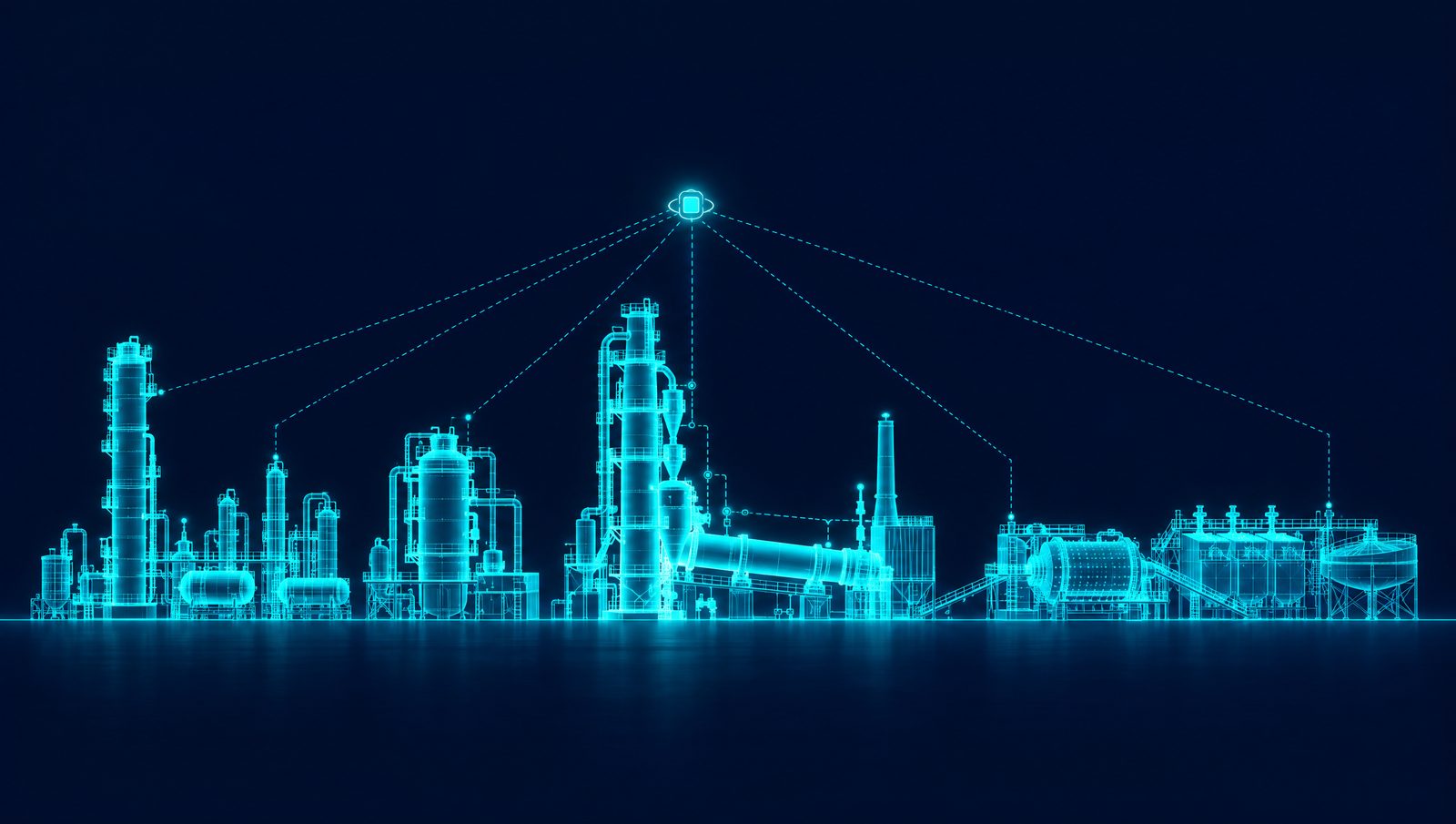
A continuous plant runs around the clock, and its margin moves with every disturbance. Feedstock prices swing, logistics stay unpredictable and compliance costs rise. Energy is one of the largest variable costs, so small inefficiencies show up directly in earnings.
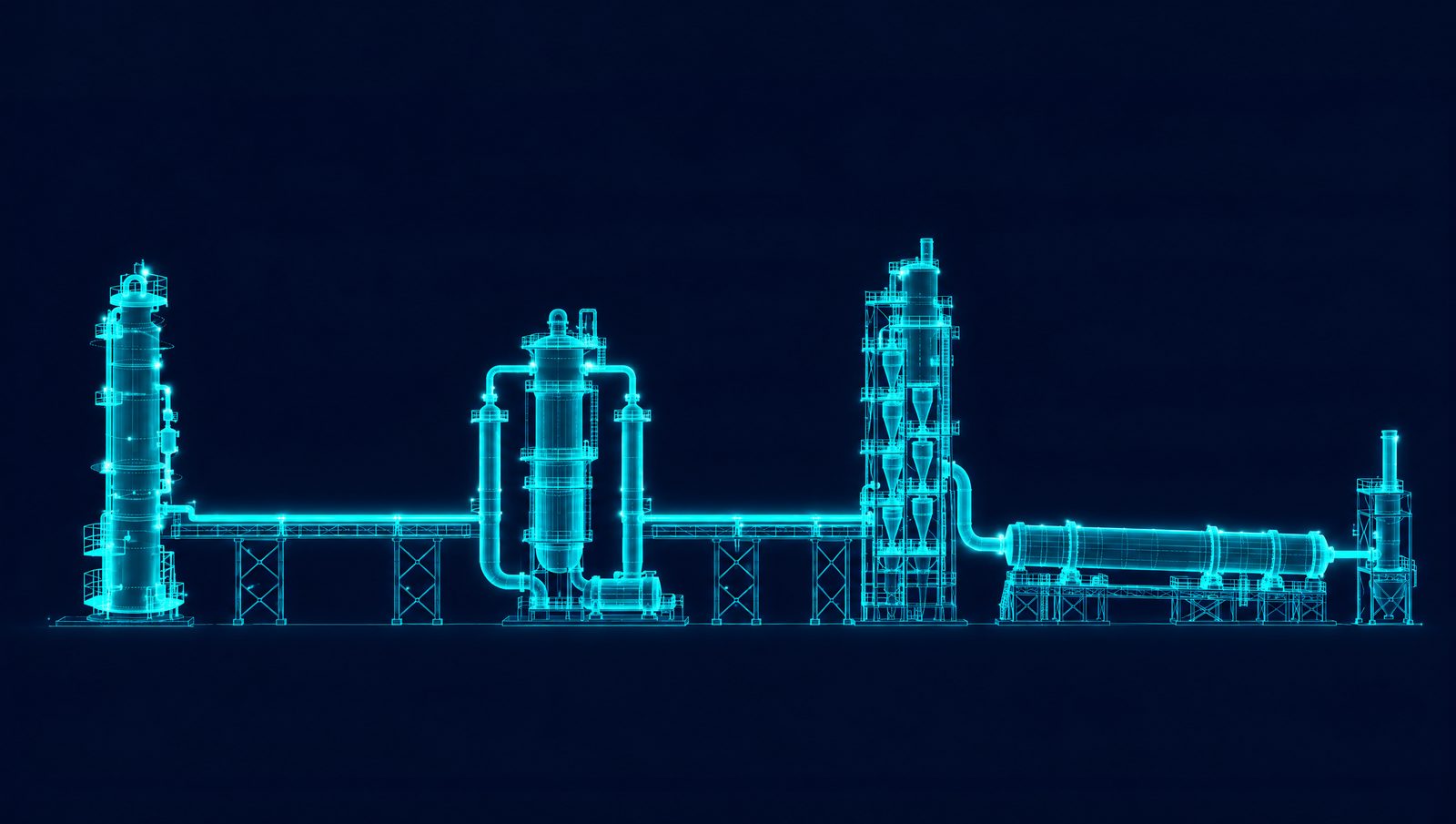
Unlike a batch operation, a continuous system has no natural pause between runs. A minor upset in one unit cascades through the units downstream, and the plant absorbs it as waste, quality giveaway or unplanned downtime.
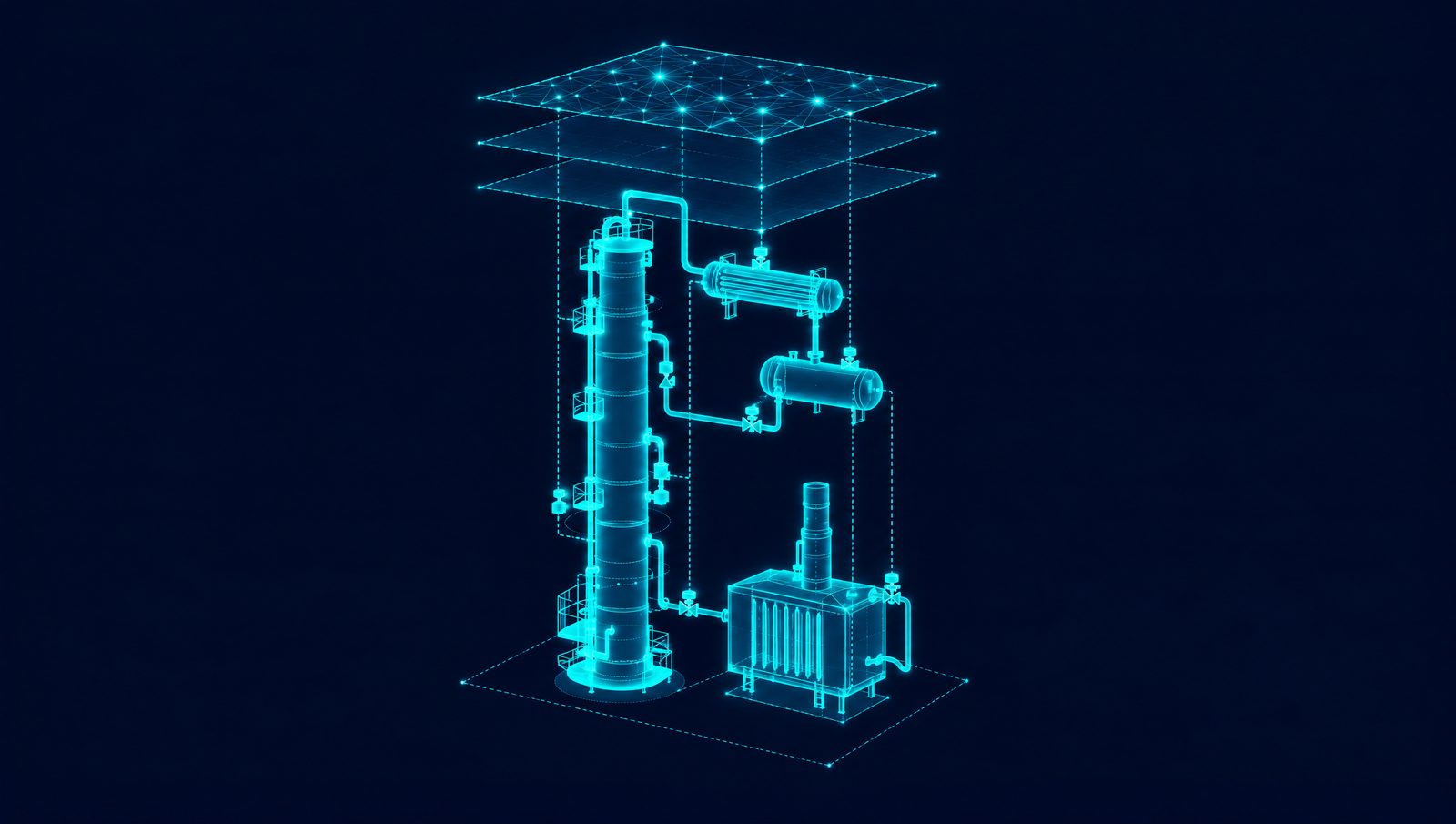
Learned process models address this by capturing how a specific plant behaves from its own historical and real-time data. In closed loop, a controller writes setpoints to the distributed control system (DCS) or the advanced process control (APC) layer, balancing throughput, quality and energy as conditions change. The sections below cover seven places where continuous plants lose margin.
Variability in raw-material quality
Continuous processes assume uniform feed, yet crude properties, ore grades and polymer feed blends rarely hold steady. When inputs drift, yields slip and off-spec volume rises.
A learned model captures the nonlinear relationships between incoming feed properties and downstream performance. A controller trained by reinforcement learning uses that model, together with live sensor readings and lab results, to move setpoints before the drift reaches product quality.
In mining, that means adjusting pH, reagent dosage and air rate on each flotation cell as ore composition shifts, to protect metal recovery. In polymer finishing, the same approach damps melt-index swings and holds grade consistency. Because the controller reacts faster than manual adjustment or a fixed controller, the plant can run closer to its limits while the feed changes.
Energy use across units
Fuel firing, airflow and utility loads interact across the plant. Optimizing each unit in isolation leaves value behind, because a change in one unit shifts the energy demand of the next.
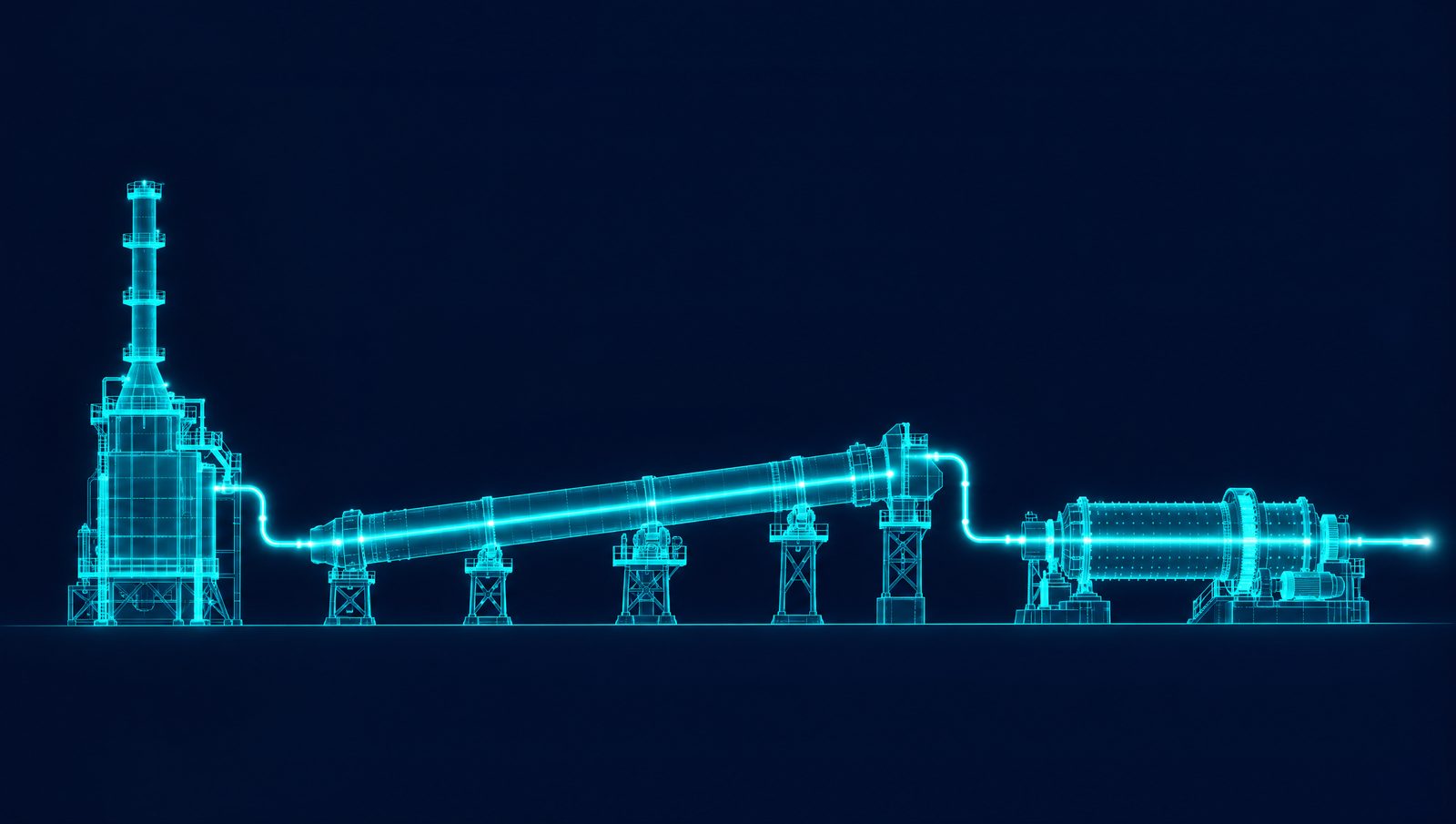
A plant-wide model evaluates how adjustments in kilns, mills or cooling towers affect downstream operations, then coordinates fuel rates, airflow and utility loads while holding throughput and quality targets. In cement, the target is lower kiln heat demand without compromising clinker quality.
Each megawatt-hour saved lowers both the utility bill and the emissions that carry compliance cost. That is why energy management belongs in the same objective as yield and throughput.
Closed-loop adjustments on top of APC
Conventional APC relies on linear models identified around an operating point. They need retuning when feed quality or ambient conditions drift, they run on fixed cycles, and in practice they handle a limited set of variables. Nonlinear behavior and interactions between units fall outside what those models represent.
A learned controller works on top of the existing APC and DCS. It runs on a model learned from the plant's own data, keeps one view of the interacting units, and writes targets to the control layer as conditions change. On a fluid catalytic cracking unit, typical objectives are a steadier riser temperature, narrower gasoline octane variability and less of the giveaway that erodes margin, with more throughput where constraints allow and fewer alarms.
Noisy historian data and operator skepticism are common practical barriers. Data-cleaning tools, an advisory stage in which operators review recommendations before closed loop, and clear dashboards address both, and they make it practical to extend the approach from one unit to several.
Losses in by-products and waste streams
Off-spec tonnes, purge streams and flare losses drain margin because every kilogram that misses specification carries the energy and feedstock already spent on it. The causes are usually multivariate: the interplay of feed quality, residence time and downstream constraints, or a slow temperature drift that no single alarm catches.
A model that tracks hundreds of variables together can find those causes and correct them before losses build. In chemical plants, fewer purges also mean a smaller environmental footprint and less time spent on compliance reporting.
Equipment availability
Unplanned downtime in a continuous plant ripples through upstream and downstream units. A failure forces emergency repair, idle labor and wasted utilities, and the lost production cannot be made up later.
Machine-learning models for predictive maintenance analyze vibration, temperature and power signals for the patterns that precede bearing wear, seal leaks or motor imbalance. When a risk threshold is crossed, planners are alerted so the repair can be scheduled into a routine service window before a hard failure forces a shutdown. The aim is fewer reactive work orders and a steadier production rate without a larger spare-parts inventory.
Grade changeovers and transitions
Grade and product changeovers create windows of purge, off-spec material and energy spikes. The ramp path sets the cost, since a fast transition makes more off-spec product and a slow one uses more energy and loses production.
With a learned closed-loop model, candidate ramp paths can be simulated before the transition and compared on throughput, quality and utilities. Once the plant team approves a path, the controller writes setpoints to the control layer and adjusts them as conditions evolve.
Each completed transition adds data to the model, so later campaigns start closer to the best path. That matters more as order books shift toward smaller, customized runs.
Emissions and compliance
A model trained on historian, sensor and lab data can set fuel, airflow and feed blends that keep the plant inside permit limits as raw-material quality and ambient conditions change. That serves decarbonization targets and margin at the same time.
Lower fuel demand reduces operating cost directly. Steadier operation means fewer emissions and wastewater excursions, less exposure to fines and less exposure to future carbon prices.
How Imubit applies this
Imubit applies Map, Model and Control to continuous units in refining, chemicals and polymers, cement, and mining and minerals. Map traces lost margin to the recurring decisions behind it. Model uses Deep Learning Process Control® (DLPC®) to learn a nonlinear dynamic model of each unit from its own history, guided by first principles. Control takes the critical decisions to closed loop, with setpoints written to the existing APC or DCS minute by minute, inside limits set by plant engineers. Across deployments the result has been a 1 to 3% average yield improvement, and a 15 to 30% reduction in energy consumption where energy is the optimization target.