Off-spec production erodes profitability long before material reaches the customer. Even a single-digit defect rate can mean thousands of tonnes of material that must be reprocessed or discarded, with the energy, labor hours and unplanned downtime that go with it.
Every off-spec run also carries an environmental cost. Systems burn extra fuel to reheat, flaring or incineration adds emissions, and wasted raw material raises the plant's carbon footprint per tonne of saleable product.
Models that learn from high-frequency sensor data and historical runs can forecast deviations, recommend operating conditions and, inside limits set by plant engineers, adjust setpoints before quality moves. The five sections below follow off-spec to its usual sources in chemical manufacturing.
| Where off-spec starts | What drives it | What the model watches |
|---|---|---|
| Grade transitions | Time spent outside the target window between grades | Temperature ramps, feed ratios, residence times |
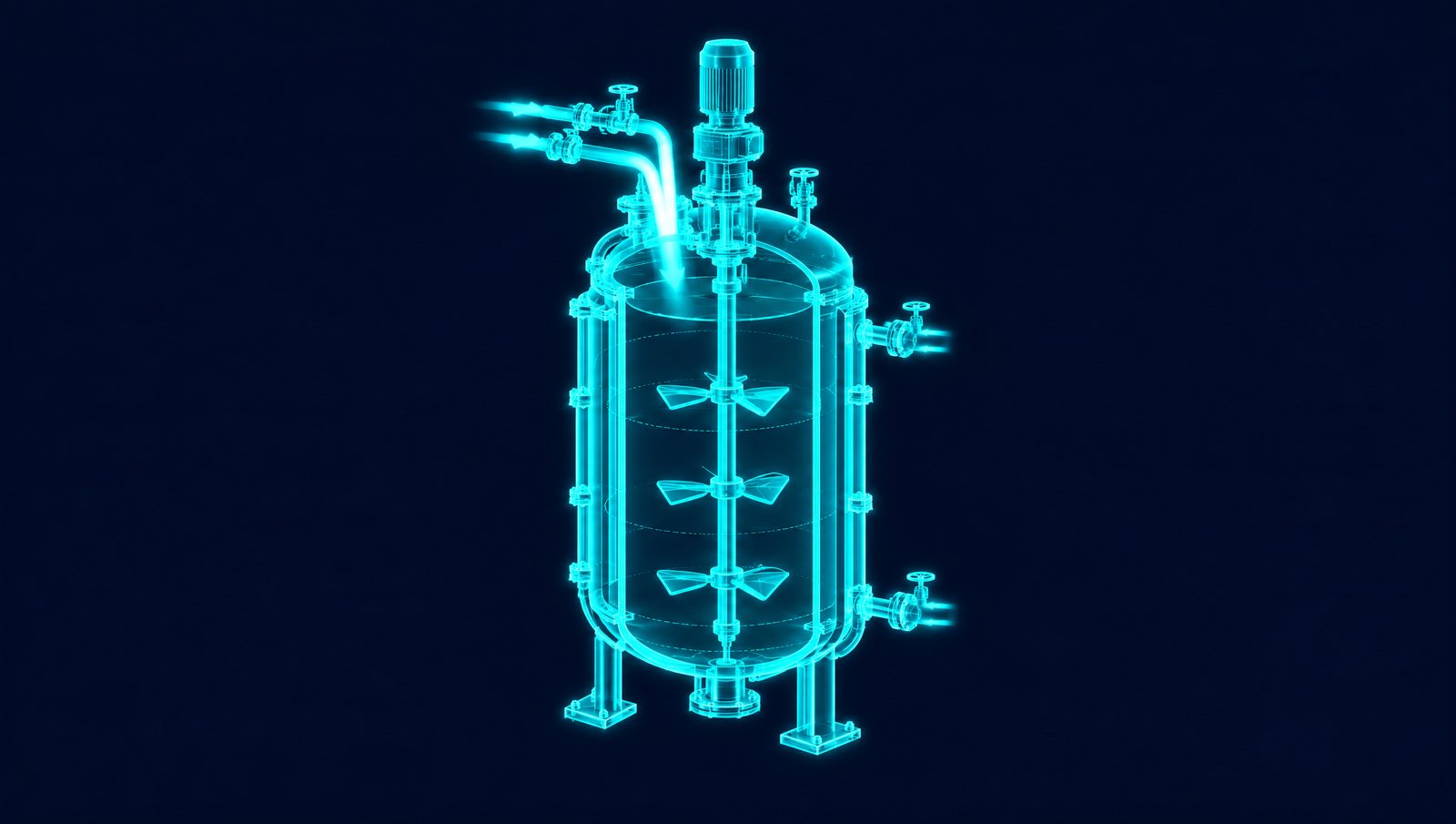
| Reactor operation | Feed composition swings | Feed quality, conversion, reactor temperature |
| Catalyst | Slow deactivation that lab results reveal late | Temperature, partial pressures, composition |
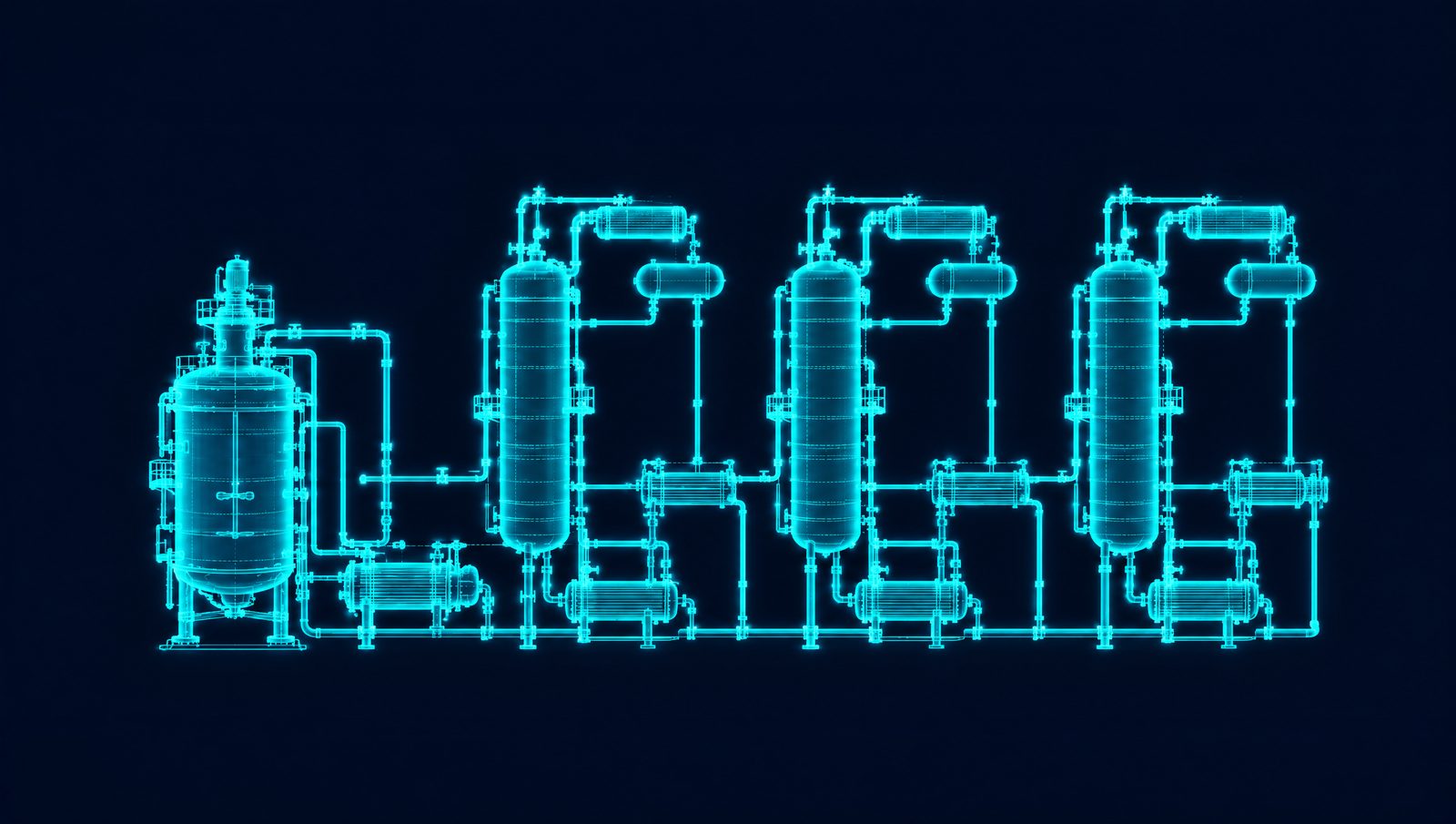
| Downstream processing | Small drifts in finishing units | Temperature profiles, pressure differentials, screw speeds, flows |
| Plant-wide drift | Drift that surfaces late, after lab confirmation | Live data against historical baselines |
Manage grade transitions
When a reactor switches from one product grade to another, every minute outside the target window becomes off-spec material that costs yield and energy. Operators tend to move conservatively, by trial and error, because the path between grades is hard to predict.
A model trained on the unit's historian data learns the nonlinear relationships between temperature ramps, feed ratios and residence times. With that, it can forecast the transition path before anyone touches a setpoint and show where quality is likely to drift along the way.
The model then calculates a transition trajectory and writes the targets to the distributed control system (DCS). Because it works through the existing control layers, a plant can start in advisory mode, with operators reviewing each move, and progress to closed loop without rewiring. The aim is a shorter, more predictable transition with less material made between grades.
Stabilize reactors under varying feed
Feed composition rarely holds steady, yet the reactor still has to hit tight conversion, temperature and residence-time targets. The same real-time monitoring used for transitions extends to feed quality and its effect on reaction dynamics.
When a disturbance starts to build, the controller writes new setpoints to the DCS and trims the excursion before it becomes an off-spec batch. Several pieces work together:
- A dynamic model of the reactor, learned from its own operating history, forecasts how key variables will evolve over the next several minutes.
- A controller trained by reinforcement learning (RL) against that model chooses the moves.
- Multivariate, nonlinear models capture interactions that the linear step-response models in most conventional advanced process control (APC) do not.
Treated this way, feed variability becomes a measured disturbance the controller can act on early. That protects product quality, catalyst use and margin on a daily basis.
Track catalyst activity in real time
Catalyst performance drifts slowly, and it often sends product quality off-spec before lab results reveal the problem. The delay between degradation and detection produces off-spec batches that have to be reworked or discarded.
Streaming temperature, partial-pressure and composition data into a model maps the catalyst's deactivation curve continuously, instead of relying on periodic test runs. The model can predict activity loss hours ahead and identify the operating conditions most likely to produce off-spec material.
In closed loop, the controller responds to small drops in conversion by adjusting the operating parameters that hold yield on target. That avoids two opposite losses: over-treatment, which wastes energy, and premature regeneration, which disrupts the production schedule. The aim is to run the catalyst longer and regenerate when its condition calls for it, all within the unit's safety constraints.
Reduce variability downstream
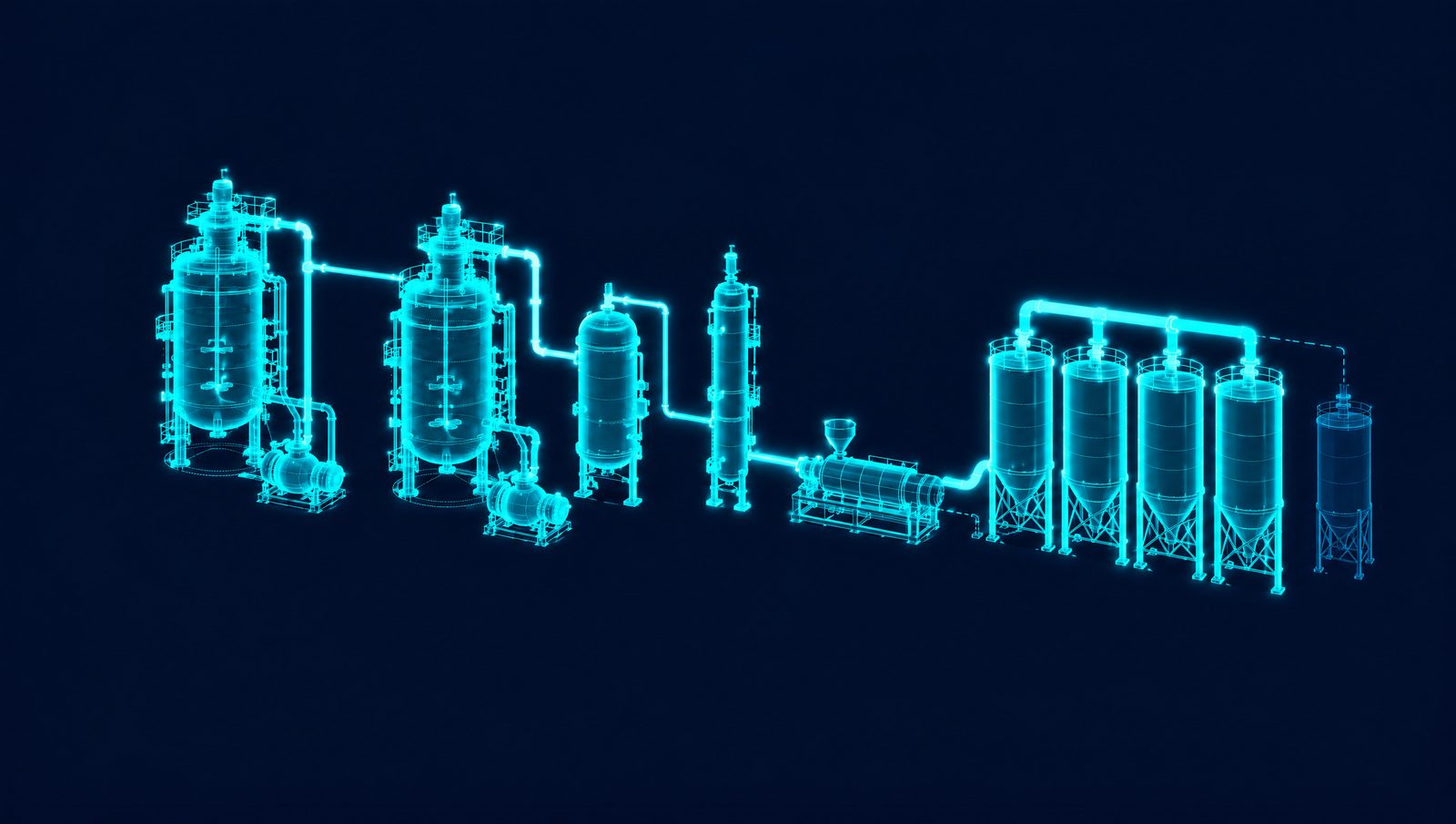
Downstream units often set final product quality. Temperature profiles, pressure differentials, screw speeds and flow rates all interact, and the relationships are nonlinear. Multivariate models built from historical batches capture those interactions where linear APC models fall short, and can recommend minute-to-minute adjustments that stop small drifts from growing into off-spec runs.
These models work as an advisor for the finishing section, testing what-if scenarios against current conditions. When a deviation threatens purity or viscosity, they recommend new setpoints so operators can act before quality slips. Narrower property distributions mean fewer downgraded batches, and less rework frees upstream capacity.
Detect process drift before quality moves
Most chemical plants discover drift only after lab results confirm a quality problem, hours or even days after the process has moved away from its targets. That delay turns directly into waste, rework cost and customer complaints.
Continuous surveillance of the plant's critical parameters changes the timing. Pattern recognition compares live data against historical baselines and flags deviations from normal operating ranges as soon as distributions begin to shift away from target.
With early detection, operators can correct the process minutes after a problem begins instead of hours after the sample comes back. As the model learns from fresh data, it gets better at telling normal process variation from genuine drift.
How Imubit applies this
In chemicals and polymers, Imubit applies Map, Model and Control to off-spec. Map traces quality losses to the recurring decisions behind them, such as transition moves, feed response and catalyst compensation. Model uses Deep Learning Process Control® (DLPC®) to learn each unit's nonlinear dynamics from its own history, guided by first principles. On a critical unit with a dozen operating regimes, a multi-site chemical manufacturer used these models to achieve a 0.5 to 1% increase in yield, reducing feed costs, across multiple sites. Control takes those decisions to closed loop, writing setpoints to the existing APC and DCS, inside limits set by plant engineers. Read more about chemicals and polymers.