For most cement plants, energy is the largest variable cost. Fuel combustion, together with the CO₂ released when limestone is calcined, also makes cement one of the largest industrial sources of CO₂ emissions. As emissions caps tighten and electricity prices rise, every tonne of fuel not burned and every kilowatt-hour avoided goes straight to the bottom line.
Data-driven, closed-loop optimization targets that fuel and power use directly. The sections below take the five most energy-intensive systems in turn.
Where the energy goes
Producing a tonne of clinker in a modern dry-process plant takes a large heat input, and electricity for milling and fans adds to the energy bill. High heat duty combined with round-the-clock power use is why cement plants draw scrutiny from finance teams and emissions regulators alike.
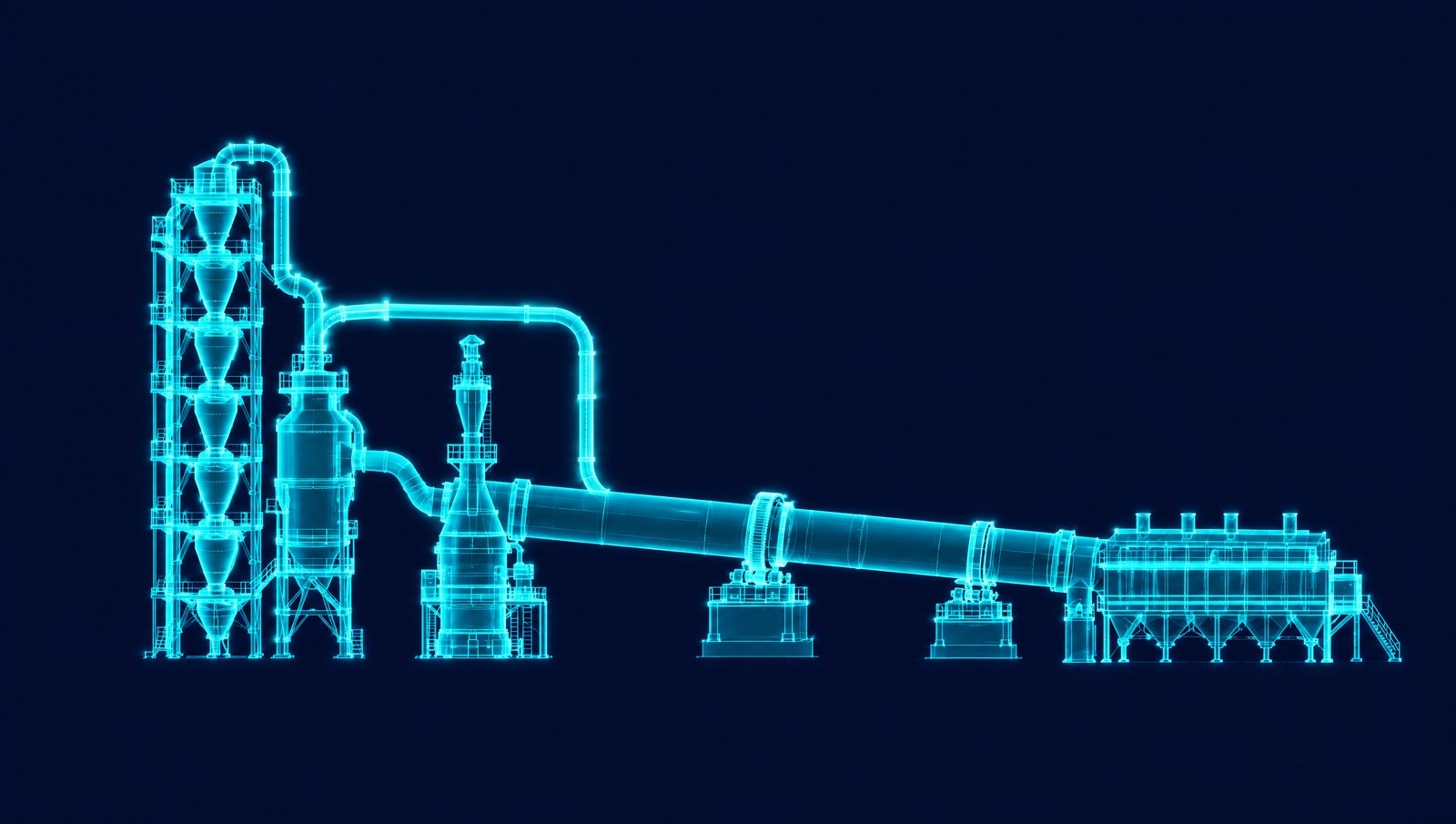
Five systems dominate the energy balance inside the fence line:
- the pyroprocess that turns raw meal into clinker
- the rotary kiln, where that reaction has to be held stable
- grinding and milling circuits
- multistage preheaters and grate coolers, which move heat back upstream
- auxiliary utilities: fans, pumps, compressors and conveyors
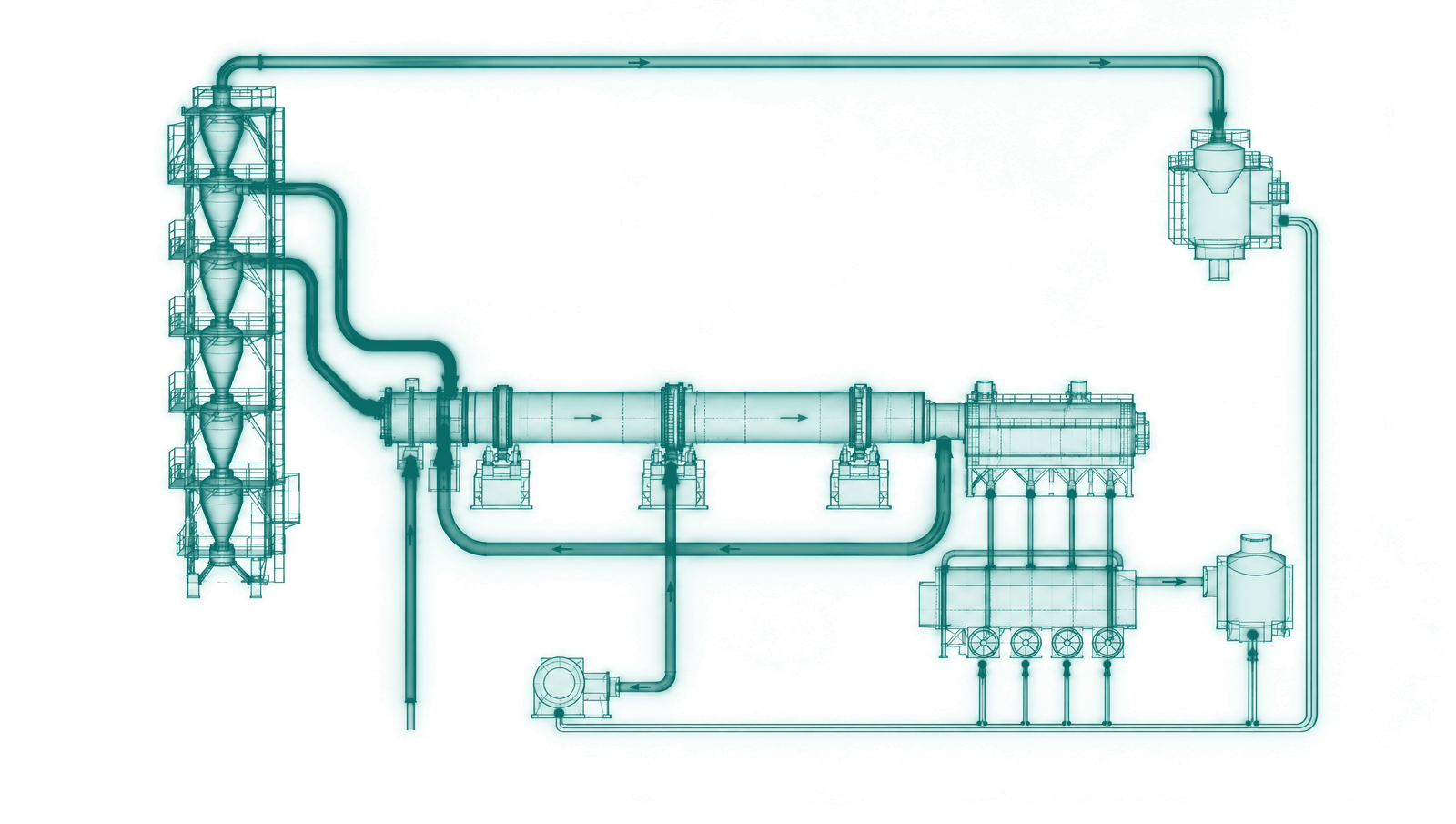
Conventional controls struggle to coordinate these interacting loads. Closed-loop optimization learns the plant's own interactions and trims fuel and electricity demand without equipment upgrades, which also prepares the plant for tighter carbon limits.
Clinker production
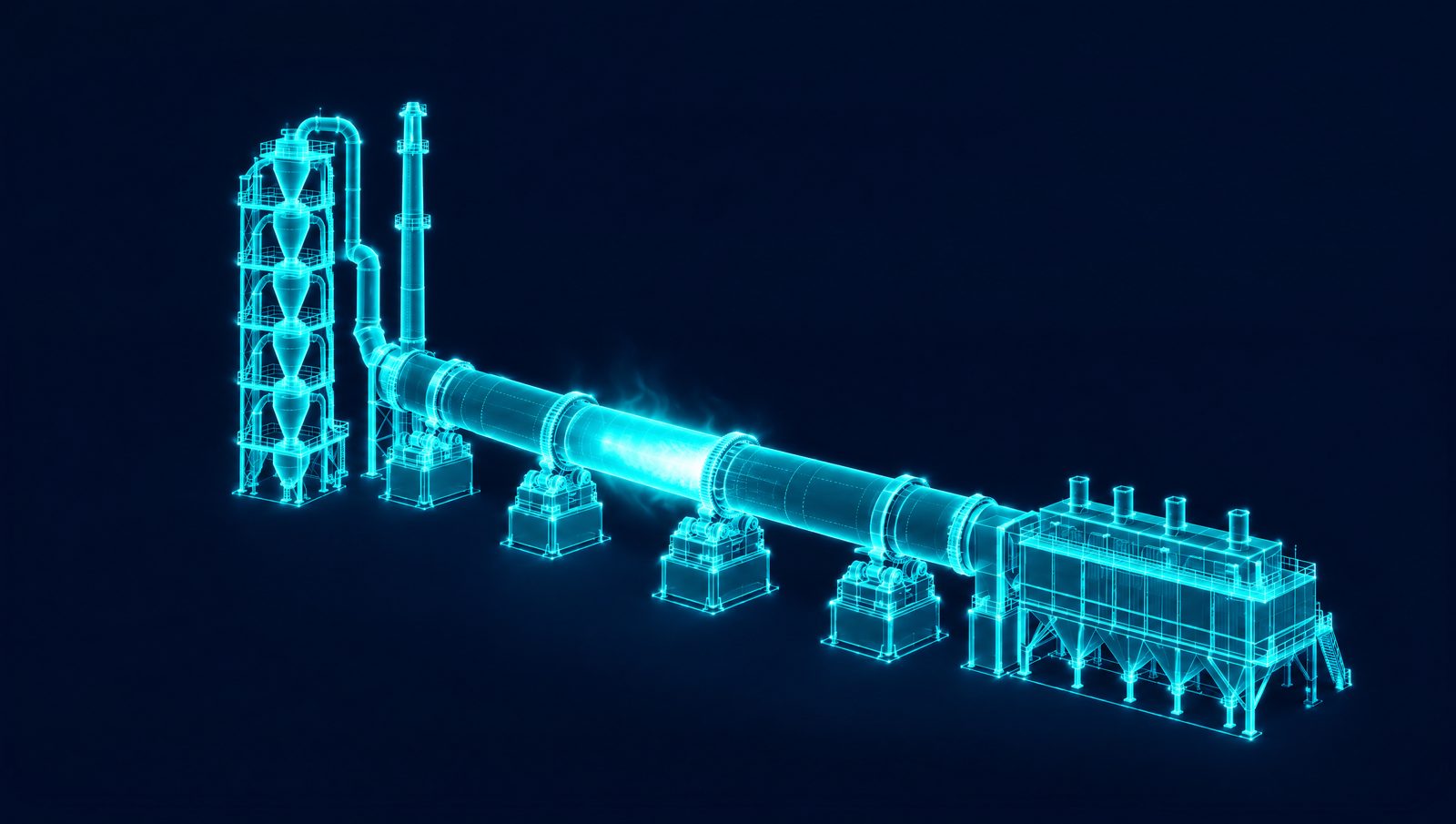
Clinker production is the largest energy consumer in a cement plant and the main source of its CO₂. In calcination, calcium carbonate decomposes into lime and CO₂, a strongly endothermic reaction. Sintering then needs the much higher burning-zone temperature that forms the clinker minerals. Every extra degree fed to the kiln raises the fuel bill, and the burden grows when raw meal carries excess moisture or when an older kiln lacks a modern preheater section.
AI turns hundreds of real-time signals into continuous control moves. Models predict free lime, adjust the fuel-air ratio and residence time, and reduce the extra heat operators often add as a safety margin. Less heat per tonne of clinker means less fuel and less combustion CO₂.
Kiln operation
The kiln responds to every fluctuation in raw meal. Burning-zone temperatures spike, rings form, the induced draft (ID) fan surges and alternative fuels burn unevenly. These interactions make the rotary kiln the plant's most temperamental and energy-hungry asset.
High-frequency sensor and infrared data feed machine learning models that learn the plant's own behavior. The models forecast free lime drift, ring build-up and combustion imbalance minutes before they destabilize production. When a deviation is predicted, the controller writes setpoints to the distributed control system (DCS), adjusting fuel flow, secondary air and kiln speed, inside limits set by plant engineers.
Trimming the insurance heat operators traditionally add is the core of kiln process optimization. A more stable pyroprocess gives steadier clinker quality and fewer unplanned stops, and frees the team from constant firefighting.
Grinding and milling
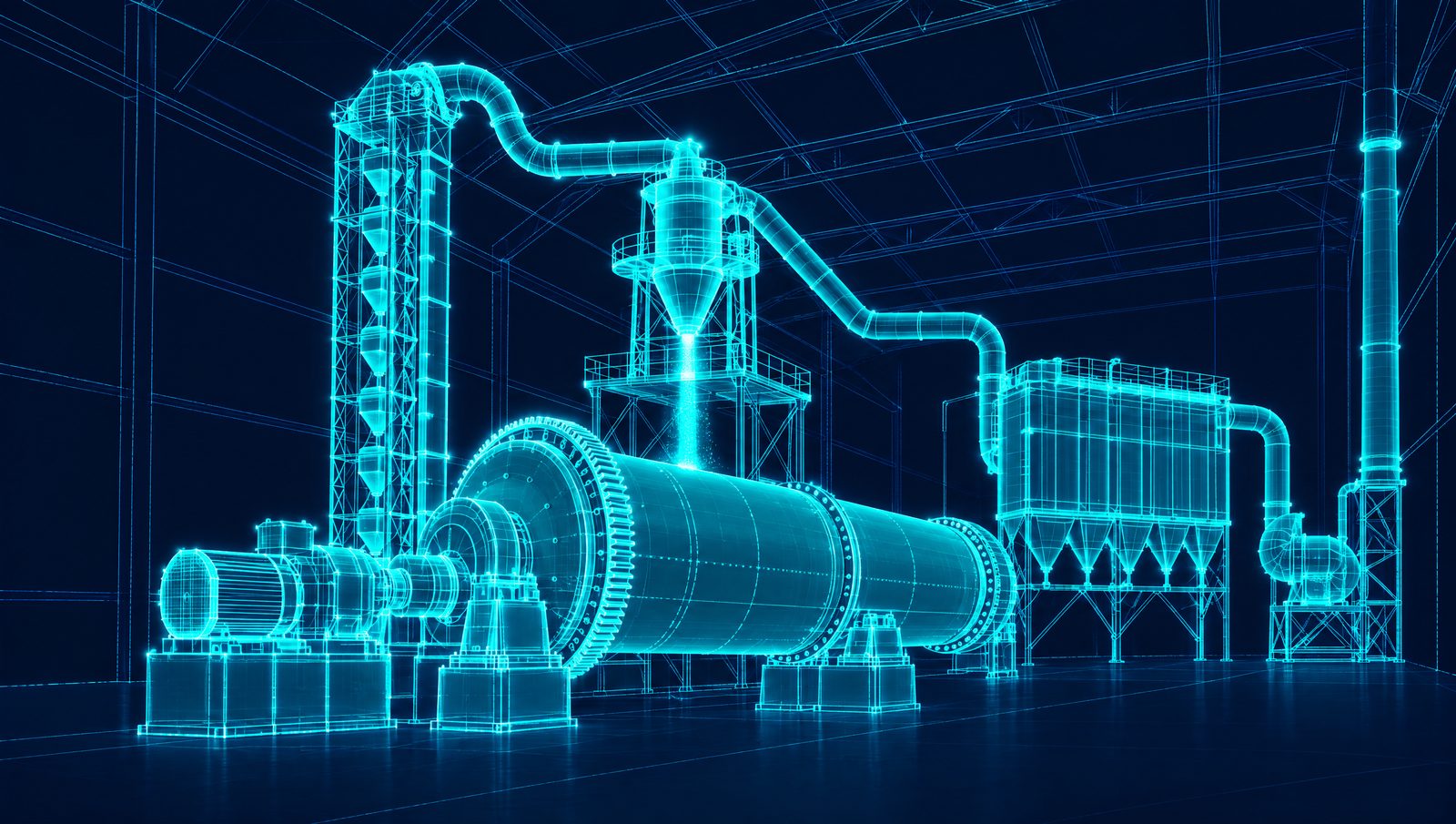
Grinding uses more electricity than any other system in a cement plant. It exceeds the kiln's electrical demand, though not the kiln's total energy demand. Ball mills turn much of their power into heat and wear. Vertical roller mills use considerably less, but both contend with variable feed chemistry and constant abrasion.
The difficulty is the number of interacting variables. Mill performance depends on feed moisture, liner profile, separator loading and grinding aid dosage, and improving one often disturbs another. Operators must balance throughput, power draw and Blaine fineness while managing liner wear and failures that raise power consumption and cut availability.
Machine learning models fed by high-frequency sensor data can predict particle size distribution in real time, then adjust mill load, separator speed and fan flow to hold the narrowest, lowest-energy operating window. They adapt to changes in material hardness minute by minute instead of waiting for laboratory results.
The same models can detect rising vibration that signals a bearing problem, so maintenance is scheduled before motors start drawing excess current. Steadier throughput and fewer unplanned shutdowns both lower the kilowatt-hours spent per tonne.
Preheating and cooling
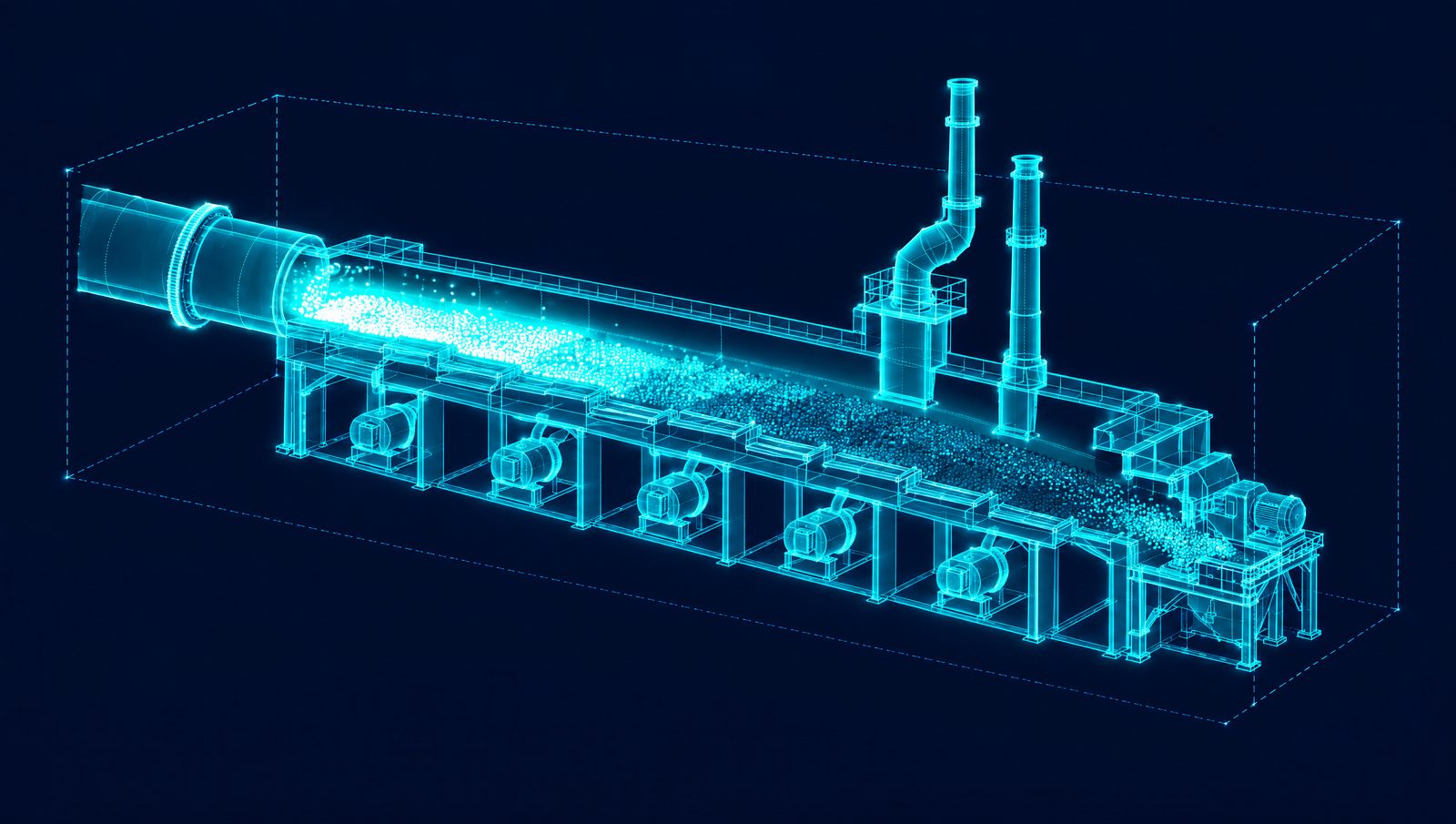
Cyclone preheaters and grate coolers sit on either side of the kiln. They recover waste heat and protect clinker quality. When air leaks through worn seals or material flow turns erratic, they lose efficiency quickly, which raises fuel demand and forces operators to over-fire the kiln to stay on specification.
Reinforcement learning (RL) controllers take live data from temperature probes, pressure taps and cameras, then adjust ID fan speed, cyclone setpoints and grate drive speed in real time. The same models can spot developing blockages or cold zones before they show up as alarms, so operators can clear them during routine pauses instead of emergency stops. Because the models learn the plant's own behavior, they hold exit gas temperature just high enough for safe operation and return as much heat as possible to the process.
Steadier cooling also limits thermal shock, extends refractory life and keeps free lime variation within tighter limits.
Auxiliary systems and utilities
Auxiliary equipment accounts for a substantial share of plant electricity. These machines run continuously but rarely get the optimization attention given to kilns and mills, which makes them an early efficiency opportunity. Typical auxiliaries include fans and blowers, pumps, conveyors, compressors, dust collectors and the many motors spread across the plant.
Several techniques address their losses:
- condition monitoring that predicts mechanical wear before it raises power draw
- reinforcement learning agents that tune variable-frequency drives to match real demand
- schedulers that stagger conveyors and non-critical pumps to reduce peak demand charges
- leak analytics that find and correct compressed air losses
- models that recalibrate fan setpoints as process conditions shift
Applied on top of existing controls, these lower site electricity use, and the CO₂ tied to it, without changes to core production equipment.
Optimizing across the plant
When kiln, mill, cooler and auxiliary data feed one model, the line can be run as one coordinated system. The model learns how each move ripples through energy use and clinker quality, and sets targets that balance the constraints together, minute by minute.
The controller writes its moves to the DCS while operators stay in charge, with the authority to override any move. Trust depends on operators understanding why each move was made, and on models that keep learning as feed chemistry, weather and demand shift.
How Imubit applies this
Imubit applies Map, Model and Control to the cement line. Map traces plan-to-plant gaps in fuel, power and clinker quality to the recurring decisions behind them. Model uses Deep Learning Process Control® (DLPC®) to learn kiln, cooler and mill behavior from the plant's own history, guided by first principles. Control takes the critical decisions to closed loop on top of the existing APC and DCS, inside limits set by plant engineers. In kiln pyroprocess applications running in closed loop, this has delivered a 20 to 30% reduction in process variability.