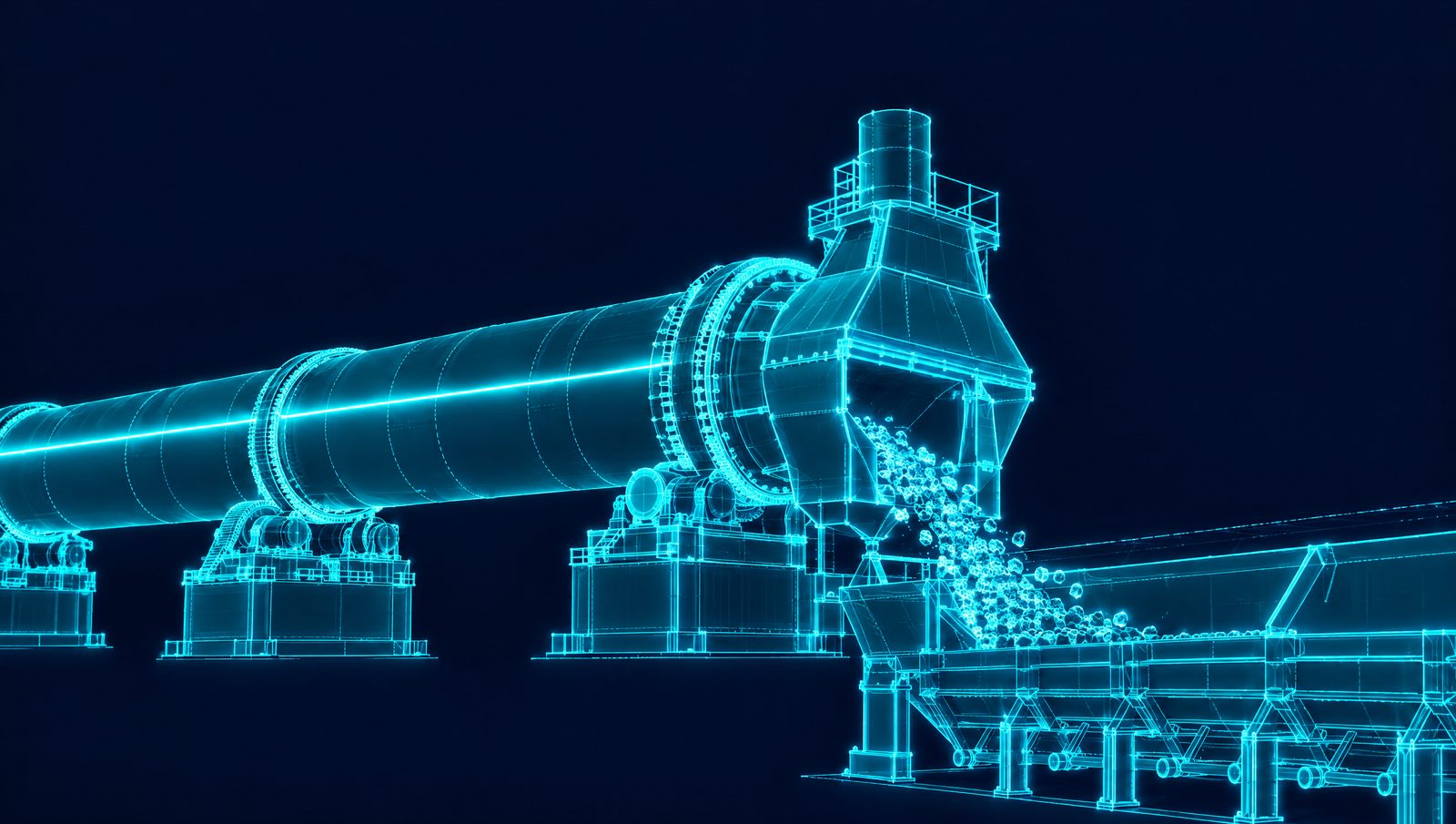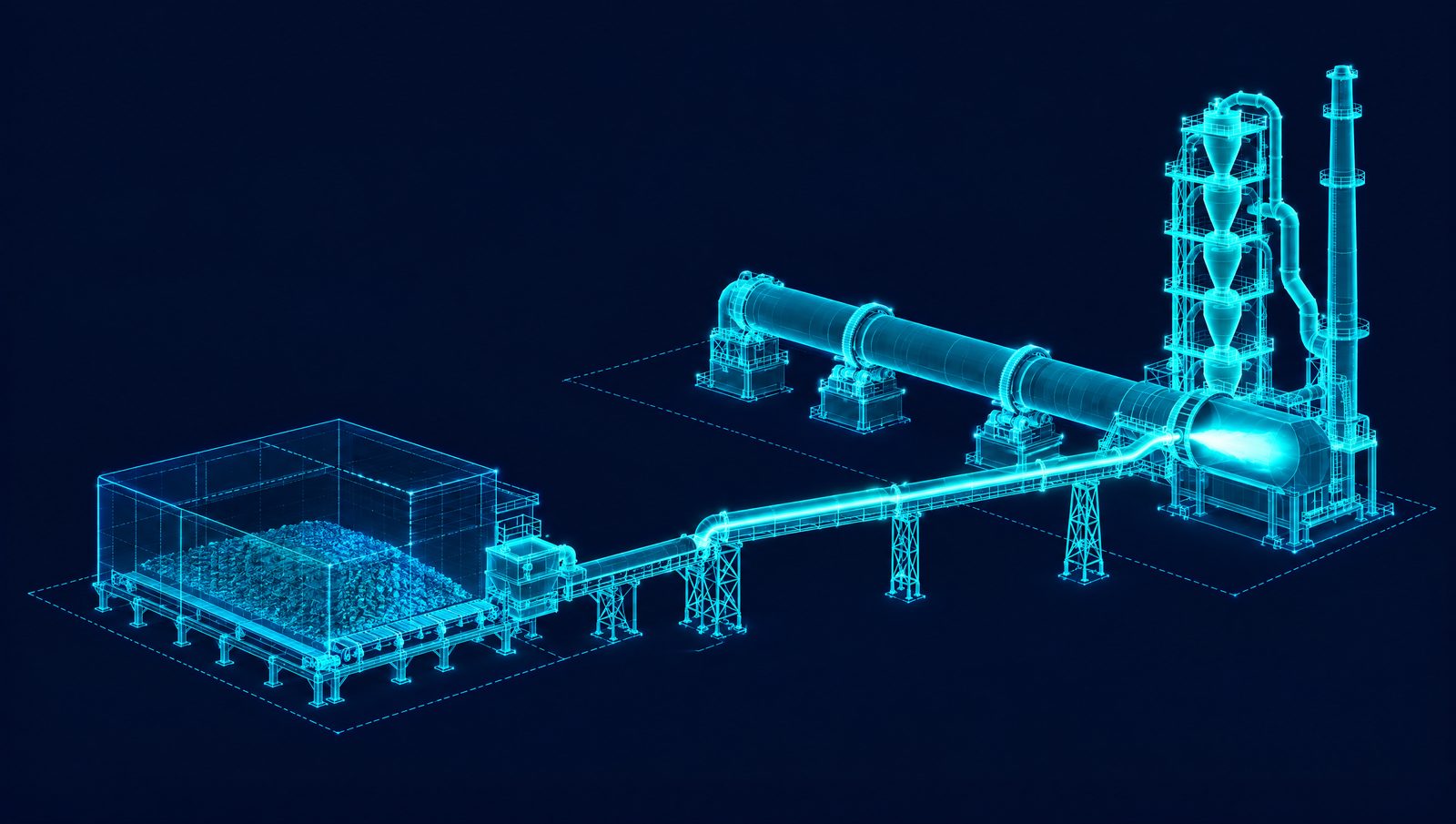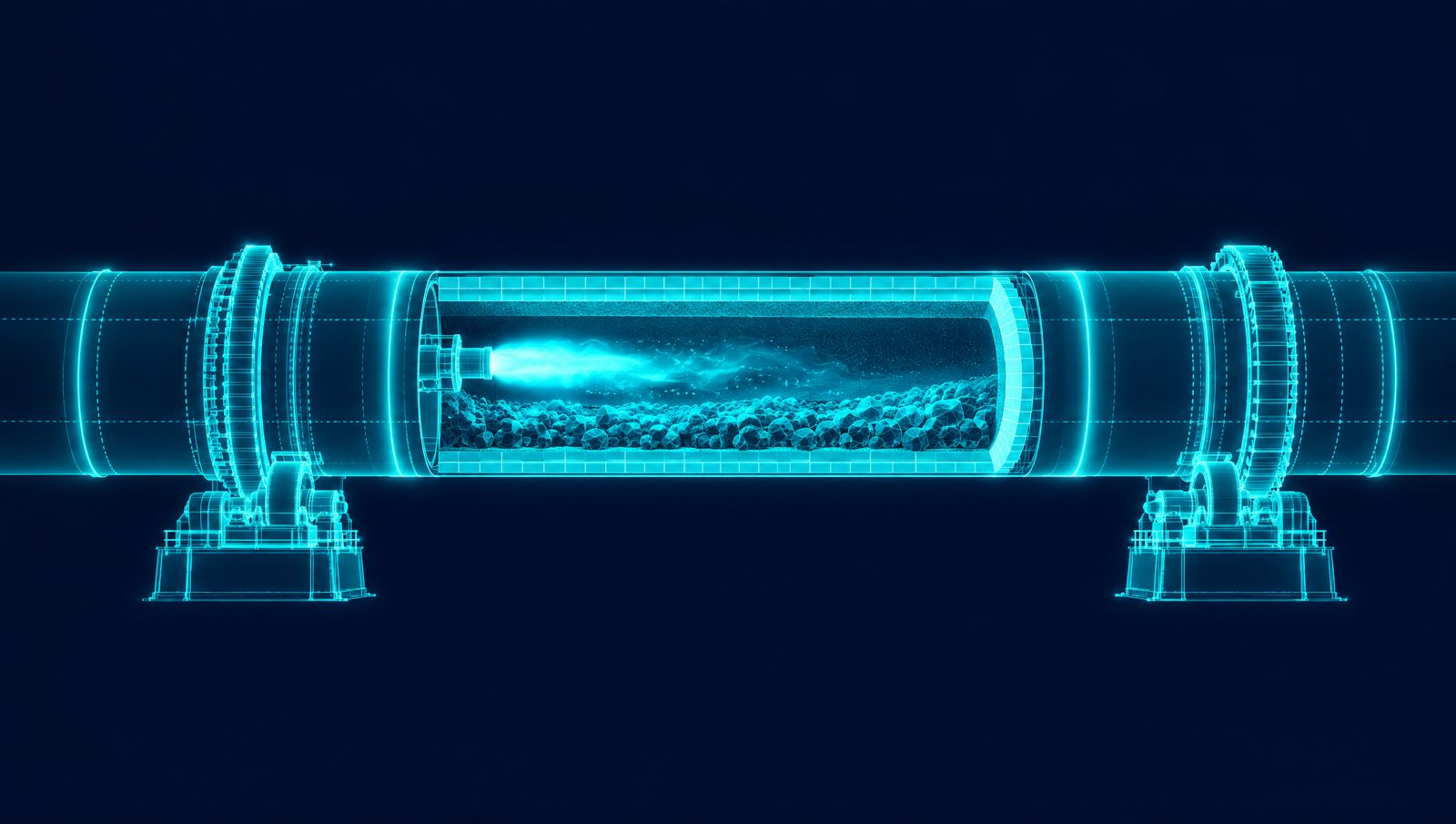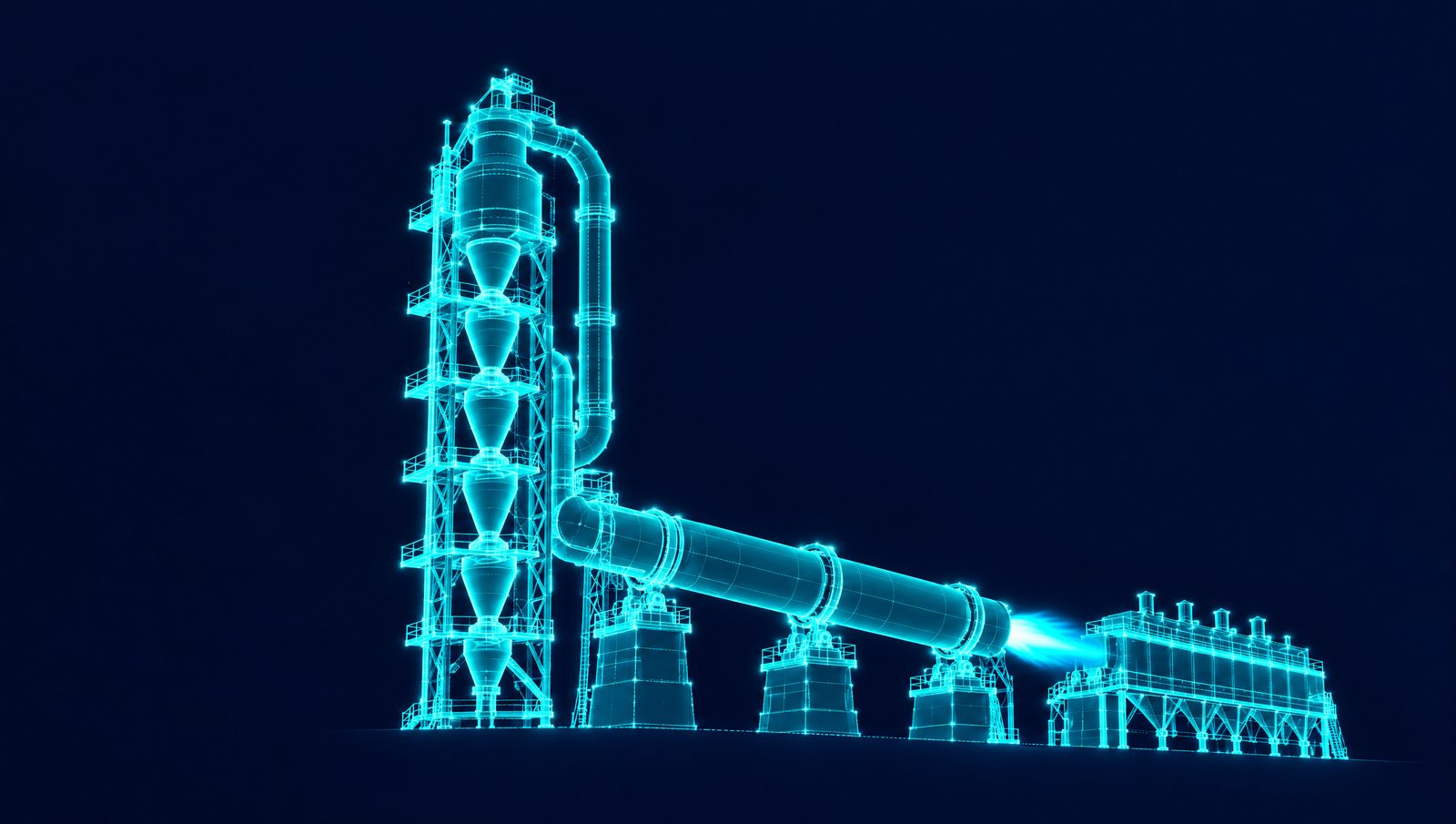
Pyroprocessing is where a cement plant burns most of its fuel. The preheater, calciner, kiln and clinker cooler turn raw meal into clinker, and fuel is the largest variable cost in that step. Higher energy prices and tighter emissions limits press on the same few variables: how much fuel the kiln burns per tonne of clinker, how often it stops, and how consistent the clinker is.
AI models address all three through combustion control, predictive maintenance and closed-loop quality control, working with the plant's existing control systems.
Reduce fuel use with combustion control
Kiln burners account for a large share of a cement plant's energy demand, so every reduction in burner fuel flow shows up directly in cost per tonne. Combustion is usually the largest single opportunity for cost reduction in the pyroprocess.
An optimization model can coordinate many operating parameters at once, including burner momentum, secondary air distribution, preheater draft and feed chemistry. By learning the interactions that govern flame shape and temperature uniformity, it damps the swings caused by variable coal quality or by refuse-derived fuels whose moisture changes from load to load, and it holds the burning zone within its target range.
Because the model adapts to the changing calorific value and moisture of alternative fuels, plants can raise their substitution rate without increasing the risk of ring formation. That lowers fuel cost and direct CO2 emissions together.
What a successful project needs
- A data audit. Map every kiln, calciner and fuel-flow measurement point, verify historian accuracy, and repair critical sensors before any model is built.
- Enough history. Training typically uses at least twelve months of cleaned operating data, so the model sees seasonal fuel variation and can detect sensor drift.
- Staged validation. Start in advisory mode to confirm the key performance indicators, then move to closed-loop setpoint control, inside limits set by plant engineers.
Three pitfalls come up often:
- Training periods biased toward stable operation, which hide how the kiln responds to fuel disruptions.
- Miscalibrated oxygen analyzers that skew the air-fuel ratio.
- Control constraints set so tight that the optimizer has no room to move.
The daily metrics to watch are specific energy consumption, primary and alternative fuel rates, stack oxygen and NOx, and the variance of clinker free lime.
Reduce unplanned downtime with predictive maintenance
A kiln failure can cost a day or more of clinker production, plus the cost of emergency repairs. Calendar-based preventive maintenance reduces the risk, but it ignores the operating signatures that come before a failure.
Predictive maintenance models learn each kiln's normal vibration, temperature and power consumption patterns, and they pick up slow degradation trends well before those become a production problem. Moving from reactive repair to planned intervention takes three steps.
Stream high-resolution data
Continuous data from critical assets, including burner fans, the kiln drive and cooler grates, feeds the plant historian. That stream establishes baseline behavior and makes deviations detectable.
Rank the alerts
Alerts are ranked by risk and production impact, and operational noise is filtered out, so the maintenance team does not develop alert fatigue.
Connect to the maintenance system
Integration with the computerized maintenance management system (CMMS) turns predictions into planned work orders in place of emergency call-outs. Measure success with mean time between failures, maintenance cost per tonne produced, and the ratio of unplanned to scheduled maintenance work.
Working out the return
The return on predictive maintenance starts with avoided downtime hours multiplied by the hourly value of production, plus the cost difference between emergency and scheduled maintenance. Set that against the investment, and add labor savings and longer equipment life. Stable operation also keeps bearing temperatures and kiln shell temperatures steady, which protects the kiln between maintenance windows. Each event the system catches or misses adds to the record that the next prediction draws on.
Stabilize clinker quality with closed-loop control
Free lime drift causes a chain of problems: extra fuel to reburn clinker, longer laboratory verification cycles, and the risk of off-spec cement reaching customers. Because the pyroprocess burns most of the plant's fuel, small variations in burn quality compound quickly into energy cost.
Optimizing the cement line starts with inferential sensing. Soft sensors trained on kiln history and laboratory data give a real-time estimate of free lime and nodulization, which bridges the gap between physical sampling and control action.
Once the soft sensors are validated against the lab, the controller writes setpoints for feed rate, kiln speed and secondary air to the APC or DCS, inside limits set by plant engineers. It keeps learning from each shift and adapts when the raw meal chemistry or the alternative fuel blend changes. The result is a tighter free lime standard deviation, fewer quality deviations and less rework. Consistent burning also makes it safer to raise supplementary cementitious material substitution and lower the clinker factor, which reduces cost and CO2 emissions together. On one customer's kiln pyroprocess, running in closed loop, Imubit recorded a 20 to 30% reduction in process variability.
Operator acceptance grows when the interface explains each control decision and when the controller starts in advisory mode before it moves to closed loop.
Measure the results
Every control adjustment should tie back to a measurable financial or environmental result.
- Specific energy consumption is the primary indicator, because fuel dominates variable cost. Every megajoule per tonne of clinker saved reduces the fuel bill. Fuel savings equal the baseline specific energy consumption minus the optimized value, multiplied by fuel price and clinker output.
- Maintenance cost comes from CMMS analysis, comparing emergency shutdown frequency and overtime before and after deployment.
- Quality translates into money through less rework, lower raw meal giveaway and a lower clinker factor.
Energy consumption, emissions per tonne, throughput and free lime standard deviation can sit on dashboards that mirror the DCS displays. The same data supports emissions reporting under frameworks such as the Greenhouse Gas Protocol or the EU Corporate Sustainability Reporting Directive.
How Imubit applies this
On a cement line, Map traces the gap between the plan and the kiln to the recurring decisions behind it, such as how hard to burn the kiln against the free lime target, or the alternative fuel rate on each shift. Model builds Deep Learning Process Control® (DLPC®) models of the kiln line from its own history, guided by first principles, so a fuel change or a new burn target can be judged before anyone commits to it. Control writes setpoints to the existing APC or DCS minute by minute, within the limits operators set. See cement.