The chemical industry is a cornerstone of the global economy. The International Council of Chemical Associations estimates that its total contribution, including its supply chain and the spending of its employees, was about 7% of world GDP in 2017. According to the International Energy Agency, it is also the largest industrial energy consumer and the third-largest industry subsector in direct CO₂ emissions.
Meeting 2030 emissions targets means changing how chemical plants run. Done well, those changes improve margin as well as emissions. This article covers why that is possible, five levers that deliver both, how to finance the program and how to organize it.
Why emissions and margin can move together
The industry has long treated emissions reduction as a cost center: expense with no direct financial return. The working assumption was that cutting emissions meant cutting production rate.
Much of a chemical plant's emissions, though, come from energy and material that never become saleable product. Excess fuel and steam, off-spec product that is reprocessed or downgraded, and conversion lost to fouled catalyst or poor operating conditions all cost money and emit CO₂. Better energy management, fewer off-spec batches and higher process yields reduce both. Capturing them consistently means moving from reactive fixes to continuous optimization on the plant's own data.
Five levers that cut emissions and cost
1. Energy efficiency and heat integration
Energy efficiency is the most direct way to reduce both emissions and cost. A targeted energy audit combined with heat recovery removes a large share of the waste. Beyond physical measures such as steam trap inspections and pipe insulation, process optimization can deliver further savings for little capital.
AI models add to this by finding the operating points that minimize total energy per unit of output. They can identify moves in steam flow or furnace temperature that lower natural gas use, often with better yield at the same time.
2. Off-spec production
Off-spec product erodes margin, and in some cases it has to be reprocessed at further energy cost. In specialty chemicals and polymers, off-spec or non-prime rates are a major source of inefficiency.
AI models can detect the subtle process variations that cause quality problems, even in slow-sampled systems where quality is measured by periodic lab results. By learning relationships that first-principles models alone miss, they give operators better visibility into the process and support more consistent control. The result is less raw material waste, better product quality, and lower emissions from rework.
3. Catalyst and feedstock use
Catalysts and raw materials are expensive inputs, and fouling or poor operating conditions waste both money and energy. Closed-loop control can adjust reactor temperatures and feed rates dynamically based on real-time fouling indicators. That keeps conversion as high as possible for the energy spent, reducing emissions and operating cost together.
4. Electrification and renewable power
Shifting process heat from fossil fuels to electricity is a key decarbonization pathway. Electric boilers, resistive heating and hybrid systems can take over duty from gas-fired heating. The right approach depends on the process temperature and pressure the duty requires. Long-term power purchase agreements (PPAs) for renewable electricity keep that power clean and its cost predictable.
5. Closed-loop optimization built on good data
Digitalization programs are pushing more chemical companies toward data readiness for AI. Closed-loop optimization makes real-time decisions on energy use, product quality and yield, inside limits set by plant engineers, which turns decarbonization from a set of fixed projects into continuous improvement.
A phased approach works best. Identify the high-impact areas first, then train models on historical and live data, then close the loop with real-time optimization and control and scale it across the plant.
Financing the transition
Decarbonization does not have to strain budgets. Capital stacking, which combines several funding sources, lowers the upfront cost and improves project returns. Green bonds, sustainability-linked financing and corporate venture capital all support industrial decarbonization projects.
Government programs reduce risk and improve returns for manufacturing decarbonization technologies. The EU Innovation Fund is one. In the United States, some tax credits created by the Inflation Reduction Act remain, but 2025 legislation narrowed or phased out others, so eligibility needs checking project by project. An internal carbon price helps justify investments by reflecting future compliance costs.
Pairing operational projects that need little capital with capital-intensive heat integration and electrification projects keeps the program funded without sacrificing profitability.
Governance, culture and change management
Technology is one part of the work. Profitable decarbonization needs a dedicated program with clear accountability, a budget, and KPIs tied to both environmental and business goals.
Upskilling the existing workforce to understand and use AI tools closes the capability gap, and operators keep human oversight of the process to protect safety. An internal carbon price brings sustainability into everyday decisions. Collaboration between engineering, maintenance, procurement and commercial teams links technical improvements to market strategy.
A closed-loop example outside chemicals
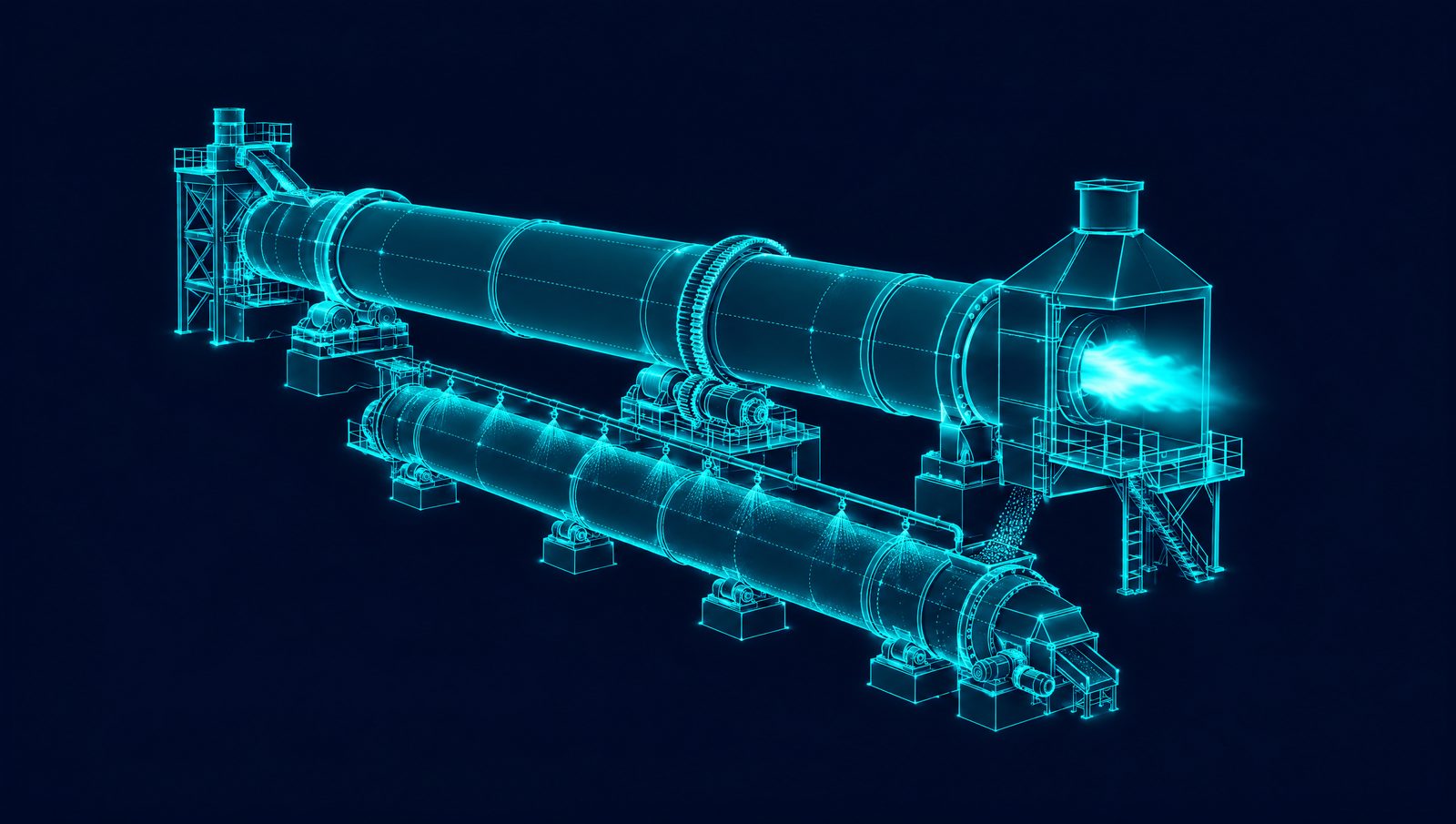
The same logic applies in other energy-intensive processes. Oxbow, a global producer of calcined petroleum coke, faced rising energy costs and needed tighter control of its rotary kiln operations, without large capital investment. Oxbow runs its kiln operations in closed loop with Imubit. Those operations now run at higher yield and with lower natural gas consumption while consistently meeting product specifications, and newer engineers and operators have tools that let them contribute sooner.
How the Imubit Platform applies
In chemicals and polymers, the Imubit Platform treats energy, yield and quality as parts of the same operating decisions. Map traces plan-to-plant gaps to the recurring decisions behind them. Model learns each unit's causality from its own history with Deep Learning Process Control® (DLPC®). Control takes the critical decisions to closed loop, inside limits set by plant engineers, on top of the existing APC and DCS. Across deployments the platform has delivered a 1 to 3% average yield improvement, and where energy is the optimization target, a 15 to 30% reduction in energy consumption.