Experienced operators are leaving the workforce in what the industry calls the great crew change. Each retirement takes decades of undocumented know-how with it, such as how a unit behaves on a particular feed or which move settles an upset. Younger teams are left to relearn those lessons on the job. McKinsey (2025) reports that the share of US manufacturing workers over 55 more than doubled in twenty years, and that retirement rates have surged.
Industrial AI can carry part of that knowledge forward. It learns from years of historian data, including how veteran operators have responded to the plant, and keeps refining its decisions as conditions change. The sections below describe five ways these systems reflect and extend the judgment of expert operators.
1. Learning from historical data and experience
When a veteran operator retires, years of tribal knowledge can go with them. A plant historian can serve as institutional memory instead, holding years of sensor readings, maintenance logs and operator notes.
The mechanics resemble training a new operator. In supervised learning, the model is shown past cause-and-effect pairs, much like walking a new hire through historical upsets. In unsupervised learning, the model explores the data on its own and surfaces patterns that never made it into the logbooks. Together they can recover part of what an experienced operator knows, across far more variables than one person can track.
Patterns alone are correlations. A model that will be trusted to move a setpoint also has to capture cause and effect, constrained by what is physically possible in the unit, so it can predict what happens when the plant acts.
2. Adapting to changing conditions in real time
Traditional control loops follow fixed rules. An engineer sets a range, tunes a PID loop, and hopes disturbances stay inside that envelope. Veteran operators know the plant is less tidy: raw-material quality shifts, ambient temperature swings, and equipment ages.
Adaptive models bring some of that operator agility into the controller. They take in streaming sensor data and use a control strategy learned by reinforcement learning to move setpoints toward the best available operating point. Because the best move is recalculated as soon as conditions change, this kind of real-time optimization can reduce energy use and improve yield compared with static schemes, with fewer manual interventions.
Consider a polymer reactor whose feed composition suddenly swings by 15 percent. A conventional controller drifts off grade until an operator intervenes. An adaptive model that has learned how feed composition drives the reaction can move the manipulated variables through the excursion to keep the product in grade, then return the reactor to steady state. Quality holds, and the operator does not have to chase the upset by hand.
3. Managing multivariable interactions
One change to air flow can ripple through temperature, product quality and energy use. Seasoned operators handle those trade-offs by instinct. A model works through the same trade-offs in real time across thousands of data points.
Conventional advanced process control (APC) relies on fixed models, which struggle where process relationships become strongly nonlinear. Even a well-tuned controller needs retuning to stay accurate as plant conditions drift.
Neural networks learn those shifting, interacting relationships directly from historian data and keep updating them as the plant changes. They capture behavior that classical equations miss, especially interactions that change with load or feed quality. Running on top of the existing APC, this lets a plant push toward its throughput limits without breaching safety or environmental constraints.
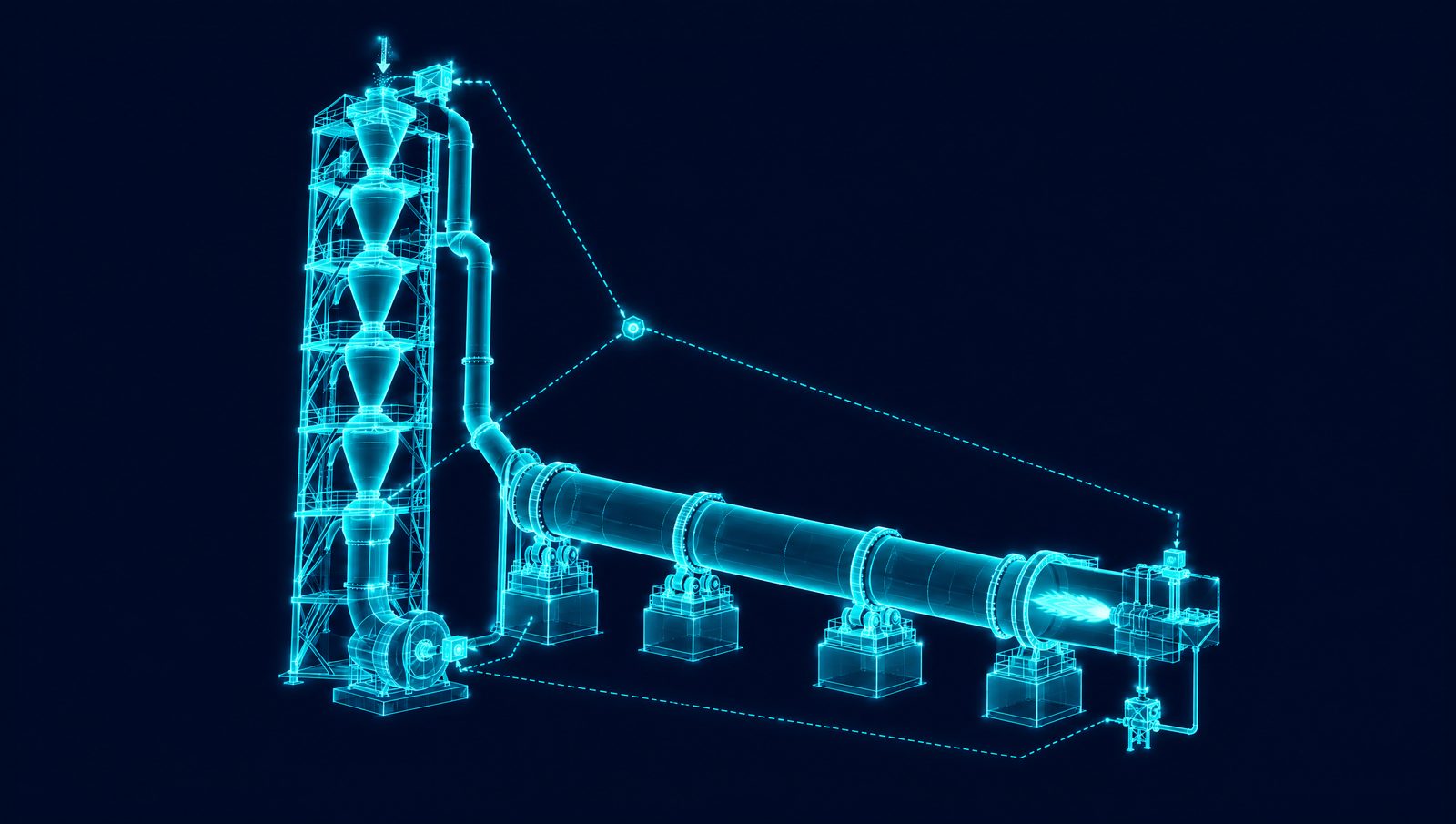
On a cement kiln, balancing feed chemistry, draft and burner heat has traditionally forced conservative setpoints. Managing those variables together lets the kiln run steadier and closer to its limits. In an Imubit deployment on a kiln pyroprocess in closed loop, the result was a 20 to 30% reduction in process variability.
4. Predicting and preventing problems before they occur
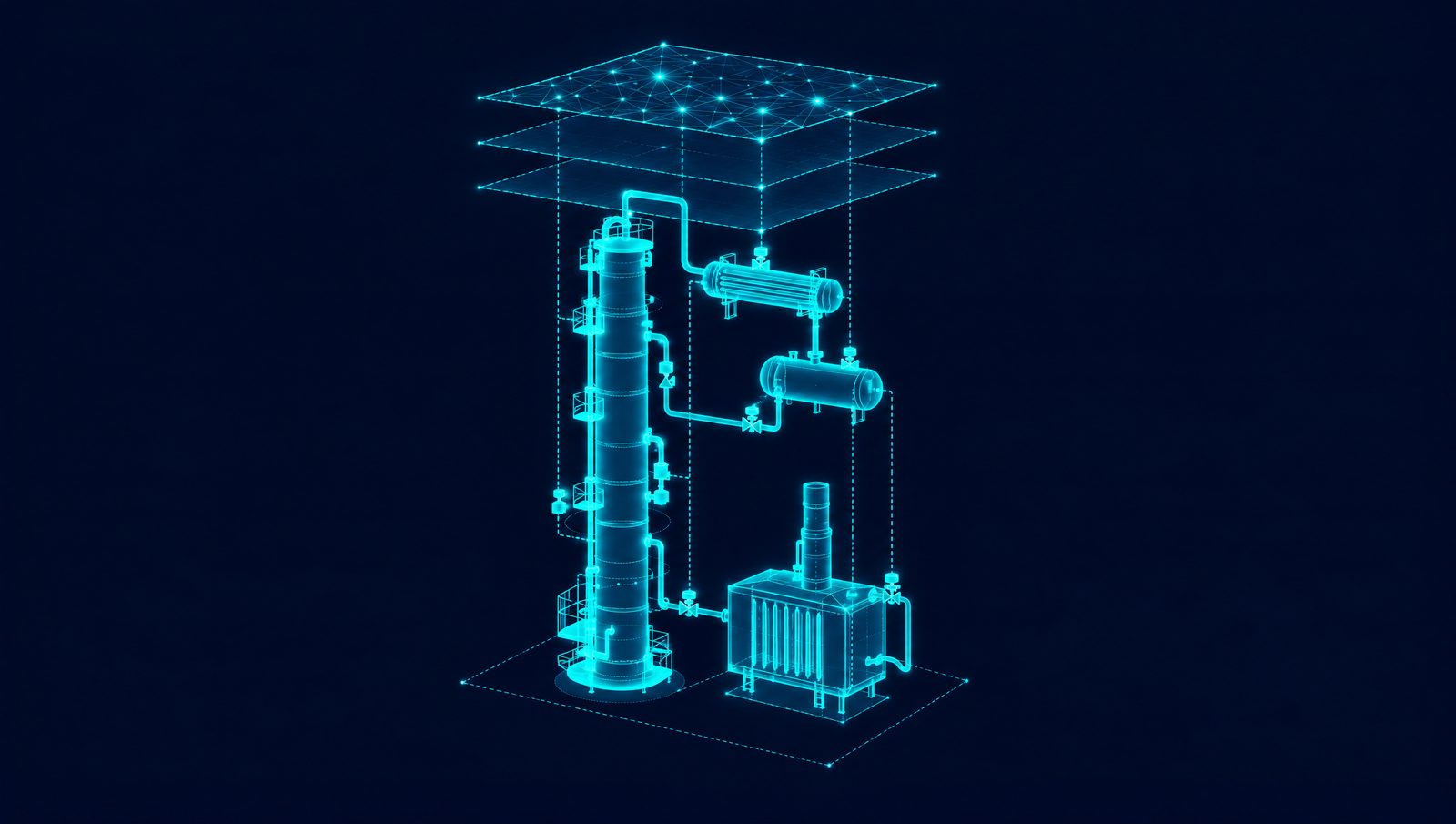
Paired with the plant historian, a model trained on years of process data can scan thousands of variables continuously and flag the subtle patterns that come before failures, quality slips or energy spikes. It works as a dynamic virtual model of the plant, which makes continuous surveillance practical and supports predictive maintenance.
Classification models surface early-warning indicators such as temperature drift, vibration signatures and reagent imbalances, and recommend setpoints that keep the unit inside safe, profitable limits.
Take a mining thickener. If the polymer flocculant feed swings outside specification, the model can predict the upset well before torque limits trip, which gives operators time to intervene and avoid a costly delay. The model keeps watching around the clock, including the hours at the end of a long shift when attention is hardest to hold.
5. Supporting decisions with data
These systems are there to support operator judgment, with data the operator would not otherwise have in front of them.
Dashboards can show operators performance in economic terms, such as the margin difference in dollars per hour between the current operating point and a recommended one. That links each operating move to its financial result and gives operators, engineers and senior management a shared basis for discussion. Small adjustments, such as fine-tuning the butane blend rate in a blending operation, are where those economics become visible, and a model can track them on every move while the crew handles the rest of the shift.
Taking routine recalculation off the operator's plate frees attention for the problems that need experience, and over time the interaction helps newer operators learn how the plant responds.
How Imubit applies this
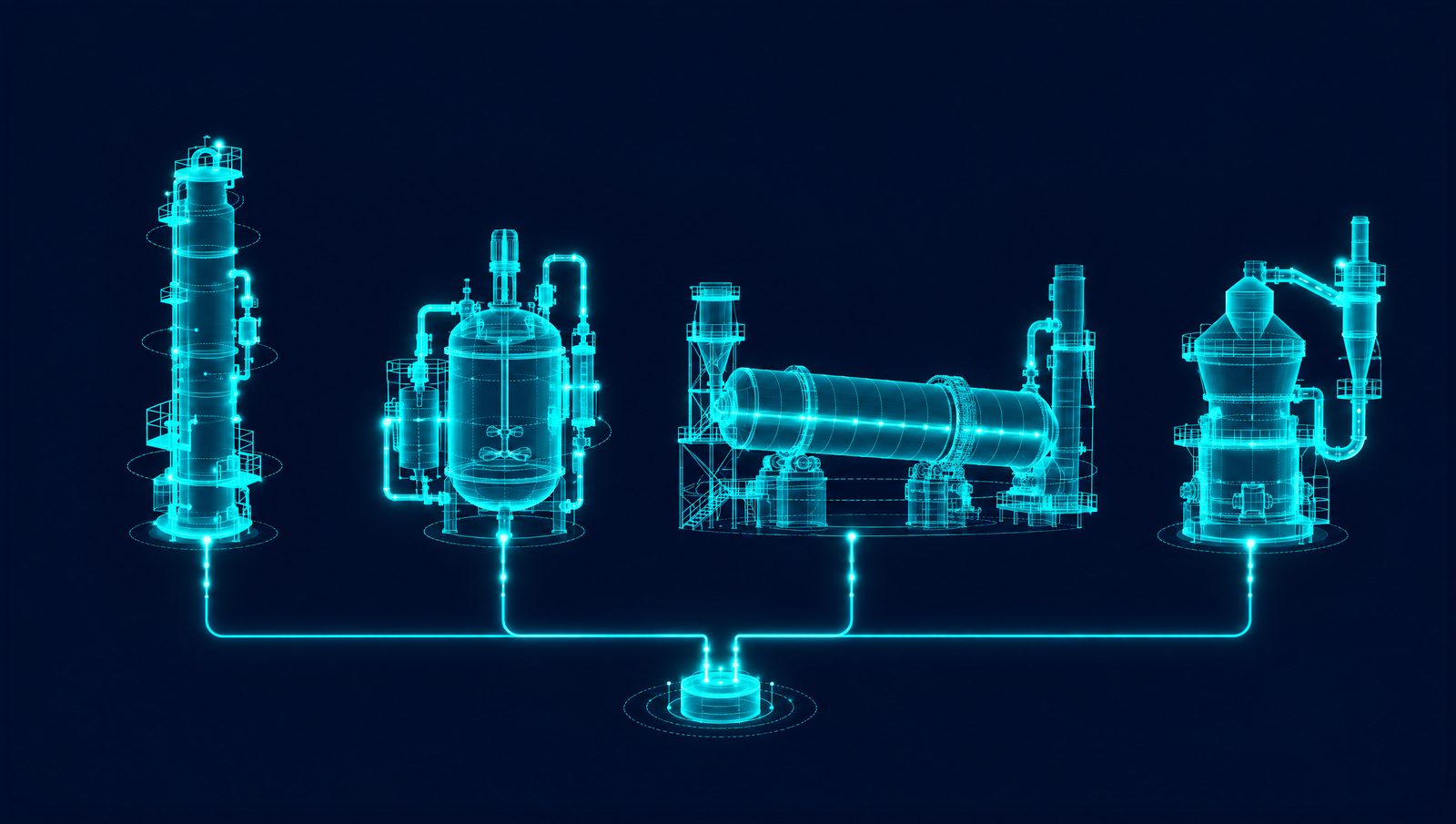
Imubit applies Map, Model and Control across refining, chemicals and polymers, cement, and mining and minerals, as described on the platform overview. Map traces plan-to-plant gaps to the recurring decisions behind them. Model uses Deep Learning Process Control® (DLPC®) to learn a nonlinear dynamic model of each unit from its own history, guided by first principles, and process engineers build those models with no Python and no machine-learning background. Control takes the critical decisions to closed loop: the controller writes setpoints to the existing APC or DCS minute by minute, and the operator moves from manual controller to supervisor, the arrangement ARC Advisory Group calls human on the loop.