Archive: market commentary from April 2021, written by Imubit's Economic Engineering team. Prices, inventories and forecasts reflect conditions at the time.
Gasoline
The U.S. Energy Information Administration (EIA) released its view of how gasoline and diesel demand might recover in its Short-Term Energy Outlook (STEO) in the first week of April 2021. The forecast shows gasoline demand rising in 2021 above the low set in 2020, but not climbing above 2019 levels until sometime after 2022, if ever. Ethanol demand should follow the same shape, since ethanol is blended up to the upper volume limit.
The author's own rough calculation, from average commute distance and average fuel economy, suggested that around 15 to 20 million commuters would need to return to work to close that gap. In that context, the pessimism in the EIA's demand recovery was understandable.
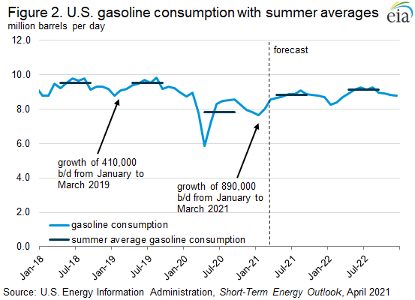
Figure 1: The gasoline consumption forecast recovers to a level short of 2019. Source: EIA.
Distillate
The EIA paints a better picture for distillate demand, perhaps factoring in the effect of the infrastructure plan proposed in the U.S. at the time. Distillate demand was already comparable to previous seasons and was projected to rise above them in the seasons ahead.
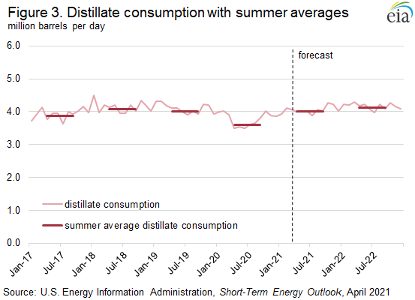
Figure 2: Distillate consumption is forecast to recover and then grow. Source: EIA.
Jet
Jet is the other large question in the distillate picture. There were good signs that the additional travel expected in the March update was arriving. TSA checkpoint data showed air travel at about 14 times the level of a year earlier, but still about 60% of 2019 levels, and airlines had begun to talk about bringing back furloughed pilots and staff. A full recovery in jet still looked doubtful, because the shift to video calls for meetings that used to be held in person may have changed business travel for good.
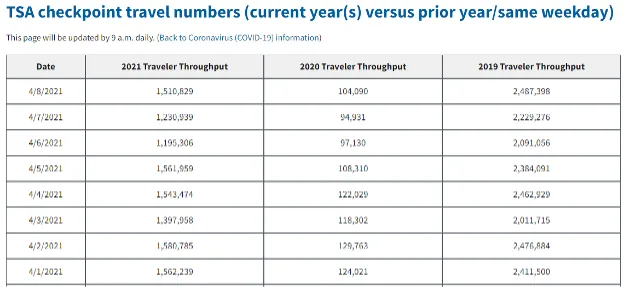
Figure 3: Air travel was about 14 times the level of a year earlier, but still about 60% of 2019. Source: TSA.
Outlook
Gasoline and jet demand still gave reason for caution, while distillate demand was a bright spot. How far commuting and business travel would come back was anyone's guess, but personal travel, and even commuting, had recovered strongly so far.
When gasoline, jet and distillate demand recover at different rates, the product slate that pays best can change between planning cycles. In between, the plan depends on recurring decisions made by different people on every shift. Imubit's closed-loop controllers run on top of a refinery's existing APC and DCS, inside limits set by plant engineers, and move each unit toward the current economics minute by minute.