By Allison Buenemann, Product Marketing Manager, Imubit
AI and machine learning have been part of the process industries for years, but their use for closed-loop optimization and control is recent. ARC Advisory Group's 2024 Process Optimization and Controls Market Study tracks that shift. Peter Reynolds, Analyst for Industrial Manufacturing at ARC, previewed the results at Imubit's Transcend 2024 summit, with a focus on how AI is changing the operational technology (OT) landscape.
Why ARC sees plants changing their approach
ARC has followed the impact of AI on traditional OT for some time. Its 2024 study points to these market trends:
- A shortage of APC engineers, driven by dated technologies and the deep technical specialization they require
- Pressure to adopt modern technologies and make better use of decades of stored data, to improve performance and margins, manage energy and comply with sustainability mandates
- A focus on harder problems, which means overcoming the limits of traditional control technology: model fit gaps, process nonlinearities and heavy services requirements
ARC notes that APC has rested on the same foundation for about 40 years, since the first matrix controller came online.
How ARC distinguishes the technologies
The study separates three groups of process optimization and control technology.
- Advanced process control (APC): multivariable predictive control (MPC) that provides closed-loop, real-time, model-based control of a continuous process using empirical or first-principles models. Process engineers configure the controllers, which run in the real-time operational environment.
- Online optimization (RTO): software that continuously monitors the state of multiple processes through a model reference to predict an optimum operating path, typically by solving simultaneous equations. Its output is either presented to operations or set directly as a new target for a lower-level control strategy.
- Closed-loop AI: machine learning algorithms, such as neural networks, that control plant operations based on model predictions. A controller trained on accumulated knowledge and experience takes actions that maximize a cumulative, user-defined reward. Solutions may include a shared environment where teams visualize data and build, train, evaluate and track the performance of closed-loop AI models.
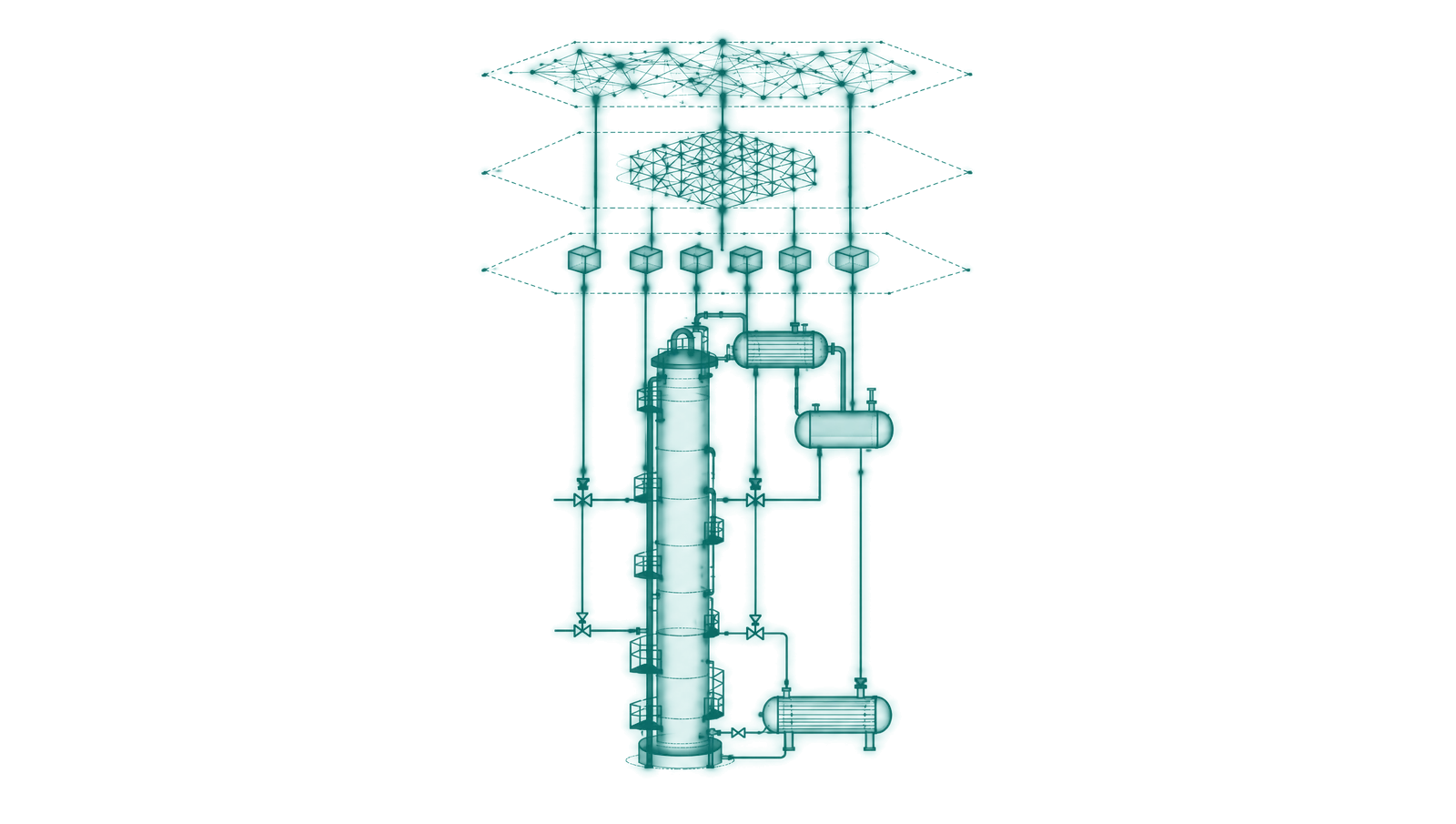
Figure 1. Process optimization and control technology groups, after the definitions in ARC Advisory Group's 2024 market study.
Writing setpoints to the control layer
In ARC's view, a key differentiator among closed-loop AI vendors is the ability to write a setpoint to a lower-level control scheme, because of the precision that requires. ARC sees modern techniques such as reinforcement learning as the way to reach that precision.
Reinforcement learning learns a control policy from feedback on the outcomes of its actions. That suits processes with high variability, where conditions keep changing and a static model falls behind. In Deep Learning Process Control® (DLPC®), a Deep Learning Predictor learns a nonlinear dynamic model of the unit from its own history, guided by first principles. A Deep Learning Controller, trained by reinforcement learning across millions of simulations, learns the control policy. The controller runs on-premise and writes to the existing APC or DCS, minute by minute, inside limits set by plant engineers.
What process operations teams once saw as a radical approach is now in broad use. Imubit has over 100 closed-loop controllers deployed worldwide, the largest install base in the industry, across refining, chemicals and polymers, cement, and mining and minerals.
What the study found on adoption
Reynolds' talk showed heavy industry moving from awareness of closed-loop AI to applying it. Among the findings:
- Closed-loop AI vendors have broken into the top 10 of the overall APC and optimization market.
- Refining is ahead of other sectors in adopting closed-loop AI.
- Small and medium-sized processors are adopting closed-loop AI more readily than the supermajors.
The third finding reflects both the historical constraints and the agility of smaller companies. As earlier presentations at Transcend showed, small refiners often lack the resources to build internal APC programs. A closed-loop AI controller can work on top of the APC a site already has, or write to the DCS where there is none. Smaller refiners also see it as a way to attract and keep the next generation of engineers.
The full study is available from ARC Advisory Group.