By the Imubit Economic Engineering team. This is archived market commentary from October 2020. Prices and spreads reflect the market at the time.
US distillates begin to feel the pinch
Since the pandemic began and jet demand fell to levels not seen in many years, our view has been that the US would go long on distillates in a way that is hard to manage. Much of the jet that refiners still make has to be blended or fractionated into the distillate pool, and to a lesser extent into the gasoline pool. At the same time diesel demand, which tracks GDP, has dropped meaningfully. We expected gasoline to diesel spreads to move in favor of gasoline as early as mid-April, while diesel was still strongly favored. In last month's update we pointed to the mismatch between distillate supply and demand and the way distillates were still being priced.
The shift toward gasoline has now arrived. It built as traders Trafigura and Vitol were reported in the trade press to be storing and shipping distillates on VLCCs to capture contango and arbitrage plays. Over the last month distillates have traded well below gasoline, which signals refineries to adjust conversion and possibly to begin cracking some layers of distillate.
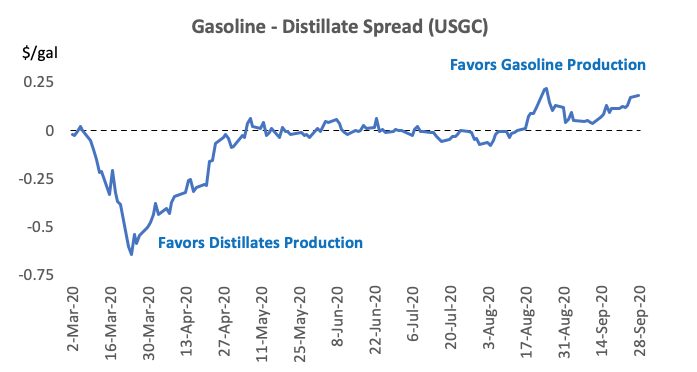
Source: EIA spot price data
It will likely take a tankage crunch to push distillate prices down further. The strong contango is funding the storage plays, which props up distillate prices and relieves tankage constraints. The long-term market view has to change before the absolute price of distillate comes down. We believe that change started in the last few weeks. Over time it will shift conversion economics at refineries and rebalance the market toward the product mix that current demand calls for.
What this means for refiners
If gasoline economics move well above diesel, conversion unit signals will shift toward gasoline production. Some tiers of distillate should also become attractive as FCC feed, competing against imported feeds. Together these two effects will likely reduce overall crude rates for the same gasoline rate. Keep in mind that gasoline stocks are drawing down slowly as winter approaches. We have even seen simulations showing that moving slightly to the gasoline side of maximum volume yield may be economic under these conditions.
Ethylene prices lift ethane cracking margins
Natural gas production fell slightly with COVID-related curtailments. Ethane then has to be recovered from farther away, so its premium over fuel value rose to about 8 to 10 cents per gallon, based on EIA Henry Hub gas prices and November 2020 Mont Belvieu ethane futures. That took a couple of cents off ethane cracking margins. The new-build ethane cracking fleet appears to be in better shape for now. November 2020 Mont Belvieu ethylene futures rose to around 24 cents per pound after Hurricane Laura, which brought ethane cracking margins back to more typical levels.
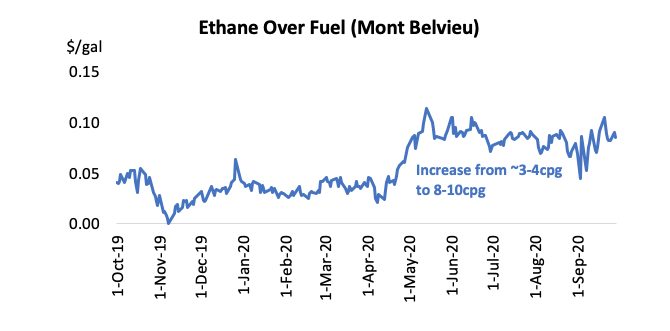
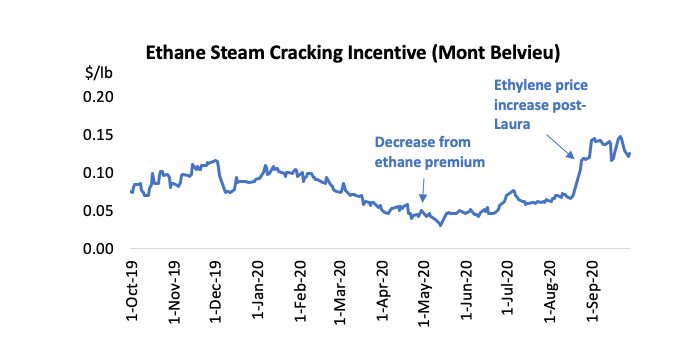
Sources: EIA Henry Hub natural gas prices, November 2020 Mont Belvieu ethane futures, November 2020 Mont Belvieu ethylene futures
A move of this size in the gasoline to distillate spread changes the economic optimum of several refinery units at once. FCC feed selection, conversion targets and crude rate all shift with it. For each site, the practical question is how quickly its unit targets follow the market. Read more about refining.