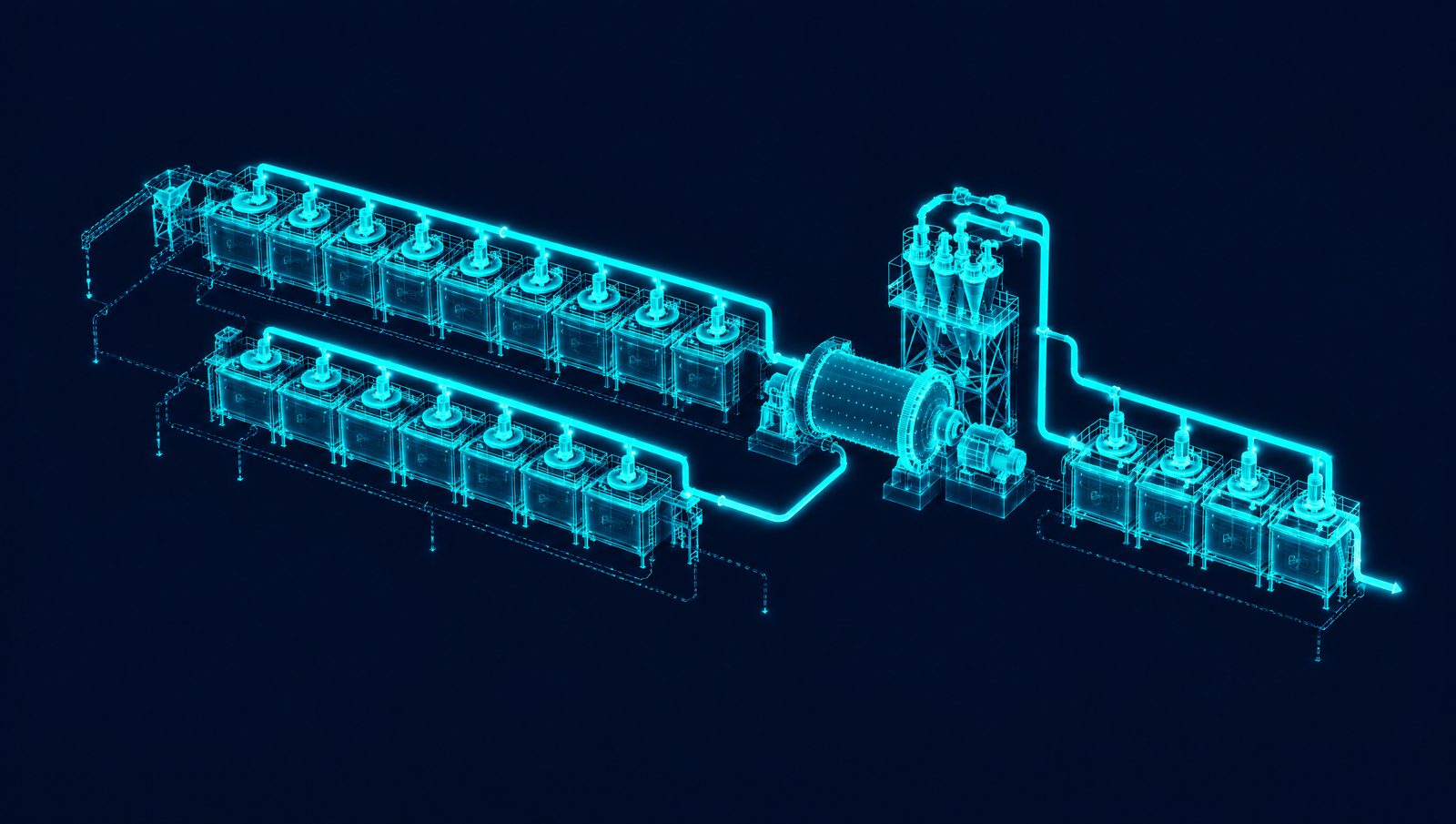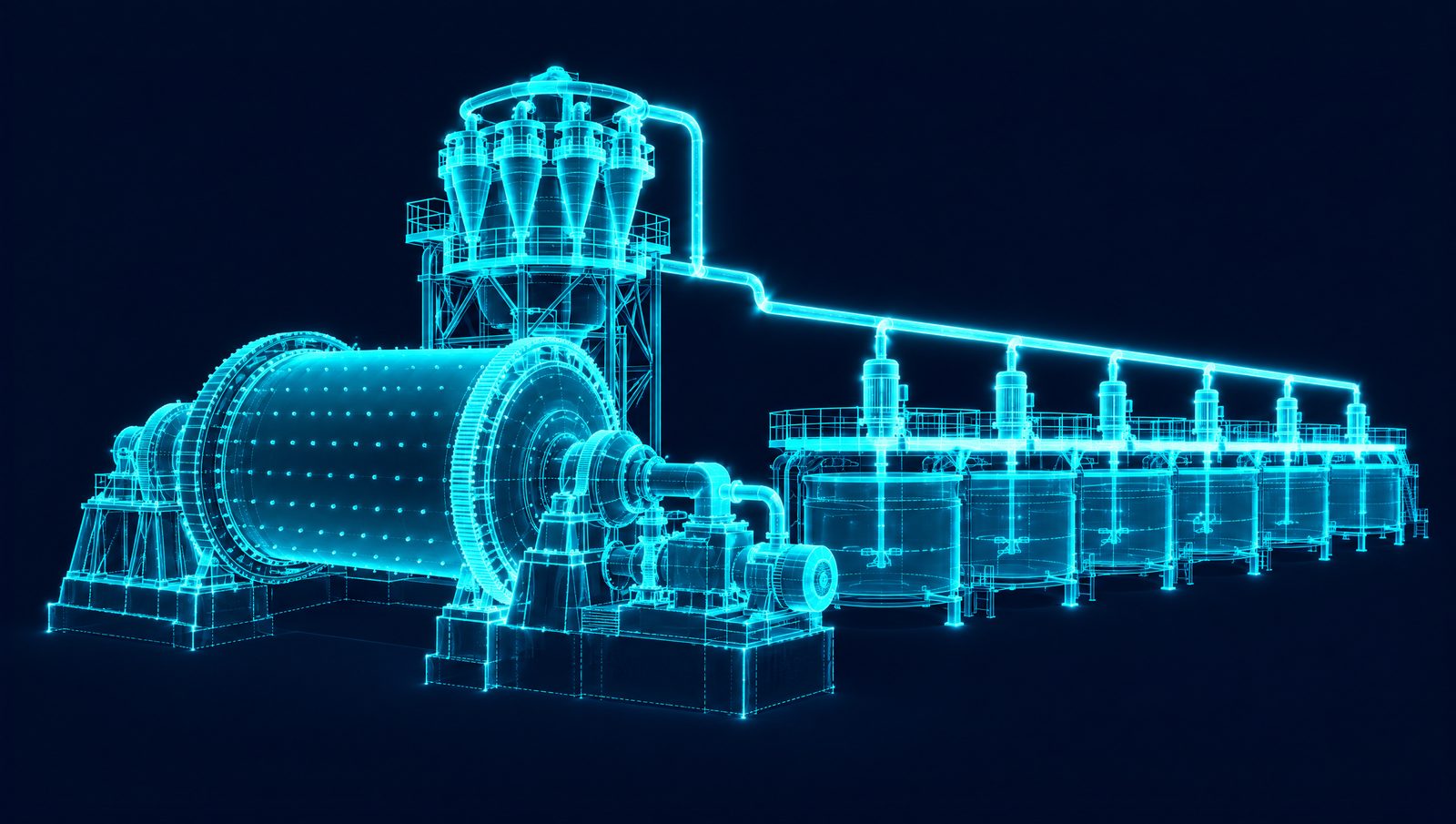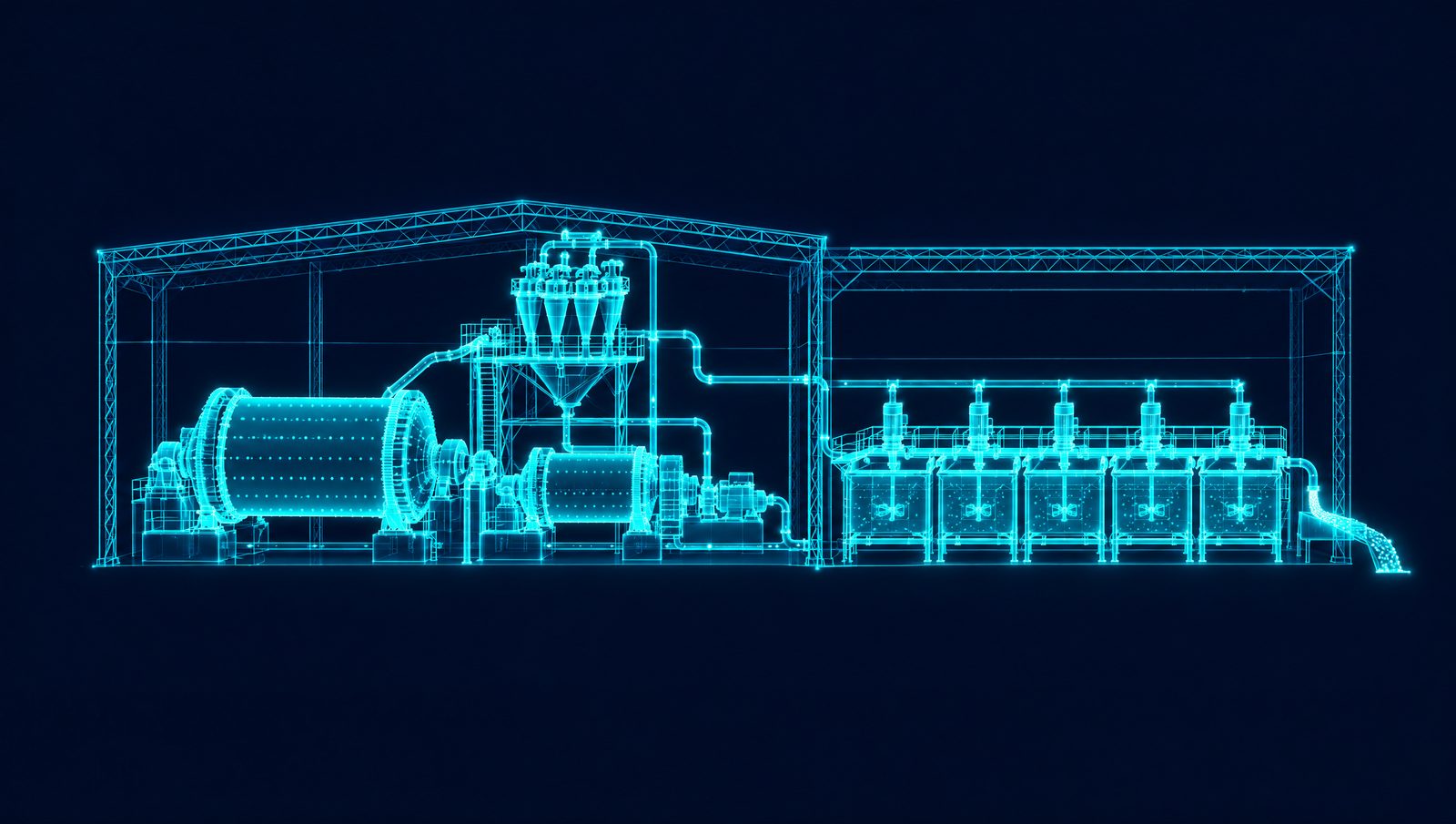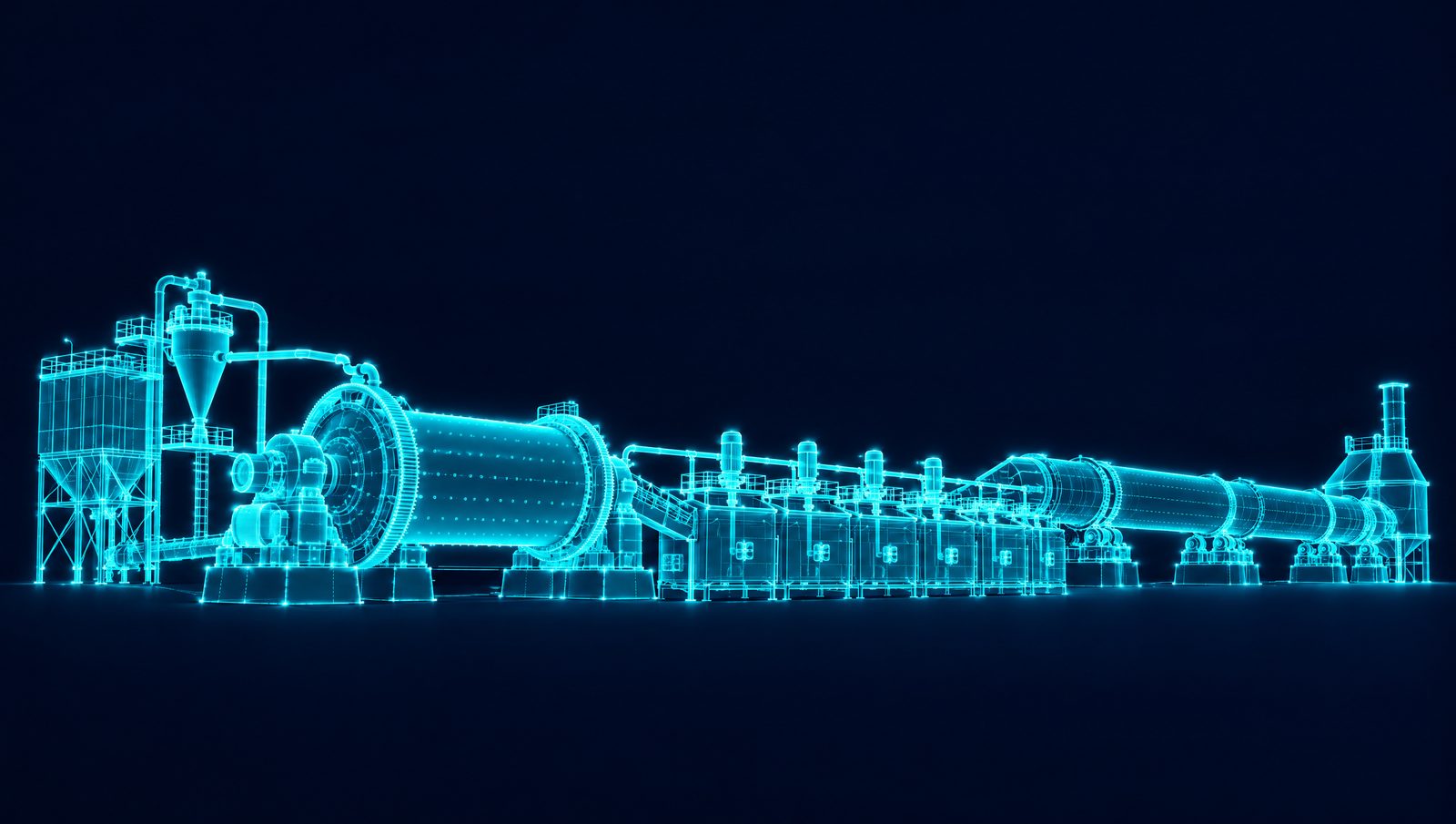
Lithium processors are under pressure to deliver more battery-grade product from the ore they already mine. Demand continues to climb as energy-storage and electric-vehicle producers scale up, and deficits could emerge as demand grows and new projects are delayed. The commodity price reporting agency Fastmarkets expects inventories to tighten, and geopolitical friction adds further price risk.
This article looks at where a hard-rock lithium operation loses value and how control that learns from plant data can recover part of it, often without new hardware: lithium lost to tailings in flotation, energy in grinding and calcination, and off-spec product in lithium carbonate production.
Recovering more lithium in flotation
Even a well-tuned flotation circuit in a hard-rock concentrator lets some spodumene drift into tailings. Guides to spodumene froth flotation from 911 Metallurgist describe how changing ore chemistry, reagent performance and pH swings create constraints that push recovery down and cost up. Each point of recovery lost is product the plant has already paid to mine, crush and grind.
The main variables are well known: reagent dosage, ore grade, pulp density, pH, air flow and residence time. They interact, and the best combination shifts as the ore changes. A controller built on a model of the circuit, learned from its own operating history, can estimate the best operating point continuously. It writes setpoint moves for froth depth or collector addition to the APC or DCS, minute by minute, with operators able to take over at any time. Because the model covers the range of ores and conditions the plant has seen, it can respond to a mid-shift feed change, or to ore moisture that varies with the weather, without waiting for the next manual adjustment. Running continuously, it can also reduce the variability between shifts.
Reducing energy use in comminution and calcination
Grinding and calcination are among the most energy-intensive steps in hard-rock lithium processing, so energy wasted there hits margin directly. Under single-loop PID control, SAG and ball mill loads can cycle between under-loading and overloading. In a rotary kiln, temperature can drift, and correcting the drift costs extra fuel.
In comminution, the controller watches motor power, feed rate, particle size and ore moisture together. It adjusts feed rate and mill speed to hold the mill load near its best level, which keeps the circulating load steady and avoids grinding energy spent to no purpose.
Calcination follows the same pattern. Spodumene concentrate is calcined to convert it from the alpha to the beta form, which can then be acid roasted and leached. The controller modulates fuel flow, secondary air and kiln rotation to hold the conversion temperature within tight limits, avoiding the temperature swings that call for fuel-intensive corrections. Kiln shell temperature and drive data, watched continuously, can also show refractory hot spots or bearing wear early, so repairs can be planned before a failure forces a restart.
Most of the tags involved, such as power draw, kiln temperature and oxygen, already sit in plant historians. Particle size distribution and ore moisture may need additional instrumentation.
Reducing off-spec product and rework
Lithium carbonate that drifts outside its limits on purity, moisture or particle size is off-spec. It is sold at a discount or recycled through the plant, which costs both margin and throughput. The root cause is often a small process upset that conventional control misses until lab results arrive hours later.
A model trained on the plant's historical quality records can learn how slurry density, crystallizer temperature and dryer airflow affect impurity levels and particle morphology. A controller built on that model, running in closed loop, inside limits set by plant engineers, writes setpoint moves to the DCS to steady the crystallizer, centrifuge and dryer before the product drifts off-spec, without waiting for the lab.
When data-driven control holds quality steady across shifts, less material goes to rework or discount, and battery customers receive more consistent product.
Practical steps for lithium processors
- Assess data quality first. Audit instrumentation for calibration problems and signal gaps. Start with the critical flotation measurements: pH, pulp density and collector flow. Simple signal validation prevents false starts later.
- Find the high-variance processes. Review several months of historian data for units where operators make frequent manual adjustments. These are strong candidates for closed-loop control.
- Map the control hierarchy. Document how process variables interact. Calciner temperature, for example, affects both conversion and energy use. Those relationships guide optimization priorities.
- Set clear baselines. Measure current recovery, energy per tonne and off-spec rates across ore types and operating conditions. Without a baseline, the return cannot be verified.
- Involve operators early. Hands-on workshops capture the process knowledge behind their control decisions, and their support decides whether the system gets used.
- Start with a bounded scope. Begin on one unit operation, such as flotation, with clear KPIs, and extend to energy and quality once the value is shown.
- Build a cross-functional team. Include operations, maintenance, process engineering and IT, so that what the model can do stays connected to how the plant runs.
How the Imubit Platform applies
In mining, minerals and metals, Imubit applies Map, Model and Control to the concentrator and the circuits downstream of it. Map traces recovery, energy and quality losses to the recurring decisions behind them. Model uses Deep Learning Process Control® (DLPC®) to learn a nonlinear dynamic model of each circuit from its own history, guided by first principles. Control takes the critical setpoint decisions to closed loop on top of the existing APC and DCS, inside limits set by plant engineers. Across its mining, minerals and metals deployments, Imubit reports a 1 to 3% metal-recovery improvement, 5 to 10% grinding-energy savings and a 2 to 5% throughput increase.