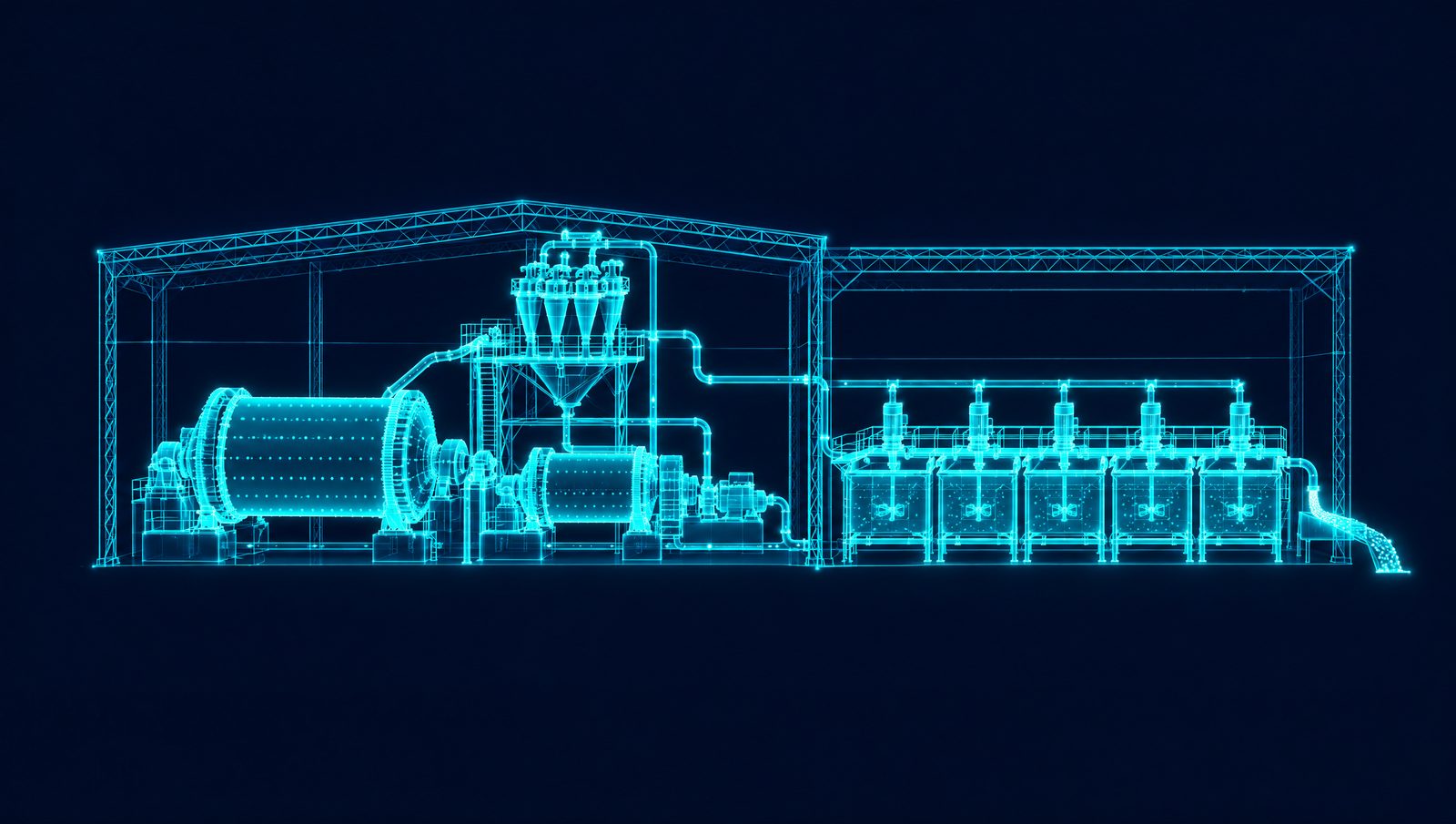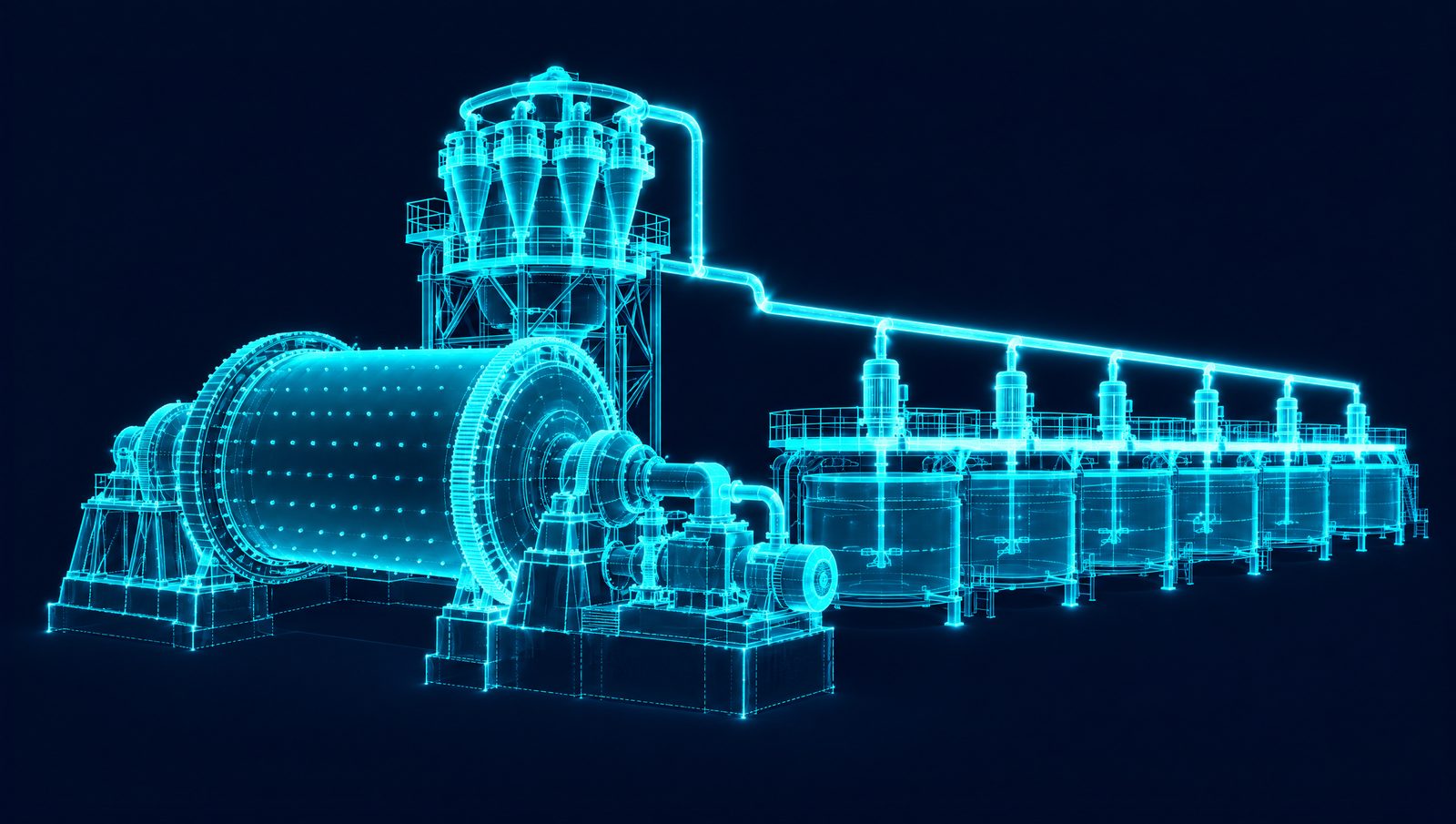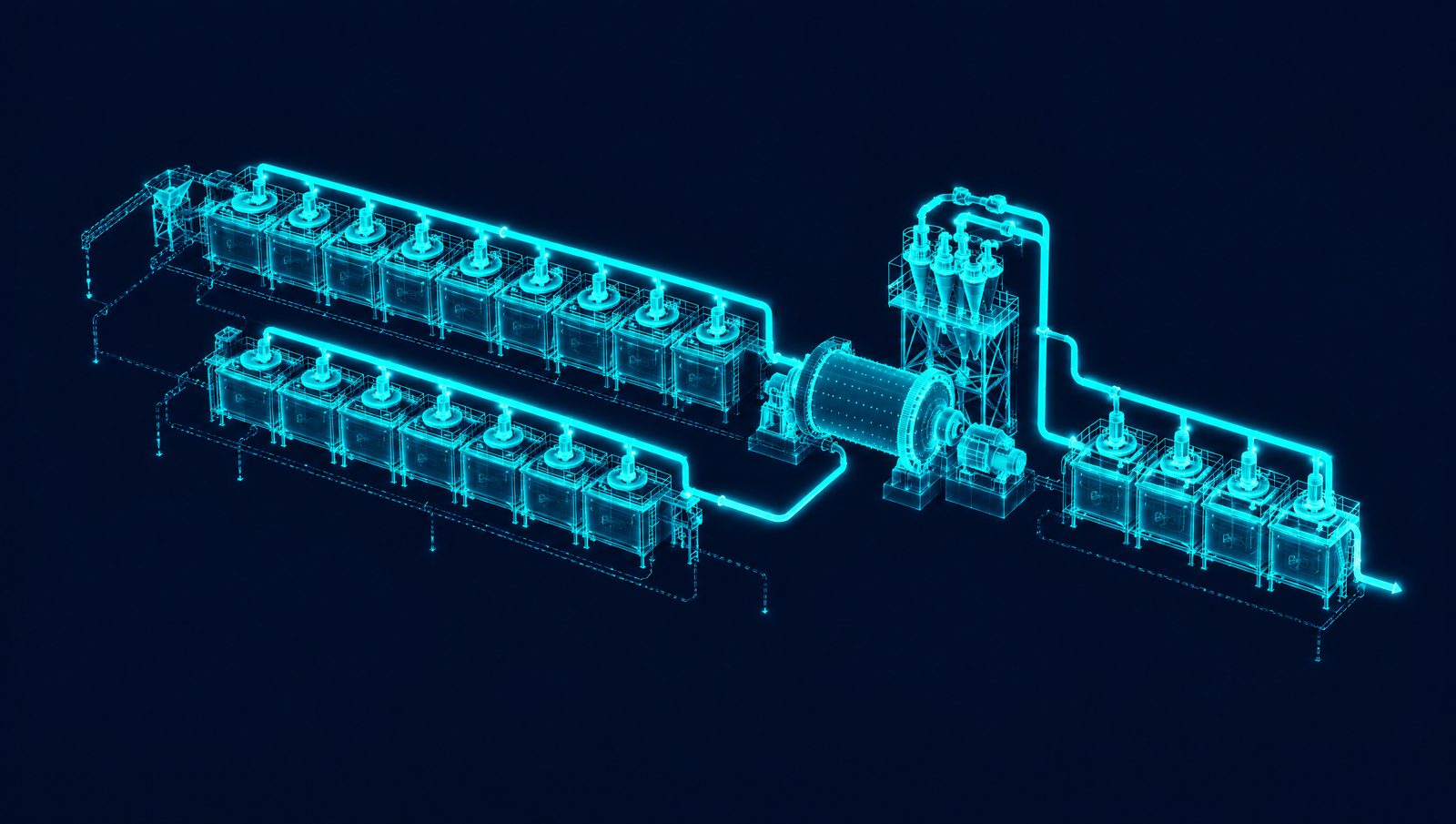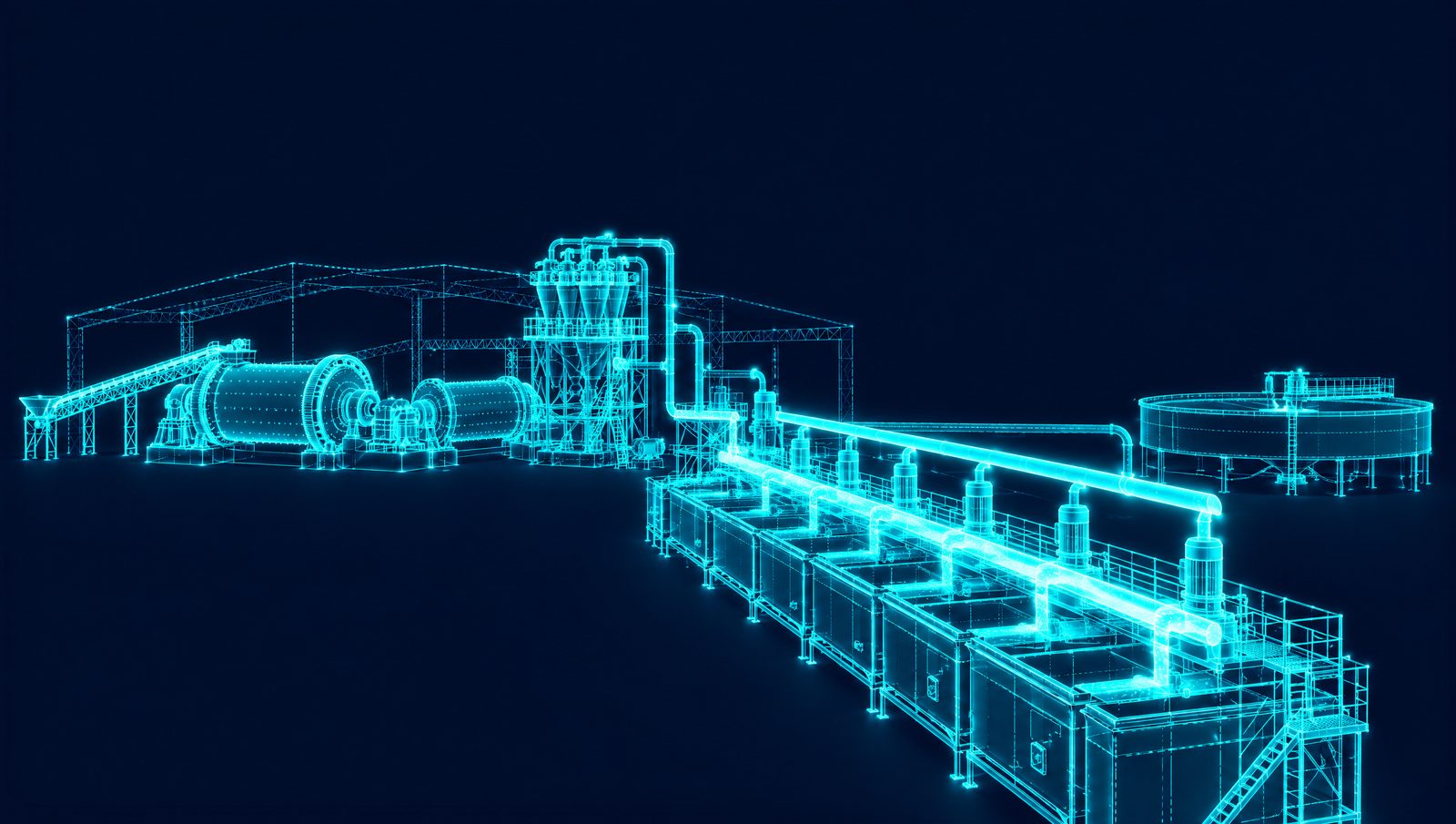
Copper concentrators are asked to recover more metal from ore that keeps getting poorer. Lower head grade means moving and treating more material for the same copper output. That drives up reagent use and energy, already one of the largest operating costs, while water constraints tighten every year.
The closed-loop approach proven in refining now applies to mineral processing. This article covers three levers in a copper plant: throughput, flotation recovery and grinding energy.
Throughput as ore grades decline
Declining ore grades push more material through crushers, mills and flotation cells, yet daily tonnage still hits a ceiling. The plant has to process more to hold output, and energy and reagent costs rise with it.
Manual setpoint changes, spreadsheet models and unit-by-unit advanced control struggle with the hundreds of interacting variables that shift with each shovel load. Operators reasonably err on the side of caution and run below the plant's real capacity to avoid upsets.
A learned process model takes in real-time data on ore hardness, mill power draw, cyclone pressure and concentrate grade, and captures the nonlinear relationships that set the bottleneck. In closed loop, the controller coordinates the processing chain as one system instead of optimizing each piece of equipment in isolation, writing setpoints to the distributed control system (DCS), inside limits set by plant engineers. The model is retrained on fresh operating data as feed characteristics and equipment performance drift.
Integration uses the existing historian and DCS tags, with no new hardware. The work runs in four phases: data extraction, model training, closed-loop deployment and ongoing support to sustain the gains. Because the model learns from plant history, it does not depend on manual step testing that disrupts front-line operations.
Metal recovery in flotation
Every point of copper that reports to tailings is lost revenue. A significant share of valuable metal still escapes there, especially when ore grade fluctuates and manual setpoints lag behind conditions.
Flotation control asks operators to manage pulp density, air rate and frother dosage, among dozens of variables, while reacting to upstream disturbances. Even the most experienced crew cannot continuously calculate the nonlinear interactions that set recovery.
A model trained on process sensors, lab assays and historian data finds the operating window that recovers more copper with less reagent. It flags sensor drift, substitutes redundant tags when a measurement fails, and presents its recommendations through the operator displays the crew already uses. That makes it a check on the circuit as well as a training aid for newer operators.
A model built from the plant's historical data can also estimate how much recovery the flotation circuit is leaving behind, before any change is made on the plant.
Grinding-circuit energy and emissions
Grinding accounts for a large share of a concentrator's energy use. Rising power prices and carbon pricing add to the pressure on every kilowatt-hour.
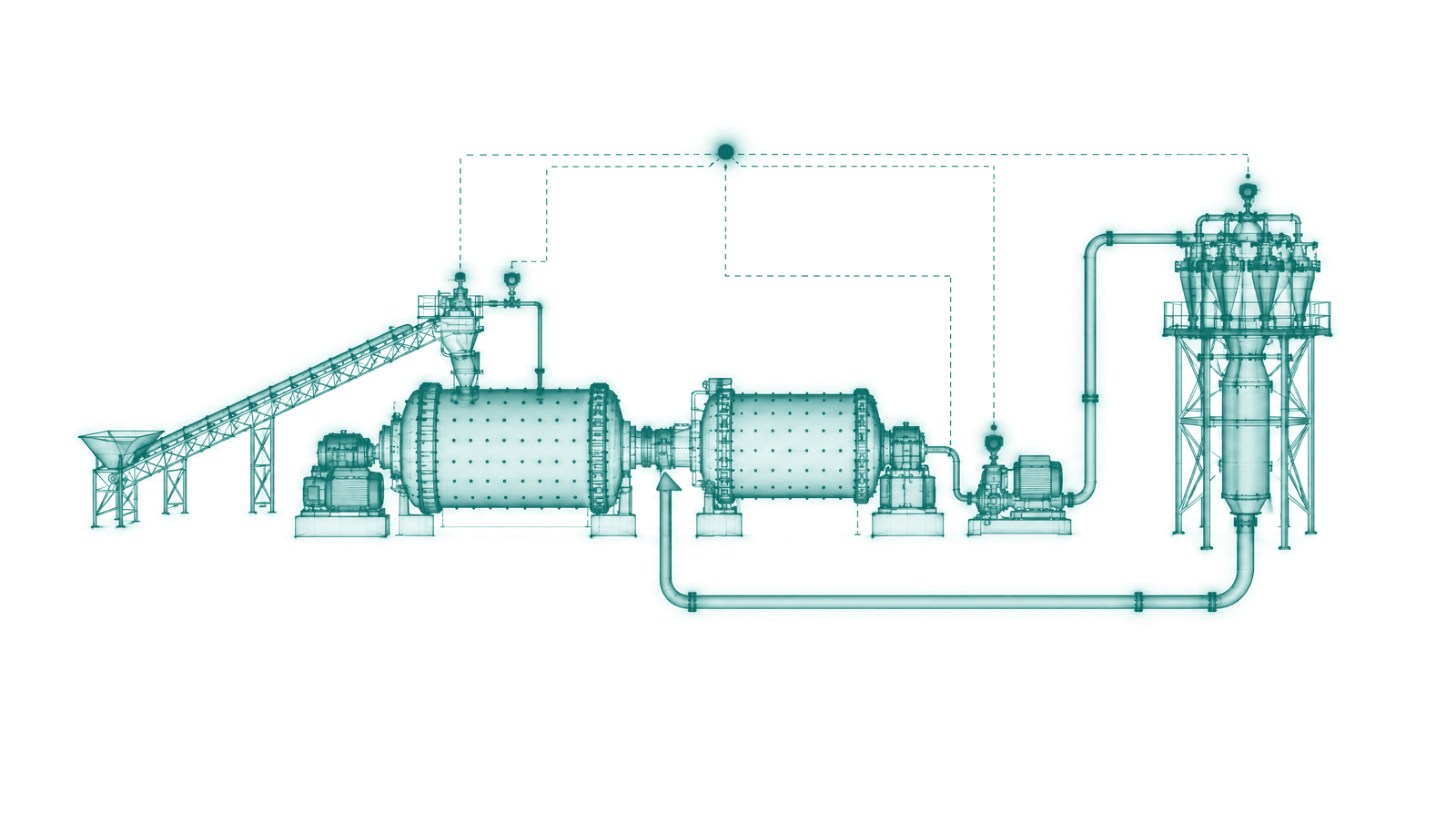
Fixed rules and operator judgment tend to leave mills either over-powered, which wastes energy, or under-filled, which limits throughput. A learned model uses ore hardness, mill speed, cyclone pressure and motor load to forecast power demand and predict particle size distribution, and the controller adjusts water addition and mill speed in real time.
A controller trained by reinforcement learning balances energy intensity against product quality, holds grind-size targets, and adapts when feed characteristics change. That removes the manual retuning cycle each time the ore shifts.
The value comes from electricity the plant already pays for, so the case rests on integration cost rather than new capital equipment. Every megawatt-hour saved also lowers the emissions tied to the plant's power supply and strengthens ESG reporting.
How Imubit applies this
Imubit applies Map, Model and Control to mining and minerals circuits. Map traces lost recovery, tonnage and energy to the recurring decisions behind them. Model uses Deep Learning Process Control® (DLPC®) to learn a nonlinear dynamic model of the circuit from its own history, guided by first principles. Control writes setpoints to the existing APC or DCS minute by minute, inside limits set by plant engineers. In mining, minerals and metals, deployments have delivered a 1 to 3% metal-recovery improvement, 5 to 10% grinding-energy savings and a 2 to 5% throughput increase.