Process companies increasingly see the value of artificial intelligence and are working out how it fits their operations. AI is still a young technology, and applying it to a refinery or chemical plant takes a deliberate approach that differs from rolling out more standard software.
The skills gap
Data science and machine learning skills take time to build, and the training behind them became mainstream within the last two decades. In a 2019 study by MIT Technology Review, 45% of senior business and technology decision makers said their organizations lacked the skilled people needed to implement AI. New applications often need specialists to take the technology from theory to practice.
A different data architecture
AI also needs a different data architecture from traditional business analytics. A company may hold the large volumes of data that AI requires and still need significant data cleaning before that data is usable. The same MIT Technology Review study found that 42% of those decision makers saw a lack of quality, unbiased data as the greatest barrier to AI adoption, while 38% pointed to a lack of the required infrastructure.
Data problems specific to refining
In refining, several data problems have to be solved before a model can be trusted.
- Historian compression. Refiners commonly compress historian data. Points judged inconsequential are discarded, and the archive keeps the points that mark more important events. The discrepancies this creates can mislead AI algorithms, so data scientists and process engineers need to evaluate them carefully together.
- Export limits. Standard data historians are not built to export years of minute-by-minute data in the format that model training requires.
- Merging sources. Models that address broader, more profitable problems often need data from several systems. Merging data stored in different formats and under different tag IDs takes specialized knowledge and tools.
- Transparency. AI models are hard to interpret. Engineers need robust, purpose-built tools to visualize a model and understand what it is doing.
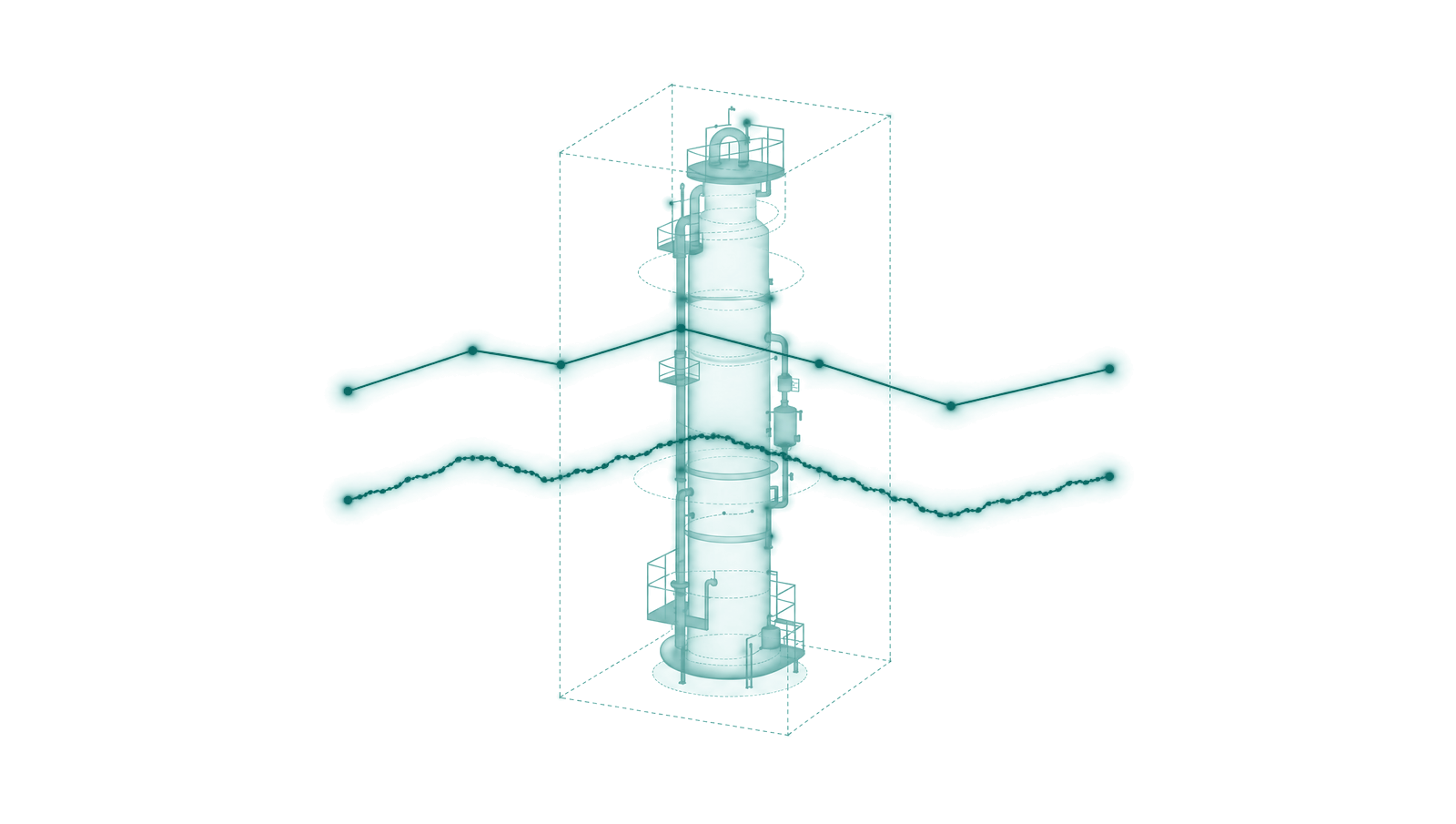
Process knowledge has to meet machine learning
These difficulties grow with the complexity of the process. Refining and petrochemicals are a clear case, because running a plant efficiently takes years of technical experience. Getting that process knowledge into an AI model takes people with domain expertise working alongside data scientists. We covered this in an earlier post on vertical, domain-driven AI and generic Industry 4.0 tools.
Who keeps the model running
An AI application on a refining unit is not finished when it goes live. Plant configurations and operating strategies change, and the model has to change with them. That work moves faster when one team is accountable for the value end to end, including ongoing maintenance. In-house control engineers are usually pulled in many directions and have limited capacity to take it on.
Since this post was written
When this post was written, the state of the technology justified dedicated data scientists working with refining experts. Imubit worked out its own methods for these data problems over years of iterative work, and its refinery experts, data scientists and software engineers built and maintained each application under a subscription model.
Today a plant's own process engineers can build Deep Learning Process Control® (DLPC®) models in DLPC® Builder, with no Python and no machine-learning background. The controllers built on those models run in closed loop on top of the existing APC and DCS, inside limits set by plant engineers.