By Allison Buenemann, Product Marketing Manager, Imubit
A high-conversion U.S. refinery had three places where its units were giving up margin: an undersized debutanizer that held back the FCC, an FCC riser temperature that moved about once a week, and a diesel stripper run with a wide flash point buffer. It applied Deep Learning Process Control® (DLPC®) to each of them in closed loop.
The debutanizer that capped FCC conversion
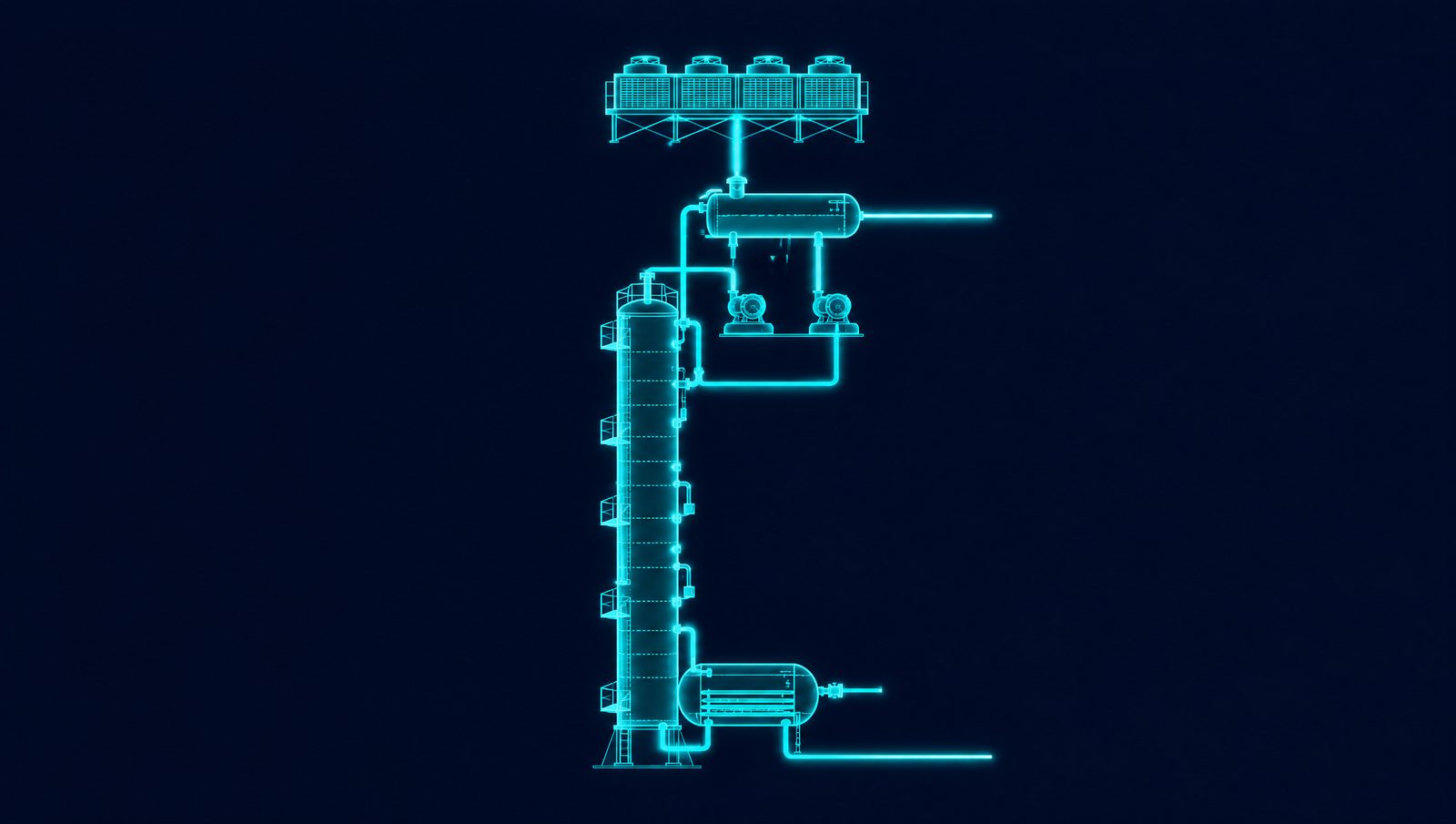
The debutanizer separates the light olefins stream overhead from the FCC gasoline in the bottoms. At this refinery the tower is undersized, and it ran against its flood point most of the time. Running at flood weakened separation and limited throughput.
The tower has two specifications to hold. The overhead olefins stream carries a 5% maximum on C5s. The bottoms gasoline carries a vapor pressure specification. Sending too many C5s overhead breaks the overhead limit. Pushing too many into the bottoms raises the gasoline vapor pressure and can take it off spec. The FCC reactor had room to run harder, but whenever the debutanizer was the limit, the refinery had to cut FCC conversion.
Before closed loop, operators adjusted one variable, waited a few hours for the result, then made the next move. The DLPC® controller predicts the stream properties in real time and moves reboiler duty and tower top temperature together, continuously, to maximize the tower's economics.
Tower separation improved. The refinery kept more C5s in the higher-value cat gasoline and made less excess olefin product. The tower's throughput capacity rose, so the refinery could raise FCC conversion and send more gasoline to the debutanizer without hitting the flood point.
The FCC riser temperature that rarely moved
The historical strategy on the FCC reactor was to hold riser temperature fairly static. Operators changed it about once a week to try to maximize conversion, which was not often enough to capture the value available as feed and conditions changed.
The refinery and Imubit built a controller that adjusts riser temperature continuously in small moves to maximize conversion. It accounts for the constraints on downstream equipment and runs close to them. Its objective function is built from the dollar value of each product, and the price deck is updated periodically as market prices move, so the controller optimizes toward the products worth the most at the time.
Liquid volume yield improved against the baseline. The gain then slowed after changes at the crude tower altered the quality of the feed reaching the FCC. The joint team retrained the model on data from the new feed so the controller could learn the new operating regime. A model learns the feed it has seen, so a lasting change in feed quality is a reason to retrain.
The diesel flash point buffer
Flooding in the diesel stripper meant the refinery ran diesel flash point well above the optimum to stay on spec. Flash was measured by lab samples taken three or four times a day, and the results were imprecise, so the refinery carried a set point buffer of several degrees above the lower flash limit it must meet to sell diesel. The buffer meant making more naphtha and less diesel than the feed allowed.
The DLPC® controller on the stripper moves reflux rate and reboiler rate together. It predicts flash in real time, which gives the refinery a reliable inferential for the property between lab samples. Operations can adjust continuously against that live value instead of waiting to react to each lab result.
With a live view of flash, the refinery narrowed the buffer and ran closer to the specification. Diesel output rose while the product stayed on spec.
Operator buy-in
An operator can switch a controller on or off depending on whether they trust its moves, so trust decides how much value a closed-loop application delivers. The refinery trained its operators and made them comfortable with the technology before the controllers went live. That early buy-in kept the controllers in use, with operators in charge of them.
DLPC® learns a dynamic model of each unit from its own operating history and writes targets to the existing APC or DCS minute by minute, inside limits set by plant engineers. For more on the units in this post, see debutanizer optimization and FCC unit optimization.