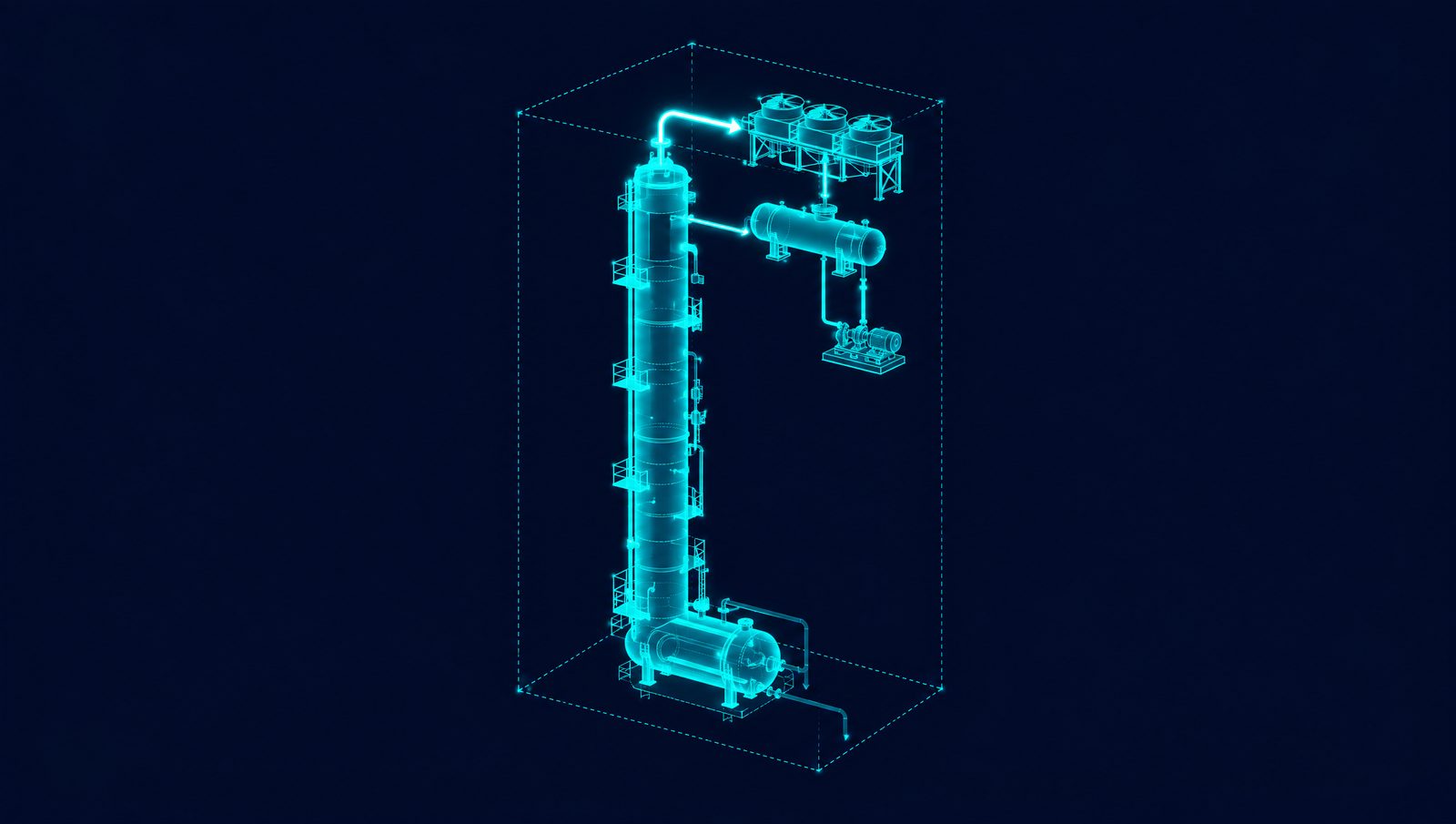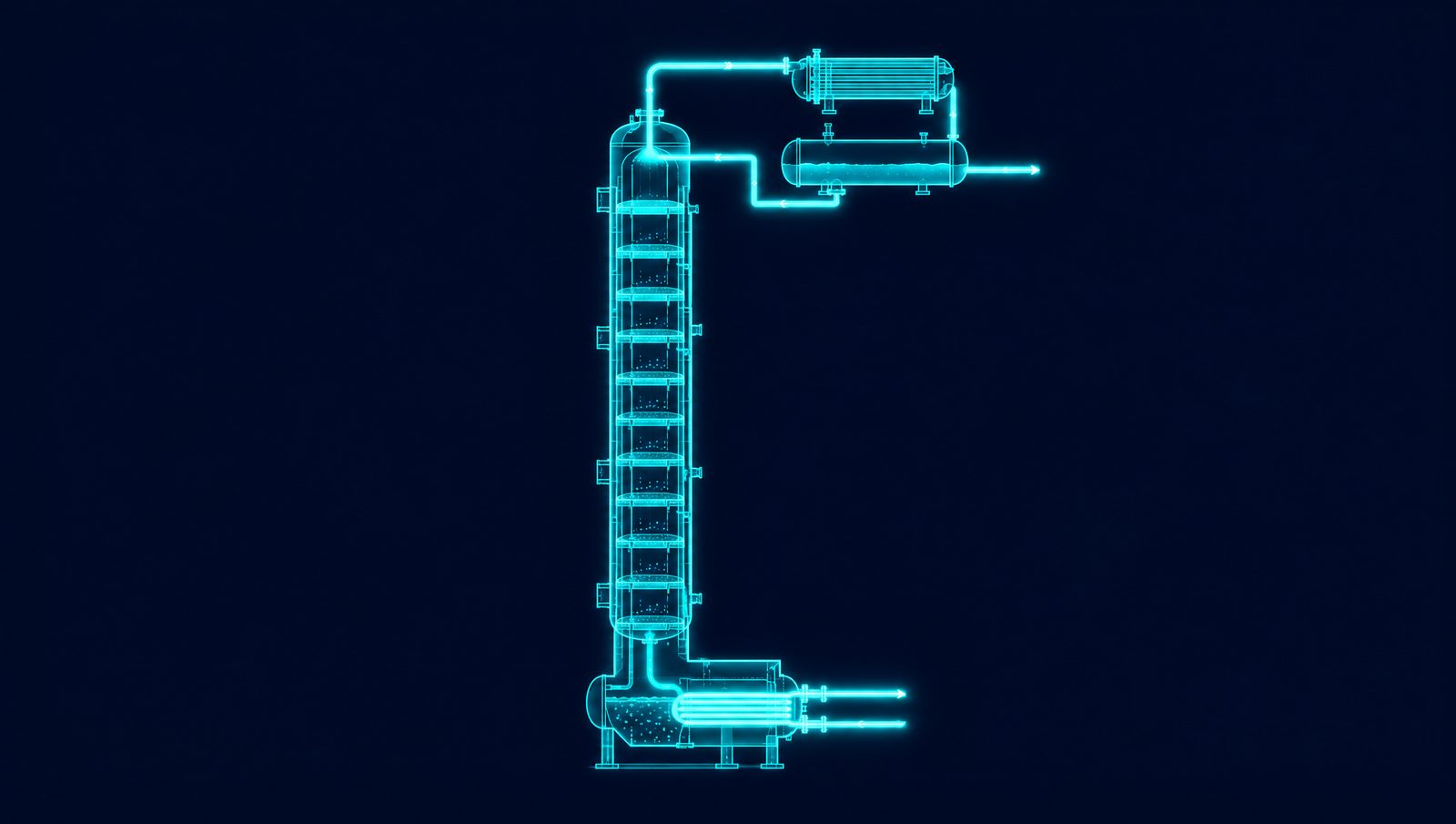
Distillation accounts for a large share of refinery energy use, though the exact proportion varies with plant configuration. The debutanizer separates butanes and lighter components from the heavier C5+ hydrocarbons. It has two specifications to hold: C5+ carried into the overhead LPG, and butane left in the bottoms, where it raises the vapor pressure of the naphtha or gasoline blendstock.
When the column slips off target, the effect shows up quickly in steam demand, flare losses and off-spec product that has to be reprocessed. Entrainment, poor tray efficiency and reboiler fouling are common causes, and each one costs yield.
This article looks at six ways data-driven methods help, from monitoring through control to fault diagnosis.
1. Real-time monitoring and anomaly detection
A debutanizer never sits still. Feed composition swings, tray hydraulics shift and reboiler duty drifts. Distributed control system (DCS) alarms often report a problem after separation efficiency has already slipped. Streaming every pressure, temperature and flow tag into models trained on the column's own history gives a live view of column health.
Those models can act as soft sensors, inferring states that are hard to measure directly, such as incipient flooding or foaming, from correlated signals the plant already collects. Because they learn multivariate patterns, they can flag subtle deviations well before any single variable crosses a static alarm limit.
2. Predictive maintenance for column equipment
Tray temperatures are watched every shift, yet equipment failures still seem to arrive without warning. Streaming vibration, pressure drop, temperature and flow data from the reboiler, overhead condenser, trays or packing, and control valves into a model gives a running estimate of each component's condition and remaining useful life.
When the model flags an emerging fault, for example a small rise in pump vibration together with declining flow, maintenance can plan the repair before performance slips. The aim is fewer emergency shutdowns and steadier LPG recovery, with less overtime and fewer rush orders for parts.
3. Adaptive control of operating conditions
Conventional advanced process control (APC) keeps the debutanizer inside fixed limits, but its models do not adjust when feed composition or ambient conditions change. Adaptive control re-optimizes the main levers, reflux ratio, column pressure and reboiler steam, as conditions change.
The model predicts product purity, column pressure drop and energy use minutes ahead and writes new setpoints to the APC or DCS. Building it starts with identifying the column's dynamics from historical data, then training the controller offline with reinforcement learning. Running in advisory mode first lets operators build confidence before the loop is closed. A nonlinear model handles the column's nonlinearities better than classical tuning, and because it is learned across the range of conditions the column has run, it covers more of that range than a controller tuned at one operating point.
4. Energy optimization
The reboiler draws significant steam every hour the column runs. A column held at conservative setpoints turns that steam into higher fuel cost and unnecessary CO₂.
One capital route is to rebuild the tower as a dividing-wall column. That demands major capital, a long outage and narrower operating flexibility afterward. The operating route works with the column that exists. It trims reflux to what the separation needs, holds top and bottom temperatures closer to their targets, and floats column pressure down to the limit the overhead condenser allows, while keeping both products inside specification. Lower reboiler duty cuts fuel and CO₂ without trading it for giveaway or rework.
5. Learning from historical and real-time data
A sound model combines years of historical data, which capture long-term operating patterns including rare but important events, with live DCS data that show current conditions. Keeping it accurate means revalidating and retraining it as the column and its feed change.
Retraining needs care. One family of techniques, replay-based learning, mixes new sensor records with selected historical data so the model keeps what it learned from rare events while it adapts to new conditions. The result is a model that tracks shifts in feed composition and ambient conditions instead of drifting out of tune, which keeps separation efficiency and energy use steady over time.
6. Fault diagnosis and troubleshooting
When the column's pressure drop spikes and C5 slip threatens product quality, a shift can be lost combing through trends, lab results and field rounds. Conventional alarms say something is wrong. They rarely say why.
Models built on years of pressure, temperature, flow and composition data compare live signals with their learned baseline, flag upsets as they develop, and rank the likely causes, such as tray damage, foaming or a sticking valve. The workflow runs from detection to a ranked root cause to recommended actions for the board operator. Each resolved incident adds to the record the model learns from, which sharpens diagnosis and reduces nuisance alarms. Faster answers mean less off-spec product and steadier operation.
For the neighboring column in the light-ends train, see depropanizer process management, and for column troubleshooting in general, fractionation column optimization.
How the Imubit Platform applies
In refining, Imubit applies Map, Model and Control to fractionation units such as the debutanizer. Map traces steam use, giveaway and off-spec rework to the recurring decisions behind them, such as reflux, pressure and reboiler duty targets. Model uses Deep Learning Process Control® (DLPC®) to learn a nonlinear dynamic model of the column from its own history, guided by first principles. Control takes those decisions to closed loop, writing setpoints to the existing APC and DCS, inside limits set by plant engineers.