Polymer producers work against volatile feedstock costs, fluctuating energy prices and tighter product quality specifications. Margins are squeezed, sustainability goals call for action, and operations keep getting more complex. Under those conditions, conventional process control and optimization often fall short of the performance plants need to stay competitive.
One of the largest hidden drains on efficiency is off-spec, or non-prime, production, especially in specialty polymers and complex polymerization processes. Non-prime material wastes raw materials and leads to reprocessing, scrap costs and missed delivery dates. Energy is another major operating cost, and reducing it without giving up throughput or quality has long been a hard balance to strike.
Closed-loop optimization learns from actual plant data and moves complex polymer systems toward their best operating point in real time. The sections below cover non-prime production, the balance between throughput and energy, and the role of the operating team.
Reducing non-prime production with precise control
Non-prime production is a major source of margin loss in polymer manufacturing, and it accumulates into significant losses over time. The problem is sharpest in specialty polymers, where specifications are stringent and small deviations can downgrade large quantities of product.
Conventional approaches rely on first-principles models or simulators to predict process behavior and guide control strategy. Those models are valuable, but they rest on assumptions, and they cannot fully capture the realities of polymer manufacturing: fouling buildup in reactors, raw material variability from batch to batch, and slow, infrequent sampling of critical product quality properties.
A learned model starts from the plant's own record. It is trained on historical and real-time data, including temperatures, pressures and flow rates, paired with lab-confirmed product quality results. From that record it identifies the nonlinear relationships and patterns that conventional models miss.
Running in closed loop, within limits the operators set, the controller monitors process parameters and quality feedback continuously and adjusts setpoints in real time to hold the best conditions. That responsiveness matters most when process conditions drift or unexpected disturbances arrive, which is when non-prime is made.
Example: reactor temperature
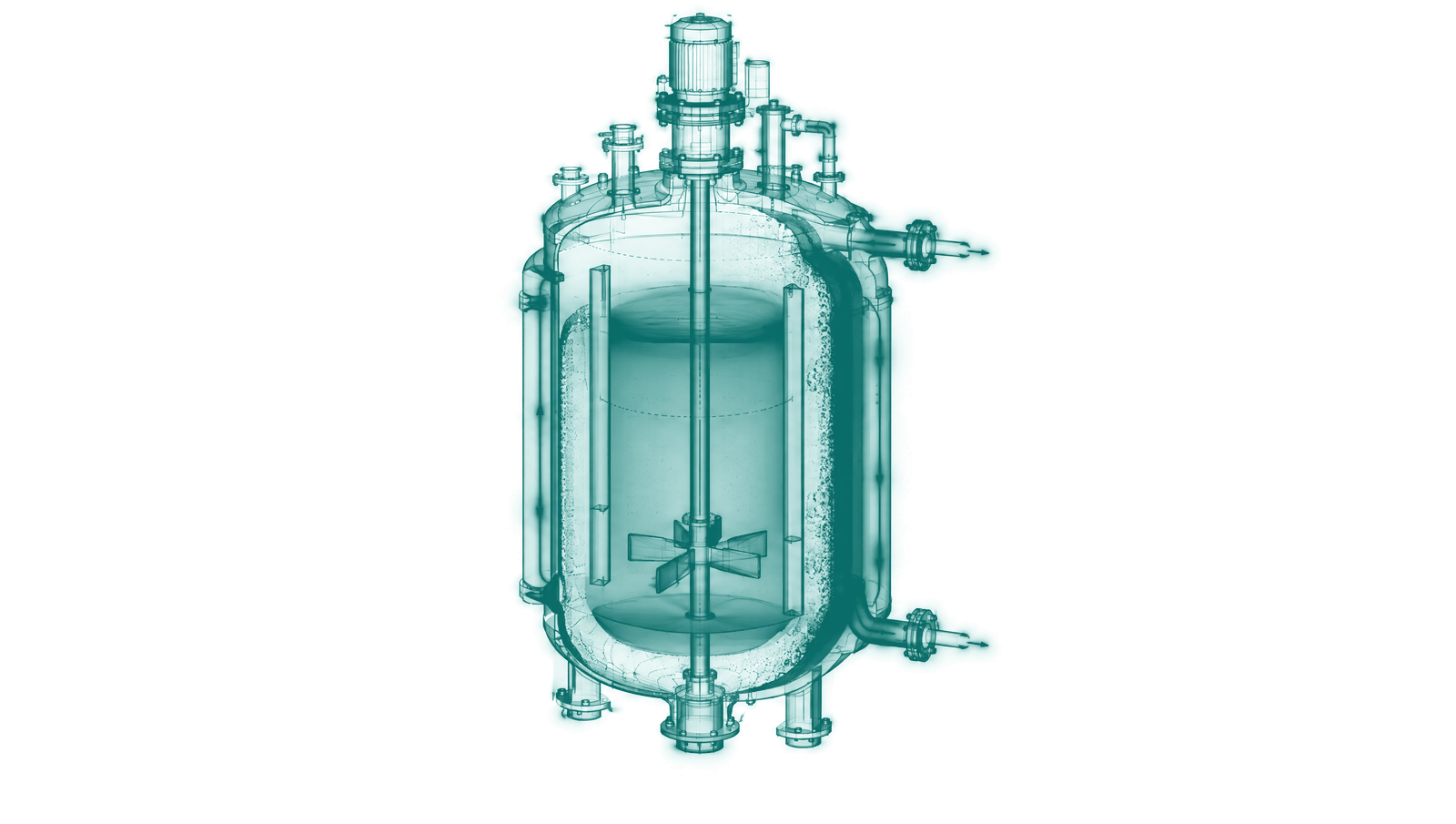
In a polymer reactor, the temperature profile has a direct effect on reaction kinetics, molecular weight distribution and final polymer properties. But fouling on reactor surfaces reduces heat transfer efficiency, raw materials vary in impurity levels within their specification limits, and frequent grade changes each need a different temperature strategy.
A model trained on operating data can detect the subtle changes that fouling or feed variability cause and adjust the temperature profile to match. Static setpoints and manual operator adjustments cannot react as quickly. Holding the right reaction conditions reduces non-prime product and also improves catalyst use, which matters most in catalyst-intensive polymerization plants.
Raising throughput while using less energy
Throughput and energy are often treated as a trade-off. Higher production rates raise energy use and can affect product quality, and lower energy use can slow production. Optimization can find capacity in existing equipment that delivers throughput and energy savings together.
By analyzing how temperatures, pressures, flow rates and equipment condition interact, the model finds operating points that raise conversion and reduce process variability, which improves product consistency and throughput. On a large polymer line, even a small percentage gain in throughput is a meaningful volume of extra product from the same equipment.
Energy savings come alongside, which lowers operating cost and carbon emissions, an increasingly important consideration for sustainability compliance. Models built on static assumptions drift as the plant changes. A model that keeps learning from new data captures subtle shifts, such as a change in the plant's energy-performance curve, and finds the point where energy per unit of output is lowest without compromising quality or production rate. That balance holds as feedstocks, ambient conditions and equipment condition change over time.
In polymer finishing, for example, the model adjusts barrel temperatures, screw speeds and cooling rates in real time to allow maximum throughput without compromising pellet cut or other quality parameters. The gains come from existing assets, with no new equipment.
Supporting the workforce and keeping operating knowledge
The technical results depend on the people who run the plant, and adoption takes trust and transparency as much as software.
A common concern among operators is that automation will take over their roles. Effective systems fit existing workflows and complement human expertise. Their outputs are explainable, so operators and engineers can see the reasoning behind each recommendation and build confidence in the system. In closed loop, operators set the limits, the arrangement ARC Advisory Group describes as human on the loop: the AI calculates and executes, and the operator moves from manual controller to high-level supervisor.
Used this way, the system builds operators' skills and reduces cognitive load on the board. Results hold when the whole crew uses it.
Plants also rely on knowledge that sits in the experience and intuition of senior staff. It is hard to document and easily lost to retirement or turnover, a central part of the manufacturing skills gap. Much of it is encoded in the plant's operating history. A model trained on that history captures the process dynamics and good practice it contains, and makes them available across shifts, plants and regions.
How Imubit applies this
Imubit applies Map, Model and Control in chemicals and polymers. Map traces non-prime, energy and catalyst losses to the recurring decisions behind them. Model uses Deep Learning Process Control® (DLPC®) to learn a nonlinear dynamic model of each reactor and finishing line from its own history, guided by first principles, and process engineers build it in DLPC® Builder with no Python and no machine-learning background. Control takes the critical decisions to closed loop, writing setpoints to the existing APC or DCS minute by minute, inside limits set by plant engineers.