Every fraction of gold a refinery fails to capture shows up on the balance sheet. Metal lost to slag and residues, and pours that come in below purity, are priced per ounce of fine gold. An unplanned outage stops that revenue the moment the melt goes cold.
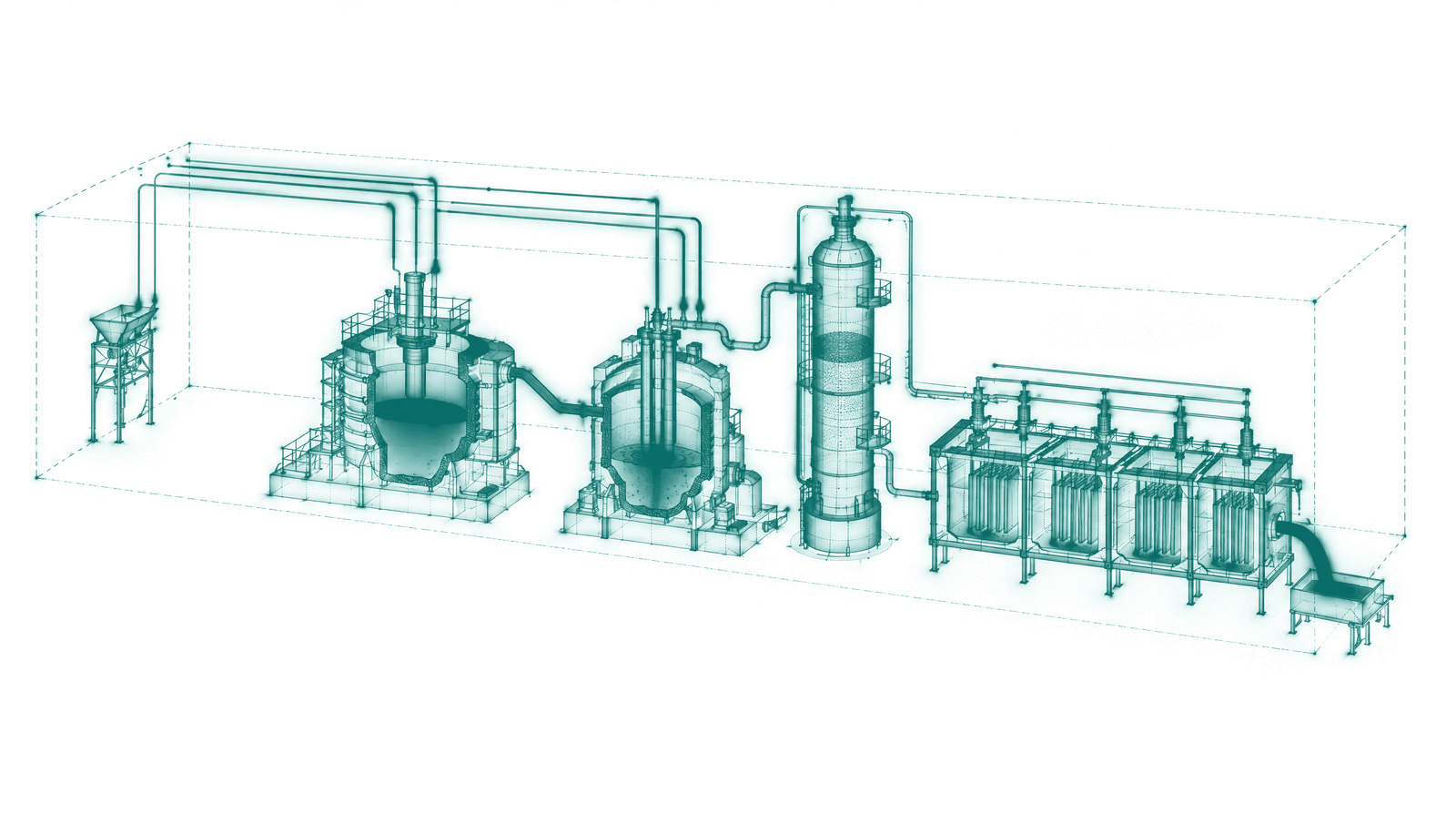
Most facilities still rely on the Miller and Wohlwill processes. The Miller process blows chlorine gas through molten bullion, converting silver and base metals to chlorides that separate from the gold. The Wohlwill process refines gold electrolytically, in a gold chloride and hydrochloric acid electrolyte, to higher purity. Both are proven, but they were designed for a slower, analog era. Batch assays, manual setpoints and energy-intensive chemistry force a trade between purity and throughput, and they keep reagent and fuel bills high.
Real-time sensor data changes what can be controlled. A model can tune temperature, flux and reagent dosage as conditions change, and anomaly detection can flag failures before they escalate.
Purity and yield with real-time control
Every drop in doré purity erodes profit. Traditional quality checks rely on batch samples sent to the lab, so operators learn about off-spec metal hours after a pour, past the point where they can recover the value. Pricing a single off-spec pour against the refinery's own economics is a quick way to size this loss.
A closed-loop controller works from the measurements the plant already streams: temperature, flux composition and available trace-metal readings. It adjusts furnace temperature, flux ratios or residence time to keep the melt on target. Because the model is learned from the refinery's own pour history, it captures how those variables interact across the range of feeds the refinery has actually processed, where a linear controller works around a single operating point.
Metal trapped in slag
Real-time control also addresses one of the largest hidden losses in refining: precious metal trapped in slag. Operators often have to choose between running hot for throughput and running cooler for purity. Setpoints that move with conditions soften that trade-off, because the furnace no longer has to sit at one conservative compromise for every feed.
Keeping operators in charge
The optimizer shows every move it intends to make and the constraint it is solving for, whether purity, throughput or both. Operators approve, override or adjust recommendations until confidence grows. When the loop is closed, the optimizer writes its setpoints through the existing distributed control system (DCS) and advanced controls, which stay in place, and operators keep the authority to override.
Lower energy and reagent cost
Procurement Resource's cost analysis of gold production places fuel, electricity and chemicals among the largest cash outflows in gold refining, alongside labor and depreciation. When those prices swing, margins compress quickly.
A controller trained by reinforcement learning against a model of the process learns the lowest fuel rate or reagent charge that still meets purity targets for the current feed, inside the operating limits the engineers set. If incoming bullion shifts from high-silver to high-copper, the controller adjusts in minutes, where retuning a furnace recipe by hand can take hours or days.
Reagents follow the same logic. Tighter pH and redox control can reduce reagent consumption per ounce, such as cyanide in upstream leach circuits and acid in refining steps, which lowers both variable cost and environmental load.
Dashboards that show the model's next recommended move also help new operators learn how the process responds. Track the results with a short set of KPIs:
- MMBtu per ounce refined
- kilograms of reagent per ounce
- CO₂ equivalent per ounce refined
Meeting those targets improves profitability and also prepares the plant for stricter emissions or water-use rules.
Predicting and preventing unplanned losses
Unplanned shutdowns are among the most expensive events in a gold refinery. A slag overflow, a cracked crucible or a leach-tank outage can idle the whole line, and the margin is lost for every day the melt is cold. Reactive maintenance waits for an alarm, while anomaly detection looks for the early signs of failure.
The approach starts with sensors feeding vibration, acoustic and thermal signatures into anomaly-detection models trained on years of historical runs. When a bearing's frequency spectrum drifts or a furnace wall shows localized hot spots, the system flags the deviation hours or days before failure.
Tracking the metal balance
Loss prevention goes further with high-frequency tracking of the metal balance across in-process streams. If assay drift suggests gold is moving into residues, the deviation is flagged along with its financial exposure. Maintenance planners can then schedule a controlled intervention during a low-demand window, while process engineers adjust parameters to stop the loss.
Sustaining the models
Keeping the value takes ownership. Plants that keep these models current assign cross-functional teams to retrain them when feed chemistry drifts or new equipment comes online. Data silos, historian gaps and latency still come up, and they are best worked through in phases with clear checkpoints.
How the Imubit Platform applies
Imubit applies Map, Model and Control across mining, minerals and metals, where the same trade-offs between purity, recovery, energy and reagent use appear. Map traces lost ounces, fuel and reagent cost to the recurring decisions behind them, such as furnace temperature, flux ratio and reagent dosing. Model uses Deep Learning Process Control® (DLPC®) to learn the nonlinear behavior of the process from the plant's own history, guided by first principles. Control takes the critical decisions to closed loop, writing setpoints to the existing APC or DCS, inside limits set by plant engineers. In mining, minerals and metals, Imubit's published results include a 1 to 3% metal-recovery improvement.